UPSC Test Series Strategy: How to Attempt, Analyze & Improve Score

UPSC Civil Services Exam needs smart study and regular practice. Reading books gives knowledge, but using that knowledge in exam time is most important. Many students study for long hours but still miss the cutoff because they do not practice enough. A good UPSC test series helps you improve speed, accuracy, and confidence. This guide explains how to use mocks in the best way, how to check mistakes, and how a UPSC prelims test series can improve your final score.
Check Out - UPSC Books
Importance of a UPSC Test Series in Your Preparation
A UPSC test series is more than just a set of questions. It helps you know your level of preparation. It shows your strong and weak subjects. It also helps you understand the UPSC exam pattern. UPSC often asks questions that test clear understanding, not only memory work.
By giving tests regularly, students learn how questions are framed. They also learn how options are made tricky. This practice is very useful before the real exam.
A UPSC mock test also teaches students how to manage pressure during the paper. It gives a real exam-like feeling and makes students ready for the final day.
Benefits of a UPSC Test Series:
-
Realistic Exam Simulation: Test series follow the UPSC Prelims and Mains pattern, including question types, marking scheme, and time limits, which helps reduce exam-day stress.
-
Time Management & Accuracy: Regular practice improves speed, helps manage time better, and reduces mistakes caused by negative marking.
-
Self-Assessment & Identifying Weakness: Students can find weak subjects, track progress, and understand changing UPSC question trends.
-
Structured Revision & Syllabus Coverage: A test series helps cover the large syllabus in an organized way through sectional and full-length tests.
-
Building Exam Temperament & Confidence: Continuous practice builds focus, mental stamina, confidence, and the ability to handle pressure.
-
Feedback & Improvement: Test analysis helps students learn from mistakes, improve answer-writing skills, and refine exam strategy.
Choosing the Right UPSC Test Series 2026
There are many coaching platforms and test papers available. Choosing the correct one is important. If you are preparing for the next cycle, choose a good UPSC test series 2026.
Things to check before joining:
-
Sectional Tests: These tests cover one subject like History, Geography, Economy, or Polity.
-
Full-Length Tests: These cover the full syllabus and real exam pattern.
-
Current Affairs Questions: A good UPSC prelims test series should include recent news-based questions.
-
Detailed Solutions: Explanations should clearly tell why an answer is right or wrong.
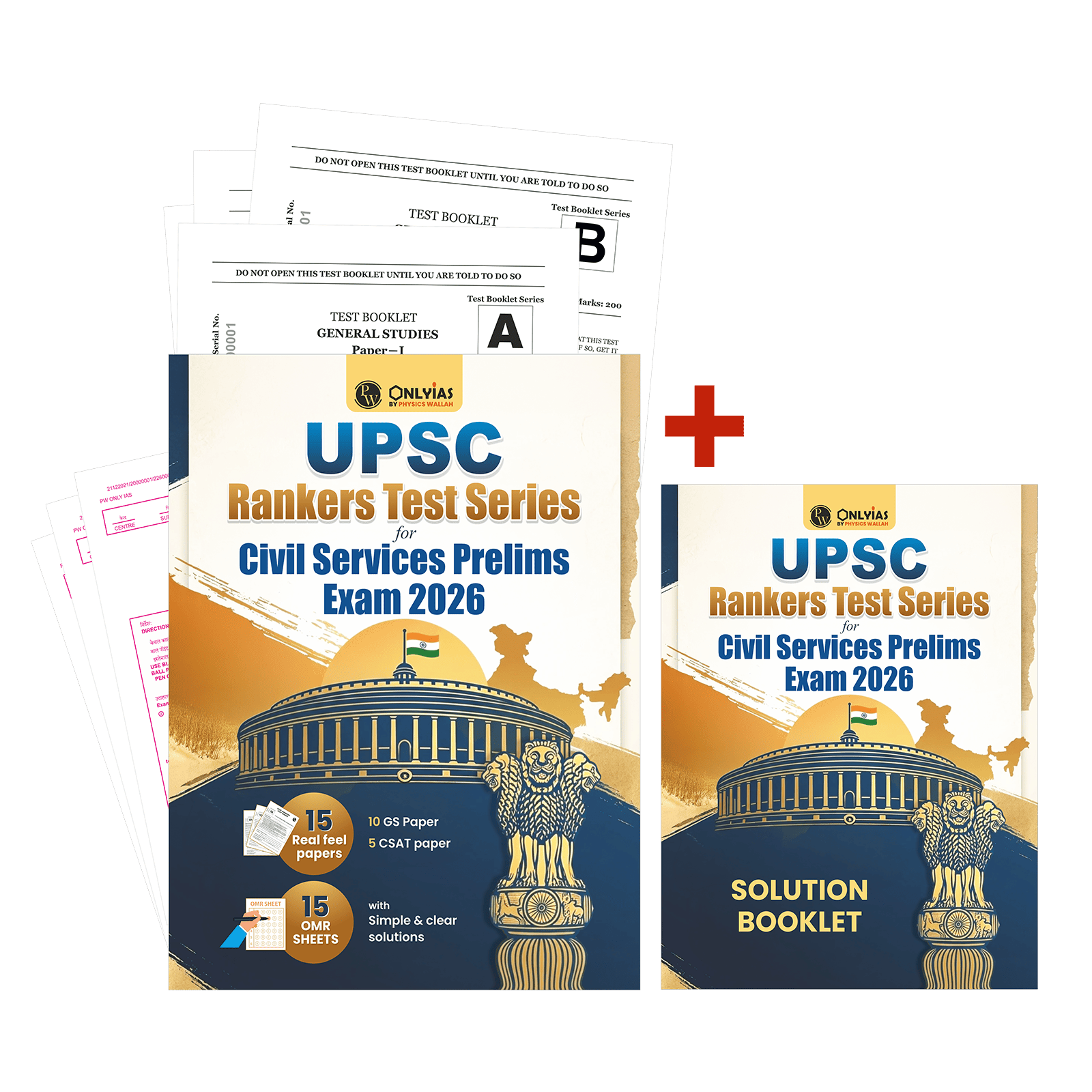
The pw UPSC test series is useful because it gives clear solutions and planned schedules. Good solutions save revision time.
How to Attempt a UPSC Mock Test Effectively
Many students give a UPSC mock test casually and then do not improve. To get full benefit, treat every mock like the real exam.
Sit on a table, keep water ready, avoid distractions, and complete the paper in fixed time.
Use proper seriousness while attempting. This builds real exam habit.
UPSC Test Series Three-Round Strategy
This method is simple and useful for many students.
First Round:
Solve only those questions where you are fully sure. These are your safe marks.
Second Round:
Now solve questions where you can remove two wrong options. Use logic and elimination.
Third Round:
Now attempt only selected risky questions where you know something about the topic.
Do not guess blindly. Random guessing can reduce marks because of negative marking.
This method is useful in every UPSC prelims mock test.
Analyzing Your Performance in UPSC Prelims Test Series
The real learning starts after the test ends. Just seeing marks is not enough. If your test takes two hours, spend at least two to three hours checking it.
A UPSC prelims test series gives best results only when you analyze deeply.
Check:
-
Which subjects are weak
-
Which questions were silly mistakes
-
Which guesses were wrong
-
Which topics need revision
-
Where time was wasted
This analysis helps you improve in the next paper.
Categorising Your Errors with UPSC Test Series
To improve score in a UPSC test series, divide mistakes into groups.
Silly Mistakes:
You read “correct” as “incorrect” or missed one word.
Knowledge Gap:
You never studied that topic.
Conceptual Confusion:
You studied topic but got confused between two options.
Revision Issue:
You studied it earlier but forgot facts now.
When you know the reason, improvement becomes easier.
Improving Your Score with UPSC Test Series
The pw UPSC test series can help students improve marks if used with discipline.
Follow these steps:
-
Follow the schedule regularly
-
Give every test on time
-
Check solutions carefully
-
Revise mistakes before next paper
-
Compare rank and percentile
Do not focus only on marks. Rank shows your level among competitors.
The pw UPSC test series is also useful because explanations help in fast revision.
The Role of CSAT in Your UPSC Test Series Strategy
Many students focus only on GS Paper 1 and ignore CSAT. This is risky because CSAT is qualifying but compulsory.
Your UPSC prelims test series should include CSAT papers too.
Practice:
-
Reading comprehension
-
Logical reasoning
-
Basic maths
-
Data interpretation
Try to score safely above the qualifying line in mocks.
If CSAT is weak, give separate practice time every week.
Check Out - UPSC Previous Year Papers
Dealing with Low Scores in Mocks Via UPSC Test Series
Low marks in mocks are normal. Do not lose confidence.
Sometimes mock papers are harder than real UPSC exam. A score of 70–80 in a tough pw UPSC test series may still be decent.
What to do:
-
Stay calm
-
Check mistakes honestly
-
Improve weak subjects
-
Continue giving tests
-
Avoid comparing too much with others
If one subject gives low marks again and again, revise basic books first.
Too many tests without analysis can cause burnout.
Final Revision and the UPSC Test Series
In the last 30 days, old mock papers become gold.
Use your UPSC prelims test series papers for revision.
Do these things:
-
Re-solve wrong questions
-
Read explanations again
-
Revise current affairs notes
-
Practice OMR marking
-
Give tests at real exam timing
Try giving final mocks from 9:30 AM to 11:30 AM. This sets your body and mind for exam timing.
A planned UPSC test series 2026 can be very useful in the final month.
Read More: How to Study Current Affairs for UPSC Exam
UPSC Test Series Strategy FAQs
Q1. When is the best time to start an UPSC test series?
Start sectional tests after covering around half of the syllabus. Full tests can start 3 to 4 months before prelims.
Q2. How many mocks should I solve in a UPSC prelims test series?
Usually 30 to 40 quality mocks are enough for good practice and revision.
Q3. Is the pw UPSC test series suitable for beginners?
Yes, the pw UPSC test series is helpful for beginners because it gives simple explanations and planned tests.
Q4. Should I focus more on marks or analysis in a UPSC mock test?
Analysis is more important. Marks change, but learning from mistakes gives real growth.
Q5. Can I rely only on a UPSC test series 2026 for current affairs?
No. A UPSC test series 2026 is useful for practice, but also read newspapers and monthly current affairs magazines.