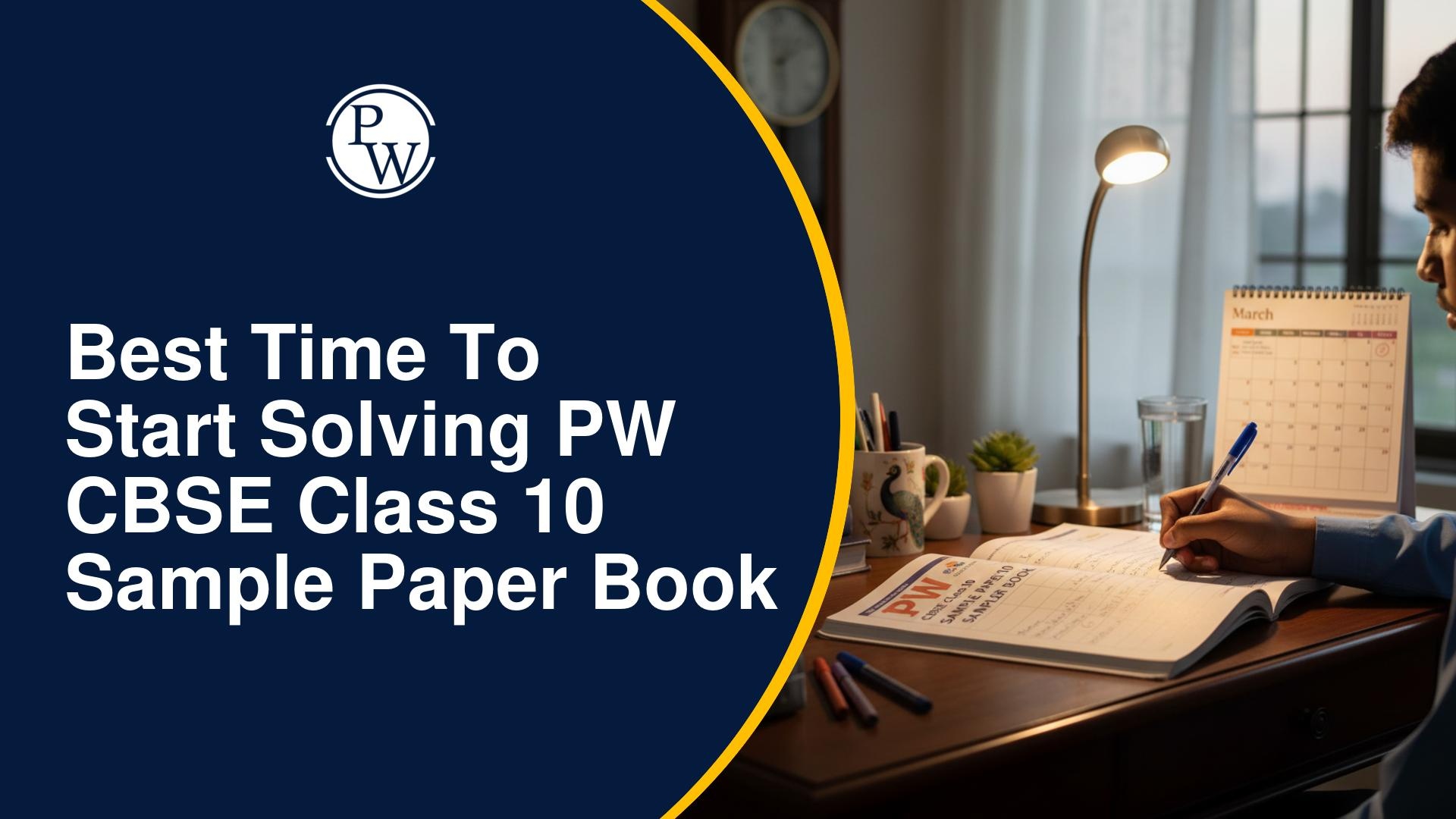
Best Time to Start Solving PW CBSE Class 10 Sample Paper Book
As the final exam dates approach, many students find themselves overwhelmed by the sheer volume of concepts, formulas, and historical dates they need to memorize. While reading textbooks builds theoretical knowledge, it often fails to prepare you for the pressure of answering complex questions under strict time limits.
You might know a concept thoroughly, yet freeze when asked to present it clearly within a three-hour window. Solving CBSE class 10 sample papers bridges this gap, transforming passive learning into practical exam readiness and ensuring you enter the examination hall fully prepared.
What is CBSE Sample Paper Class 10?
A CBSE class 10 sample papers set is a carefully structured collection of practice tests designed to reflect the official curriculum, question distribution, and marking scheme set by the Central Board of Secondary Education. These test sets mirror the exact format, question styles, and difficulty levels you will face during your final board examinations.
-
Official Question Typologies: They include Multiple Choice Questions (MCQs), short answer questions, long answer questions, and competency-based case studies.
-
Marking Guidelines: Each paper comes paired with detailed, step-by-step solutions that explain how marks are awarded for specific steps.
-
Balanced Coverage: They cover all major core subjects, including Science, Mathematics (Standard), English, and Social Science.
-
Trend Analysis: Practice papers incorporate structural trends from past years to ensure you prepare for modern question formats.
Why CBSE Sample Paper Class 10 Is Useful for Board Preparation
Relying solely on chapter revisions can leave you unprepared for the actual exam environment. Integrating structured sample papers into your schedule turns passive reading into active self-assessment, which is essential for effective class 10 board exam preparation.
-
Real Exam Simulation
Mock papers recreate the length, depth, and pressure of the actual board assessment. Sitting through a full three-hour test trains your brain to remain focused without experiencing mental fatigue.
-
Step-by-Step Solution Insights
When you review answers using official marking schemes, you learn how to structure your points to secure full credit. You discover which steps carry critical marks and which unnecessary details you can omit.
-
Progressive Difficulty Tiers
Quality sample paper sets organize practice tests into Easy, Medium, and Hard difficulty levels. This progressive approach allows you to build foundational confidence on simpler sets before tackling complex, high-difficulty questions.
-
Error Reduction
Specialized guides within practice books, such as dedicated common-error analyses, highlight frequent student mistakes. Learning what not to do prevents you from making costly errors in your actual answer script.
Topics Covered in CBSE Sample Paper Class 10
A comprehensive practice set covers every key subject area to ensure well-rounded preparation across your entire syllabus. Using CBSE Class 10 Books alongside regular practice can help strengthen concepts, support topic-wise revision, and improve overall preparation for the board examinations.
|
Subject |
Major Content Areas Covered |
Key Practice Features Included |
|
Science |
Physics numericals, Chemical reactions, Biology diagrams and life processes |
Mind maps for fast chapter revision |
|
Mathematics (Standard) |
Algebra, Geometry theorems, Trigonometric identities, Mensuration |
Most probable questions for targeted practice |
|
English |
Analytical writing tasks, Formal letters, Unseen reading comprehension |
Structured answering templates for full marks |
|
Social Science |
History source-based tasks, Map markings, Civics, Economic concepts |
Competency-based formats for analytical answers |
How to Use CBSE Sample Paper Class 10 With Solutions
Simply looking through questions and reading the answers is not enough. You must establish a clear sample paper solving strategy to extract maximum benefit from every practice session.
1. Create a Distraction-Free Environment
Sit at a clean desk in a quiet room. Turn off all digital devices and strictly enforce the official three-hour time limit to replicate authentic exam conditions.
2. Grade Your Paper Objectively
Once time is up, put your pen down immediately. Use the provided step-by-step marking schemes to grade your answer sheet critically, without giving yourself the benefit of the doubt on incomplete answers.
3. Analyze Topper Answer Styles
Examine handwritten topper-style solutions often made available via QR codes in modern sample paper books. Notice how high achievers underline keywords, format subheadings, and present neat mathematical steps.
4. Track Recurring Errors
Maintain an error logbook. Record every calculation mistake, missed keyword, or misread question. Reviewing this logbook weekly prevents repeat mistakes.
5. Utilize Visual Revision Tools
Before attempting a new paper, quickly review mind maps and cheat sheets to lock key definitions and formulas into your short-term memory.
When to Start Solving CBSE Sample Paper Class 10
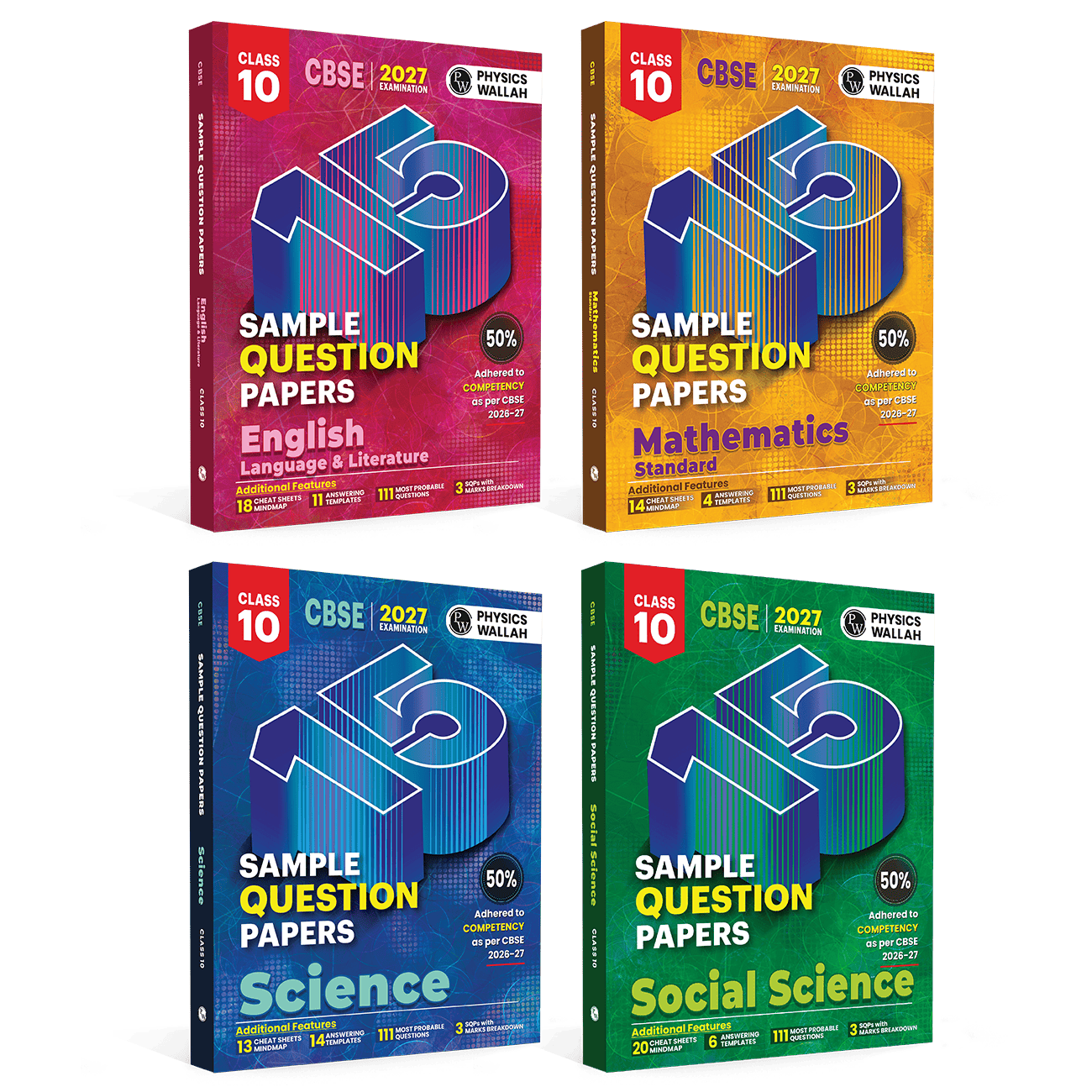
Many students ask when to solve Sample Papers Class 10 to get the best possible results. Timing your practice correctly ensures you build confidence without causing unnecessary pre-exam stress. The CBSE Class 10 Sample Papers Combo of 4 Books 2027 can be included in your preparation schedule to practise exam-style questions, assess your readiness, improve time management, and identify areas that need revision.
-
The Foundation Phase (October to November)
Begin attempting sample papers as soon as you complete 70% to 80% of your textbook syllabus. At this stage, focus on Easy-level papers. Solving one paper per week helps you get comfortable with the exam layout while you finish remaining class topics.
-
The Intensive Phase (December to January)
By December, your syllabus should be completely finished. Transition into solving Medium and Hard level papers. Aim to complete two to three full-length papers each week under strict timed conditions to build stamina and speed.
-
The Final Simulation Phase (Pre-Board Period)
During the final weeks before board exams, focus on past years' solved papers and official sample papers. Pay close attention to administrative details, including proper OMR sheet filling techniques, to prevent minor mistakes from costing you marks.
Study Strategy Plan with CBSE Sample Paper Class 10
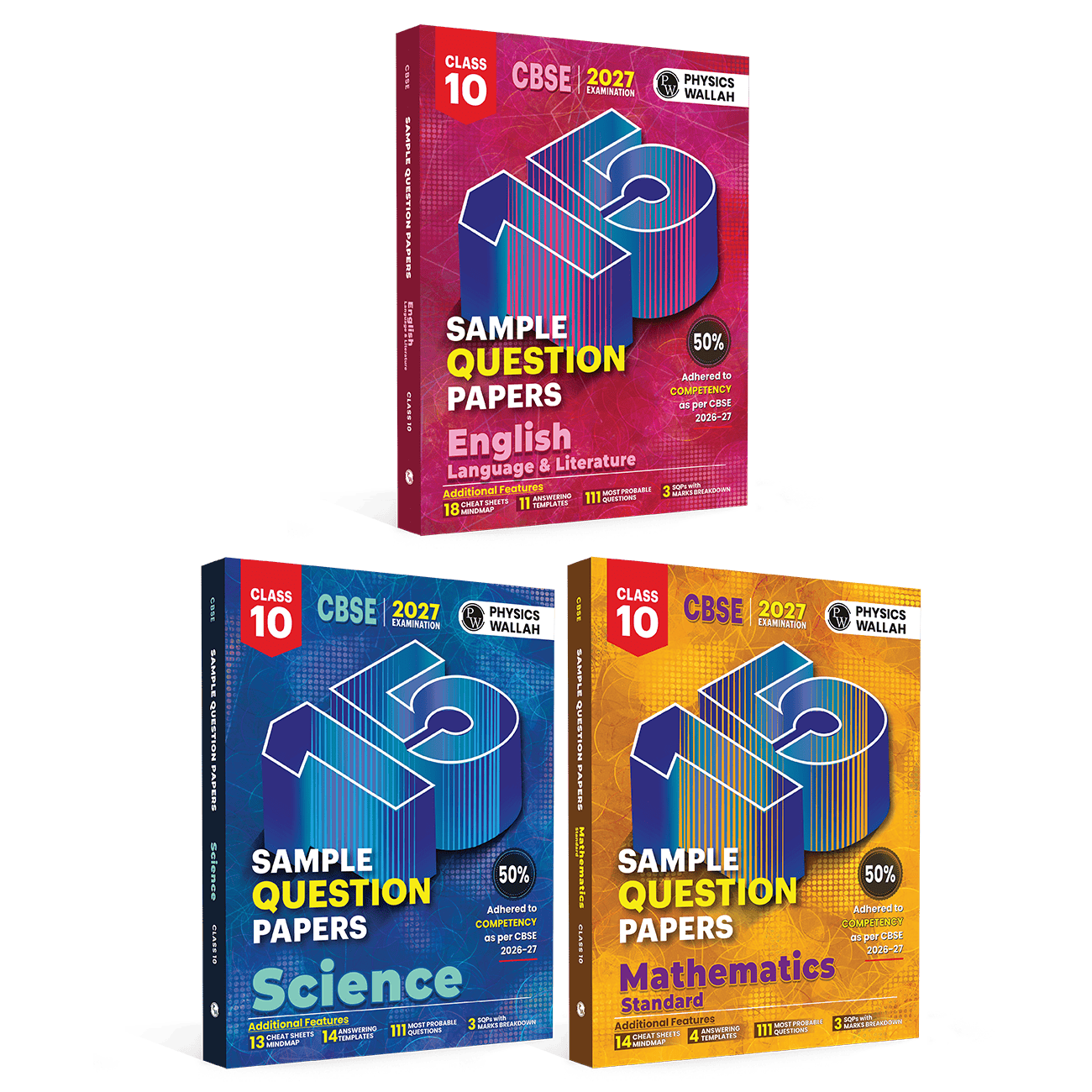
Incorporating organised test sessions into your routine prevents last-minute panic. Consistent practice with the CBSE Class 10 Sample Papers Combo of 3 Books 2027 can help you become familiar with exam-style questions, assess your preparation, improve time management, and ensure steady academic improvement.
Weekly Timetable Breakdown
-
Monday: Revisit weak chapters identified during weekend testing. Review science formulas and maths theorems using mind maps.
-
Tuesday: Complete targeted practice on high-probability questions for Mathematics and Science.
-
Wednesday: Solve one full-length, timed Science sample paper. Focus on speed and diagram clarity.
-
Thursday: Evaluate the Wednesday test using step-by-step marking schemes. Document every error in your logbook.
-
Friday: Work through English and Social Science practice sets. Focus on writing formats using proven response templates.
-
Saturday: Solve one full-length Mathematics (Standard) sample paper under 3-hour exam conditions.
-
Sunday: Conduct a comprehensive weekly review. Study topper solutions to refine your answer presentation skills.
Common Mistakes to Avoid in CBSE Sample Paper Class 10
Knowing what mistakes to avoid during your sample paper practice for boards saves crucial marks during final evaluation.
1. Skipping Intermediate Working Steps
Board examiners assign specific marks to intermediate steps in numerical problems. Skipping straight to the final answer costs you partial credit, even if your final value is correct.
2. Mismanaging Section Time
Spending too much time on early 1-mark questions often leaves you rushing through high-value 5-mark long answers. Train yourself to move past stuck questions and return to them later.
3. Ignoring Answer Templates
Freeform writing in language and social science papers often leads to rambling. Use structured answer templates to keep your responses focused, concise, and easy to grade.
4. Neglecting OMR Sheet Practice
Filling in OMR bubbles incorrectly or smudging options can cause automated evaluation errors. Practice filling OMR sheets during mock tests so it feels natural on exam day.
Read More: CBSE Class 10 Question Bank PDF Download
Frequently Asked Questions
1. How many sample papers should I solve for Class 10 boards?
Aim to complete 8 to 12 full-length papers per subject. This count should include official sample papers, past years' solved papers, and progressive practice sets.
2. Is it necessary to solve papers under strict 3-hour timing?
Yes, timed class 10 exam practice builds mental endurance and helps you develop intuitive pacing for every section of the paper.
3. How do answer templates help in English and Social Science?
Templates provide clear structural frameworks for formal letters, analytical essays, and long answer responses, helping you present clear points that fetch full marks.
4. What should I do if I score low on my first sample paper?
Low initial scores are completely normal. Use your initial results to identify weak chapters, review core textbook content, and attempt a new paper after targeted revision.
5. Why is CBSE sample paper preparation better than simple reading?
Solving papers forces active recall, tests your ability to write clearly under pressure, and exposes hidden learning gaps that passive reading often misses.