Most Important Class 10 Science Question Types with PW Sample Papers Book
Many students struggle with board exam preparation because they are unsure about question patterns, marking schemes, and important topics. Practising with a sample paper class 10 science book helps students understand exam formats, improve time management, and identify weak areas. Regularly solving a class 10 science sample paper also builds confidence and improves accuracy before the final class 10 science board exam.
Sample Paper Class 10 Science Exam Pattern
Knowing the structure of the official board test helps you to tackle each segment with clarity and quickness. The normal CBSE sample exam for science has a well defined pattern that has five different portions that test the students on their direct knowledge, logical reasoning and practical application.
-
Section A (Objective Type): Contains 20 multiple-choice questions (MCQs) worth 1 mark each. This section includes direct objective questions and Assertion-Reasoning problems that test core conceptual clarity across Physics, Chemistry, and Biology.
-
Section B (Very Short Answer): Features 6 short questions worth 2 marks each. Answers in this section must be crisp, precise, and completed within 30 to 50 words.
-
Section C (Short Answer): Consists of 7 questions worth 3 marks each. These questions demand brief explanations, balanced chemical reactions, basic numerical steps, or structured comparative tables.
-
Section D (Long Answer): Includes 3 comprehensive questions worth 5 marks each. This section focuses on extensive derivations, complex numerical problems, and detailed labeled scientific diagrams.
-
Section E (Case-Based Questions): Comprises 3 integrated case-based assessment scenarios worth 4 marks each, created to evaluate real-world application skills and data interpretation.
Important Question Types in the Class 10 Science Board Exams
To secure maximum marks in your final assessments, you must practise Class 10 Science important questions and familiarise yourself with the specific categories of questions that consistently appear in board question papers. Regularly solving CBSE Class 10 Sample Papers can further help you understand the exam pattern, practise different question formats, improve time management, and build confidence for the board examination.
Objective and Assertion-Reasoning Questions
Objective formats evaluate your speed, fundamental knowledge, and critical elimination skills.
-
Multiple-Choice Questions: Test direct factual memory, scientific definitions, and simple formula-based calculations.
-
Assertion-Reasoning: Requires evaluating two separate statements to decide if both are factually accurate and whether the reason correctly justifies the given assertion.
Conceptual and Short Answer Questions
Short-answer formats evaluate your ability to explain scientific mechanisms accurately using precise terminology.
-
Definitions and Scientific Laws: Demands exact definitions for concepts like Ohm's Law, Snell's Law, or Fleming's Left-Hand Rule.
-
Differences and Comparisons: Organised neatly in comparative tables, such as contrasting aerobic vs. anaerobic respiration, metals vs. non-metals, or real vs. virtual images.
Diagrammatic and Ray Diagram Questions
Visual representation carries significant weightage across all sections of the paper.
-
Biology Diagrams: Focuses on detailed labeled diagrams of the human digestive system, nephron structure, human heart, or plant reproductive organs.
-
Physics Ray Diagrams: Covers image formation by concave mirrors, convex mirrors, concave lenses, and convex lenses for different object placements.
Numerical and Equation-Based Questions
Accuracy in calculations and chemical representations guarantees full marks in the Physics and Chemistry segments.
-
Chemical Equations: Focuses on writing balanced chemical equations, identifying displacement or redox reaction types, and predicting unknown products.
-
Physics Numericals: Involves direct application of formulas related to electric current, equivalent resistance, electrical energy, focal length, and magnification.
Competency and Case-Based Questions
These real-world case scenarios test higher-order thinking skills (HOTS) as emphasized in recent CBSE curriculum updates.
-
Data Interpretation: Requires analyzing given tables, line graphs, or experimental setups to draw valid scientific conclusions.
-
Practical Scenario Analysis: Focuses on applying theoretical knowledge to everyday situations or standard laboratory experiments.
What You Get in a Sample Paper Class 10 Science Book
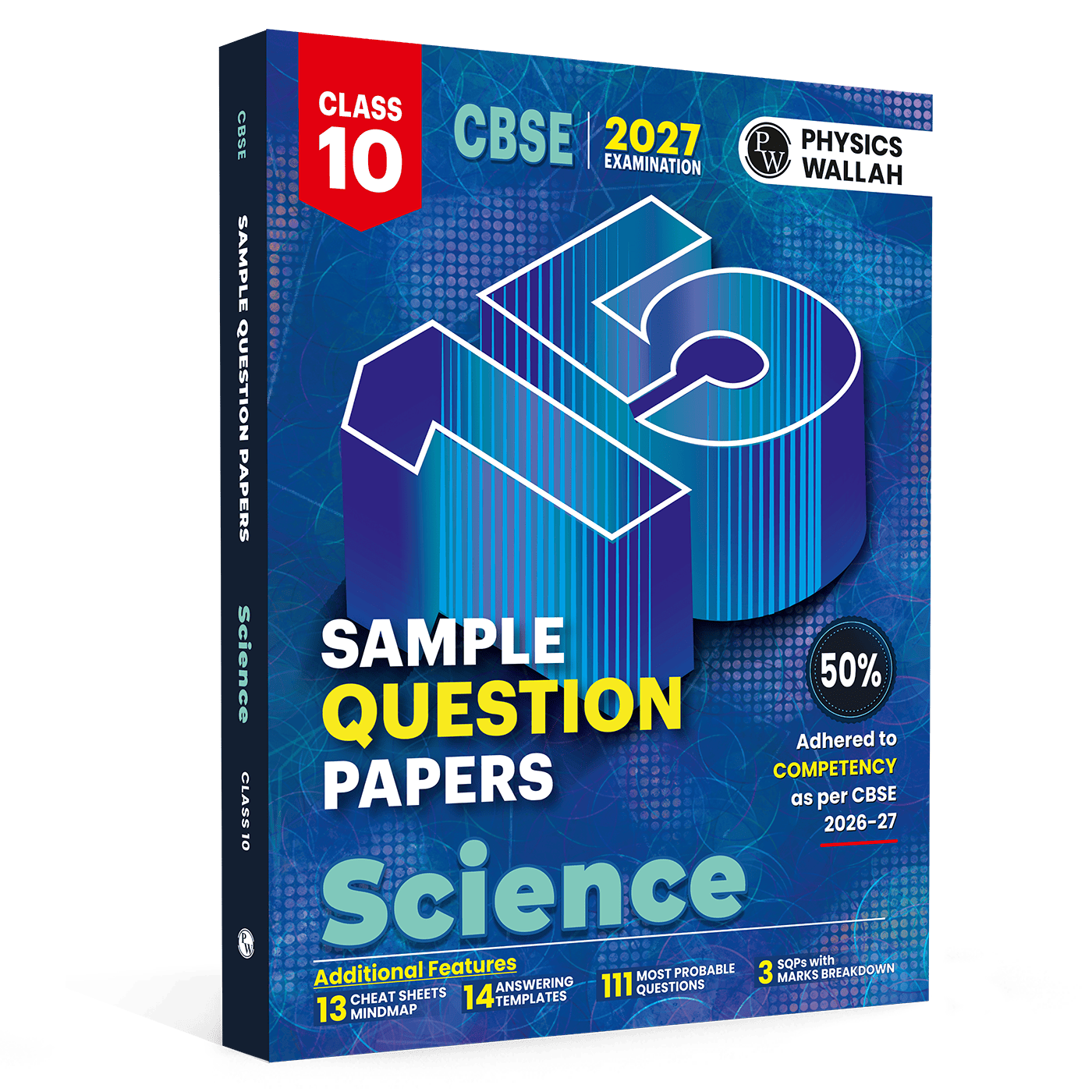
The CBSE Sample Papers Class 10 Science book provides an all-in-one preparation material crafted strictly according to the latest CBSE pattern. Studying with this CBSE Class 10 books ensures you learn every class 10 science practice paper systematically.
|
Feature |
Student Benefit |
|
15 Full Sample Papers |
Includes fully solved papers, self-assessment practice tests, and official sample papers. |
|
Chapter-Wise Mind Maps |
Facilitates rapid visual revision of core concepts right before the examination. |
|
CBSE-Like Answer Sheets |
Provides authentic hands-on practice with realistic exam-style layouts to reduce stress. |
|
Detailed Step-by-Step Solutions |
Offers clear explanations with official marking scheme allocations for partial marking. |
|
Most Probable Questions |
Highlights high-yield question trends based on thorough historical paper analysis. |
Practise Important Questions With Sample Paper Class 10 Science
Test your knowledge and preparation levels with these representative exercise sets compiled according to the official sample paper class 10 science format.
Exercise 1: Objective & Assertion-Reasoning Practice (1 Mark Each)
Q1. What happens when dilute hydrochloric acid is added to iron filings?
-
(a) Hydrogen gas and iron chloride are produced.
-
(b) Chlorine gas and iron hydroxide are produced.
-
(c) No reaction takes place.
-
(d) Iron salt and water are produced.
Q2. Which of the following statements is correct regarding the propagation of light through a glass prism?
-
(a) Red light bends the most because it has the shortest wavelength.
-
(b) Violet light bends the most because it has the shortest wavelength.
-
(c) All colors bend equally regardless of their wavelength.
-
(d) Green light undergoes maximum dispersion.
Q3. Assertion (A): The blue colour of copper sulphate solution fades when an iron nail is dipped in it.
Reason (R): Iron is more reactive than copper and displaces copper from its salt solution.
-
(a) Both A and R are true, and R is the correct explanation of A.
-
(b) Both A and R are true, but R is not the correct explanation of A.
-
(c) A is true, but R is false.
-
(d) A is false, but R is true.
Q4. Assertion (A): Decomposers play an essential role in any natural ecosystem.
Reason (R): They break down complex organic substances into simple inorganic nutrients that return to the soil.
-
(a) Both A and R are true, and R is the correct explanation of A.
-
(b) Both A and R are true, but R is not the correct explanation of A.
-
(c) A is true, but R is false.
-
(d) A is false, but R is true.
Exercise 2: Short Conceptual & Numerical Practice (2 & 3 Marks)
Q5. A convex lens forms a real and inverted image of a needle at a distance of 50 cm from it. Where is the needle placed in front of the convex lens if the image is equal to the size of the object? Calculate the power of the lens.
Q6. Write balanced chemical equations for each of the following reactions:
-
Thermite reaction between ferric oxide and aluminium powder.
-
Reaction of metallic sodium with cold water.
-
Heating of ferrous sulphate crystals in a dry boiling tube.
Q7. Differentiate between autotrophic nutrition and heterotrophic nutrition based on the following parameters:
-
Primary source of energy.
-
Requirement of chlorophyll.
-
End products formed.
Q8. A circuit consists of three resistors of resistance 2 ohms, 4 ohms, and 6 ohms connected in parallel across a 12-volt battery. Calculate:
-
The equivalent resistance of the entire circuit.
-
The total current flowing through the circuit.
Exercise 3: Case-Based Integrated Practice Scenarios (4 Marks Each)
Q9. Read the given passage carefully and answer the questions that follow:
All living organisms require energy to perform essential life processes. This energy is derived from food through cellular respiration. In human beings, glucose is broken down inside cells through different metabolic pathways depending on the availability of oxygen.
-
Name the 3-carbon molecule produced when glucose breaks down in the cytoplasm. (1 Mark)
-
Identify the compound formed in human muscle cells during anaerobic conditions that causes severe cramps. (1 Mark)
-
Compare the amount of energy released during aerobic respiration versus anaerobic respiration, explaining why this difference occurs. (2 Marks)
Q10. Read the given passage carefully and answer the questions that follow:
When electric current passes through a conductor, heat is generated due to the resistance offered by the conductor to the flow of electrons. This phenomenon is known as the heating effect of electric current and is widely utilized in household appliances like electric heaters, irons, and fuses.
-
State Joule's Law of Heating and express its mathematical relation. (1 Mark)
-
Why is tungsten universally used as the filament in incandescent electric lamps? (1 Mark)
-
An electric iron rated at 750 watts operates for 2 hours daily. Calculate the total electrical energy consumed in kilowatt-hours (kWh) over a period of 30 days. (2 Marks)
How to Solve a Class 10 Science Questions in Exams
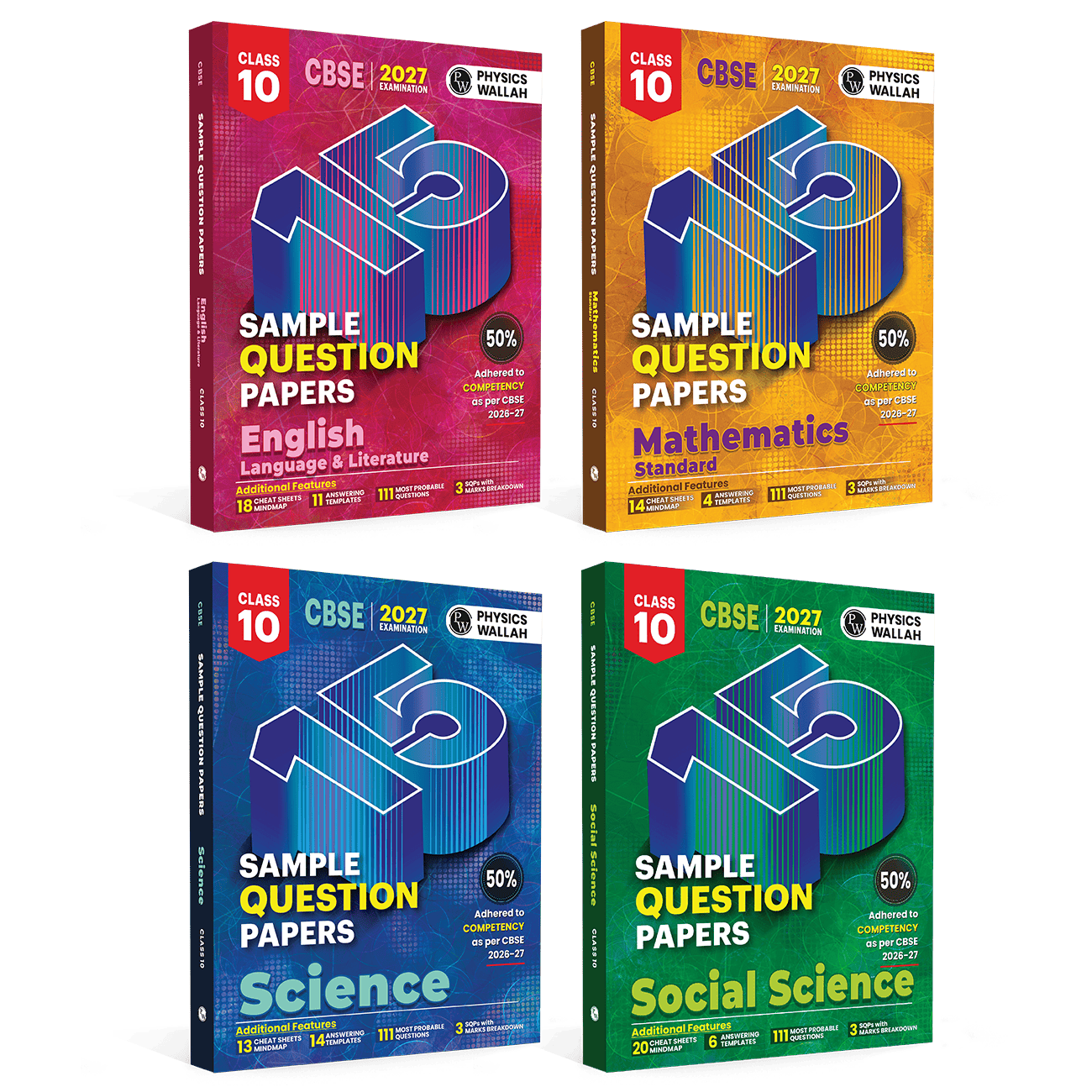
Solving a Class 10 Science question paper effectively requires a combination of strong conceptual knowledge and smart exam-management strategies. Practising with the CBSE Class 10 Sample Papers Combo of 4 Books 2027 can help you become familiar with different question formats, understand the exam pattern, improve time management, and assess your preparation through regular practice.
-
Maximize the 15-Minute Reading Time: Read through the paper carefully to choose internal options, identify easy questions, and plan your writing sequence.
-
Adhere to Step-Wise Marking Rules: Write all working formulas, substitute given values, and state unit conversions clearly in Physics calculations to secure partial credit even if final arithmetic errs.
-
Underline Key Terminology: Highlight scientific keywords, important catalyst names in chemical reactions, and standard SI units to make your answers easily readable.
-
Draw Clean Labeled Diagrams: Always use a sharp pencil and ruler for drawing ray diagrams and biology sketches. Align all labels neatly on the right-hand side.
-
Pace Your Writing Speed: Allocate roughly 1.5 minutes per mark, leaving at least 15 minutes at the end of the exam to review your responses thoroughly.
Class 10 Science Sample Paper FAQs
How many sample papers should I solve using a sample paper class 10 science book?
Solving 10 to 15 practice sets using a comprehensive sample paper class 10 science book ensures adequate exposure to all question types, pattern variations, and time management demands.
Are Assertion-Reasoning questions mandatory in the board exam?
Yes, Assertion-Reasoning questions form an integral part of Section A in the paper to test direct conceptual clarity and analytical reasoning.
How does the sample paper book assist with step marking?
The class 10 science sample paper book contains detailed solutions mapped strictly to official CBSE marking schemes, showing you exactly how marks are distributed across individual steps.
Are case-based questions difficult to solve in the final examination?
Case-based questions are straightforward if your fundamental concepts are clear. Practicing regularly with a dedicated class 10 science practice paper builds confidence in analyzing scenarios and extracting accurate answers.
Why is practicing a class 10 science question paper under timed conditions important?
Solving a complete class 10 science board exam questions set within 3 hours builds real test endurance, improves writing speed, and significantly reduces exam-day anxiety.