CBSE Class 10 Science Half Yearly Sample Paper 2026
The kids of Class 10 often get overwhelmed by the enormous syllabus of Physics, Chemistry and Biology when they are preparing for mid-term examinations. Getting the correct practice material to test your preparedness, can make a tremendous difference to your confidence. Solving a CBSE class 10 science half yearly sample paper 2026 can help you comprehend the latest exam pattern, manage time properly and identify weak subjects before final marks are recorded. A dedicated example paper goes a long way in keeping you on top of your study and facing your mid-term exams with perfect clarity.
CBSE Class 10 Science Half Yearly 2026 Exam Pattern
The first step in preparing well is to familiarize yourself with the structure of the exam paper. The CBSE Class 10 science sample paper is arranged into five structured areas to check the theoretical comprehension, practical knowledge, and analytical skills.
Section-Wise Breakdown of Questions
-
Section A: 20 objective type questions carrying 1 mark each. This section has Multiple Choice Questions (MCQs) & Assertion- Reasoning questions.
-
Section B: 6 Very Short Answer (VSA) questions of 2 marks each. Answers should be short and concise.
-
Section C: 7 SA questions of 3 marks each. These need detailed explanations and simple diagrammes where required.
-
Section D: (3 x 5 = 15 marks) Consists of 3 Long Answer (LA) questions. The tests measured sophisticated conceptual understanding and stepwise problem solution.
-
Section E: Contains 3 Source-Based or Case-Based units of assessment worth 4 marks each, evaluating real-life application and analytical skills.
CBSE Class 10 Science Half Yearly Sample Paper 2026 Syllabus
The mid-term syllabus usually covers half of the total course modules. To score well in your class 10 science half yearly exam 2026, focus on the main chapters across all three branches.
|
Subject |
Covered Chapters |
Key Topics to Focus On |
|
Chemistry |
Chemical Reactions and Equations, Acids, Bases and Salts, Metals and Non-metals |
Chemical balancing, pH scale application, reactivity series |
|
Biology |
Life Processes, Control and Coordination |
Human digestive system, plant hormones, reflex arch |
|
Physics |
Light: Reflection and Refraction, Human Eye and Colourful World |
Ray diagrams, lens formula, atmospheric refraction |
CBSE Class 10 Science Half Yearly Sample Paper 2026 Practice Questions
Practising standard questions helps you assess your exam readiness. Below are practice exercises designed according to the current pattern of the Class 10 Science half-yearly question paper. Using CBSE Class 10 Sample Papers alongside these exercises can help you understand the exam format, practise different question types, improve time management, and identify areas that need further revision.
Section A: Multiple Choice Questions (1 Mark Each)
-
Which of the following reactions represents a double displacement reaction?
-
A) 2Mg + O2 -> 2MgO
-
B) Na2SO4 + BaCl2 -> BaSO4 + 2NaCl
-
C) Zn + H2SO4 -> ZnSO4 + H2
-
D) 2FeSO4 -> Fe2O3 + SO2 + SO3
-
A solution turns red litmus paper blue. Its pH value is likely to be:
-
A) 1
-
B) 4
-
C) 5
-
D) 10
-
Which part of the human brain controls involuntary actions like blood pressure and vomiting?
-
A) Cerebrum
-
B) Cerebellum
-
C) Medulla
-
D) Hypothalamus
-
The focal length of a spherical mirror is 20 cm. Its radius of curvature is:
-
A) 10 cm
-
B) 20 cm
-
C) 40 cm
-
D) 80 cm
Section B: Very Short Answer Questions (2 Marks Each)
-
Why does the colour of copper sulphate solution change when an iron nail is dipped into it? Write the balanced chemical equation.
-
Differentiate between autotrophic nutrition and heterotrophic nutrition, giving one example of each.
-
State Snell's Law of Refraction. Write the formula for refractive index in terms of the speed of light.
Section C: Short Answer Questions (3 Marks Each)
-
A sodium compound 'X' is commonly used in the kitchen for making crisp fritters and acts as an antacid.
-
A) Identify compound 'X' and state its chemical formula.
-
B) How is it produced? Write the relevant chemical equation.
-
C) What product is formed when it is heated during cooking?
-
Explain the mechanism of urine formation in human kidneys using a clear block diagram.
-
A concave lens has a focal length of 15 cm. At what distance should an object be placed from the lens so that an image is formed at 10 cm from the lens? Find the magnification produced by the lens.
Section D: Long Answer Questions (5 Marks Each)
-
Answer the following questions on optics:
-
A) Draw a neat ray diagram showing image formation by a concave mirror when the object is placed between the focus and the center of curvature.
-
B) Mention two practical uses of concave mirrors based on their optical characteristics.
-
C) Define the power of a lens and state its standard unit of measurement.
-
Describe the human digestive system in detail:
-
A) Trace the path taken by food from the mouth to the small intestine.
-
B) Explain the function of hydrochloric acid, pepsin, and trypsin in digestion.
-
C) Describe how the inner wall of the small intestine is adapted for effective absorption.
Section E: Case-Based Questions (4 Marks Each)
-
Read the text carefully and answer the questions below:
-
Context: Light changes direction when passing from one optical medium to another due to a change in its speed. This bending phenomenon is known as refraction. Light moving from an optically rarer medium to a denser medium bends towards the normal. Conversely, light traveling from a denser medium to a rarer medium bends away from the normal.
-
Q1. What causes light to bend as it enters a new medium? (1 mark)
-
Q2. Does the frequency of light change during refraction? (1 mark)
-
Q3. An object is placed 20 cm in front of a convex lens of focal length 10 cm. Calculate the position and magnification of the image formed. (2 marks)
CBSE Class 10 Science Half Yearly Sample Paper 2026 Benefits
Regular revision with a proper Class 10 Science practice paper helps bridge the gap between learning concepts and expressing them effectively in exams. Using CBSE Class 10 Books alongside practice papers can further strengthen conceptual understanding, support topic-wise revision, and improve answer-writing skills for the board examination.
-
Better Speed and Accuracy: Solving full-length papers within 3 hours helps you regulate your writing pace so you do not leave questions unattempted.
-
Targeted Weakness Identification: Working through a complete science question paper helps you spot topics that require extra attention before the final exams.
-
Clear Understanding of Marking Schemes: Seeing step-wise mark allocations teaches you how to present answers neatly to secure full marks.
-
Reduced Exam Stress: Familiarity with question styles removes fear, building confidence during your actual mid-term assessment.
CBSE Class 10 Science Half Yearly Sample Paper 2026 Features
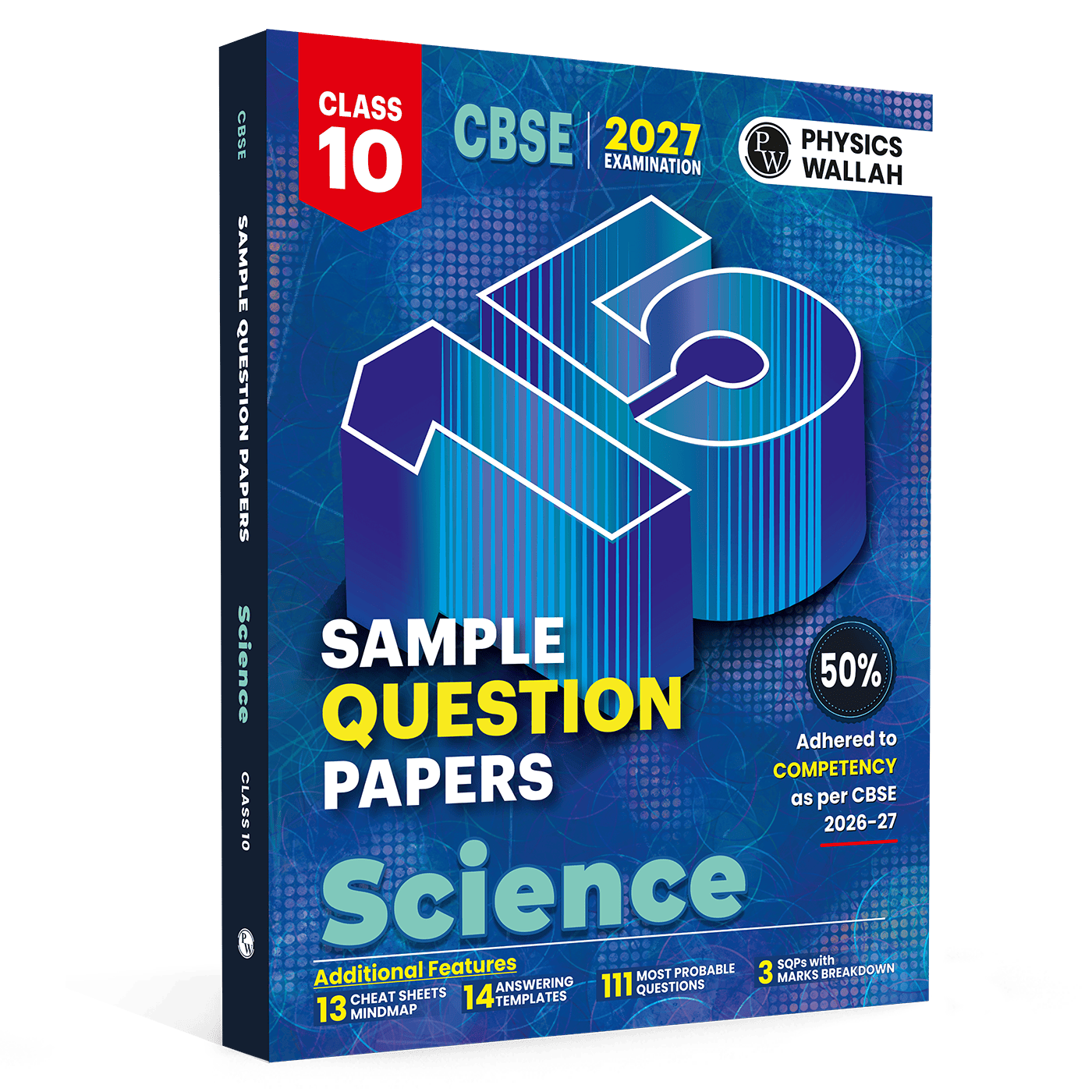
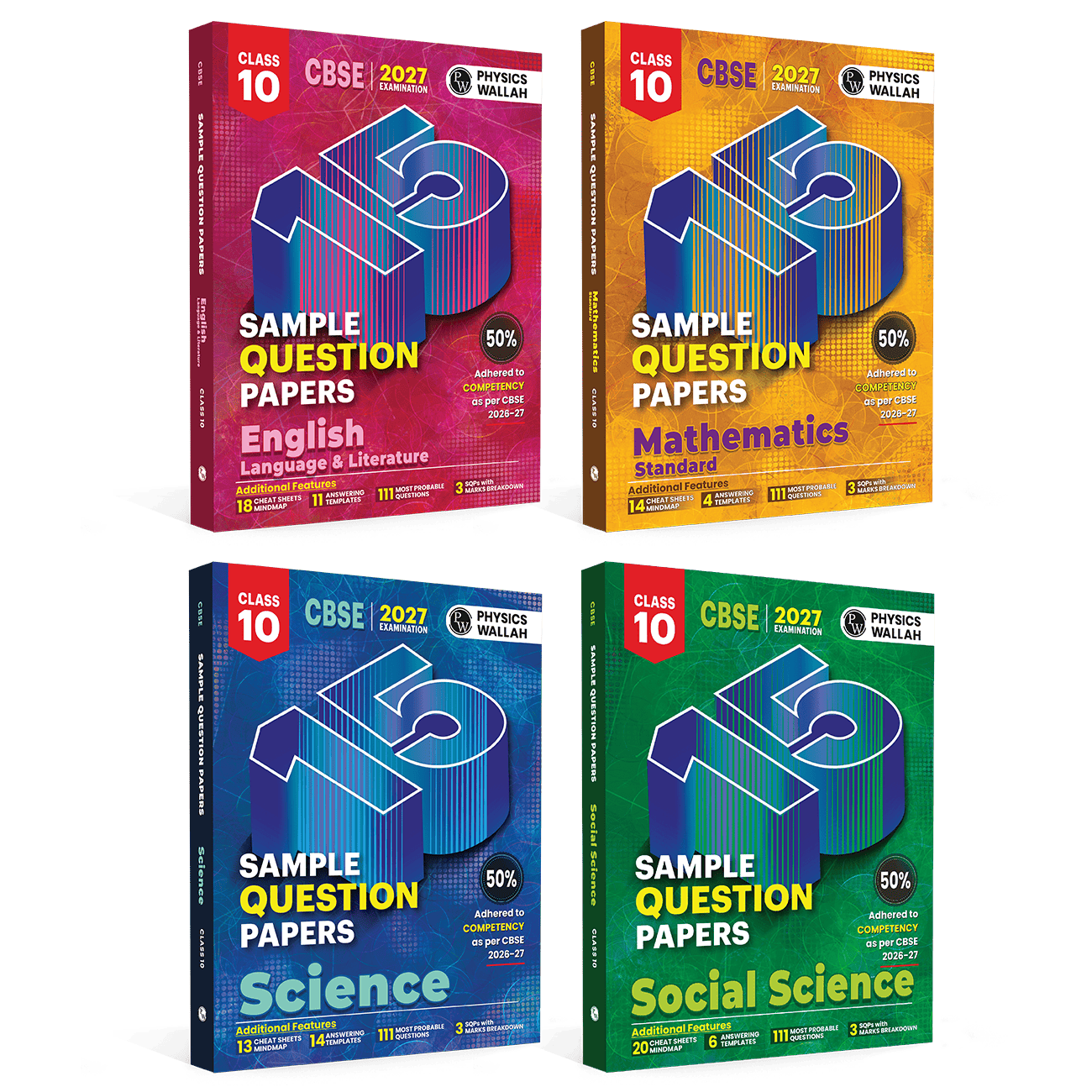
When preparing for mid-term and final examinations, having access to authentic resources is essential. The CBSE Class 10 Sample Papers Combo of 4 Books 2027 guide provides targeted tools designed for thorough prep.
-
15 Full Practice Papers: Features comprehensive sample tests designed according to the latest CBSE pattern.
-
Answer Sheets and Question Booklets: Includes realistic test booklets to give you a true feel for actual examination conditions.
-
Step-Wise Marking Guidelines: Equips you with marking stickers and breakdown guides to learn how answers are scored.
-
Visual Mind Maps: Offers quick chapter summaries to help you review key formulas and definitions right before entering the exam room.
-
Most Probable Questions: Contains high-yield questions chosen specifically to target important board topics.
Class 10 Science Sample Paper FAQs
Where can I download the latest CBSE Class 10 Science half yearly sample paper 2026?
Educational portals provide updated sample papers and practice booklets that can be accessed instantly. They include well-structured assessments based on the current curriculum.
How many times should I practice a Science half yearly sample paper before exams?
Effective time management skills and accuracy are developed by solving 3 to 5 full-length sample papers under stringent timed conditions ideally.
Does the CBSE Class 10 Science question paper feature case-based questions?
Yes, Section E of the current CBSE Class 10 science question paper contains source-based and case-based evaluation questions to test application skills.
What is the weightage distribution across Physics, Chemistry, and Biology?
The theoretical paper of 80 marks has roughly equal weightage for Chemistry, Biology and Physics with small fluctuations depending upon the chapter content in mid-terms.
How does solving a Class 10 science practice paper help for board preparation?
By writing a science practice paper in the initial preparation for the half yearly examination, the basic concepts are reinforced and this makes the final board review smooth and efficient.