Role of Sample Papers Book in Final CBSE Class 10 Practice
While reading the textbook syllabus gives a good theoretical base, many students still struggle when facing the actual question paper. The usual problems are poor time management in exams, inability to arrange long answers properly and last minute panic. These are the very issues solved by CBSE Class 10 sample papers, which mimic the real test settings. This full essay explains how methodical practice builds exam stamina, improves speed and presentation of answers for high grades.
Importance of CBSE Class 10 Sample Papers for Board Exams
Understanding board patterns requires more than rote memorisation. Engaging in daily sample paper practice class 10 offers students a complete preview of the official examination environment, bridging the gap between textbook reading and real-time execution.
Decoding the Official Board Layout
Official sample sets mirror the structural breakdown of actual board question papers. Working through these sets helps you get comfortable with the distribution of marks, section choices, and varying question styles.
-
Sectional Understanding: Board papers divide questions into distinct sections ranging from Multiple Choice Questions (MCQs) to long analytical queries. Regular exposure eliminates surprises on exam day.
-
Weightage Realignment: Solving mock papers reveals which chapters carry higher weightage, helping you adjust your study priority accordingly.
-
Question Variety: Practice sets introduce a healthy balance of direct questions, numerical problems, and application-based scenarios.
Tracking Mastery and Identifying Gaps
A critical element of effective exam preparation is knowing where your preparation stands weeks before entering the hall.
-
Pinpointing Weak Areas: Attempting full papers immediately highlights chapters where you lose marks or take too long to recall formulas.
-
Real-Time Self-Assessment: Reviewing completed papers against official answer keys offers an honest reflection of your readiness.
-
Building Exam Stamina: Sitting continuously for three hours trains your body and mind to stay sharp without hitting mid-exam fatigue.
How CBSE Class 10 Sample Papers Improve Time Management
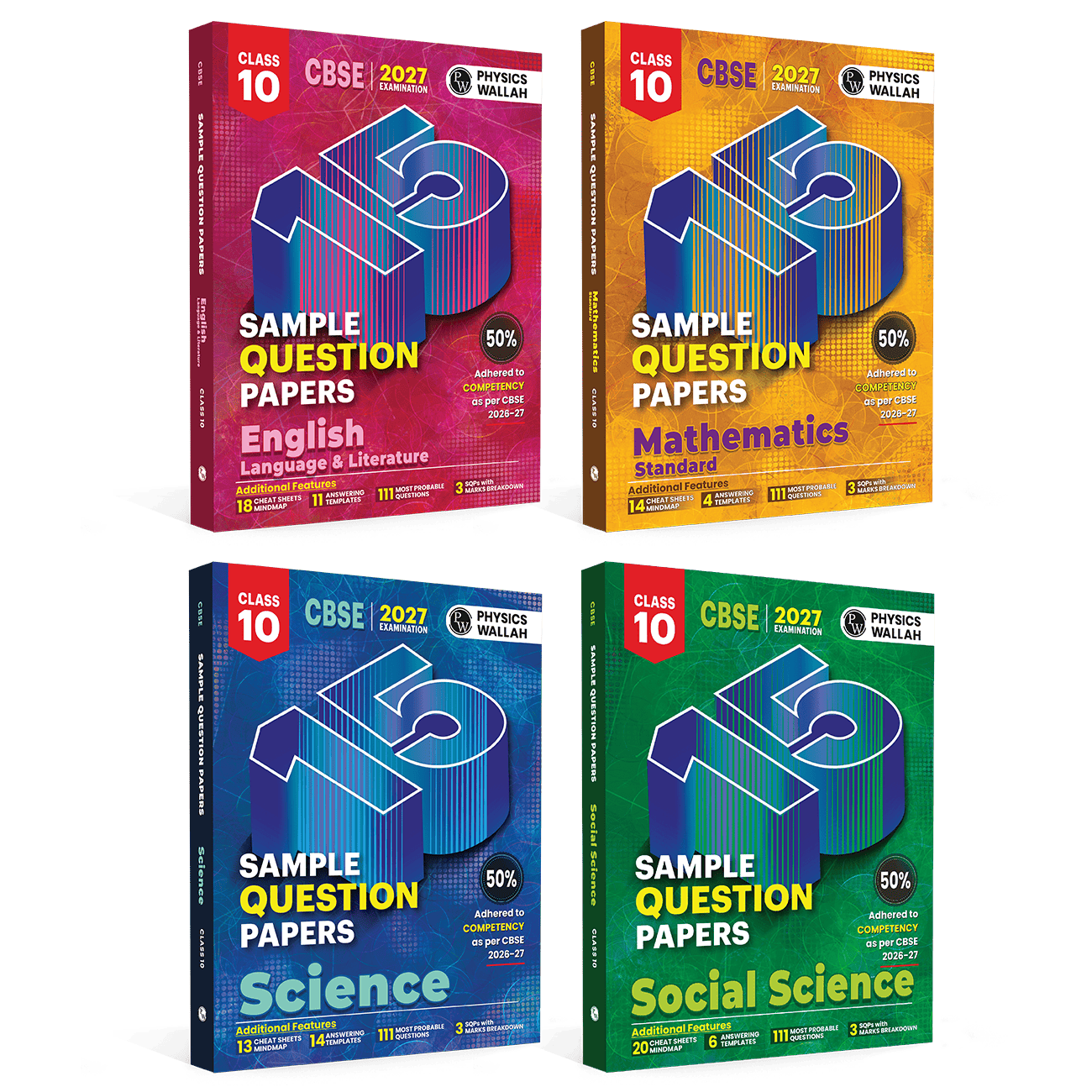
Time pressure causes many well-prepared students to leave questions unanswered. Strategic practice with the CBSE Class 10 Sample Papers Combo of 4 Books 2027 can condition your brain to manage the three-hour clock efficiently across short and long sections.
|
Section Type |
Question Format |
Ideal Time Limit |
Strategy for Maximum Speed |
|
Section A |
MCQs & Objective Items |
30–35 Minutes |
Read carefully, eliminate wrong choices fast, avoid overthinking. |
|
Section B & C |
Short & Medium Answers |
45–50 Minutes |
Write direct points, include key terms, show essential steps. |
|
Section D |
Long Answer Questions |
50–60 Minutes |
Plan answer structure first, use bullet points, add diagrams. |
|
Section E |
Case-Based Questions |
20–25 Minutes |
Scan passage for data, answer directly with precise logic. |
|
Verification |
Overall Review |
10–15 Minutes |
Recheck calculations, verify question numbers, correct errors. |
Allocating Reading Time Effectively
CBSE provides 15 minutes of initial reading time before writing begins. Smart students take this time to go through the full paper and select the optional questions.
-
Identify internal choice questions: Quickly determine which ones play to your skills.
-
Categorise Question Difficulty: Group questions into immediate answers, moderate calculations, and complex long answers.
-
Mental Outline Creation: Formulate basic outlines for Section D essay-type questions or Social Science long answers during these opening minutes.
How to Use CBSE Class 10 Sample Papers for Board Preparation
Executing a deliberate CBSE board exam preparation plan yields far better results than haphazard reading. Follow these sequential steps to maximize the utility of every mock paper you write.
1. Simulate Authentic Test Conditions
Set up a quiet desk away from mobile phones, televisions, and study aids. Stick strictly to the three-hour timer. Writing under realistic constraints builds psychological resilience, making the final examination feel like just another routine mock test.
2. Rigorous Marking and Honest Grading
Avoid self-leniency when marking completed papers. Compare your written responses against standard marking schemes. Check whether you included essential keywords in Science, proper units in Physics calculations, and necessary step-by-step working in Mathematics.
3. Maintain an Error Tracking Logbook
Maintain a separate notebook to note down all the mistakes you make when doing sample tests. Classify these errors as conceptual misconceptions, calculation oversights, or poor time management. Reviewing this logbook daily can greatly reduce the amount of repeat errors.
How to Use CBSE Class 10 Sample Papers for Final Revision
During the final weeks preceding exams, full-length practice must replace passive chapter reading. An integrated Class 10 final revision strategy using CBSE Class 10 Books relies on active recall and output-based practice.
Prioritising High-Value Revision Techniques
-
Practice Papers + Active Recall: Don't reread your notes over and again. Solve mixed-question papers to check your quick memory retrieval.
-
Learning to Design Presentations: Practice making nice labeled diagrams in Science and neat maps in Social Science. Answers which are well structured with highlighted headings tend to gain higher ratings from examiners.
-
Focus on Step-Wise Scoring Board: Examiners provide half marks for accurate steps, intermediate formulas and clear comments. If you practice writing step-by-step you will be assured to get some marks even if you end up with the wrong figures.
Adapting to Modern Competency-Based Patterns
Assessment criteria now focus on application of concepts, rather than recall. Half of the final examination consists of competency-based items.
-
Case-Based Passages: Train your mind to extract core concepts quickly from contextual data paragraphs in Science and Social Studies.
-
Assertion and Reason Sets: Practice evaluating whether statements are individually true and if the reasoning logically supports the assertion.
-
Real-World Problem Solving: Work through practical scenario-based problems in Mathematics to sharpen analytical thinking.
How CBSE Class 10 Sample Papers Improve Exam Practice
Complete book sets offer a more manageable print option and give structured study resources. Combo packages of the key courses - Science, Mathematics, English and Social Science - within a common structure for Class 10 exam practice.
Core Benefits of Subject-Specific Practice Sets
Science
-
Physics numerical problems involving stepwise accurate calculations.
-
Emphasizes balancing of chemical equations and providing exact definitions.
-
Practice designing good, clear and well labeled biological diagrams.
Mathematics (Standard & Basic)
-
Features step-by-step theorem proofs and formula applications.
-
Provides dedicated case-study questions based on practical situations.
-
Helps build numerical accuracy through repeated practice under clock pressure.
Social Science
-
Teaches concise answer structuring using bullet points and sub-headings.
-
Includes targeted map work practice for History and Geography.
-
Strengthens analytical skills for source-based evaluation questions.
English Language & Literature
-
Provides step-by-step formats for formal letters, analytical paragraphs, essays.
-
Explains grammar rules with different scenario exercises.
-
Better response presentation for literature-based extract questions.
Also Check - CBSE Class 10 PYQs
How to Choose the Best CBSE Class 10 Sample Papers
Some practice materials are not as academically valuable as others. By practicing with standardized sample papers, you will save time and your practice will be as per the current board pattern.
Essential Benchmarks for Mock Books
-
Current layout alignment: Make sure that papers are strictly based on the latest blueprints, divisions and official question formats issued by the board.
-
Explanatory Solutions: Look for books that include whole step-by-step solutions, not just final answer keys. Detailed explanations provide insight into the exact rationale of right replies.
-
Gradual Difficulty Levels: Quality books have practice sets arranged in increasing order of difficulty, beginning with beginner level papers to boost initial confidence and then progressing to more complex and high difficulty mocks.
CBSE Class 10 Sample Papers FAQs
How many CBSE Class 10 sample papers should I solve for each subject?
The importance of sample papers Class 10 lies in regular practice. Solving 10 to 12 full-length sample papers per subject provides thorough exposure to different question types, improves writing speed, and helps students develop better time management skills.
When is the best time to start sample paper practice class 10?
Initiate a dedicated sample paper practice two to three months before board exams. This schedule leaves adequate time to identify weak topics and refine answer-writing strategies.
How do sample papers strengthen my class 10 revision strategy?
Attempting full mock tests identifies knowledge gaps, highlights calculation habits, and reinforces key concepts through active recall rather than passive textbook reading.
Are competency-based questions included in standard sample papers for board exams?
Yes, Good quality sample papers have upto 50% competency based questions such as case studies, assertion rationale type and real life application difficulties.
How does CBSE board exam preparation improve with timed tests?
Timed test practice trains you to complete papers within three hours, builds mental stamina, reduces test-day anxiety, and sharpens overall accuracy during exam preparation.