CBSE Class 10 Maths Standard Sample Papers for Pre Board Preparation
Entering the first term session of Class 10 brings a noticeable shift in academic pressure. As school assessments begin, many students struggle to bridge the gap between understanding theoretical concepts in textbooks and applying them to complex board-style questions.
The Mathematics Standard paper demands strong conceptual clarity, logical reasoning, and precise problem-solving speed. Relying solely on standard textbook exercises is rarely enough to build the required confidence for high-stakes evaluations.
Integrating CBSE Class 10 Maths standard sample papers into your daily routine helps bridge this gap, ensuring you become comfortable with the structure and difficulty level of actual board questions.
Importance of CBSE Class 10 Maths Standard Sample Papers
Preparing for Class 10 Mathematics standard level requires structured evaluation and strategic revision. Solved question sets serve as essential tools to test your conceptual knowledge under actual examination conditions.
-
Familiarity with Exam Patterns: Regular solving exposes you to diverse question formats, including multiple-choice questions, assertion-reasoning items, and case-study scenarios.
-
Enhanced Speed and Accuracy: Practice helps you allocate proper time to every section, minimizing calculation errors during timed sessions.
-
Step-Wise Marking Awareness: Reviewing official solution layouts teaches you how step-wise marking works, allowing you to present solutions clearly.
-
Identification of Knowledge Gaps: Working through authentic papers highlights weak topics early in the academic session, giving you time to revise difficult areas.
-
Confidence Building: Simulating realistic test environments reduces anxiety and builds mental endurance for longer evaluation papers.
What Do CBSE Class 10 Maths Standard Sample Papers Cover
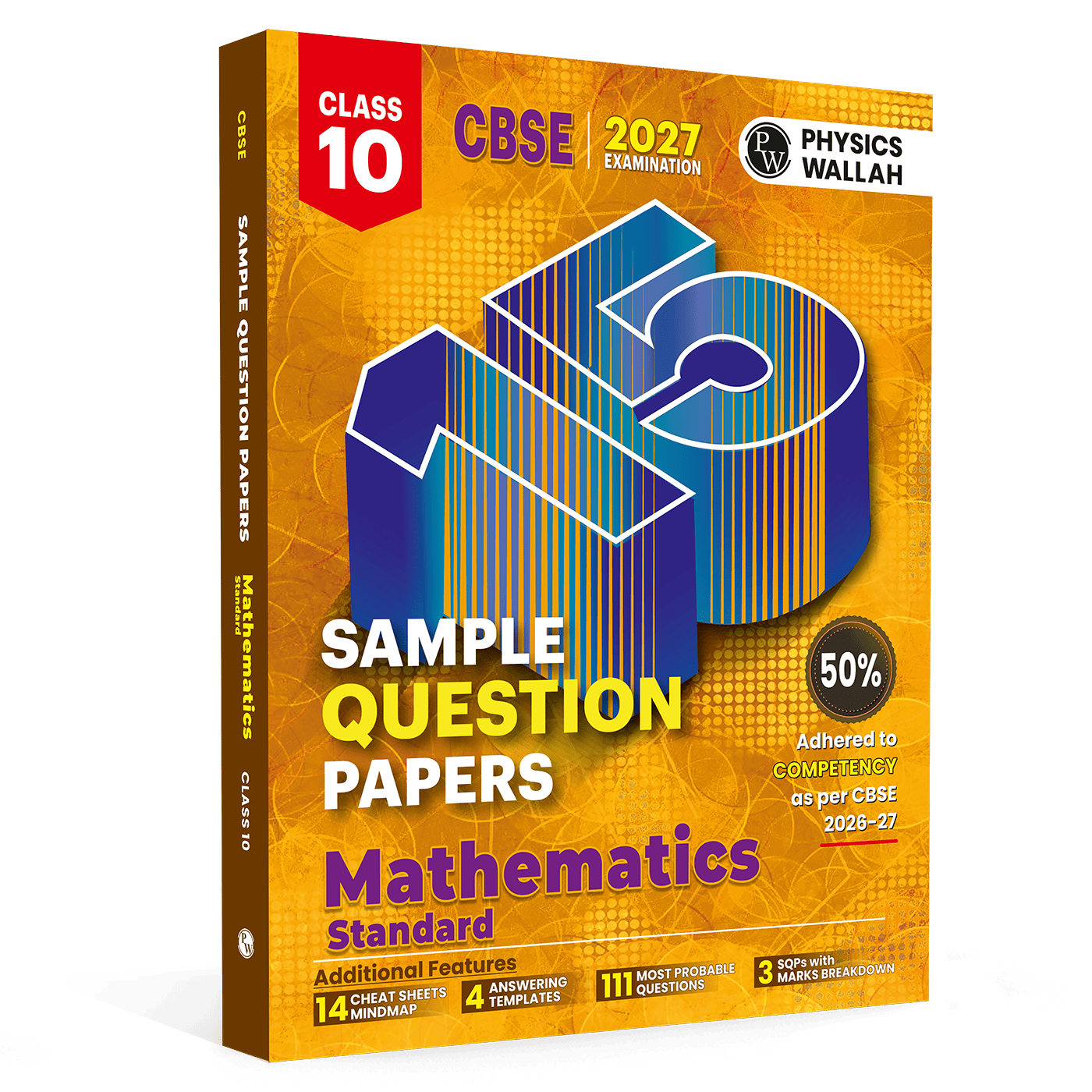
Comprehensive CBSE class 10 Maths standard sample papers contain structured elements designed to strengthen learning and refine test-taking strategies. These components provide systematic support throughout your study sessions.
|
Component |
Description |
|
15 Board-Style Sample Question Papers |
Full-length papers crafted in accordance with the latest board patterns and grading guidelines. |
|
Past 5 Years' Trend Analysis |
Analysis covering solved papers from 2024, 2025, and 2026 to track topic weightage changes. |
|
14 Cheat Sheets & Mind Maps |
Concise visual revision notes summarizing crucial formulas, theorems, and definitions. |
|
111 Most Probable Questions |
High-priority questions selected based on historical evaluation trends. |
|
Level-Wise Papers & Answering Templates |
Practice sets sorted by difficulty with dedicated answering templates and handwritten explanations via QR codes. |
|
Self-Assessment Marking Stickers |
Practical tools to record scores, track overall progress, and pinpoint weak areas. |
|
Mistake 101 & Key Takeaways |
Detailed notes highlighting common student errors and offering practical accuracy strategies. |
Using these structured class 10 sample papers gives you a complete overview of expected question types.
How to Use CBSE Class 10 Maths Standard Sample Papers
Simply solving questions without a plan limits your academic improvement. To gain maximum benefit from every class 10 Maths Standard Sample Paper, follow a disciplined evaluation method.
Step 1: Create Real Examination Conditions
Sit in a quiet space without access to study guides, notes, or calculators. Set a strict timer for three hours to simulate real examination conditions. Managing time pressure early in the first term helps build proper pacing habits.
Step 2: Perform Objective Self-Evaluation
After completing a paper, grade your work using the official marking scheme and step-wise solution guides. Pay close attention to lost marks caused by missing intermediate steps, missing units, or incorrect geometric representations.
Step 3: Analyze and Categorize Mistakes
Record your errors in a dedicated notebook. Divide mistakes into three distinct categories:
-
Conceptual Errors: Fundamental misunderstandings of theorems, principles, or formulas.
-
Calculation Slip-ups: Basic operational mistakes in arithmetic, algebra, or sign placement.
-
Presentation Flaws: Incomplete step-by-step logic, missing final statements, or poor answer structuring.
Study Strategy Plan with CBSE Class 10 Maths Standard Sample Papers
A structured strategy ensures balanced syllabus coverage while leaving adequate time for thorough testing. Incorporating a Maths pre board sample paper class 10 into your schedule improves long-term retention.
-
Phase 1: Quick Formula Revision: Use cheat sheets and mind maps to quickly review essential mathematical formulas and fundamental concepts before attempting questions.
-
Phase 2: Timed Solving Session: Attempt full-length CBSE Maths standard pre board papers under timed conditions to refine section-wise speed.
-
Phase 3: Targeted Weakness Rectification: Focus your mid-week study sessions on resolving specific conceptual errors identified during previous practice runs.
-
Phase 4: Reviewing Question Trends: Compare your solutions against past paper trend analyses from 2024, 2025, and 2026 to stay aligned with evolving evaluation structures.
Tips to Score Better with CBSE Class 10 Maths Standard Sample Papers
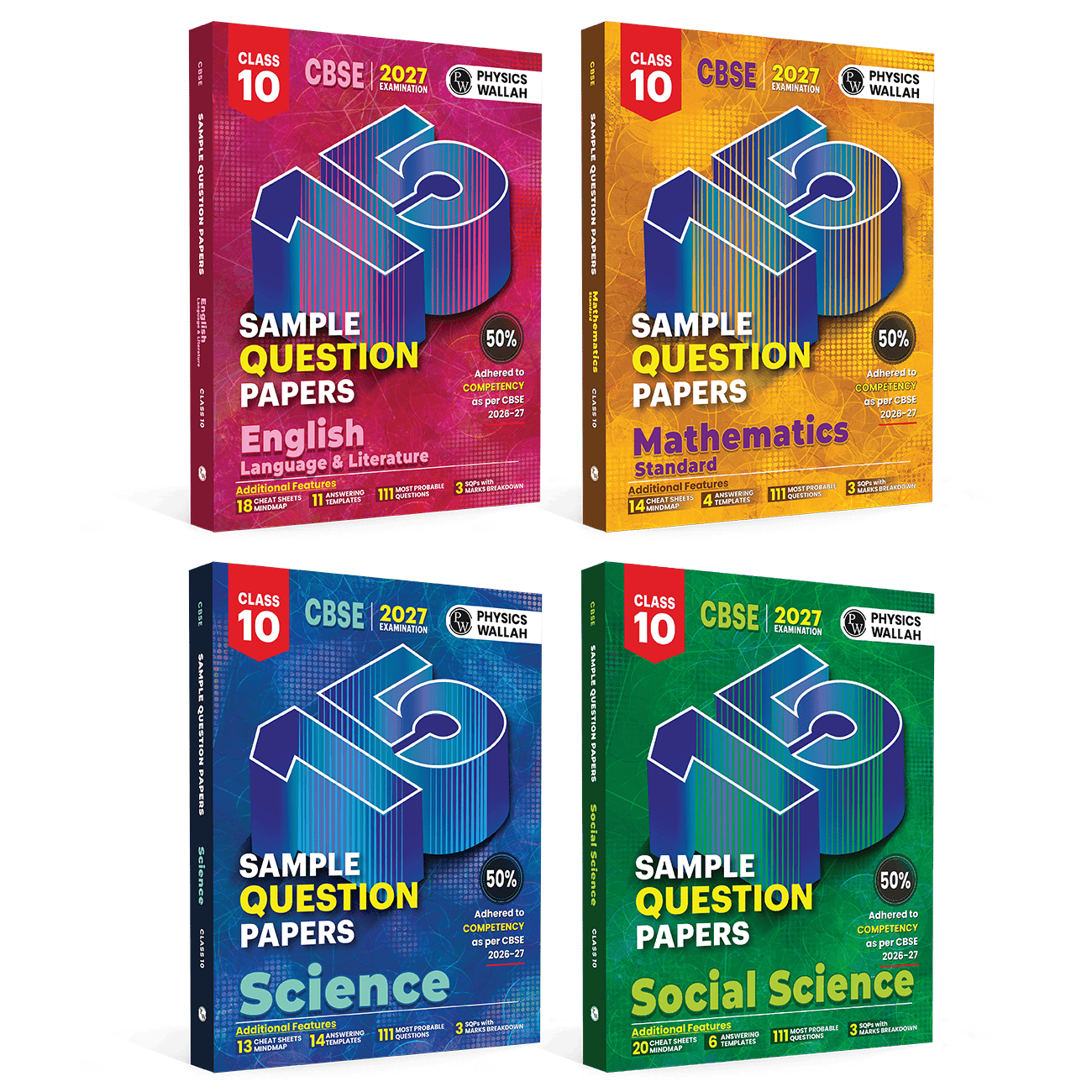
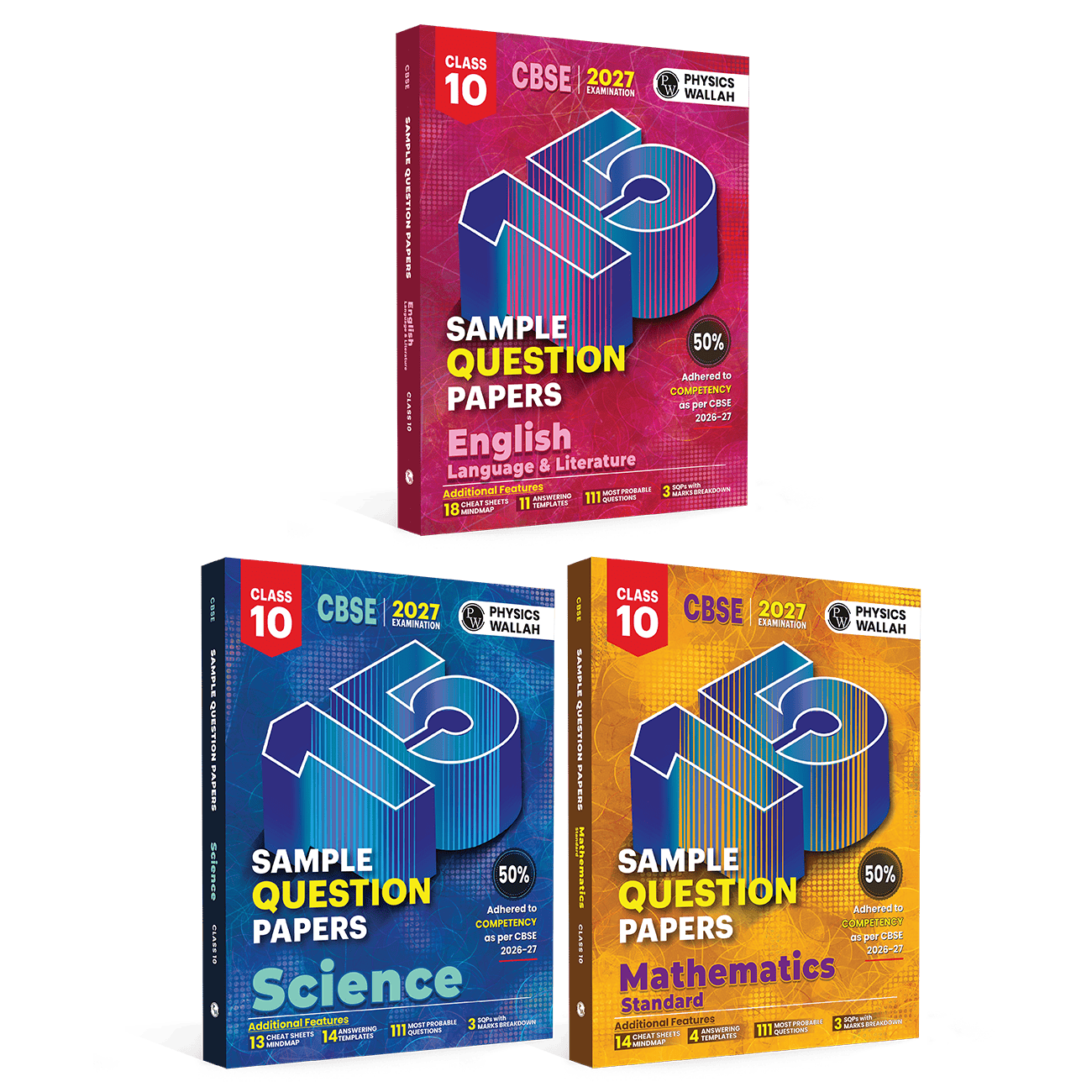
Achieving top marks requires combining strong mathematical competence with clear visual presentation. Practicing with Maths sample papers 2026-27, including the CBSE Class 10 Sample Papers Combo of 4 Books 2027, can help you develop key exam-taking skills, improve accuracy, and build confidence.
-
Master Answer Presentation: Write down explicit steps, state assumed variables clearly, and highlight your final answers within neat boxes.
-
Prioritize High-Weightage Sections: Tackle long-answer questions and case-study scenarios first when your concentration levels are highest.
-
Utilize Answering Templates: Practice structuring complex proofs and multi-step derivations using standard answering templates.
-
Leverage Handwritten Guidance: Access step-by-step video or handwritten explanations through QR code resources to learn effective problem-solving approaches.
-
Monitor Score Progression: Apply tracking stickers after every test to measure score growth and ensure consistent progress throughout the term.
Common Mistakes to Avoid While Solving CBSE Class 10 Maths Standard Sample Papers
Avoiding recurring pitfalls is critical when preparing with CBSE Class 10 Books and CBSE Class 10 Maths standard sample papers. Watch out for these frequent mistakes:
-
Skipping Step-Wise Presentation: Writing direct answers without showing intermediate algebraic transformations can result in substantial step-mark losses.
-
Ignoring Time Limits: Solving practice papers casually without setting a timer fails to build the pacing needed for formal assessments.
-
Neglecting Case-Study Practice: Case-study questions require careful reading and practical application; skipping them limits your ability to tackle real-world problem scenarios.
-
Failing to Review Mistakes: Jumping to a new paper without thoroughly analyzing previous mistakes leads to repeating the same errors.
-
Misreading Question Statements: Skimming over specific constraints (e.g., leaving answers in terms of pi versus using numerical approximations) leads to avoidable point drops.
Practice Sheet for CBSE Class 10 Maths Standard Sample Papers
Below is a diagnostic practice sheet reflecting high-priority question styles. Work through these sample problems to test your readiness.
Section A: Short Conceptual Questions
-
Find the HCF and LCM of 120 and 144 using the prime factorisation method.
-
If one root of the quadratic equation 2x^2 + kx - 6 = 0 is 2, determine the value of k.
-
Determine whether the pair of linear equations 3x + 2y = 5 and 6x + 4y = 10 has a unique solution, infinitely many solutions, or no solution.
Section B: Long Application Questions
-
Prove that the lengths of tangents drawn from an external point to a circle are equal.
-
A tower stands vertically on the ground. From a point on the ground, which is 15 metres away from the foot of the tower, the angle of elevation of the top of the tower is found to be 60 degrees. Calculate the height of the tower.
-
Solve the following system of equations graphically:
-
2x + y = 6
-
2x - y = 2
Indicate the coordinates of the vertices of the triangle formed by these lines and the y-axis.
Read More: Latest CBSE Sample Papers for Class 10 All Subjects
CBSE Class 10 Maths Standard Sample Papers FAQs
1: How many practice papers should I complete before my term assessments?
Completing 10 to 15 full-length papers provides comprehensive exposure to diverse question styles, improves time management, and builds exam confidence.
2: Are cheat sheets effective for quick pre-exam revision?
Yes, cheat sheets and mind maps compress critical formulas, geometric theorems, and key steps into visual summaries, making them ideal for rapid review.
3: How does step-wise evaluation impact overall scoring?
CBSE marking schemes assign specific points to individual steps. Showing clear intermediate calculations ensures you earn partial credit even if a final calculation error occurs.
4: What is the best way to handle difficult case-study questions?
Read the provided context carefully, break down the scenario into basic mathematical statements, and solve each sub-question sequentially using relevant formulas.
5: Why should I review past years' paper trend analyses?
Analyzing past paper trends highlights high-frequency topics, evolving question patterns, and weightage distribution, helping you prioritize your revision effectively.