CBSE Half Yearly Sample Paper Class 10 2026
Preparing for the mid-term assessment requires a structured revision strategy, as marks directly influence overall academic performance. Practising with a reliable CBSE Class 10 half yearly sample paper helps students understand mid-term exam patterns, improve time management, and fix conceptual gaps before the final assessments.
Why Use CBSE Class 10 Half Yearly Sample Paper for 2026?
Practicing a sample paper makes the pupils get a real life replica of the mid-term test atmosphere. The mid-term exams encompass around 50% of the annual course so it is important to train in a targeted manner and keep track of the topic-wise preparedness.
-
Knowledge about the Format of the Exam: While practicing a structured example paper, students get introduced to a variety of question types such Multiple Choice Questions (MCQs), Assertion-Reason, Short Answer, and Long Answer questions.
-
Enhanced Time Management: timed attempts using a CBSE half yearly paper class 10 teach students how to allocate appropriate minutes to high-weightage sections, avoiding last-minute rush.
-
Targeted Weakness Identification: Reviewing solutions after attempting a class 10 half yearly question paper highlights specific conceptual errors in calculation, theory, or diagram labelling.
-
Boosting Confidence: Solving structured practice tests builds exam stamina and reduces test anxiety during the actual half yearly exam class 10.
CBSE Class 10 Half Yearly Sample Paper Features
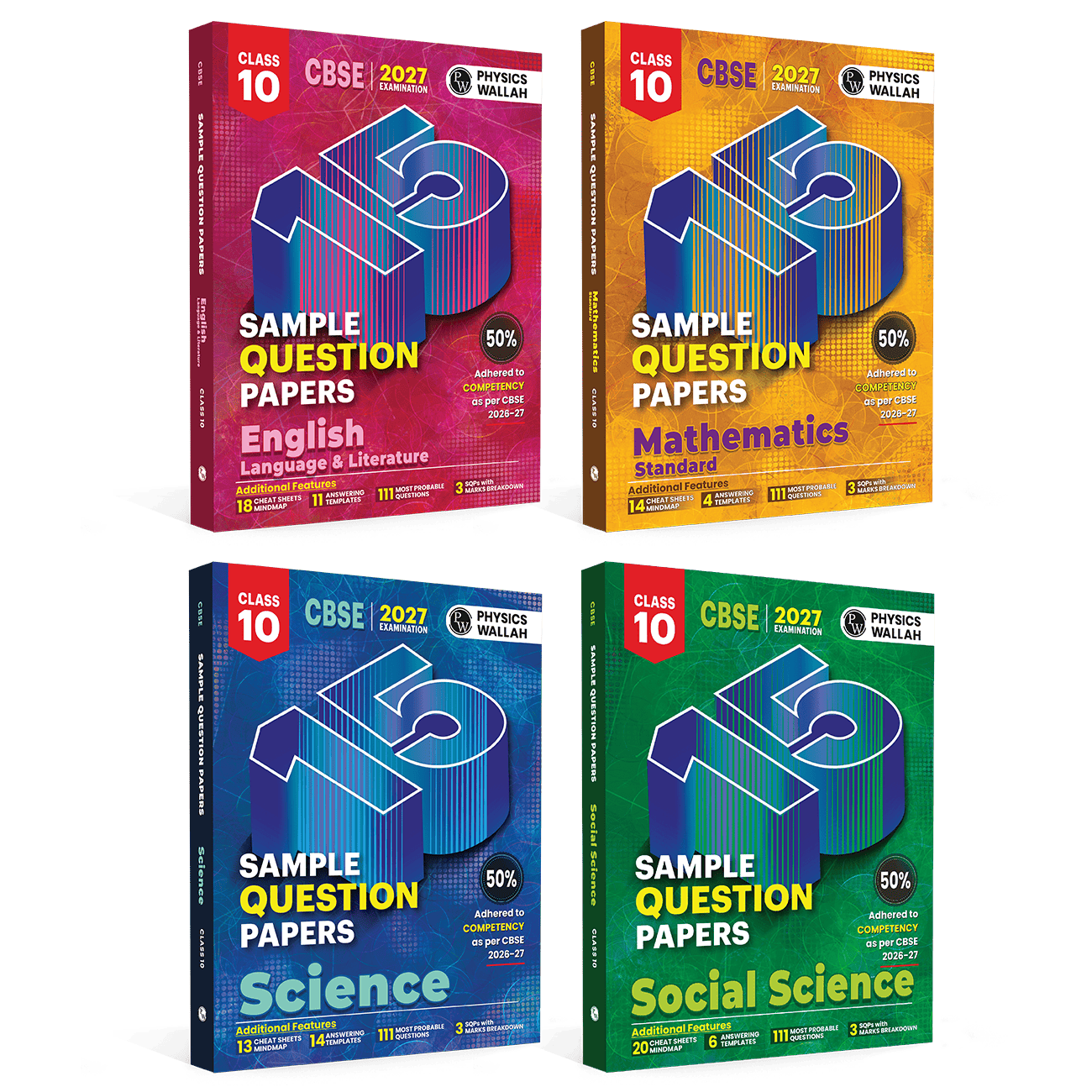
The sample paper provides specialized resources tailored to match current Central Board of Secondary Education guidelines. Utilizing CBSE Class 10 half yearly papers ensures alignment with expected question distributions and competency levels.
|
Resource Feature |
Detail & Pedagogical Value |
|
Syllabus Coverage |
Strictly follows updated board guidelines for Science, Maths (Standard), English, and Social Science. |
|
Progressive Difficulty |
Divided into Easy, Medium, and Hard sets for gradual skill improvement. |
|
Question Typologies |
Contains 50% Competency-Based Questions, case studies, and assertion-reason types. |
|
Explanatory Tools |
Includes 13 Cheat Sheets (Mind Maps) and 14 Answering Templates for step-marking gains. |
|
Topper-Style Solutions |
QR code access to handwritten step-by-step solutions for self-evaluation. |
Subject-Wise Breakup for CBSE Class 10 Half Yearly Sample Paper
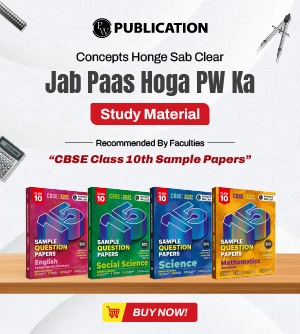
Each subject requires a customized strategy when attempting a class 10 half yearly practice paper. Below is the core focus breakdown across key subjects for the half yearly CBSE Class 10 sample paper combo set of 4 books for 2027 exams.
Mathematics (Standard & Basic)
-
High-Weightage Chapters: Real Numbers, Polynomials, Pair of Linear Equations in Two Variables, Quadratic Equations, Arithmetic Progressions, and Triangles.
-
Core Skills Tested: Formula application, algebraic simplifications, geometric proofs, and real-world word problems.
-
Practice Approach: Work out each step clearly using standardized answering templates to secure step-marking.
Science (Physics, Chemistry, Biology)
-
High-Weightage Chapters: Chemical Reactions and Equations, Acids Bases and Salts, Life Processes, Control and Coordination, Light – Reflection and Refraction.
-
Core Skills Tested: Chemical equation balancing, ray diagram drawing, numerical problem solving, and biological process explanations.
-
Practice Approach: Focus on properly labelled diagrams and structured step-wise numerical derivations.
Social Science (History, Geography, Political Science, Economics)
-
High-Weightage Chapters: Rise of Nationalism in Europe, Resources and Development, Power Sharing, Federalism, Development.
-
Core Skills Tested: Event sequencing, map pointing, case study analysis, and cause-and-effect reasoning.
-
Practice Approach: Frame answers using bullet points with bold sub-headings to maximize clarity and presentation marks.
English Language & Literature
-
High-Weightage Sections: Reading Skills (Discursive & Case-based Passages), Writing Skills (Formal Letters & Analytical Paragraphs), Grammar, and First Flight/Footprints without Feet Literature chapters.
-
Core Skills Tested: Comprehension extraction, grammatical precision, format adherence, and character analysis.
-
Practice Approach: Understand analytical paragraph formats and letter templates to save time during writing sections.
Preparation Plan Using CBSE Class 10 Half Yearly Sample Paper
Executing a plan ensures maximum scoring potential during mid-term assessments.
-
Complete Core Syllabus: Finish reading textbook chapters thoroughly before attempting complete papers.
-
Revise with Mind Maps: Use cheat sheets to quickly recap formulas, key dates, and scientific definitions.
-
Simulate Exam Conditions: Sit in a quiet room, set a 3-hour timer, and attempt the test without checking solutions.
-
Self-Assess with Marking Schemes: Use provided solutions to evaluate your paper strictly against CBSE marking schemes.
-
Analyze Errors with Mistake 101: Review frequent calculation or conceptual mistakes and re-attempt missed questions.
CBSE Class 10 Half Yearly Sample Paper for Self Assessment
A sample paper becomes more useful when students analyse their performance after every attempt. Using CBSE Class 10 Books alongside sample papers can help strengthen concepts and address weak areas. Instead of focusing only on the final score, review where marks were lost and how much time was spent on each section.
-
Check Question-Wise Accuracy: Identify questions where the concept was understood but the answer was incomplete or incorrectly presented.
-
Analyse Time Usage: Note which sections took longer than expected and adjust your approach for the next paper.
-
Maintain an Error Log: Record repeated mistakes in calculations, formulas, grammar, diagrams, or factual answers.
-
Reattempt Incorrect Questions: Solve questions you got wrong after reviewing the relevant chapter. This helps confirm whether the concept has been understood.
-
Compare Weekly Scores: Keep a record of your marks across different half yearly question paper attempts to track improvement.
This approach turns every practice test into a learning opportunity. Students can gradually improve accuracy while becoming more comfortable with the pressure of completing a paper within the allotted time.
Time Management Tips Using CBSE Class 10 Half Yearly Sample Paper
Time management is an important part of performing well in the half-yearly examination. Practising with a sample paper allows students to experiment with different answering strategies before the actual test.
First, divide your available writing time amongst the several sections, according to their marks and complexity. Don't spend too many minutes on one hard question when there are easier questions left. If a question takes a long time, mark it and move on. You may always come back to it in the final assessment.
Students should also use the initial reading time carefully. Read questions completely, identify internal choices, and mentally prioritise questions that can be answered confidently. During practice, note how much time is spent on reading, writing, calculations, and checking.
A good routine is:
-
Read and plan: Understand paper and find simpler questions.
-
Ask confident queries such as: “Well, that’s a good thing, isn’t it,” he said.
-
Long questions management: Provide adequate time for case studies and extensive answers.
-
Review answers: Reserve the final minutes for calculations, diagrams, question numbers, and unanswered parts.
Repeated practice with this approach can make students more comfortable with the pace required in a half yearly exam class 10.
Read More: CBSE Class 10 Sample Papers 2026-27: Subject-Wise PDF & Solutions
CBSE Class 10 Sample Paper FAQs
How many subjects are covered in the CBSE Class 10 Sample Paper Combo?
The set covers four core subjects: Mathematics (Standard), Science, Social Science, and English Language & Literature.
Does the CBSE sample paper include solutions?
Yes, papers include detailed step-by-step solutions along with marking schemes and QR-accessible handwritten topper solutions.
Are competency-based questions included in the class 10 half yearly question paper?
Yes, practice sets incorporate competency-based MCQs, assertion-reason, and case-based questions aligned with recent guidelines.
How do mind maps in the sample paper books assist in half yearly preparation?
Mind maps present key concepts, formulas, and diagrams on a single page, enabling rapid revision before attempting practice papers.
When should students start practicing with the sample paper sets?
Students should start solving practice papers at least 3 to 4 weeks before the mid-term examinations begin to allow adequate time for error analysis and revision.