NCERT Book vs Sample Papers Book - Understanding Their Purpose
Many board exam applicants find it difficult to balance between reading fundamental textbooks and mock practice. You might be wondering if finishing your core textbook is enough or if you should pick up supplementary practice exams for the best scores. Once you understand the role of an NCERT book vs CBSE Class 10 Sample papers, this uncertainty gets cleared. You can arrange your study schedule better and develop your confidence for the exams.
NCERT Book vs Sample Papers Book for Class 10 Preparation
The primary distinction is in their academic goal. A core textbook increases your understanding one chapter at a time. A series of practice tests determine how well you can apply your information in a strict board exam setting.
|
Parameter |
Core NCERT Textbook |
Sample Papers Book |
|
Primary Objective |
Conceptual clarity and syllabus coverage |
Exam simulation, speed, and accuracy |
|
Content Structure |
Theory, diagrams, in-text questions, exercises |
Full-length mock test papers with step-wise solutions |
|
Question Focus |
Basic to moderate conceptual questions |
Board-pattern questions (MCQs, Case-Based, Assertion-Reason) |
|
Usage Phase |
Beginning and middle of the academic year |
Final 2 to 3 months before board exams |
|
Target Skill |
Subject understanding and memory building |
Time management and exam strategy |
Importance of Class 10 NCERT Book in Preparation
The NCERT book forms the absolute foundation of CBSE class 10 preparation. Central Board of Secondary Education question papers are framed directly from the concepts, formulas, and definitions explained within these official textbooks.
The importance of NCERT Class 10 books cannot be overstated for board exam success:
-
Direct Exam Alignment: Most short-answer and long-answer questions trace back to textbook exercises and examples.
-
Clear Conceptual Explanations: Complex scientific processes and mathematical theorems are simplified into structured, readable chapters.
-
Standard Definitions: Answers marked during board evaluation follow the exact terminology and definitions used in NCERT text.
Importance of Class 10 Sample Paper Book for Board Exams
While textbooks build subject knowledge, a sample paper book translates that knowledge into actual exam performance. Practicing with dedicated mock tests provides direct exposure to the actual question paper format, marking scheme, and time constraints.
Essential Features of Practice Test Books
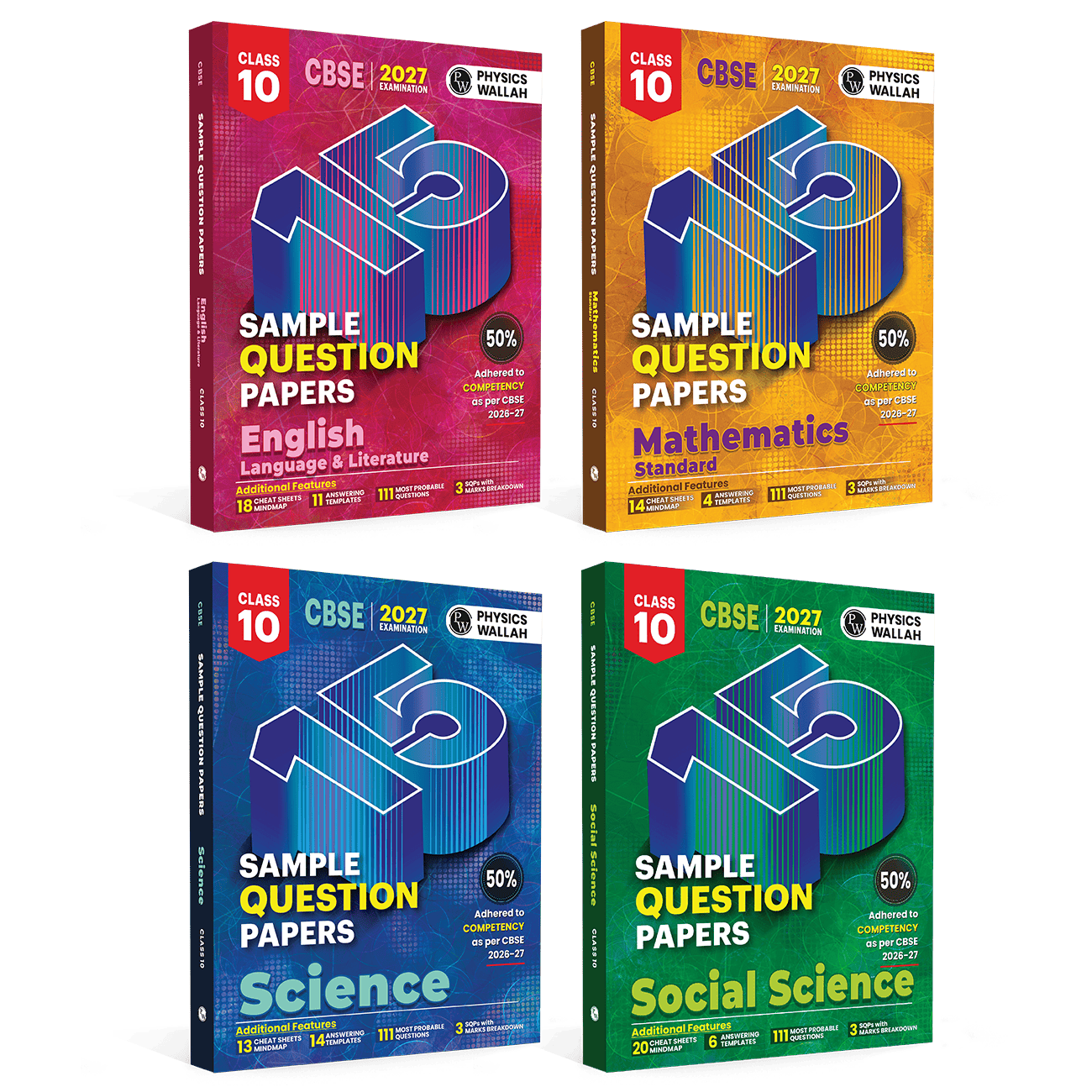
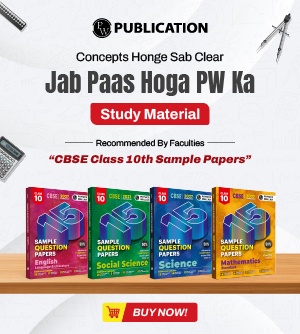
Quality practice resources, such as the CBSE Class 10 Sample Papers Combo Set of 4 Books (Science, Maths, Social Science, English), offer specialized features for exam readiness:
-
15 Board-Style Level-Wise Sample Papers: Papers categorized into easy, medium, and hard levels for structured practice progression.
-
Real Feel Test Paper Booklets: Separate answer booklets that replicate actual board answer sheets for real-time practice.
-
Past 5 Years' Trend Analysis: Insights into high-frequency topics and question patterns from previous board exams.
-
Cheat Sheets and Mind Maps: Visual summaries that allow quick revision of key formulas and concepts before solving papers.
-
Answering Templates and Step-Wise Solutions: Clear mark distribution tables that show how to secure full marks for every section.
Which Should You Use NCERT Book vs Sample Papers Book
A balanced study plan uses both NCERT and sample papers in a coordinated sequence rather than viewing them as alternatives. Comparing an NCERT book vs sample papers book highlights how they complement each other throughout the academic year.
1. Conceptual Foundation vs Application Practice
Reading your NCERT book ensures you understand core concepts, definitions, and derivations. However, simply reading text does not prepare you for complex, case-based, or assertion-reasoning questions. Solving a sample paper book forces you to apply these concepts to practical problems.
2. Chapter-Wise Learning vs Full-Syllabus Testing
Textbooks organize learning chapter by chapter, which can lead to compartmentalized thinking. In contrast, mock test papers combine questions from the entire syllabus into a single 3-hour exam. This trains your brain to switch quickly between different topics, such as moving from algebra to geometry or from chemistry to physics.
How to Use Both NCERT Book and Sample Paper Book
Combining NCERT vs sample papers effectively requires a phased study approach. Using practice tests too early can cause frustration, while starting them too late leaves insufficient time to fix weak areas.
Step 1: Syllabus Completion Phase (Months 1 to 7)
-
Focus primary energy on the Class 10 NCERT book for each subject.
-
Read every chapter thoroughly and solve all in-text and exercise problems.
-
Note down important formulas, definitions, and key historical dates.
Step 2: Revision and Testing Phase (Months 8 to 10)
-
Shift to solving full-length test sets from your Class 10 sample paper book.
-
Sit in a quiet room and set a 3-hour timer to mimic actual exam conditions.
-
Evaluate your performance using step-wise marking schemes to identify concept gaps.
-
Re-read specific chapters in your NCERT book vs sample papers book practice when you identify recurring errors.
Also Check - CBSE Class 10 PYQs Book
How Hindi Sample Papers Help with Class 10 Preparation
Practising a Hindi sample paper class 10 allows the students to get to know the way language abilities are being tested in the board examination. The example papers offer a chance to practice the abilities learned through NCERT textbooks, which help in getting acquainted with prose, poetry, grammar and writing genres, under timed settings.
Students can use Hindi sample papers to practise different sections of the paper, including unseen passages, grammar-based questions, writing tasks, and literature-based questions. Regular practice also helps students identify which sections consume more time and which areas require additional preparation.
-
Improves Reading Speed: Regular unseen passage practice helps students locate important information quickly.
-
Strengthens Writing Skills: Writing letters, analytical paragraphs, and other responses repeatedly improves structure and presentation.
-
Builds Grammar Accuracy: Practice questions help students identify recurring grammar mistakes.
-
Improves Literature Preparation: Questions based on poems and prose help students understand how literary concepts are tested.
-
Improves Literature Preparation: Questions based on poems and prose help students understand how literary concepts are tested.
-
Develops Time Management: Solving complete papers within the given time makes students more comfortable with the actual examination setting.
How to Use Hindi Sample Papers Alongside NCERT
A hindi sample paper class 10 together with NCERT can help achieve a balanced preparing regimen. Before students attempt full-length example papers, they should first master the chapters and prescribed concepts using their textbook.
Begin by reading the NCERT chapters and taking short notes on major themes, characters, literary devices and writing formats. Complete a few chapters and try subject wise questions to check your understanding. Once you have completed most of the material, start solving full length example papers.
When you grade your answers, don’t just look at the ultimate score. Check for spelling mistakes . Check for incomplete responses . Check for wrong formats . Check for questions you misinterpreted the requirement . Keep a little notepad of mistakes and review them before each new practice paper.
A simple routine can include:
-
Read NCERT chapters and understand the concepts thoroughly.
-
Practise chapter-based questions after completing each section.
-
Attempt a hindi sample paper class 10 under timed conditions.
-
Check answers using the marking scheme and identify lost marks.
-
Return to NCERT for concepts or chapters where mistakes are repeated.
-
Attempt another paper after correcting the identified weaknesses.
This combination ensures that students do not treat NCERT and sample papers as competing resources. Instead, the textbook builds the foundation while sample papers provide the practice needed to apply that knowledge effectively in the board examination.
Read More: Class 10 Science Mnemonics PDF
Class 10 Sample Papers Book FAQs
1. Can I score 90% or above in board exams by studying only the NCERT book?
Studying the core textbook thoroughly builds strong conceptual clarity. However, practicing with sample papers is essential to learn time management, understand the latest marking scheme, and handle assertion-reasoning or case-based questions effectively.
2. When is the right time to switch from NCERT books to sample papers?
You should begin solving full-length sample paper books after completing at least 80% to 90% of your board syllabus. This usually happens 2 to 3 months before the official board examinations start.
3. Are questions in board exams taken directly from NCERT textbooks?
Yes, many questions are directly based on textbook concepts, examples, and exercises. However, board exams also include modified, competency-based questions that test your ability to apply those concepts.
4. How many sample papers should I solve for each subject?
Solving 10 to 15 full-length sample papers per subject under timed conditions gives adequate exposure to different difficulty levels, boosts speed, and improves answer-writing accuracy.
5. Should I stop reading NCERT books once I start solving sample papers?
No, you should use both resources together. When you make mistakes in sample papers, return to the relevant chapter in your textbook to review the core concepts before attempting the next mock test.