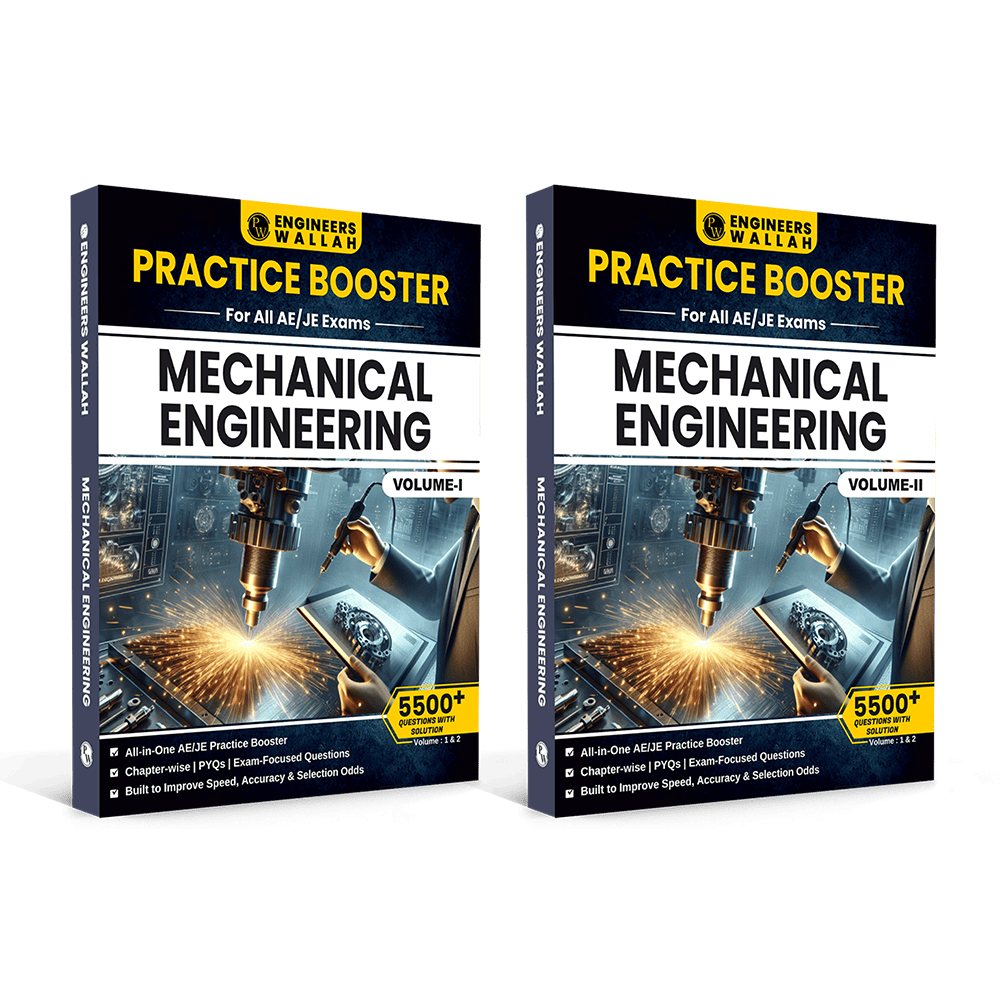
How to Prepare for AE JE Mechanical Engineering Exam
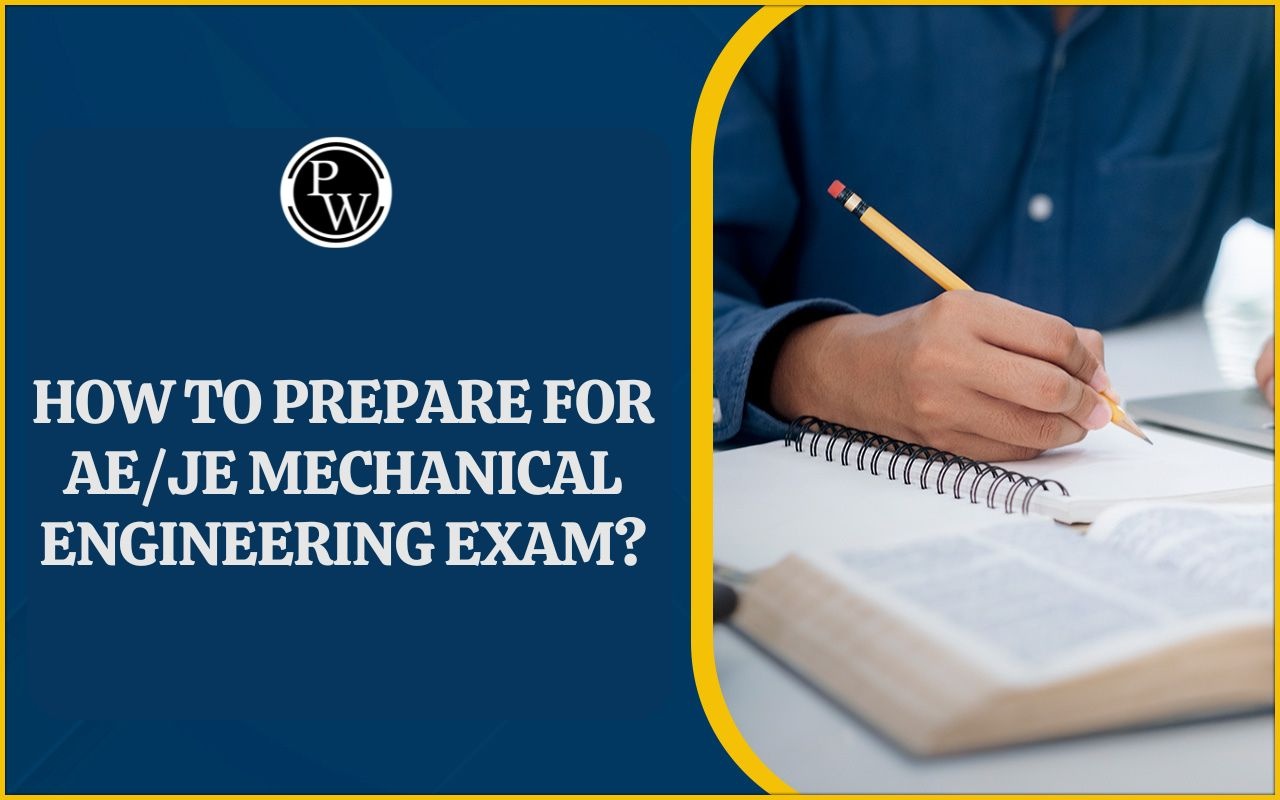
The transition from understanding the laws of thermodynamics to solving a complex numerical problem under a one-minute timer is a significant hurdle. The primary challenge isn’t just absorbing information; it is the strategic application of knowledge.
To bridge this gap, a structured approach is essential. A reliable AE JE mechanical engineering PYQ book allows you to decode the exam’s DNA, helping you understand the specific language and weightage used by various recruitment boards.
Importance of AE JE Mechanical Engineering PYQ Book
Understanding the exam pattern is the vital first step toward your selection. A dedicated PYQ book acts as a GPS for your preparation, showing you exactly where to put in the most effort.
-
Identifies Trends: It reveals which topics, such as Strength of Materials or IC Engines, have consistently appeared over the last decade.
-
Time Management: Practising with an AE JE ME PYQ set helps you gauge the time required for theoretical vs numerical questions.
-
Concept Clarity: Top-tier resources provide step-by-step solutions that explain the underlying logic, ensuring you don't just memorise answers.
-
Level Differentiation: It helps you distinguish between the straightforward nature of Junior Engineer (JE) tasks and the analytical depth required for Assistant Engineer (AE) roles.
Features of AE JE Mechanical Engineering PYQ Book
Drawing inspiration from quality educational materials, your study resources should offer more than just a list of questions. Based on successful pedagogical models, a great AE JE PYQ mechanical engineering guide should include:
-
Detailed Explanations: Look for "Concept-plus-Solution" formats that explain why other options are incorrect.
-
Trend Analysis: A table at the start of each chapter showing how many questions were asked from that topic in 2022, 2023, 2024, and 2025.
-
Error-Free Keys: Verified answer keys are crucial for avoiding the learning of incorrect information.
-
Chapter-wise Segregation: Avoid "mixed" papers until the final month of preparation; focus on topic-wise sets first.
How to Use an AE JE Mechanical Engineering PYQ Book
Simply buying the good AE JE books on the market won't guarantee a rank. You must integrate it into your daily routine with a tactical mindset.
The "Chapter-Then-Paper" Rule
The most effective way to study is to complete a specific chapter in your standard textbook and then immediately switch to the PYQ book. For instance, after studying "Properties of Pure Substances," solve every related question from the past 10 years. This reinforces the theory while it is fresh in your mind.
Tiered Difficulty Scaling
Start your practice by solving Junior Engineer-level questions to build your foundation and confidence. Once you are scoring well, move to the more complex Assistant Engineer level problems. This gradual increase in difficulty prevents burnout and ensures your basics are rock-solid before you tackle high-level calculus-based engineering questions.
Study Plan for AE JE Mechanical Engineering PYQ Book
Success in competitive exams is 40% knowledge and 60% strategy. Your daily schedule should reflect a balance between learning and testing.
|
Time Slot |
Activity |
Focus Area |
|
Morning (8 AM - 11 AM) |
Hard Core Theory |
SOM, Theory of Machines, Fluid Mechanics |
|
Afternoon (2 PM - 5 PM) |
Active Practice |
Solving AE JE ME previous year paper |
|
Evening (6 PM - 8 PM) |
Non-Technical |
Reasoning, General Awareness, English |
|
Night (9 PM - 10 PM) |
Error Analysis |
Reviewing wrong answers from the PYQ book |
-
Daily Goals: Aim to solve at least 50-100 questions every single day without fail.
-
Weekly Revision: Use Sundays to revisit the "starred" or difficult questions you encountered during your AE JE PYQ sessions.
-
Formula Journal: Maintain a sleek notebook specifically for "frequently asked formulas" and constants (like the gas constant or kinematic viscosity values) found in previous papers.
Benefits of Solving AE JE Mechanical Engineering PYQ Book
Solving an AE JE ME previous-year paper serves as a diagnostic scan of your brain. It highlights exactly where your "data packets" are missing or corrupted.
-
Accuracy Improvement: You start noticing common traps, such as units being given in mm instead of meters, which reduces "silly mistakes."
-
Familiarity: You become comfortable with the formal technical terminology used by exam boards like SSC, RRB, or State PSCs.
-
Pattern Recognition: You will begin to notice that certain numerical patterns in "Centrifugal Pumps" or "Governor Mechanisms" repeat almost every two years with different values.
Mistakes to Avoid in AE JE Mechanical Engineering PYQ Book
Many students fall into the "Reading Trap"—they read the question and immediately look at the solution. This creates a false sense of competence.
-
Avoid Instant Gratification: Give yourself at least two minutes to struggle with a numerical. The "struggle" is where the actual brain wiring happens.
-
Don't Ignore Non-Tech: In exams like SSC JE or State AE, the non-technical portion can account for up to 50% of the marks. Ensure your AE JE mechanical engineering PYQ book or supplementary material covers these sections.
-
Overlooking Diagrams: Mechanical engineering is visual. Many aspirants skip questions involving Free Body Diagrams or P-V charts because they look "hard," but these are often the highest-scoring areas.
For more structured preparation and broader subject coverage, students can also combine PYQ practice with GATE Combos Books to strengthen concepts, improve revision quality, and build a more complete exam strategy across technical subjects.
Tips for Solving AE JE Mechanical Engineering PYQ Book
To stay ahead of the thousands of other applicants, you need to be faster and more precise.
-
Simulate Exam Conditions: Sit in a quiet room, set a timer for 120 minutes, and solve a full AE JE previous year paper. No water breaks, no phone.
-
Focus on Speed: In JE exams, you often have less than 45 seconds per question. Learn to skip lengthy calculations that aren't worth the time and focus on the theory-based technical questions first.
-
Stay Updated: Ensure your PYQ includes the most recent 2025 and 2026 papers, as the question style often shifts slightly every few years toward more application-based problems.
Read More: Quantitative Aptitude - Topics, Questions and Answers
AE JE Mechanical Engineering PYQ Book FAQs
1. Why is an AE JE mechanical engineering PYQ book important?
It acts as a primary tool to understand the exam's difficulty level, identifies high-yield topics, and help students master time management through real-world exam scenarios.
2. How many years of AE JE PYQ should I solve?
For a comprehensive understanding, you should aim to solve at least the last 10 to 15 years of questions. This helps you track how the syllabus emphasis has shifted over time.
3. Is solving an AE JE me previous year paper enough for selection?
While it is a cornerstone of preparation, it must be paired with building strong conceptual foundations and regular mock tests to ensure you can handle new, unseen questions.
4. Can I find chapter-wise questions in an AE JE me PYQ book?
Yes, professional-grade books include chapter-by-chapter questions to allow for focused, systematic revision after completing each unit.
5. How does practising AE JE PYQ mechanical engineering improve speed?
By repeatedly exposing you to common formulas and question structures, you spend less time "interpreting" the question and more time "executing" the solution.