Why Competency-Based Questions Matter in Class 10 Maths?
Many students feel confident with basic formulas, yet struggle when an assessment tests application over memory. Understanding Class 10 Maths competency questions becomes essential at this stage because mid-term tests now mirror updated board exam patterns.
These questions bridge the gap between Classroom theory and practical problem-solving. By mastering Class 10 Maths competency questions, you build genuine analytical confidence, ensure higher retention across complex topics, and tackle unfamiliar board-style problems without exam stress.
What Are Class 10 Maths Competency Questions?
Class 10 Maths competency questions are application-focused evaluation problems engineered to test your core conceptual clarity, critical thinking, and real-world problem-solving abilities rather than your ability to memorize proofs.
Aligned directly with the latest NEP 2020 guidelines, these questions move away from asking for simple mathematical definitions. Instead, they present relatable scenarios, quantitative datasets, or practical situations, requiring you to determine which mathematical concept best applies to resolve the challenge.
Adopting a competency-based learning framework ensures that learning focuses on deep functional mastery rather than surface-level memorisation. In chapters such as Polynomials, Coordinate Geometry, or Surface Areas and Volumes, these problems present situations like calculating optimal storage dimensions, predicting statistical trends, or analyzing path curves.
Why Are Class 10 Maths Competency Questions Important?
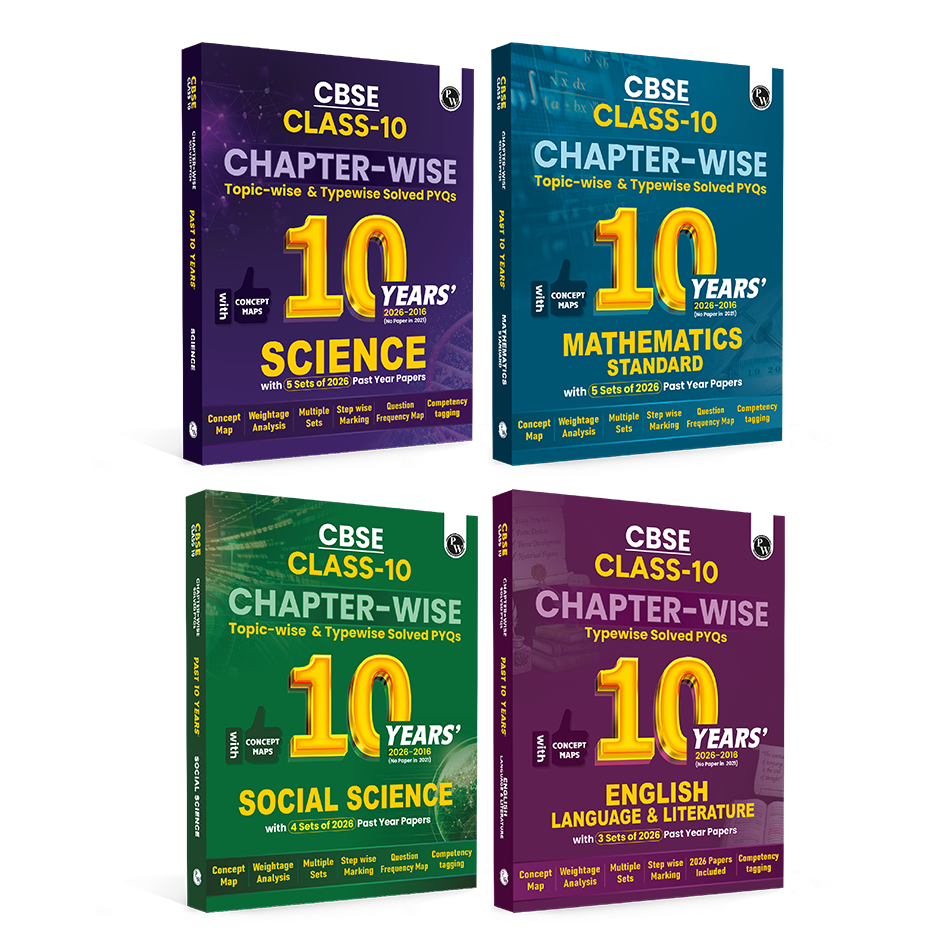
Mid-term assessments serve as a vital reality check regarding updated examination standards. With the increasing focus on CBSE competency-based questions, students need to strengthen their conceptual understanding and application skills. Using CBSE Class 10 Books alongside regular practice can help students revise important concepts, practise different question types, and prepare more effectively for both mid-term and board examinations.
1. Eliminates Dependence on Rote Learning
Memorising solution steps works poorly when exam questions alter contextual settings. Practicing application problems forces you to explore why formulas work, ensuring that your knowledge remains intact even when questions appear in unfamiliar layouts.
2. Directly Prepares You for Board Exam Trends
Board exam papers no longer consist purely of direct textbook questions. By spending time on application problems during mid-term preparation, you adapt early to modern question patterns, preventing surprise or stress during final examinations.
3. Fosters Higher-Level Problem-Solving Skills
Solving real-world scenarios develops logical reasoning skills that extend beyond school examinations. Learning to analyze complex information, identify core variables, and systematically apply logic prepares you for advanced entrance tests and future academic pursuits.
How Do Class 10 Maths Competency Questions Test Real Understanding?
Standard textbook exercises usually present clean numerical inputs alongside explicit instructions regarding which operations to perform. Conversely, Class 10 Maths competency questions present narrative word scenarios or real-life situations where you must identify what is being asked before attempting any calculations.
|
Feature |
Traditional Textbook Questions |
Competency-Based Questions |
|
Primary Focus |
Formula memory and basic execution |
Concept application & critical thinking |
|
Problem Format |
Direct numerical inputs and steps |
Narrative scenarios and case studies |
|
Solution Path |
Fixed, repetitive procedural steps |
Multi-step analysis & decision making |
|
Learning Goal |
Short-term computational speed |
Long-term analytical mastery |
Types of Class 10 Maths Competency Questions You Should Practise
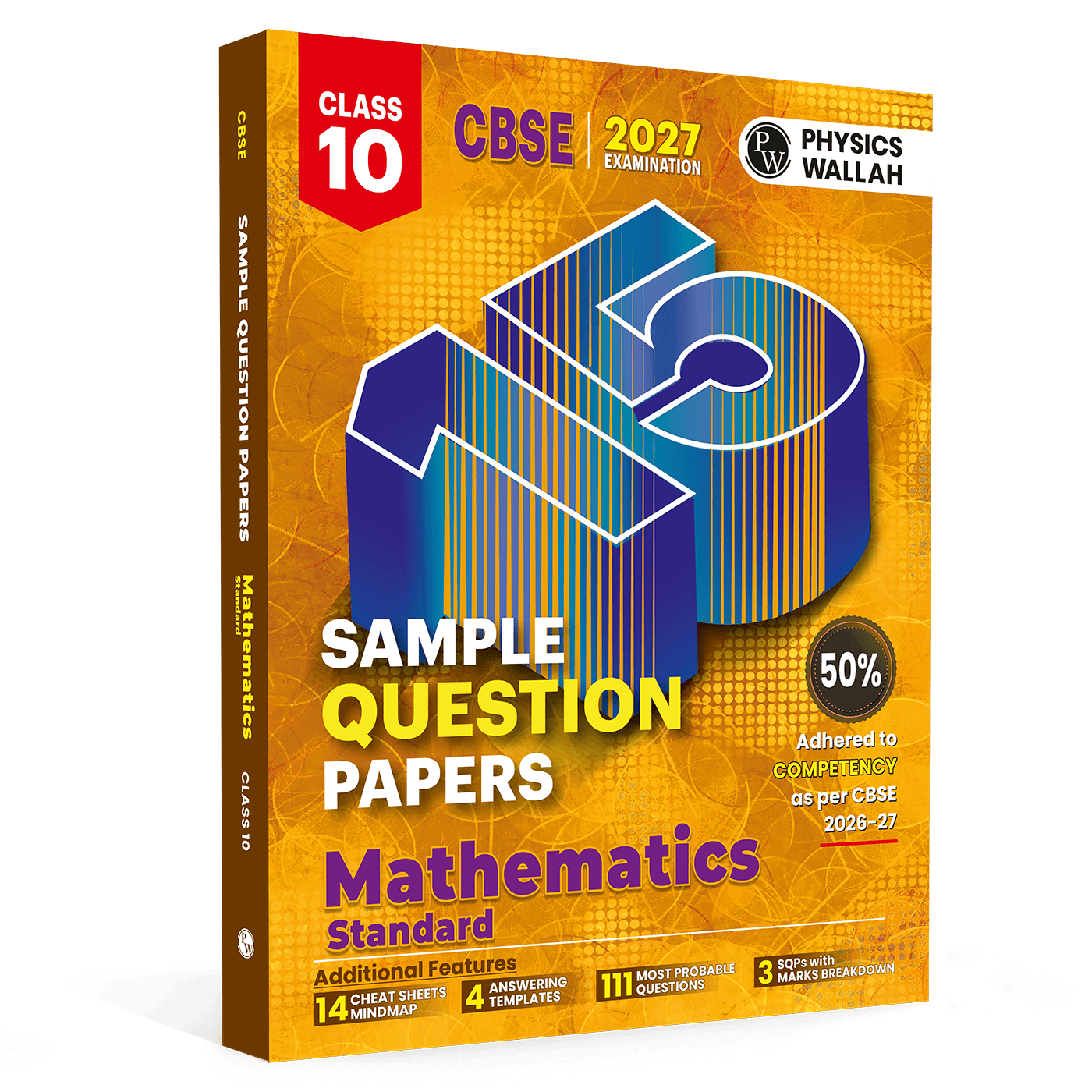
Achieving total readiness for mid-term tests requires consistent practice across all application formats. Practising CBSE Class 10 Sample Papers helps students become familiar with different question structures, understand the exam pattern, manage time effectively, and maintain speed and composure during timed exams. Regular sample paper practice also helps identify weak areas and improve overall exam readiness..
-
Multiple Choice Questions (MCQs)
Application-based MCQs do not merely test basic recall. They often present a mini-scenario or visual model where distractors represent common conceptual missteps. Solving them efficiently requires fast logical evaluation and sound conceptual clarity.
-
Assertion and Reason Questions
These questions present two statements: an Assertion (A) and a Reason (R). Your task is to verify whether both statements are factually correct and determine if the Reason accurately explains the Assertion. This format tests your ability to connect mathematical definitions directly with underlying logical proofs.
-
Case-Based Questions
Case-study questions provide a detailed background narrative—such as an architectural plan, a business scenario, or a sports stat sheet—followed by 4 to 5 sub-questions. You must read the passage carefully, extract necessary numerical data, and apply relevant mathematical concepts to answer each part accurately.
-
Subjective Application Problems
Subjective competency problems require multi-step analytical reasoning and comprehensive solution formatting. Marks are awarded not just for the final answer, but for setting up accurate equations, stating applicable theorems, and presenting clear intermediate steps.
Practice Plan for Class 10 Maths Competency Questions
Balancing daily Classroom learning with targeted revision requires a practical study schedule. Utilizing a specialized Class 10 competency book alongside regular NCERT revision helps structure your preparation systematically.
|
Schedule |
Focus Area |
Key Action Items |
|
Days 1–2 |
Foundation Review |
Revise core definitions, formulas, and theorems |
|
Days 3–4 |
Objective Application Practice |
Solve MCQs and Assertion-Reasoning problems |
|
Days 5–6 |
Case Study & Subjective Practice |
Work through comprehensive real-world scenarios |
|
Day 7 |
Review & Step Analysis |
Check answers against official marking schemes |
How to Prepare for Class 10 Maths Competency Questions?
Preparing effectively for Class 10 Maths competency questions requires structured study habits rather than solving random online sheets without a plan.
-
Build Complete Conceptual Clarity
Before attempting complex application problems, make sure your basic mathematical concepts are rock-solid. Use standard textbook explanations and NCERT Exemplar support to strengthen your grasp of basic definitions and theorems.
-
Practice with Dedicated Practice Materials
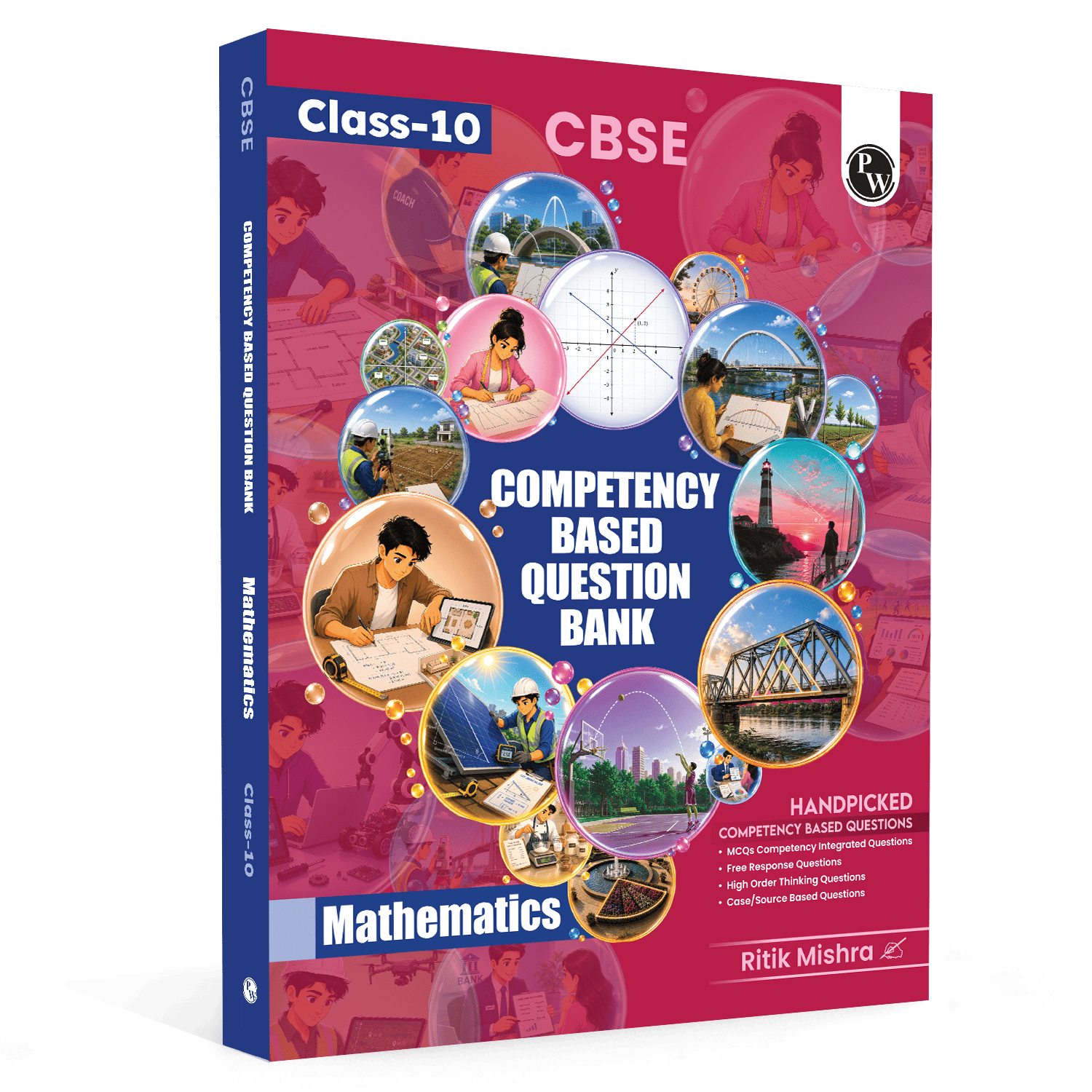
Utilize specialized question banks that contain 400+ competency-based questions tailored specifically to modern examination trends. Exposing yourself to diverse problem styles ensures you remain calm when faced with novel scenario layouts during mid-term exams.
-
Study Step-Wise Model Solutions
Do not simply check whether your final numerical answer is correct. Examine detailed solutions carefully to learn how expert educators extract data, structure logical steps, and present intermediate calculations cleanly.
-
Practice Under Timed Conditions
Application-based questions often require more reading time than direct numerical problems. Practice reading scenarios, extracting parameters, and solving questions under realistic timed conditions to build both speed and accuracy.
Tips to Score Better with Class 10 Maths Competency Questions
Developing effective test-taking habits helps you translate your conceptual knowledge into maximum marks during school assessments. Regular practice with CBSE Class 10 Maths Sample Papers can help you become familiar with different question formats, improve time management, reduce calculation errors, and build confidence for the actual examination.
1. Read Scenario Narratives Carefully
Take time to read the opening context of a case study twice before jumping to conclusions. Important constraints or specific units are frequently embedded directly within the narrative text.
2. List Given Variables Explicitly
When tackling a word-based application problem, start by writing down all known parameters along with their respective units. This habit organizes your thoughts and reveals which mathematical formula to select.
3. Structure Answers for Step-Wise Marking
Board and mid-term evaluations strictly apply a step-wise marking scheme. Clearly write out applied formulas, state any assumptions made, and show intermediate calculation steps to secure partial credit even if a minor arithmetic slip occurs at the end.
4. Maintain Consistent Practice Routines
Schedule dedicated time every week for focused Class 10 Maths practice. Regular interaction with application problems builds intuitive familiarity with diverse question formats, reducing overall exam anxiety.
Common Mistakes to Avoid While Solving Class 10 Maths Competency Questions
Awareness of frequent student errors allows you to actively avoid them during high-stakes examinations:
-
Skimming Narrative Passages: Rushing through scenario descriptions often leads to missing key conditions or subtle numerical details.
-
Applying Standard Formulas Blindly: Selecting a formula based purely on keywords without verifying whether the practical scenario requires a modified approach.
-
Omitting Intermediate Steps: Skipping explanatory lines or failing to state underlying theorems, which costs marks under step-wise marking rules.
-
Ignoring Dedicated Question Banks: Relying exclusively on standard computational exercises rather than working through modern question collections containing 400+ competency-based questions.
-
Misinterpreting Practical Units: Forgetting to convert mixed measurement units (e.g., combining metres and centimetres) before carrying out calculations.
Read More: CBSE Class 10 Study Timetable
Solving Class 10 Maths FAQs
What are Class 10 Maths competency questions?
They are practical evaluation problems designed to test analytical reasoning, critical thinking, and real-world application of mathematical concepts rather than direct formula recall.
Why are competency questions important for Class 10 exams?
These questions align with NEP 2020 guidelines and current board exam structures. They shift evaluation away from memorisation toward genuine concept mastery and practical problem-solving.
How many competency questions should I practise for mid-terms?
Working through a comprehensive practice source featuring 400+ competency-based questions provides thorough coverage across objective, case-based, and subjective formats.
Do competency questions follow a step-wise marking scheme?
Yes, evaluations follow a strict step-wise marking scheme. You earn partial marks for correct data extraction, proper formula selection, and logical step presentation.