Using Banking Quant Game Changer Book for Topic-Wise Mastery
Sitting at a study desk surrounded by multiple rough sheets, a common frustration for many students is watching the timer run out while working through complex numerical problems. Standard revision resources often present mixed exercises too early, leaving learners confused about basic formulas.
By integrating the banking quant game changer book into your routine, you can isolate individual mathematical challenges, practice target exercises, and turn your weakest areas into highly reliable scoring opportunities.
What is the Banking Quant Game Changer Book?
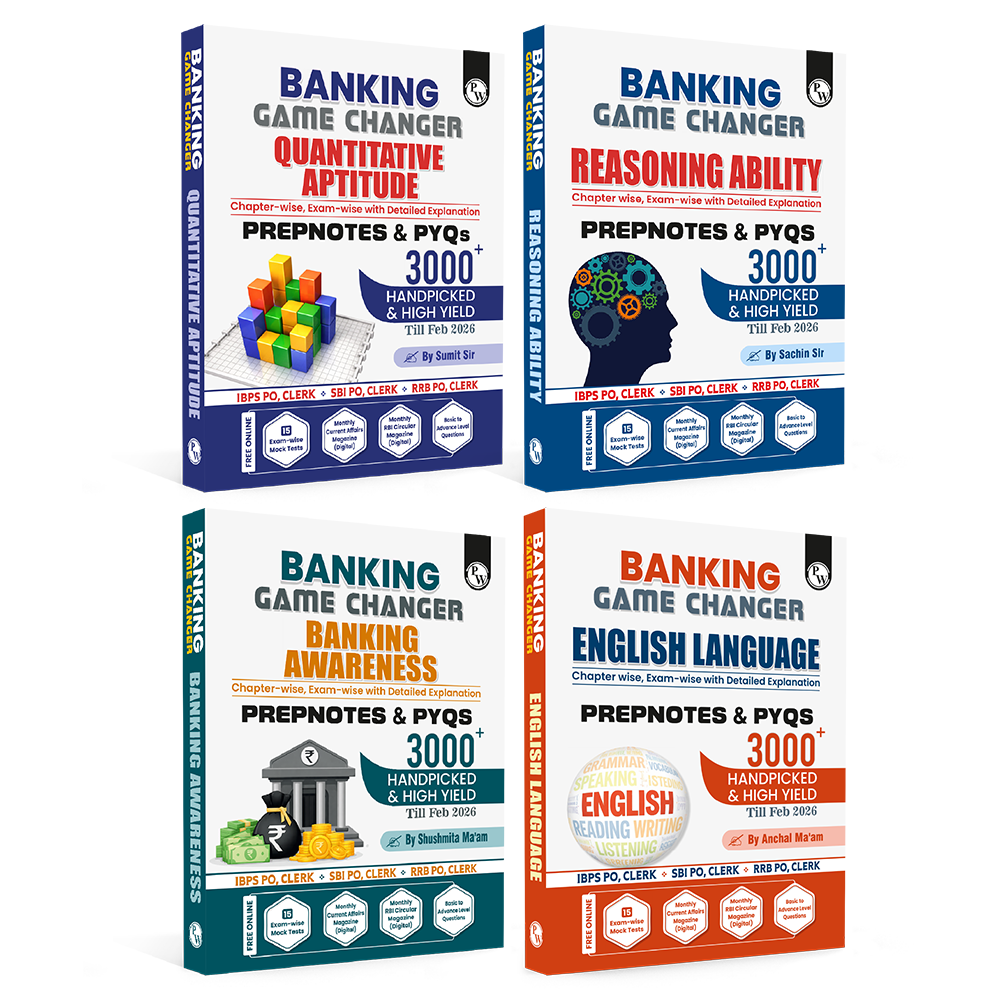
The banking quant game changer book is a comprehensive, structured resource designed specifically for candidates aiming to clear major competitive assessments. This text forms part of a complete set of prep notes and questions designed for the 2026-2027 recruitment cycles. It is designed to serve as a singular, comprehensive roadmap for individuals targeting positions across major national institutions.
Rather than throwing mixed model papers at a student immediately, this Banking Quantitative book focuses on building an incremental learning path. It addresses the needs of candidates appearing for various examinations, including:
-
IBPS PO and IBPS Clerk
-
SBI PO and SBI Clerk
-
RRB PO and RRB Clerk
The material inside focuses on eliminating guesswork by combining formal rule summaries with extensive question banks. It provides a structured blend of theory and practice, ensuring students can easily track their daily progress.
Features of the Banking Quant Game Changer Book
Using a dedicated, topic-specific resource provides clear advantages over generalised guides. This Banking book is structured around the exact requirements of modern computer-based tests, allowing students to build competence systematically.
-
Extensive Question Banks: The resource forms part of a wider series featuring over 12,000+ PYQ-based MCQs. This ensures students never run out of reliable practice material.
-
Targeted Topic-Wise Quantitative Aptitude Development: Instead of facing random question papers, students can focus entirely on one mathematical area until they achieve complete speed and accuracy.
-
Dual-Tier Learning Content: Every segment integrates quick prep notes alongside comprehensive question sets, helping students quickly review rules before diving into long practice sessions.
-
Simulated Testing Options: The overall package includes access to 60 online CBTs (Computer-Based Tests). This helps candidates transition smoothly from paper-based problem-solving to real-time digital exams.
-
Current Alignment: All content is updated according to the latest trends, ensuring that students do not waste valuable time working on outdated question formats.
Enhance your Banking exam preparation with this Banking Game Changer combo of 4 books covering English Language, Banking Awareness, Reasoning Ability, and Quantitative Aptitude. Packed with PrepNotes, 12,000+ Previous Year Questions (PYQs), concept-based theory, detailed practice exercises, and exam-focused content, this set provides everything you need to prepare confidently for the 2026–27 Banking exams.
Why the Banking Quant Game Changer Book is Ideal for Topic-Wise Preparation?
True confidence in competitive mathematics comes from mastering individual concepts before attempting mixed test papers. If a student struggles with basic percentage calculations, they will inevitably face difficulties with complex data interpretation sets. The banking quant game changer book resolves this issue by focusing heavily on structured, isolated learning.
This resource provides high-yield prepnotes that summarise essential shortcuts, properties, and formulae for each topic. By focusing on chapter-wise maths, it ensures that a student fully understands one topic before moving on to the next.
This systematic method prevents the cognitive overload that often happens when students try to learn multiple distinct mathematical rules at the same time.
Read More - How Banking Quant Game Changer Book Improves Calculation Speed
How are the Quant Topics Covered in the Banking Quant Game Changer Book?
The inner architecture of the banking Quant book is designed to guide students from foundational arithmetic up to complex data-driven caselets. By categorising different mathematical domains into separate sections provides a highly organized approach to bank exam preparation.
1. Foundational Calculation Blocks
Before tackling multi-step word problems, candidates must build rapid calculation habits. The book includes structured exercises focused on simplification, approximation, number series patterns, and quadratic equations.
2. Core Arithmetic Modules
This section covers essential word problems that form the backbone of both preliminary and mains assessments. It provides targeted arithmetic questions covering areas such as:
-
Ratio and Proportion
-
Percentages, Profit, and Loss
-
Simple and Compound Interest
-
Time, Speed, and Distance
3. Advanced Data Interpretation
Data Interpretation often carries the highest weightage in mains examinations. The book organises these sections by data type, guiding students through tables, bar graphs, pie charts, line graphs, and radar charts.
|
Section Category |
Primary Focus Areas |
Intended Learning Outcome |
|
Calculation Blocks |
Simplification, Series, Quadratic Equations |
Improving speed and mental math accuracy |
|
Arithmetic Modules |
Percentages, Ratios, Interest, Time & Work |
Building strong concept clarity for word problems |
|
Data Interpretation |
Tables, Graphs, Caselets, Missing Data |
Developing strong analytical and data-reading skills |
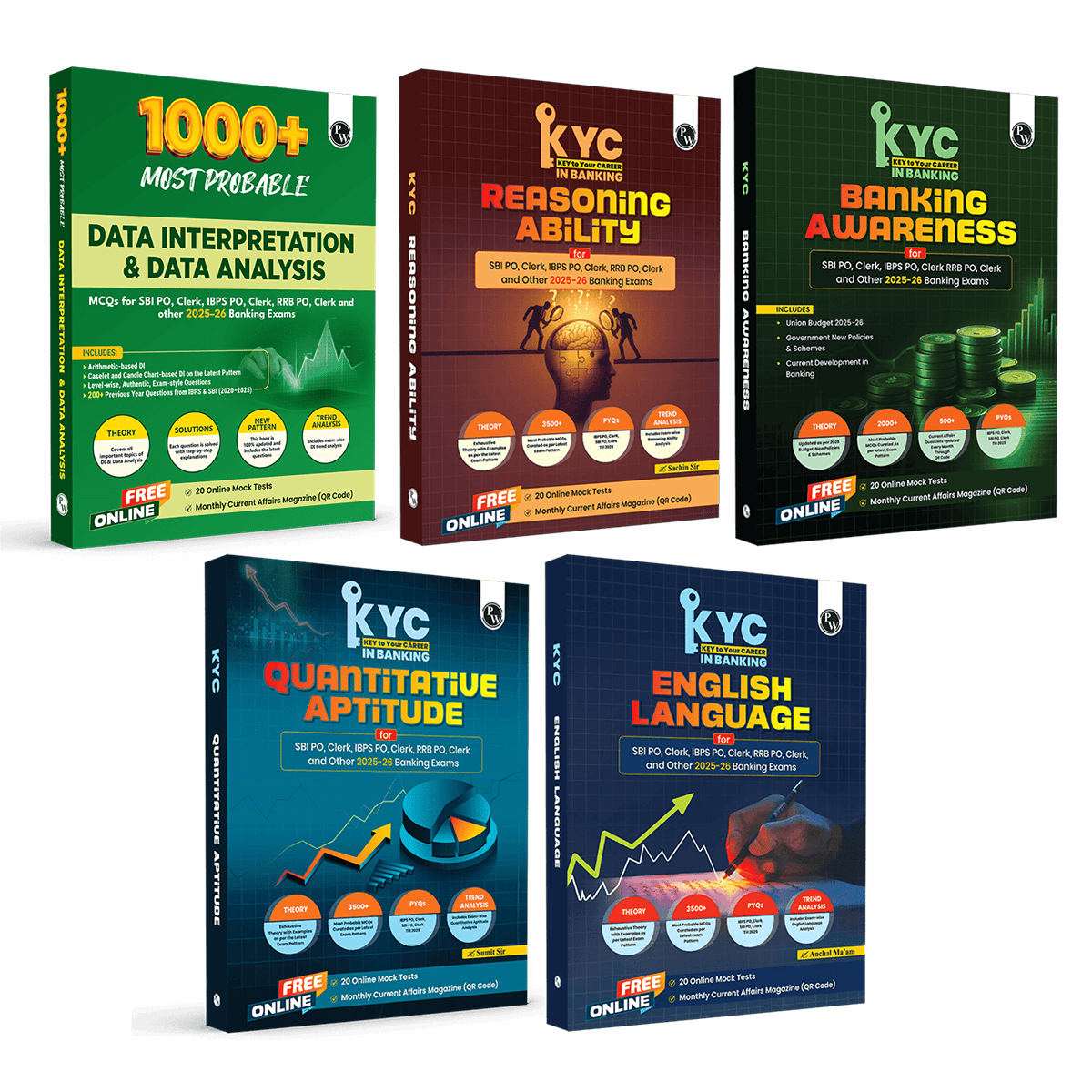
Ace your Banking Exams with PW Banking KYC Books Combo Set of 5 covering Banking Awareness, Reasoning Ability, English Language, Quantitative Aptitude, Data Interpretation (DI), and Data Analysis (DA). This complete study package includes comprehensive theory, concept-based explanations, solved examples, extensive practice questions, Previous Year Questions (PYQs), and quick revision notes to help you build confidence and maximize your exam performance.
When to Use the Banking Quant Game Changer Book?
Knowing exactly when to introduce this resource into your daily routine can significantly improve your retention and performance. The banking quant game changer book serves different purposes depending on where you are in your preparation journey.
-
During the Initial Conceptual Phase: Use the book right at the start of your preparation to study chapter-wise theory and clear up any fundamental confusion.
-
During Focused Banking Quant Practice Sessions: When you identify a specific recurring error in your weekly tracking, use the dedicated chapters to run targeted drills.
-
During Daily Quant Revision: Use the concise, handwritten-style prepnotes as a quick reference guide to refresh your memory on formulas before starting your morning study sessions.
-
In the Final Weeks Before the Exam: Use the extensive past-year question sections to familiarise yourself with the exact patterns used by examiners in recent recruitment cycles.
How to Create a Topic-Wise Study Plan Using the Banking Quant Game Changer Book?
Owning a comprehensive preparation book is only half the battle; success requires a structured, highly disciplined daily plan. A chaotic approach can lead to uneven preparation, where a student becomes highly proficient in one area while completely neglecting another.
Phase 1: The Six-Day Concept Cycle
Divide your study calendar into clear, six-day blocks focused on specific themes. On days one and two, read the prepnotes and work through the practical examples to understand the underlying theory. On days three and four, solve at least 50 to 60 basic and intermediate-level questions to build consistency. On days five and six, attempt advanced questions under self-imposed time constraints.
Phase 2: Error Tracking and Logging
Never close the book immediately after finishing a set of questions. Maintain a dedicated error log to document every calculation mistake, misinterpreted word problem, or forgotten formula. Re-attempt those exact problematic questions forty-eight hours later to ensure you have fully understood the correct method.
Phase 3: Weekly Structural Reviews
Dedicate every Sunday morning exclusively to a structured quant revision session. Instead of starting new topics, use this time to review your error log, re-read the formula summaries, and solve a few mixed questions from previously completed chapters to keep the concepts fresh.
Common Mistakes to Avoid While Using the Banking Quant Game Changer Book
Many hardworking candidates fail to get their desired results because of subtle flaws in their daily preparation strategy. Recognising these common mistakes early can save you months of frustrating effort.
-
Skipping Directly to Shortcuts: Trying to memorise tricks without understanding the underlying mathematical concepts leaves you vulnerable when examiners twist the wording of a question.
-
Neglecting Your Error Log: Rushing through question sets without analyzing your mistakes means you are likely to repeat those same errors during the actual exam.
-
Improper Time Management During Practice: Solving questions without a timer gives a false sense of security. Always practice with a stopwatch once your basic concepts are clear.
-
Over-Focusing on Favourites: It is common to enjoy practicing topics you are already good at while avoiding your weaker areas. Force yourself to spend extra time on your most challenging chapters.
Banking Quant Game Changer Book FAQs
Can I rely on the banking quant game changer book if my math foundation is weak?
Yes, the book is designed with clear chapter-wise theory and practical examples, making it highly suitable for building concepts from scratch.
How does chapter-wise maths practice help improve exam speed?
Focusing on one topic at a time allows you to recognize question patterns quickly, reducing the time it takes to choose the right formula during the exam.
Does the book cover both the preliminary and mains exam patterns?
The resource covers foundational arithmetic questions alongside advanced data interpretation models, ensuring thorough preparation for both exam tiers.
Should I complete all arithmetic chapters before practicing data interpretation?
Mastering core arithmetic chapters like percentages and ratios first is highly recommended, as these concepts form the base for solving data interpretation sets.
How should I use the 12,000+ PYQ series alongside my daily study plan?
Use the past-year questions immediately after completing the theory notes of a chapter to check if your preparation matches actual exam standards.