How to Identify Weak Areas in Banking English with PW Book?
Most of the applicants are not able to enhance their English scores because they are not able to recognize their weak areas. A banking English book assists aspirants in checking their performance with topic-wise practice, diagnostic tests, and complete solutions.
It helps in identifying repeated mistakes, enhances grammatical and comprehension abilities, and allows targeted study for IBPS, SBI, and RRB exams, which leads to more accuracy and better marks.
Importance of a Banking English Book for Exam Preparation
In today's competitive exams, the English Language paper tests the practical application and not rote study. Candidates using general study material typically do not reach the cut-off marks, as Banking questions include subtle context, logical linkages, and speed in a strict time constraint.
Common Challenges in Banking English Preparation
Knowing exactly what to expect on the exam is important to prepare well for English. Candidates often confront some barriers common to the entire section:
-
Negative Marking Overload: Guessing answers in IBPS PO and SBI PO prelims without strong conceptual clarity leads to hefty penalty deductions.
-
Time Management: Spending too much time on long Reading Comprehension passages leaves little opportunity for high-scoring direct questions.
-
Changing Patterns of Exams: The examination boards frequently change the question patterns by mixing Cloze tests with vocabulary fillers or by changing the usual error detection pattern.
-
Absence of Performance Analytics: If students conduct random online tests without going over the error logs, they don’t see patterns of mistakes.
|
Preparation Hazard |
Root Cause |
Impact on Banking Exam Score |
|
Unfocused Question Selection |
Practicing non-banking pattern questions |
Reduced speed on exam day |
|
Blind Guesswork |
Inadequate conceptual foundation |
Heavy penalty from negative marking |
|
Ignoring Speed Metrics |
Offline practice without timer checks |
Unattempted questions in sectional limits |
|
Neglecting Detailed Solutions |
Reviewing only correct options |
Repeated errors on similar concept rules |
Impact of Unfocused Grammar and Vocabulary Practice
Modern bank test scores are rarely boosted by rote memorization of grammar rules. Aspiring players get to read through lengthy lists of rules for weeks, but they don’t get to see how rules interact in complicated sentence patterns.
-
Isolated Rule Memorisation: Learning subject-verb agreement or modifier rules in isolation fails when exam questions blend multiple grammatical errors in a single sentence.
-
Uncontextualised Vocabulary: Learning dictionary definitions without practicing contextual usage leads to confusion in Fillers and Cloze Tests.
-
Over-reliance on Elimination: Relying solely on intuition or "sounds wrong" techniques causes errors in high-level sentence improvement questions.
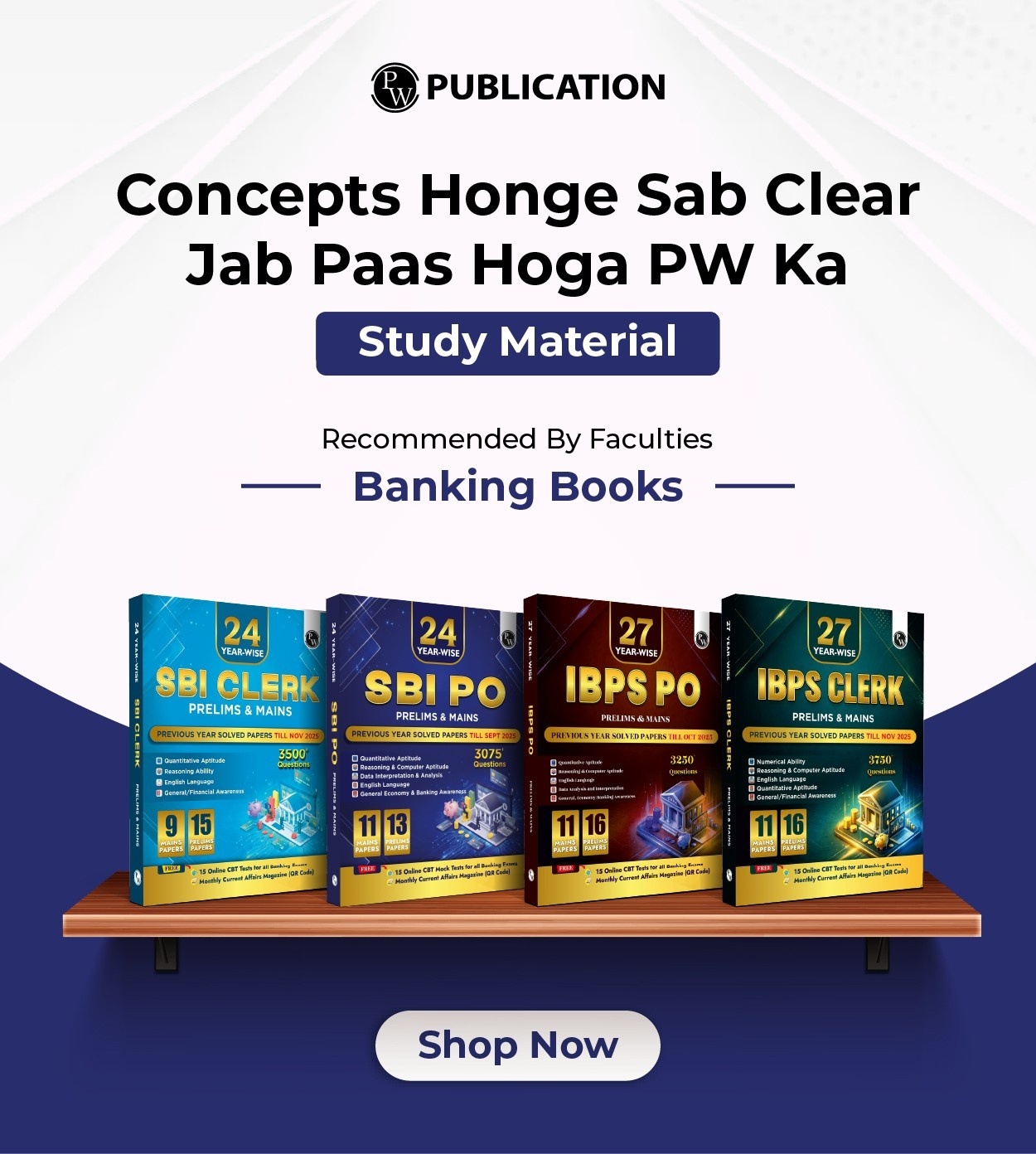
A tailored banking English book solves these issues by placing every rule within an authentic exam frame, accompanied by contextual explanations and topic-wise error breakdowns. Alongside this, Banking PYQ Books provide authentic previous year questions that help candidates understand recurring patterns, practise exam-level questions, and improve speed and accuracy.
How to Identify Weak Areas with a Banking English Book?
Systematic self-diagnosis converts random practice into a precise improvement strategy. Instead of working through chapter after chapter linearly, candidates should evaluate their current accuracy level across core subject modules.
Attempt Topic Diagnostic ➔ Categorise Incorrect Answers (Grammar / Vocab / Logic) ➔ Review Detailed Explanations ➔ Re-test with Targeted PYQs
Diagnostic Evaluation Through Chapterwise Theory and Examples
To isolate baseline weaknesses, candidates must test themselves across fundamental skill areas. A complete preparation book organizes content into distinct thematic modules:
-
Grammar Foundation: Subject-Verb Agreement, Tenses, Prepositions, Articles, Conditionals, Parallelism, and Active/Passive Voice.
-
Vocabulary & Context: Cloze Test, Single & Double Fillers, Idioms & Phrases, Word Swap, and Contextual Usage.
-
Reading & Verbal Reasoning: Reading Comprehension, Para Jumbles, Sentence Rearrangement, Paragraph Completion, and Inferences.
Aspirants should read through the initial theory of a chapter and immediately attempt the introductory practice examples. If accuracy falls below 80 percent on basic examples, the chapter represents a fundamental conceptual weak area that requires immediate review.
Analyzing Accuracy Gaps in Reading Comprehension and Cloze Tests
Reading Comprehension (RC) and Cloze Tests account for a major portion of the marks in both Preliminary and Mains examinations. Analyzing performance in these areas requires tracking specific error types:
-
Vocabulary-in-Context Errors: Marking a dictionary synonym that does not match the passage's contextual tone.
-
Inference Traps: Selecting options that contain true statements but fail to directly answer the passage question.
-
Detail Misinterpretation: Skimming passages too quickly and missing qualifier words such as "except", "only", or "never".
-
Tone & Central Idea Gaps: Failing to distinguish between the author's primary argument and supporting counter-arguments.
Documenting these specific failure modes in a dedicated study log helps candidates transform passive reading into active, accuracy-driven comprehension practice.
Why Choose the Banking English Book?
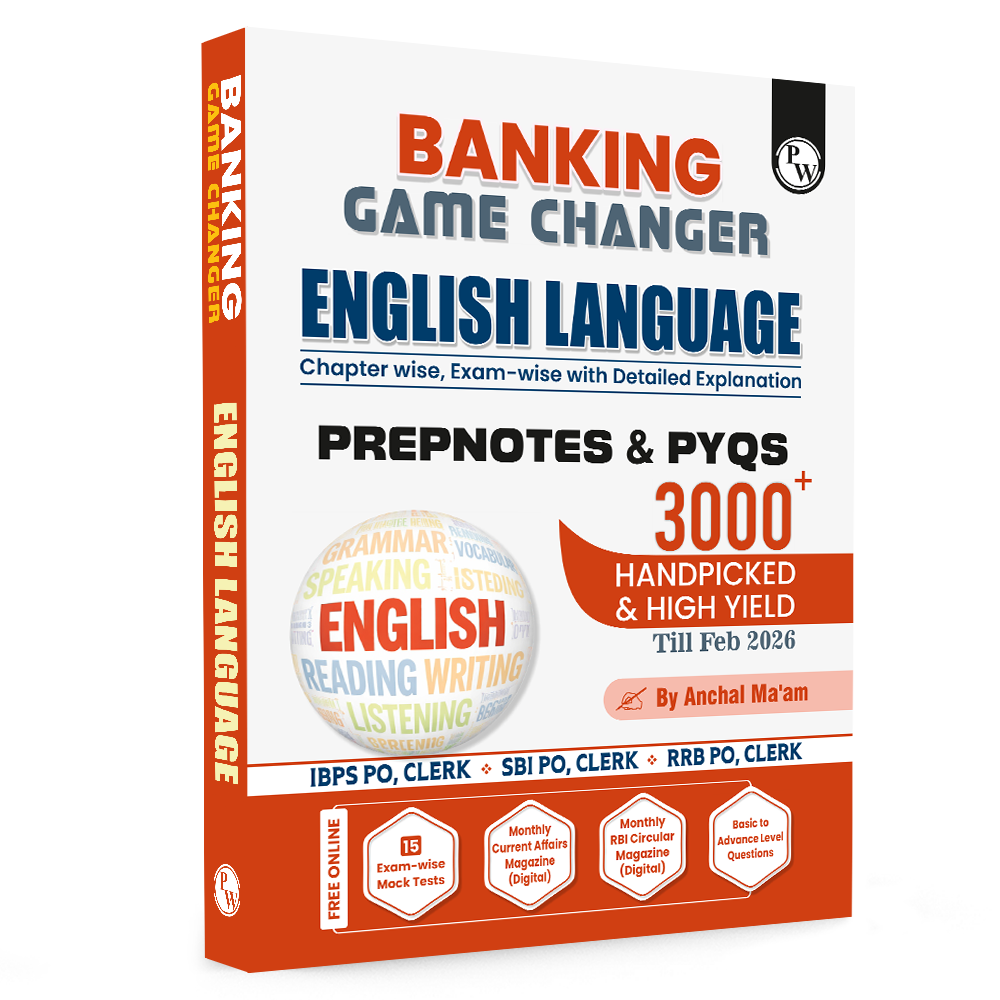
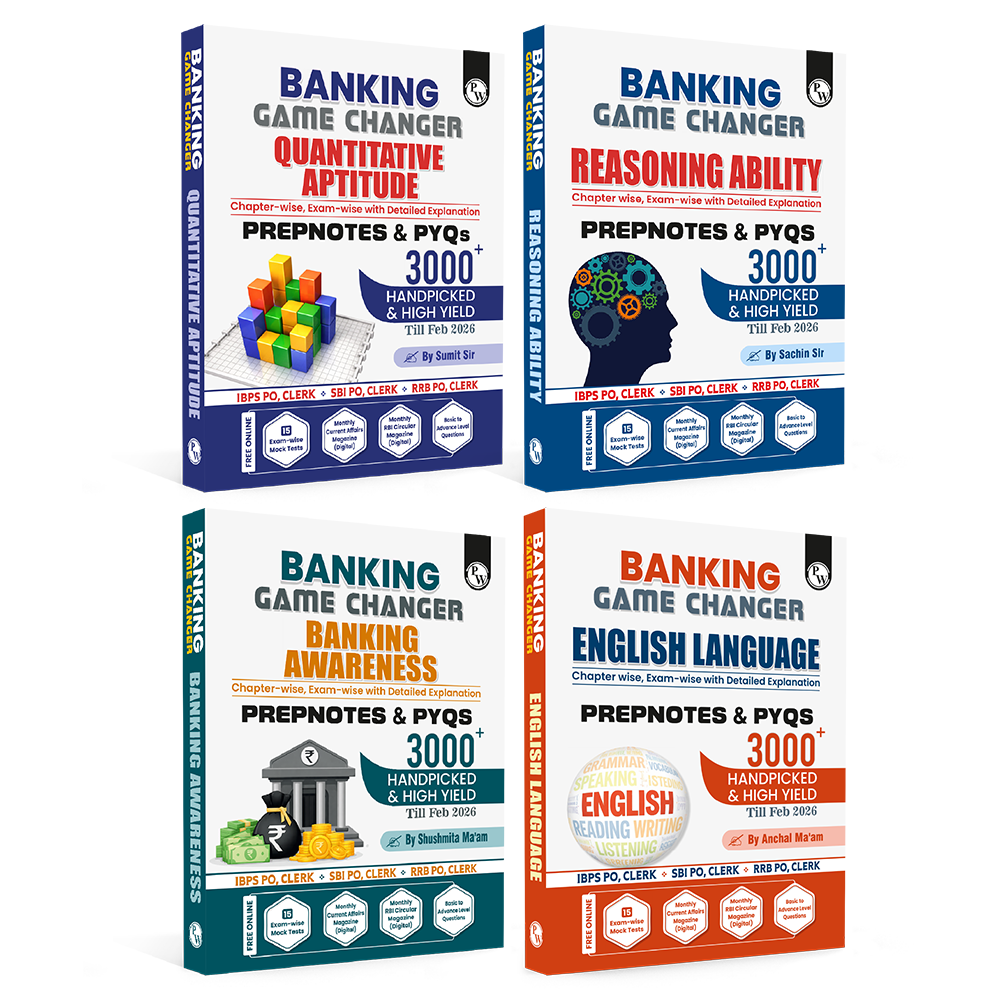
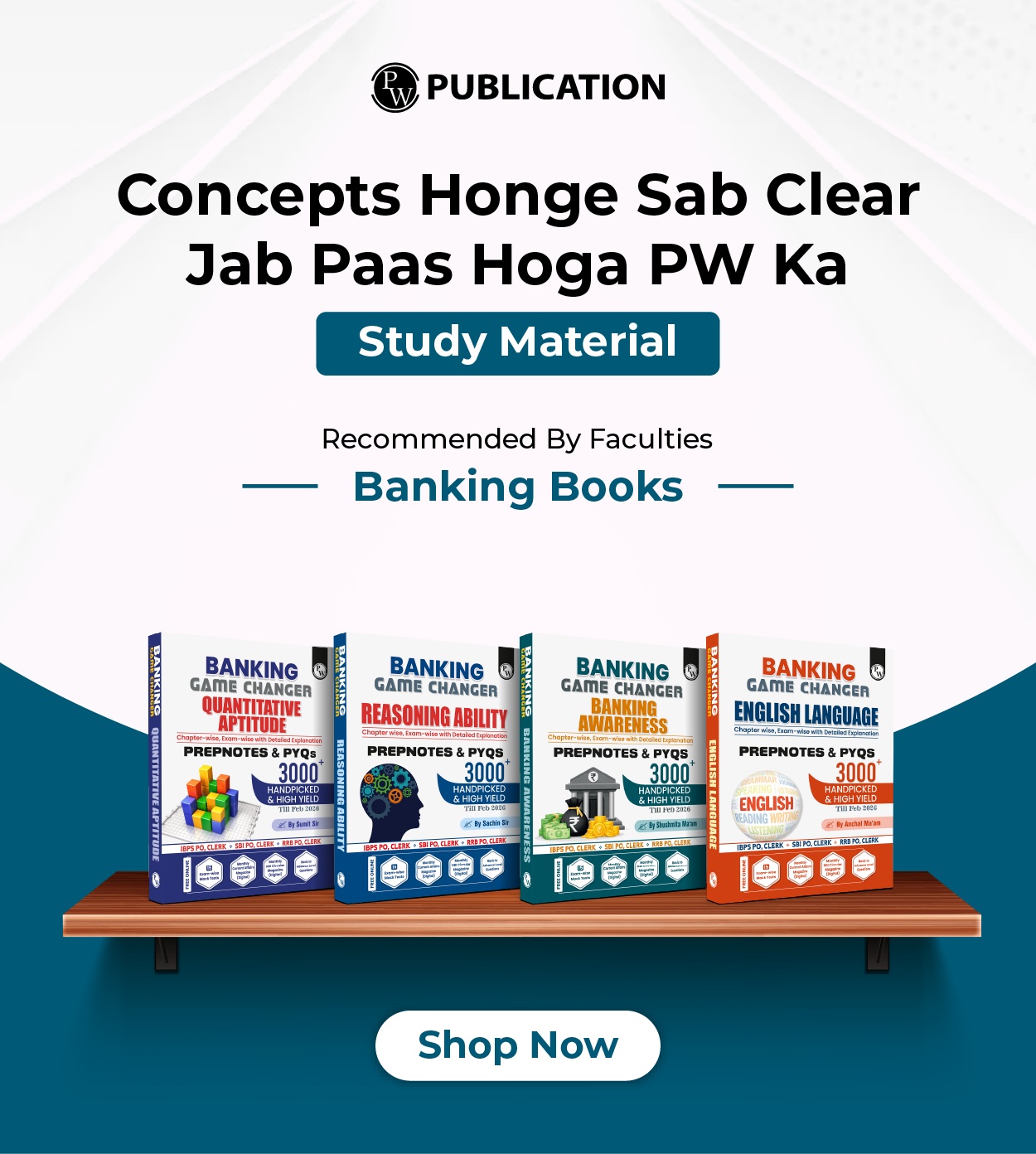
To stay ahead of competitive cutoffs, aspirants must align their study routine with actual exam trends. The PW Banking Game Changer book is specifically engineered to simplify diagnostic preparation and performance tracking for IBPS PO, IBPS Clerk, SBI PO, SBI Clerk, and RRB exams.
|
Feature / Module |
Key Highlight |
|
Chapter-Wise Theory |
Simplified examples for core conceptual clarity |
|
3000+ PYQ-Based MCQs |
Aligned with the latest exam patterns and difficulty |
|
15 Online CBT Mock Tests |
Full-length tests simulating the actual test interface |
|
Monthly Current Affairs |
Instant digital access via QR code updates |
|
Exam Trend Analysis |
Detailed breakdown of topic-wise weightage shifts |
Evaluating Question Types and Topic Weightage
Understanding which topics carry the highest mark distribution prevents candidates from spending disproportionate time on low-yield areas. Comprehensive trend analysis provided in the book helps prioritize daily study schedules:
-
High-Weightage Core Topics (15-20 Marks): Reading Comprehension, Cloze Test, and Error Spotting form the core of preliminary papers.
-
Moderate-Weightage Topics (8-12 Marks): Para Jumbles, Sentence Improvement, Word Swap, and Fillers appear regularly across shifts.
-
Advanced Mains-Level Topics (5-10 Marks): Connectors, Paragraph Starters, Critical Reasoning, and Column-Based Matching.
|
Banking Exam Section |
High-Frequency Question Types |
Primary Skill Tested |
Target Accuracy Level |
|
Reading Comprehension |
Direct Facts, Inferences, Tone |
Speed Reading & Retention |
85% or higher |
|
Cloze Test |
Vocabulary Fillers, Grammar Clues |
Contextual Understanding |
90% or higher |
|
Error Detection |
Tense Shifts, Preposition Errors |
Banking Grammar Practice |
90% or higher |
|
Para Jumbles |
Mandatory Pairs, Opening Lines |
Logical Cohesion & Structure |
80% or higher |
|
Word Swap |
Contextual Meaning, Part of Speech |
Fast Vocabulary Application |
95% or higher |
Utilizing 3000+ Banking English PYQs for Pattern Recognition
Practicing authentic PYQs allows candidates to experience the precise difficulty level and option traps set by exam conducting authorities.
-
Pattern Identification: Working through over 3,000 previous-year questions reveals how examiners twist standard grammar rules into complex sentence formats.
-
Option Elimination Mastery: Solving real past paper items trains candidates to identify distractor options designed to mislead under pressure.
-
Shift-Wise Comparison: Access to historical questions across IBPS and SBI exams helps candidates adapt to varying difficulty levels.
Using authentic previous-year questions eliminates surprise factors on exam day by familiarising students with modern variations of sentence structures. Alongside PYQ practice, Banking Books can help strengthen core English concepts, provide structured topic-wise practice, and improve accuracy and confidence for Banking examinations.
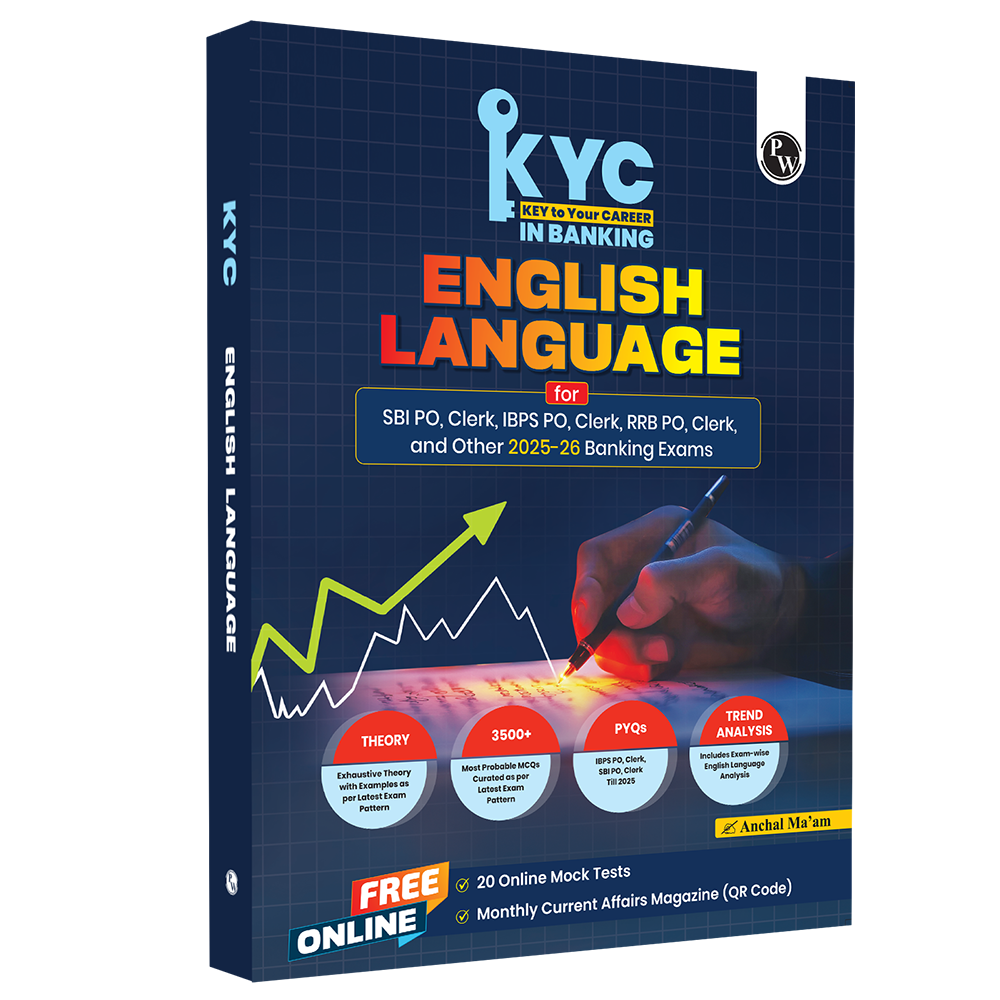
Also Check - PW Banking KYC English Language Book
How to Use a Banking English Book for Better Scores?
Once weak areas are identified through diagnostic evaluation, candidates must execute a structured remediation plan. Following a clear four-step strategy ensures consistent score progression.
Step 1: Baseline Assessment via CBT Mock Tests
Begin by taking a full-length online Computer-Based Test (CBT) using the 15 mock tests included with the English book.
-
Simulate real exam conditions by turning off external distractions and adhering strictly to the 20-minute sectional timer.
-
Complete the test without consulting reference notes or guessing blindly on uncertain items.
-
Record overall attempt count, gross correct answers, incorrect marks, and net sectional score.
Step 2: Targeted Banking Grammar Practice for Error Detection
If diagnostic tests show low accuracy in Spotting Errors or Sentence Improvement, dedicate focused study sessions to structured rule application.
Review Chapter Theory ➔ Solve 50 Single-Rule MCQs ➔ Analyze Mistake Log ➔ Attempt Mixed Practice Set
-
Review Core Principles: Revisit focused theory sections covering High-Frequency Rules such as Subject-Verb Agreement, Parallelism, and Conditionals.
-
Conduct Focused Drills: Engage in dedicated grammar practice by solving 50 to 100 topic-specific questions without time pressure.
-
Maintain an Error Logbook: Write down every rule breached in incorrect attempts along with the full sentence correction.
-
Perform Mixed Set Verification: Transition to mixed grammar sets to verify that the rule can be recognized when surrounded by unrelated sentence structures.
Step 3: Resolving Speed and Accuracy Bottlenecks with Banking English Previous Year Questions
Slowness during reading passages or Para Jumbles often leads to unattempted questions. Solving real banking English PYQs under timed conditions builds necessary mental stamina.
-
Time-Bound Sets: Divide practice questions into mini-sets of 10 items and allocate exactly 6 minutes per set.
-
Mandatory Pair Technique: When practicing Para Jumbles, focus first on linking two adjacent sentences rather than trying to sequence the entire paragraph at once.
-
Keyword Scanning in RC: Practice scanning passage text for specific keywords before reading full paragraphs to locate factual answers faster.
-
Elimination Drills: For Cloze Tests, identify the required part of speech (noun, verb, adjective, adverb) before looking at option choices.
Step 4: Continuous Progress Tracking Across IBPS and SBI Patterns
By tracking systematically, you keep adding to your score over time. Every fortnight, we re-evaluate the performance, and prior mistakes do not reappear.
-
Weekly Retesting: After 7 days, re-attempt missing questions from the banking English book to assess long-term memory retention.
-
Sectional Speed Tests: Use online CBT portals to track time taken for each question type, and make sure you are not taking more than 45 seconds on a question.
-
QR Code Updates: Scan in-built book QR codes to get updated current affairs, financial awareness notes, and more practice stuff on a monthly basis.
-
Mock Validation: Finally, compare current mock results to baseline test scores. Try to achieve an overall accuracy rate of at least 85 percent on all English items attempted.
Read More: How to Prepare for Banking Exams While Studying or Working
Banking English Book FAQs
How does a specialized banking English book help improve overall exam scores?
The book is a complete guide to preparation with theory explained subject-wise, practice sets in an organized manner, authentic previous years' questions, and online CBT mock exams as per the latest IBPS and SBI exam patterns.
How can I identify my weak topics in banking English quickly?
You can identify weak topics by attempting diagnostic practice sets, recording error types in a dedicated mistake logbook, and calculating accuracy percentages separately for Grammar, Vocabulary, and Reading Comprehension.
What practice material is available in the PW Banking English Game Changer Book?
The book includes detailed chapter-wise theory with practical examples, over 3,000 previous year questions with solutions, 15 full-length online CBT mock tests, current affairs updates via QR code, and section-wise trend analysis.
Is grammar practice different from general competitive exam grammar?
Yes, banking exams test context-driven grammar application, long sentence structures, and multi-rule error detection rather than straightforward direct rule checks seen in basic exams.
How often should I solve banking English previous year questions during preparation?
Throughout your preparation, you need to solve past year questions. During the idea-building phase, you start with topic-wise PYQs and then proceed to solve full-length past papers during the final revision stage.