IBPS Clerk PYQs: Important Question Patterns
Preparing for the banking sector exam requires regular practice and a clear study plan. Solving an authentic IBPS Clerk PYQ can help candidates understand common question styles, exam difficulty, and time management. It also gives them practical experience with questions asked in earlier examinations. Banking exam preparation can feel difficult when candidates do not know where to focus. Some students spend too much time on topics without checking how they have been tested in previous papers. Reviewing IBPS Clerk PYQ can make preparation more focused and help candidates find areas that need more practice.
What Is IBPS Clerk PYQ and Why Is It Important?
An PYQ is a question from an earlier IBPS Clerk examination. Previous year papers may be available as officially released papers or memory-based papers prepared from questions recalled by candidates.
Studying these questions helps candidates understand the type of questions asked in Prelims and Mains.
-
Real Exam Exposure: Familiarises candidates with the style and format of banking exam questions.
-
Repeated Concepts: Helps identify concepts and question formats that have appeared in earlier papers.
-
Speed Practice: Shows how quickly candidates can solve questions while working under time limits.
-
Difficulty Understanding: Gives candidates an idea of the level of questions they may encounter.
-
Revision Support: Makes it easier to revise topics through actual exam-style questions.
Analysing past papers changes preparation from only reading theory to actively solving questions. Each practice set can also help candidates find gaps in their understanding.
Features of IBPS Clerk PYQ Preparation Book
Prepare for IBPS Clerk Prelims and Mains with a useful mix of questions, solved answers, online tests, and exam trend insights. The book helps candidates practise regularly and focus on areas that need more attention.
-
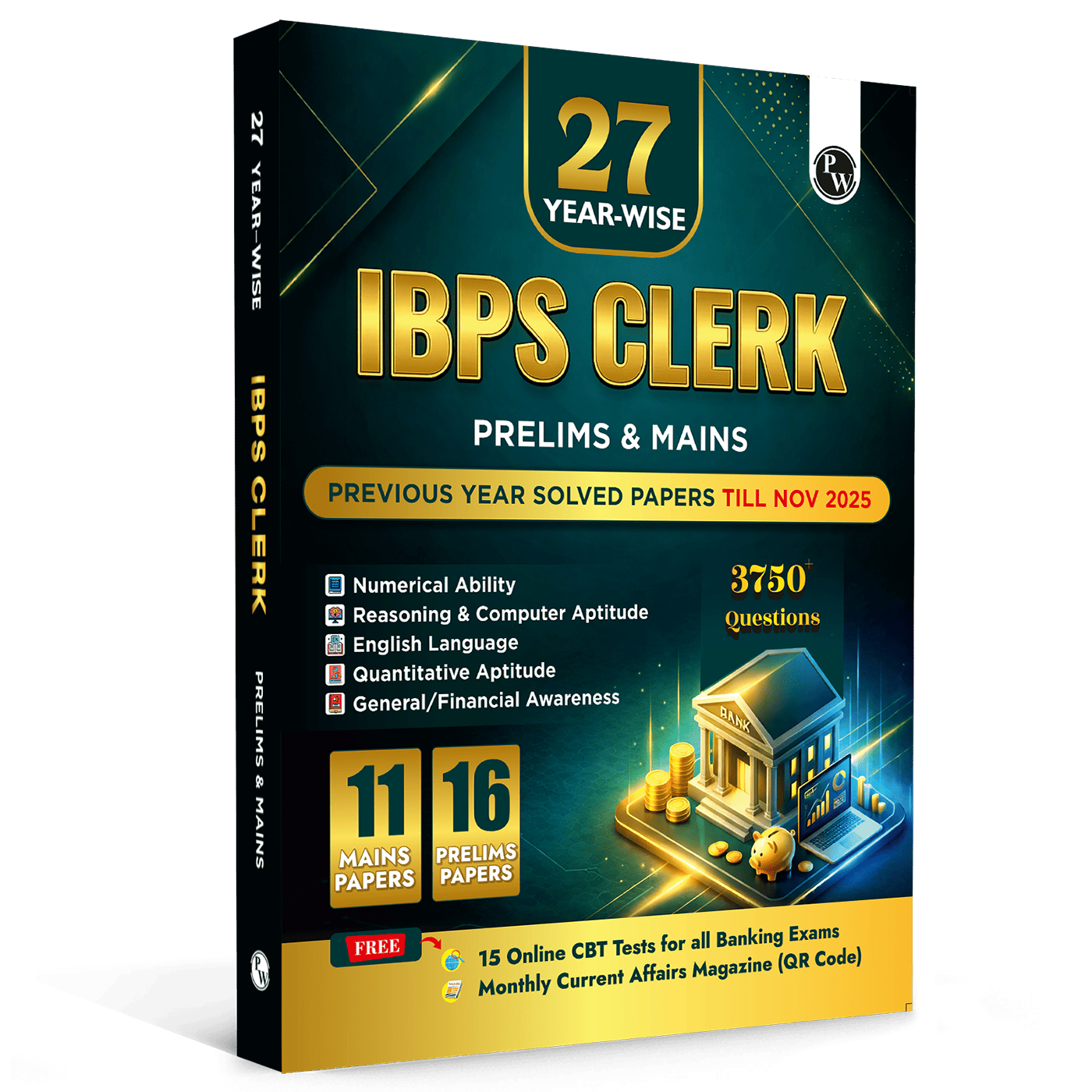
15 Online Tests Based on the Latest Pattern: Take 15 CBT-style practice tests designed around the latest IBPS Clerk exam pattern to improve speed, accuracy, and time management.
-
3750+ IBPS Clerk MCQs & PYQs: Practise 3750+ MCQs and Previous Year Questions (PYQs) covering important topics from the banking exam.
-
Reliable Solutions for Better Learning: Get accurate, verified answers with clear explanations so you can understand the correct method and strengthen your concepts.
-
Prelims & Mains Preparation Together: Cover important topics from both IBPS Clerk Prelims and Mains with detailed explanations for better study and revision.
-
5-Year Exam Trend Analysis: Study recent IBPS Clerk question trends and topic-wise information to identify areas that need more practice and plan your preparation effectively.
Using solved questions and online tests together can make daily practice more organised.
Why Should You Analyse IBPS Clerk PYQ for Exam Success?
Practising only random mock questions may not give candidates a complete understanding of the actual examination. A PYQs collection provides useful practice with questions and formats from earlier examinations.
Candidates can compare different papers and note which areas they find easy or difficult.
-
Identifying Trends: Reviewing past papers can show changes in question styles and difficulty.
-
Accuracy Improvement: Regular practice helps candidates find calculation and concept mistakes.
-
Confidence Building: Familiarity with exam-style questions can reduce hesitation during the test.
-
Better Revision: Candidates can use past questions to revise concepts they have already studied.
-
Time Management: Timed PYQ practice helps candidates learn how much time they need for different question types.
Banking Previous year questions should be used as a learning tool rather than as a way to predict the exact questions that will appear in the next examination.
How to Use IBPS Clerk PYQ for Better Preparation?
Simply collecting papers is not enough. Candidates should use every IBPS clerk previous year questions set to check their preparation and improve their solving approach.
Start by attempting questions without looking at the solution. Record the time taken and number of correct answers. After completing the set, review every incorrect or doubtful question.
-
Timed Practice: Use a stopwatch while solving sections or complete papers.
-
Detailed Error Analysis: Write down mistakes in a separate notebook.
-
Concept Revision: Return to the relevant chapter when a question shows a knowledge gap.
-
Re-Solve Difficult Questions: Attempt incorrect questions again after a few days.
-
Track Progress: Compare your accuracy and solving time over several practice sessions.
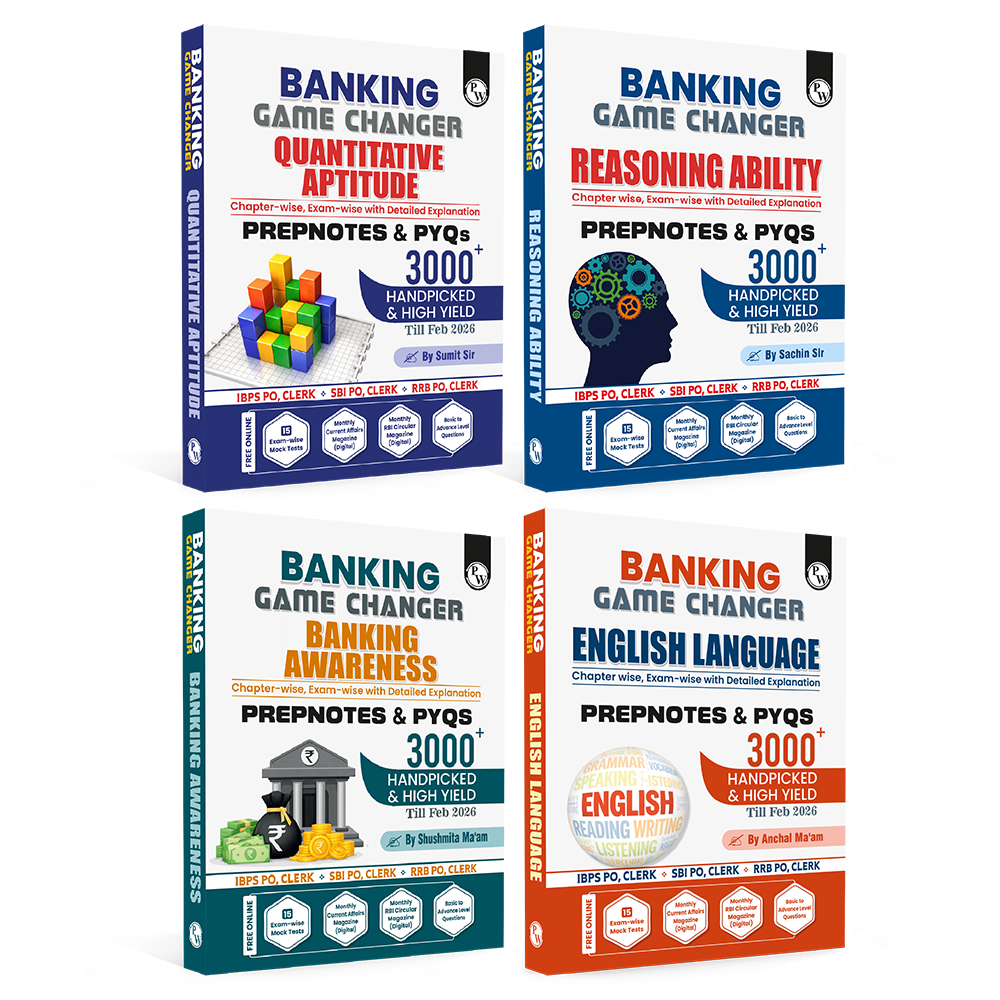
This process helps candidates understand whether their main problem is concept clarity, calculation, speed, or question selection. Referring to Banking Books can help them strengthen weak concepts, practise relevant questions, and improve their overall exam performance.
What IBPS Clerk PYQ Question Patterns Should You Practise for Prelims?
The IBPS Clerk Prelims examination tests candidates in English Language, Numerical Ability, and Reasoning Ability. Reviewing IBPS clerk question patterns can help candidates understand the different ways these subjects are tested.
The exact question mix can change from one examination or shift to another. Therefore, candidates should use PYQs to understand the range of questions instead of preparing only a small set of expected topics.
-
English Language: Practise reading comprehension, cloze tests, grammar, vocabulary, and sentence-based questions.
-
Numerical Ability: Cover simplification, approximation, number series, arithmetic, and data interpretation.
-
Reasoning Ability: Practise syllogisms, inequalities, coding-decoding, puzzles, seating arrangements, and other logical questions.
-
Mixed Practice: Once individual topics are clear, solve mixed sets to improve question selection.
Candidates should also check the latest official notification because the exam pattern and requirements can change.
How to Practise IBPS Clerk PYQ for Quantitative Aptitude?
Quantitative Aptitude requires both calculation skills and a good understanding of basic concepts. Practising IBPS clerk important questions can help candidates become familiar with common numerical question formats.
Instead of memorising a fixed list of questions, candidates should understand the method behind each problem and practise different variations.
-
Simplification and Approximation: Practise basic operations, fractions, percentages, decimals, and BODMAS.
-
Data Interpretation: Solve tables, bar graphs, pie charts, line graphs, and other common DI formats.
-
Arithmetic Topics: Cover percentages, profit and loss, ratio and proportion, averages, simple interest, time and work, and speed, time and distance.
-
Calculation Practice: Learn common squares, cubes, fractions, and percentage values to improve calculation speed.
How to Analyse IBPS Clerk PYQ for Reasoning Trends?
Reasoning requires candidates to understand information quickly and apply logical rules. A proper IBPS Clerk PYQ analysis can help candidates see the different types of reasoning questions used in earlier papers.
Puzzles and seating arrangements can require more time than short questions, so candidates should practise both lengthy and quick question types.
-
Puzzles: Practise linear, circular, floor-based, box-based, and other arrangement questions.
-
Inequalities: Learn how to compare statements and reach the correct conclusion.
-
Coding-Decoding: Practise different coding patterns and carefully observe changes in letters, numbers, or symbols.
-
Syllogism: Practise statement-based questions and learn to identify valid conclusions.
-
Question Selection: Learn to recognise questions that can be solved quickly and avoid spending too much time on one difficult puzzle.
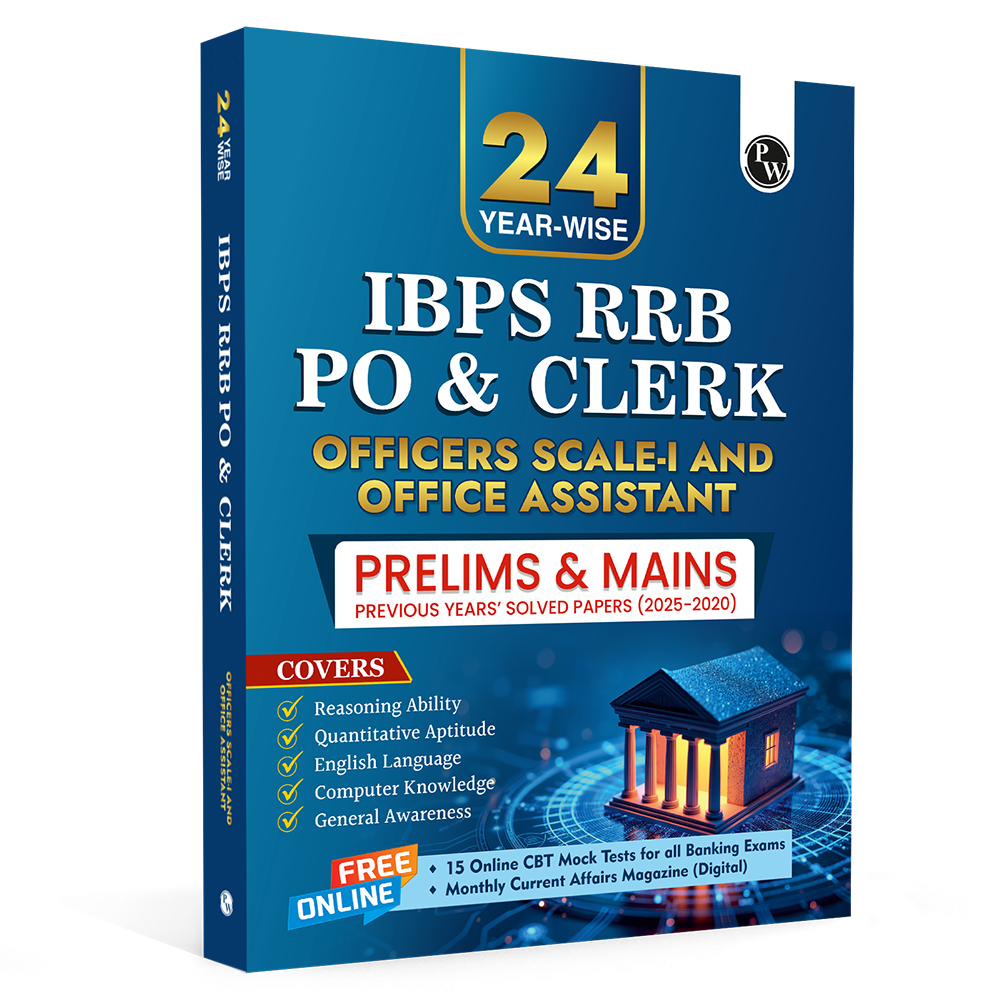
Candidates can use timed reasoning sets to improve both speed and decision-making. The All in One IBPS Clerk Prelims & Mains Exams book can help candidates practise important reasoning questions, strengthen their problem-solving skills, and prepare more effectively for both exam stages.
How to Make an IBPS Clerk PYQ Mistake Log?
A mistake log can make PYQ practice more useful. Candidates can record every important error and review the list at the end of each week.
|
Area |
What to Record |
|
Topic |
Chapter or question type |
|
Mistake |
Concept, calculation, or reading error |
|
Time Taken |
Approximate solving time |
|
Correct Method |
Short note about the right approach |
|
Revision Date |
Date for solving the question again |
This simple record can show which topics are causing repeated problems. Candidates can then give more practice time to those areas.
Read More: IBPS Clerk Preparation Tips for Upcoming Exams
IBPS Clerk PYQ FAQs
What makes practicing an IBPS Clerk PYQ essential for cracking the exam?
Solving an IBPS Clerk PYQ helps candidates understand previous question formats, difficulty levels, and the skills needed for the examination. It also provides useful practice under time limits.
How many years of IBPS Clerk PYQs should I solve before the exam?
There is no fixed number of years that every candidate must solve. Practising several years of IBPS Clerk PYQs can provide wider exposure to different question types. Candidates should focus on analysing mistakes and understanding concepts rather than only counting papers.
Where can I find reliable book resources containing IBPS clerk previous year questions?
Candidates can use organised IBPS Clerk preparation books that provide year-wise or topic-wise previous year questions with clear solutions. A good resource should also include updated practice material and, where applicable, online tests.
How does IBPS Clerk PYQ analysis improve speed in the actual test?
PYQ analysis helps candidates understand which questions are quick to solve and which ones may take more time. Timed practice also helps improve calculation speed, question selection, and overall time management.