IBPS Clerk Syllabus 2026 for Prelims and Mains
Each year, there are thousands of banking aspirants competing for the coveted position of a bank clerk in public sector banks. If you are serious about your goal of succeeding in the examination, the first step towards a stable career is to master the IBPS Clerk syllabus. The 2026 cycle is designed according to a particular pattern. It is intended to test your speed, accuracy, and knowledge in a variety of numerical and logical skills.
In this article, we will take a detailed look at the IBPS Clerk 2026 syllabus for both the Preliminary and Main examinations. We will also examine the latest IBPS Clerk exam pattern and provide a clear preparation roadmap. Whether you are a beginner or a serious repeater, this guide will help you prepare strategically for the examination. To strengthen your preparation further, you can use PW Banking Books, which offer comprehensive concept coverage, chapter-wise practice, and exam-oriented questions to improve accuracy and boost your overall performance.
IBPS Clerk Exam Pattern
The selection procedure for the clerical cadre of 2026, officially known as the CRP CSA-XVI, involves a Preliminary Exam and a Main Exam. There is no interview for this position, and hence, your score in the Mains will be the final determining factor for your selection. Both the exams are online, i.e., Computer Based Tests, and consist of objective-type multiple choice questions with sectional timing for each section.
For the IBPS Clerk exam pattern, each correct answer earns one mark, while a penalty of 0.25 marks is applied for every wrong answer. A critical part of the process is the Language Proficiency Test (LPT). This is mandatory for candidates who did not study the local language of their applied state in Class 10 or above, ensuring you can communicate effectively with local customers.
IBPS Clerk Prelims Syllabus
The IBPS Clerk Prelims syllabus acts as a screening mechanism and is a qualifying examination. The examination is divided into 100 questions for 100 marks and is to be completed within a total time limit of 60 minutes. The aspirants must secure the required cutoff marks to enter the Mains stage.
1. Reasoning Ability (35 Questions, 20 Minutes)
This section tests your logical thinking and analytical skills.
-
Puzzles & Seating Arrangement: Circular, Linear, Floor-based, and Uncertain.
-
Syllogism: Standard and "Only a few" types.
-
Inequality: Direct and Coded relationships.
-
Coding-Decoding: Word-based and new pattern coding.
-
Miscellaneous: Blood Relations, Direction Sense, and Alphanumeric Series.
2. Numerical Ability (35 Questions, 20 Minutes)
Emphasis is given to Speed & Accuracy for:
-
Simplification & Approximation: These are high weightage topics.
-
Number Series: Finding missing or wrong numbers.
-
Quadratic Equations: Inequality involving linear or quadratic equations.
-
Data Interpretation: Bar Graphs, Line Graphs, Pie Charts, Tables.
-
Arithmetic: Percentages, Averages, Ratio & Proportion, Profit & Loss.
3. English Language (30 Questions, 20 Minutes)
It tests your basic knowledge of grammar, vocabulary, and reading:
-
Reading Comprehension: Reading comprehension of factual as well as inference-based passages.
-
Cloze Test: Filling up missing words of a passage.
-
Error Spotting: Finding grammatical as well as other errors.
-
Para Jumbles: Arranging a group of sentences to form a meaningful paragraph.
-
Vocabulary: Synonyms, Antonyms, Word Usage.
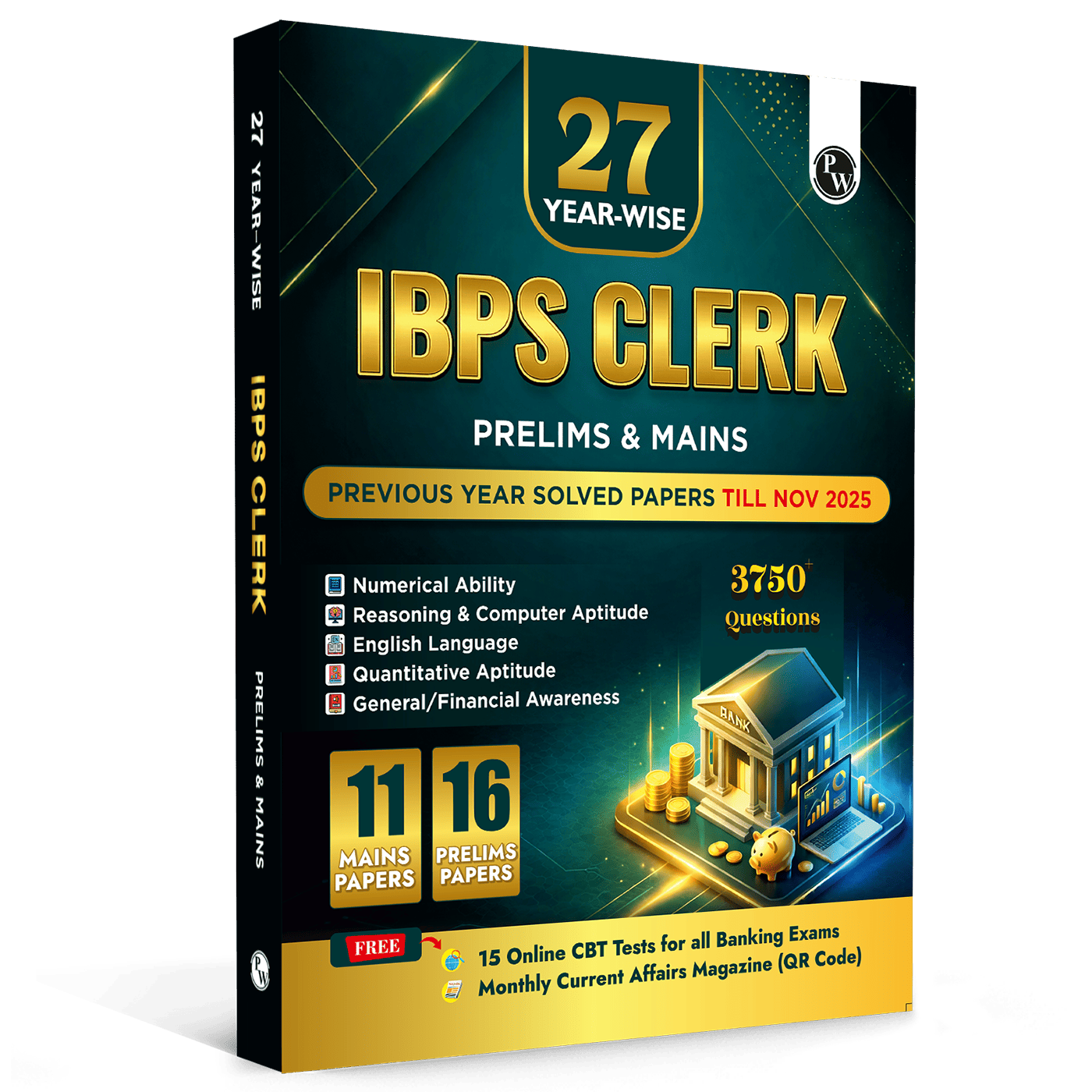
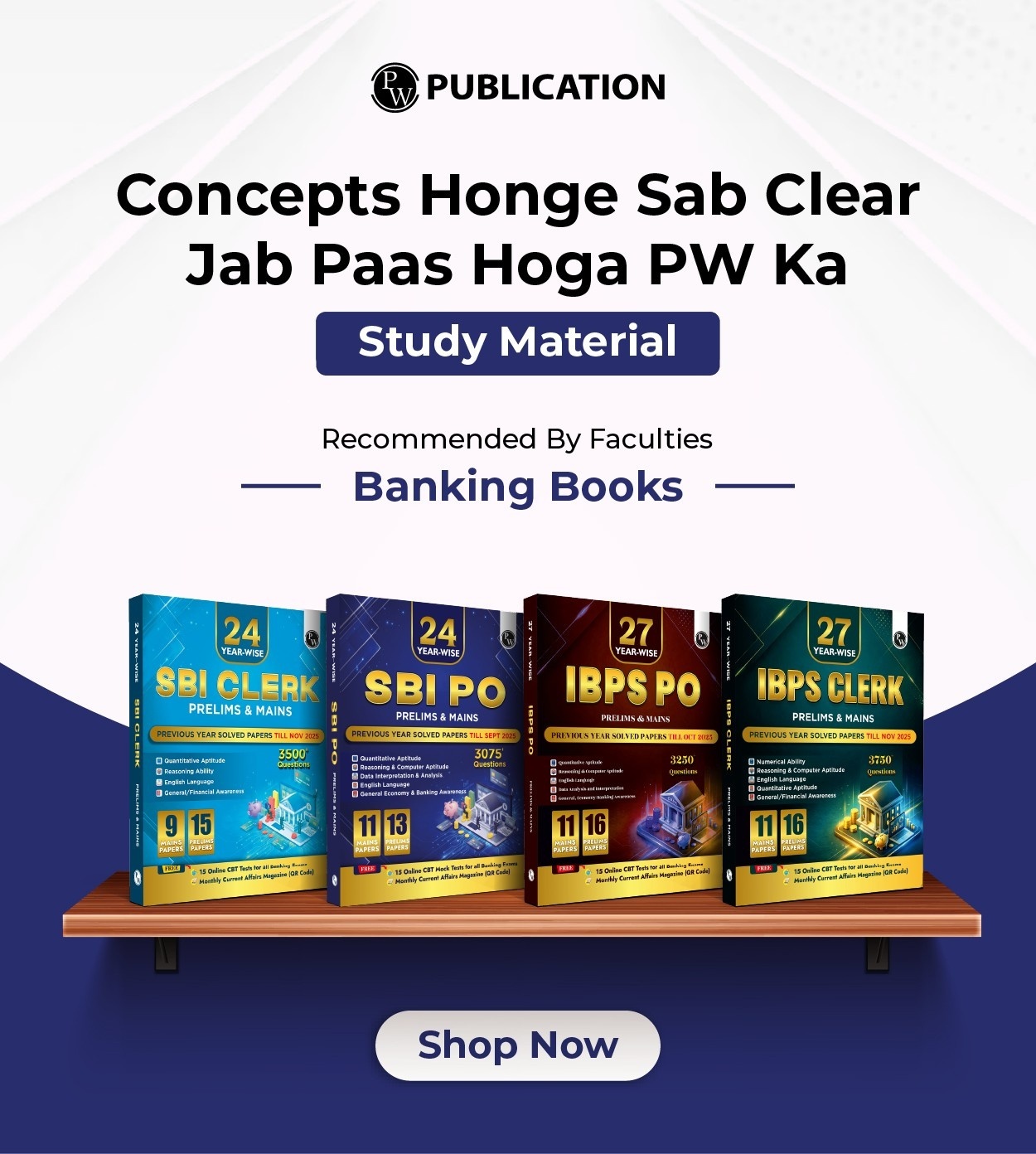
Prepare smarter with the 27 Years IBPS Clerk PYQ – Prelims & Mains (2026-27 Edition), featuring 3,750+ previous year questions, 27 year-wise solved papers, and 15 online CBT mock tests. It helps you understand the latest exam pattern, improve speed and accuracy, and build confidence for both the IBPS Clerk Prelims and Mains.
IBPS Clerk Mains Syllabus 2026
The IBPS Clerk mains syllabus is more analytical and comprises 155 questions for a total of 200 marks. The time limit for this stage of deciding merits is 120 minutes. The subjects are data-driven and advanced compared to those in the Preliminary stage.
General and Financial Awareness (40 Questions, 50 Marks, 20 Minutes)
This is a score booster for those who are updated.
-
Current Affairs - National and International Events from the past 6 months.
-
Banking Awareness - Functions of RBI, history of banking, and monetary policy.
-
Static GK - Important days, capitals, currencies, and government schemes.
-
Economic Updates - Credit policies, union budget, and financial terms.
General and Financial Awareness (40 Questions, 50 Marks, 20 Minutes)
This section is a score booster for those who are updated.
-
Current Affairs - National and International events from the past 6 months.
-
Banking Awareness - Functions of RBI, history of banking, and monetary policy.
-
Static GK - Important days, capitals, currencies, and government schemes.
-
Economic Updates - Credit policies, union budget, and financial terms.
Quantitative Aptitude (35 Questions, 50 Marks, 30 Minutes)
In the Mains, this section becomes more data-heavy.
-
Advanced DI: Radar Graphs, Caselet DI, and Mixed Graphs.
-
Data Sufficiency: Determining if data is enough to solve arithmetic problems.
-
Arithmetic Word Problems: Probability, Mensuration, and Mixtures.
-
Quantity Comparison: Analyzing two different quantities (Q1 & Q2).
Reasoning Ability & Computer Aptitude (40 Questions, 60 Marks, 35 Minutes)
This section assesses logical depth and technical basics.
-
Complex Puzzles: High-level seating arrangements with multiple parameters.
-
Machine Input-Output: Pattern-based processing strings.
-
Logical Reasoning: Statements, Assumptions, and Conclusions.
-
Computer Basics: Hardware, MS Office (Word, Excel, PPT), and Networking.
-
Cybersecurity: Viruses, Hacking basics, and Security Tools.
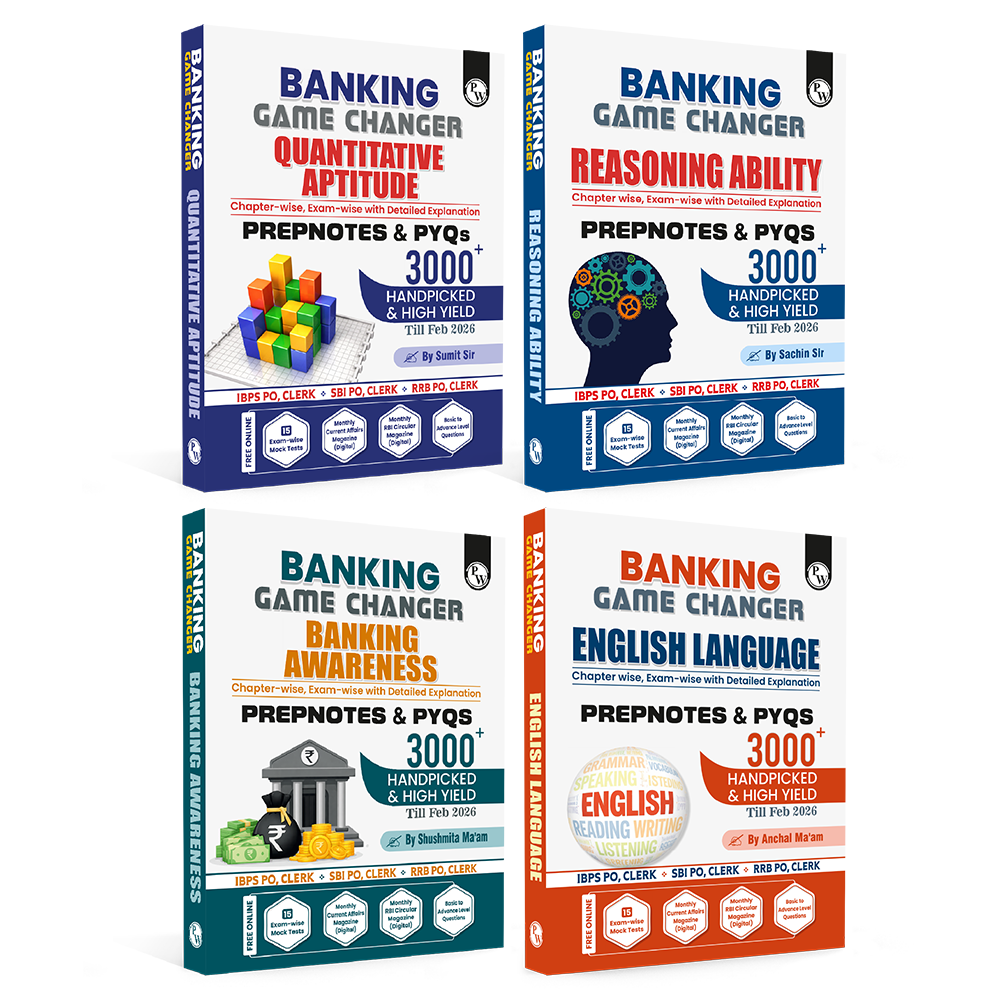
Boost your Banking exam preparation with the Banking Game Changer Books Combo, featuring comprehensive theory, chapter-wise practice, 3,000+ PYQs per subject, and 15 online CBT mock tests. The combo covers Quantitative Aptitude, Reasoning Ability, English Language, and Banking Awareness, helping you build strong concepts and improve accuracy for IBPS, SBI, RRB, and other Banking exams
Why You Should Download the IBPS Clerk Prelims Syllabus PDF?
Having an IBPS Clerk prelims syllabus pdf helps you track your progress and ensures you don't miss any topics during your study sessions. A structured checklist allows you to mark off subjects as you master them, which is essential for systematic preparation. It also helps in planning your mock test schedule with precision.
Downloading a reliable ibps clerk prelims syllabus pdf allows for offline access to the topic list. You can use it to identify high-weightage areas, such as Puzzles and Data Interpretation, which typically dominate the exam. Staying organized with a PDF roadmap is a proven strategy for top scorers who want to visualize their goals.
Get complete exam preparation in a single resource with the PW All in One IBPS Clerk 2026. It includes comprehensive subject-wise coverage, exam-focused practice questions, 12 solved previous year papers, and 15 online CBT mock tests to help improve conceptual clarity, accuracy, and confidence for the IBPS Clerk Prelims and Mains.
Subject-Wise Preparation Strategy for IBPS Clerk 2026
If you want to crack the IBPS Clerk syllabus, it is important that you use a subject-specific strategy. For the Quantitative Aptitude section of the IBPS Clerk syllabus, it is important that you increase your speed of calculation. For the Reasoning section of the syllabus, Seating Arrangement holds the most weightage. Hence, it is important that you solve at least five sets of Seating Arrangement questions on a daily basis.
In the English section of the IBPS Clerk syllabus 2026, it is important that you focus on the Reading Comprehension section as it holds significant weightage. For the General Awareness section of theIBPS Clerk syllabus, it is important that you use daily quizzes and monthly magazines to increase your speed. Analyzing your mistakes is important so that you can identify the areas where you need to improve before the actual exam on October 2026.
Read More: IBPS Clerk Preparation Tips for Upcoming Exams
IBPS Clerk Syllabus 2026 FAQs
Is there an interview after clearing IBPS Clerk Mains?
No, there is no interview for IBPS Clerk posts. Your final selection depends only on your Mains exam score. However, you must pass the Local Language Proficiency Test (LPT) for the state you applied to.
What is the negative marking in the IBPS Clerk exam?
There is a 0.25 mark deduction for every wrong answer in both Prelims and Mains. So it’s better to skip a question than guess randomly.
Where can I find the latest IBPS Clerk Prelims syllabus PDF?
You can download the latest IBPS Clerk Prelims syllabus PDF from the official IBPS website or trusted exam preparation websites.
Is the IBPS Clerk syllabus 2026 different from previous years?
The main subjects are the same as previous years, but the difficulty level—especially puzzles and DI keeps increasing.
What is the selection process for IBPS Clerk 2026?
The process has three stages: Prelims, Mains, and the Local Language Test. Prelims is only qualifying, and final selection depends on your Mains marks. Document verification happens after that.