Why Section-wise PYQ Practice Improves SBI PO Prelims Scores
Regular practice of SBI PO Prelims PYQ papers makes the SBI PO test preparation more efficient. The prior-year questions of each section assist candidates in comprehending the latest exam pattern, identifying the high-weightage themes, increasing speed and accuracy, and enhancing time management.
Regular SBI PO PYQ practice also helps in identifying the weak areas and builds up the confidence required to crack the preliminary test.
Importance of SBI PO Prelims PYQ Practice?
Solving actual past problems exposes the applicants to the actual difficulty level maintained by the exam conducting body instantly. Textbooks provide broad preparation, but real exam papers are a true reflection of the exact question patterns, trap alternatives, and time-intensive riddles.
By doing the SBI PO previous year papers, aspirants get an idea about how the topics are tested in the toughest exam environment. Candidates don't have to guess the weighting of themes; they may examine repeating question models in different shifts and throughout years.
You have to do full-length practice tests to prepare for the real thing. But if you haven't mastered the individual sections first, then doing full-length tests can be confusing. If a candidate attempts 100 questions in one go, it is tough to find the particular concept deficit in a single subject.
Section-wise practice breaks the preliminary syllabus into manageable components.
By focusing on one subject at a time, candidates can evaluate their performance in specific areas like Data Interpretation or Reading Comprehension. This methodology makes SBI PO section-wise practice significantly more effective during the core learning phase.
How to Practice SBI PO Prelims PYQ Section-Wise?
The Reasoning Ability section tests logical thinking, pattern recognition, and speed under time pressure. Puzzles and Seating Arrangements typically form a significant portion of this section, requiring systematic practice.
-
Puzzles & Seating Arrangement: Practice linear, circular, and floor-based layouts separately to learn initial conditions and elimination techniques.
-
Miscellaneous Topics: Dedicate specific practice sessions to Syllogisms, Inequality, Coding-Decoding, and Blood Relations to secure quick marks.
-
Time Allocation: Aim to solve non-puzzle questions within 6 to 8 minutes, leaving 12 to 14 minutes for complex puzzle sets.
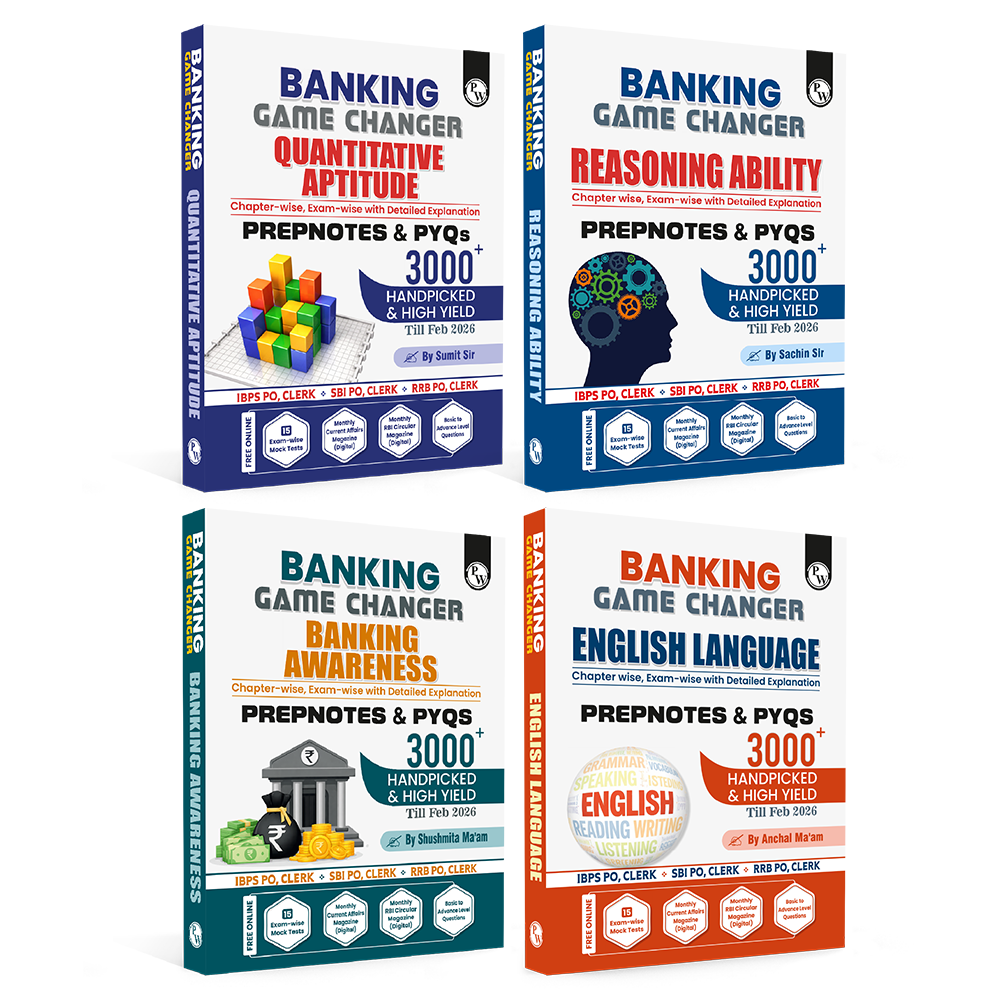
Build stronger reasoning skills with the Banking Game Changer Reasoning Ability Book by PW. It combines concept-focused learning, 3,000+ previous year questions, chapter-wise practice, and 15 online CBT tests to help you understand important reasoning topics and improve speed and accuracy. It is useful for aspirants preparing for IBPS, SBI, and RRB Banking examinations.
Quantitative Aptitude Section-Wise Practice
Quantitative Aptitude evaluates numerical ability, mathematical clarity, and rapid calculation skills. Success in this section relies on balancing speed with absolute accuracy.
-
Data Interpretation: Solve bar graphs, line charts, pie charts, and caselets from past papers to improve data extraction speed.
-
Speed Maths: Practice Approximation, Simplification, Number Series, and Quadratic Equations to build calculation momentum.
-
Arithmetic Topics: Focus on high-frequency topics such as Profit & Loss, Simple & Compound Interest, Work & Time, and Ages.
Strengthen your Quantitative Aptitude preparation with the Banking Game Changer Quantitative Aptitude Book by PW. It combines concept-based learning, chapter-wise practice, 3,000+ previous year questions, and 15 online CBT tests to help you improve calculation speed, accuracy, and problem-solving skills. It is designed for aspirants preparing for IBPS, SBI, RRB, and other Banking examinations.
English Language Section-Wise Practice
The English Language section tests grammar fundamentals, vocabulary, and reading comprehension speed. Section-wise revision allows candidates to systematically build language accuracy.
-
Reading Comprehension: Practice reading passages from past papers to improve comprehension speed and accuracy in inference-based questions.
-
Grammar & Vocabulary: Focus on Error Spotting, Cloze Tests, Para Jumbles, and Sentence Improvement questions.
-
Rule Application: Maintain a dedicated log of grammar rules encountered in past paper solutions to avoid repeating grammatical mistakes.
Make your Banking English preparation more focused with the Banking Game Changer English Book by PW. The book combines clear concept explanations, chapter-wise practice, 3,000+ PYQs, and 15 online CBT tests to help you strengthen grammar, vocabulary, comprehension, and question-solving skills. It is a useful resource for IBPS, SBI, RRB, and other Banking exams.
Benefits of Solving SBI PO Prelims PYQ Section-Wise
Practising SBI PO Prelims PYQ section-wise helps candidates improve one subject at a time, making it easier to identify weak areas, strengthen concepts, and build speed before attempting full-length mock tests.
|
Benefit Area |
Mixed Full Mock Practice |
Section-Wise PYQ Practice |
|
Focus Level |
Divided across 3 sections |
100% dedicated to one subject |
|
Error Analysis |
Generalized across all topics |
Pinpointed to specific question types |
|
Time Allocation |
Rigid 20-minute timer per section |
Flexible timer based on topic mastery |
|
Concept Retention |
Moderate due to task switching |
High due to repetitive pattern exposure |
|
Confidence Building |
Dependent on overall composite score |
Built topic by topic progressively |
Targeted Weakness Identification in Reasoning and Quant
Quantitative Aptitude and Reasoning Ability require distinct analytical skills. A candidate might excel at Syllogisms but struggle with Seating Arrangements, or perform well in Simplification while losing marks in Data Interpretation.
-
Isolating Problem Areas: Solving questions section by section isolates specific problem areas immediately.
-
Targeted Re-learning: Candidates can pause, revise the core concept, and solve ten similar previous-year questions to solidify their understanding.
-
Eliminating Repeat Mistakes: Systematic practice prevents candidates from repeating the same errors in subsequent practice sessions.
Learning Sectional Time Management and Speed
The preliminary examination enforces a strict 20-minute sectional timer for each of the three subjects. Having only 20 minutes per section means candidates cannot afford to spend more than 30 to 45 seconds on routine questions.
Solving a concentrated batch of SBI PO prelims PYQ sets under timed conditions trains the brain to recognize solvable questions quickly. Candidates learn which questions to attempt first and which complex puzzles to skip, maximizing their overall attempt rate within the allotted 20 minutes.
Improving Accuracy with Verified Solutions
Practicing without checking answer accuracy can reinforce incorrect methods and shortcuts. Reliable solved papers provide verified, step-by-step explanations for every question.
Reviewing detailed solutions helps candidates discover shorter calculation methods, standard formulas, and logical shortcuts. Comparing personal solution steps against verified explanations improves accuracy and prevents mark deduction from negative marking.
How to Use SBI PO Prelims PYQ for Daily Preparation
Before attempting questions, examine recent paper trends to understand how topics are distributed across the 100 total marks.
-
Go back to the 5-year trend analysis in your study materials.
-
Important areas in Reasoning, Quantitative Aptitude, and English.
-
Set weekly targets for preparation depending on the topic weightage.
Divide your daily schedule into dedicated subject blocks and solve SBI PO prelims PYQs in a topic-wise manner.
-
Select one specific chapter, such as Syllogism or Data Interpretation.
-
Solve 30 to 40 previous-year questions from that topic without worrying about time initially.
-
Focus purely on understanding the logic and applying correct formulas.
When you finish a practice set, review all the questions, including the ones you answered correctly, for the same length of time.
-
Compare the path of your answer with the validated explanations in the solved papers.
-
Write down the shorter ways of calculating or grammar rules you are lacking in a revision notebook.
-
Immediately re-solve all wrong or skipped problems to reinforce the right techniques.
Once you are acquainted with each individual topic, take timed sectional and full-length online examinations.
-
Under examination conditions, take the 15 online CBT tests.
-
Analyze your sectional scores, accuracy percentage, and time spent per question.
-
Refine your question selection strategy based on test analytics.
Why Choose SBI PO Prelims PYQ Book?
Having authentic and thoroughly verified preparation material is crucial for effective exam readiness. This Banking book offers a structured resource for serious aspirants targeting the 2026 exam cycle.
-
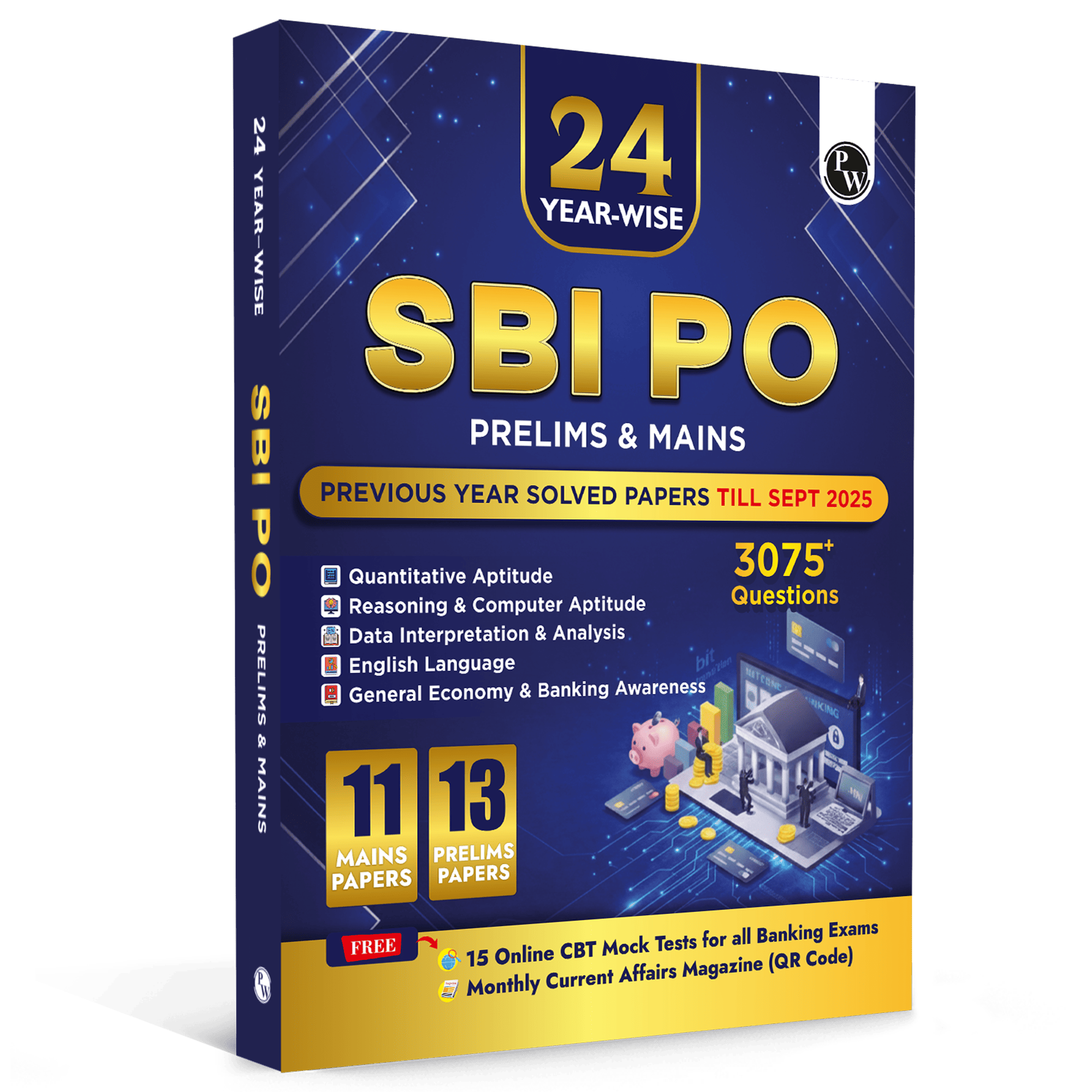
3075+ Solved Questions: Contains over 3,075 authentic questions covering both preliminary and main examination patterns up to September 2025.
-
Fully Solved Explanations: Every question includes verified and step-by-step solutions to ensure absolute conceptual clarity.
-
Updated Exam Alignment: Content is aligned with the latest syllabus, question variations, and exam trends set by the State Bank of India.
|
Feature / Component |
Details & Highlights |
|
Solved Papers Included |
24 SBI PO Prelims & Mains Solved Papers (Till 2025) |
|
Practice Volume |
3075+ Verified Past Year Questions (PYQs) |
|
Strategic Insights |
5-Year Trend Analysis & Topic-Wise Weightage Info |
|
Exam Simulation |
15 Online Computer-Based Test (CBT) Mock Tests |
5-Year Trend Analysis and Topic-Wise Weightage Insights
Understanding weightage trends allows candidates to prioritize high-yield topics during their SBI PO preparation. This solved paper resource includes a comprehensive 5-year trend analysis that breaks down question distribution across subjects.
By analyzing weightage insights, candidates can see exactly how many questions appear from specific chapters like Puzzles, Data Interpretation, or Reading Comprehension across different exam shifts. This data-driven insight prevents candidates from spending excessive time on low-yield topics.
Simulating Real Exam Conditions with 15 CBT Tests
Solving questions on paper builds conceptual clarity, but the actual examination takes place on a computer interface. The PW SBI PO PYQ resource incorporates 15 Online Computer-Based Tests (CBT) to bridge this gap.
These CBT mocks allow candidates to practice in an environment that mirrors the real exam interface, complete with countdown timers and sectional transitions. Taking online tests helps candidates refine their screen-reading speed, mouse navigation, and exam temperament.
Read More: Bank Exam Syllabus and Preparation Strategy
SBI PO Prelims PYQ FAQs
Why is section-wise PYQ practice better than mixed question practice?
Section-wise practice allows candidates to focus entirely on one subject, making it easier to identify specific conceptual weaknesses, learn topic-specific strategies, and build consistent accuracy before attempting full-length mixed mocks.
How many years of past papers should I solve for SBI PO Prelims?
Ideally, candidates should do prior papers for 5 to 10 years. Resources that cover solved papers up to recent shifts, such as papers till September 2025, give full coverage of shifting question patterns.
How does solving previous year questions help with sectional timing?
By practicing the questions in a section with a timer, candidates can get an idea about the time taken for each topic. This develops intuitive time management abilities needed to optimize attempts within the 20-minute sectional limit.
Are past year questions sufficient to clear the SBI PO Prelims exam?
Past year questions are important to get an idea of the exam patterns and the difficulty levels. But if you combine PYQ practice with topic revision and online CBT mock examinations, you are fully prepared for new varieties of questions.
How can I track my performance while solving past papers?
Keep track of your mistakes along with your score, accuracy, time per section and topics you had trouble with. The log should be checked regularly so that practice sessions are always getting better.