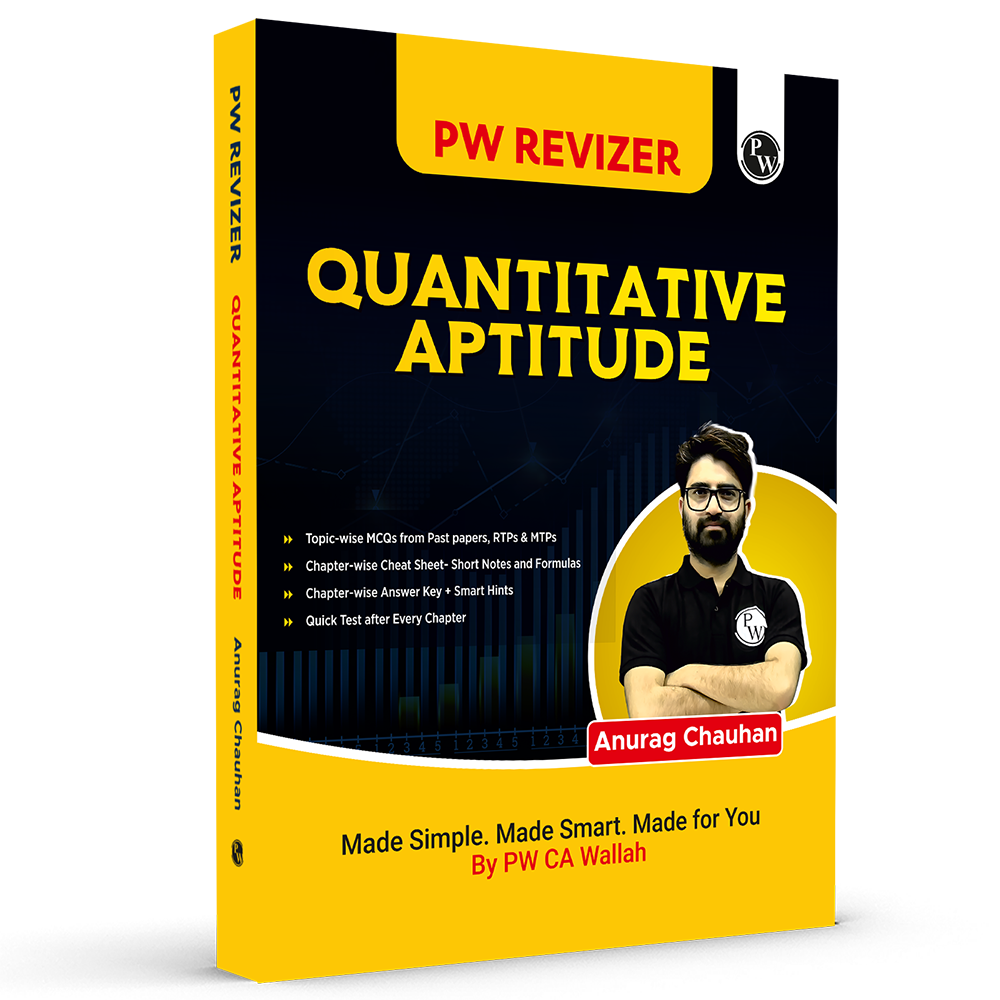
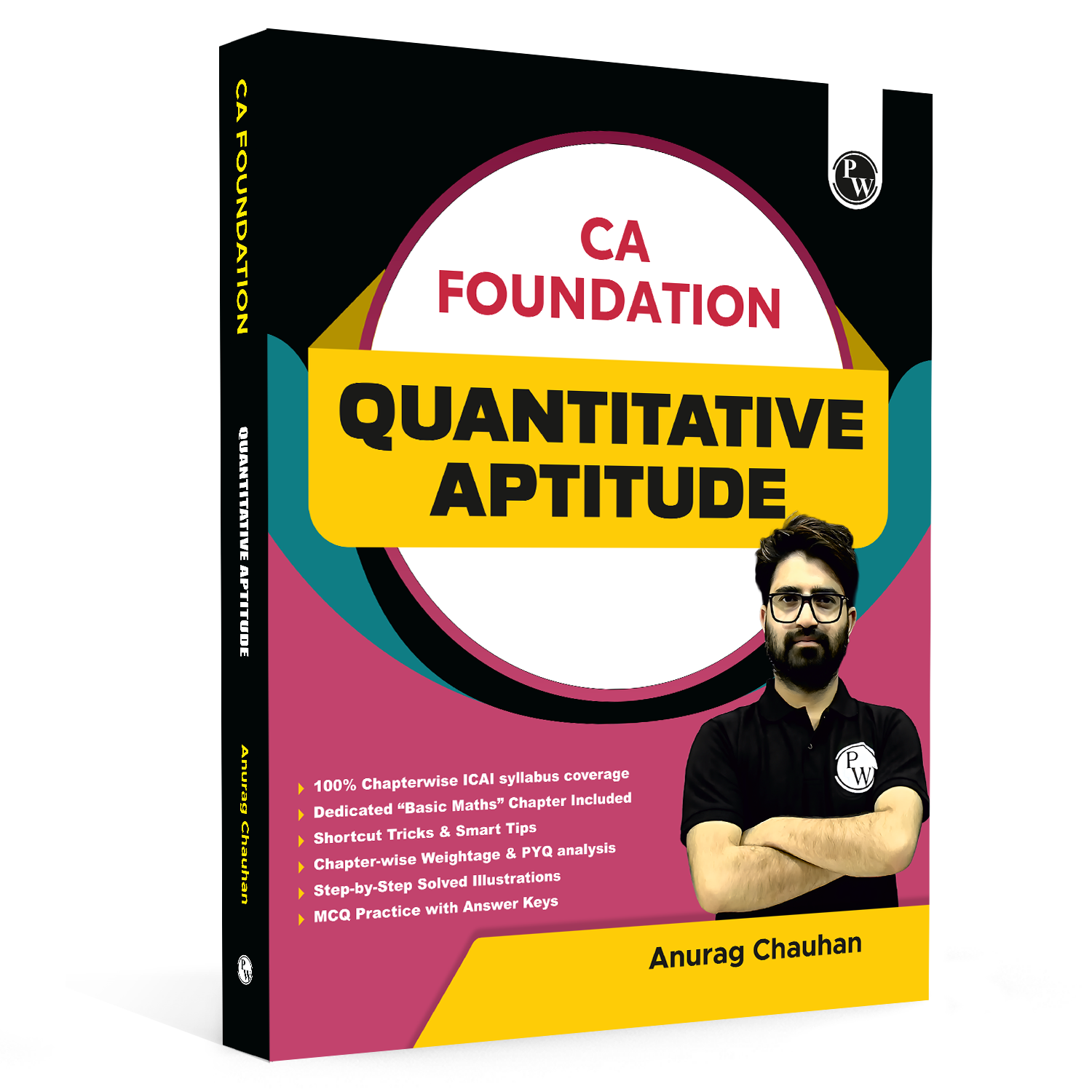
CA Foundation Quantitative Aptitude Books for Question Practice
Choosing the right CA Foundation quantitative books can help students prepare for Paper 3 with greater confidence. This paper includes Business Mathematics, Logical Reasoning, and Statistics, so students need clear concepts, regular practice, and good time management. The right study resources can help learners understand formulas, solve numerical questions, and improve their accuracy before the exam.
Why Are CA Foundation Quantitative Books Important for Exam Preparation?
Quantitative Aptitude can be challenging when students struggle with formulas, lengthy calculations, or questions that require quick thinking. Reading theory alone is not enough. Students must solve different types of questions to learn how to apply each concept.
Good CA Foundation quantitative books provide chapter-wise explanations, solved examples, and practice questions. They help students build their knowledge step by step instead of trying to learn every topic at once.
Before choosing a book, check whether it follows the latest applicable ICAI syllabus and includes enough practice for all three areas of Paper 3.
-
Complete syllabus coverage: Look for all required topics in mathematics, reasoning, and statistics.
-
Simple explanations: Choose resources that explain formulas and methods clearly.
-
Solved examples: Learn the steps used to reach the correct answer.
-
Practice questions: Solve a mix of basic and challenging problems.
-
Previous year questions: Use past questions to understand how concepts have been tested.
-
Revision support: Keep important formulas and methods easy to find.
What Features Should You Look for in CA Foundation Quantitative Books?
The right CA Foundation maths books should help students understand concepts and apply them to different question types. A book that provides only formulas or final answers may not be enough for students who are still learning the basics.
Look for books that explain each method step by step. For example, when studying time value of money, students should understand the formula, the meaning of each value, and how to use it in a question.
A useful book should also offer enough questions for practice after each chapter. This allows students to test their understanding before moving to the next topic.
-
Step-by-step solutions: Follow the calculations and understand the method.
-
Formula summaries: Review important formulas without reading the entire chapter again.
-
Chapter-wise exercises: Practise each topic immediately after learning it.
-
Mock tests: Check your speed and accuracy under timed conditions.
-
Previous year questions: Become familiar with different question formats.
-
Error analysis: Use explanations to understand why an answer is wrong.
Students should also check the quality of the answer key. Incorrect solutions can create confusion, especially in mathematics and statistics, where one calculation error can affect the final result.
How to Use CA Foundation Quantitative Books and Study Material Effectively
Good CA Foundation quantitative aptitude study material helps students organise their preparation and cover the syllabus in a planned way. Start with basic concepts and gradually move to questions that require more steps or calculations.
For example, revise ratios, proportions, equations, and basic statistical ideas before attempting more difficult questions from the relevant chapters. In Logical Reasoning, practise different question types regularly so that you can recognise patterns more quickly.
Use a separate notebook for formulas, common mistakes, and methods that you often forget. Review this notebook regularly instead of waiting until the final days before the exam.
A simple preparation routine can include:
-
Learn the concept: Read the explanation and understand the formula or rule.
-
Follow solved examples: Study how the method works in different situations.
-
Practise questions: Attempt problems without looking at the answer.
-
Check your mistakes: Identify whether the problem came from a formula, calculation, or misunderstanding.
-
Revise important points: Add difficult formulas and methods to your revision notebook.
-
Take timed tests: Check whether you can solve questions accurately within the available time.
Try to give time to all three areas of Paper 3. Focusing only on mathematics while leaving Logical Reasoning or Statistics for the end can make revision harder.
How to Improve Speed Using CA Foundation Quantitative Books and Practice Questions
Speed improves when students learn to recognise familiar question types, choose suitable methods, and avoid unnecessary calculations.
However, speed should not come at the cost of accuracy. A quick method is useful only when you understand why it works and can apply it correctly.
Use these methods during practice:
-
Read the question carefully: Identify the values given and what the question asks you to find.
-
Select the correct formula: Avoid using a formula simply because it looks familiar.
-
Use option elimination: Remove clearly incorrect options when the question allows this method.
-
Check calculations: Pay attention to signs, units, decimal values, and arithmetic steps.
-
Practise mental calculations: Improve basic numerical skills through regular short exercises.
-
Track your time: Notice which question types take longer than expected.
-
Review incorrect answers: Solve difficult questions again after revising the related concept.
You should not guess blindly when you are unsure. Check the marking rules for your exam attempt and use mock tests to practise deciding when to attempt or leave a question.
What Makes the CA Foundation Quantitative Books Useful?
When reviewing a book, check whether it offers the following features:
-
Full syllabus alignment: Content should follow the latest applicable ICAI study material.
-
Question-wise marks and attempt details: Where available, these details can help students understand the format of past questions.
-
Chapter-wise trend analysis: Past trends can guide revision, although they cannot guarantee what will appear in the next exam.
-
Topic-wise PYQs across 15+ attempts: Questions from revision test papers (RTPs), mock test papers (MTPs), and other included papers provide varied practice. Check the exact attempts covered in the edition.
-
Unit-wise mind maps: Visual summaries can help students review connected concepts quickly.
-
Clear topic lists: A well-organised structure makes it easier to locate chapters and track progress.
-
Colour-coded pages: A readable layout can help students identify important information.
-
Expert comments: Explanations and notes can clarify difficult questions and common errors.
One important point is that resources should match the subject. For Quantitative Aptitude, students should prioritise mathematical formulas, reasoning methods, statistical concepts, and numerical practice. Features such as legal case law notes are more relevant to law subjects and should not replace quantitative practice.
How to Choose the Right CA Foundation Quantitative Books for Maths and Statistics
The right books for CA Foundation maths depend on your current knowledge and preparation needs. Beginners may need detailed explanations and worked examples, while students who have already completed the syllabus may benefit more from question banks and mock tests.
Preparation resources from trusted educational publishers, including available combo sets and individual modules, may help students organise their study material. However, check the exact product contents rather than assuming every package includes the same features.
-
Author and publisher: Review the background of the author and the reliability of the publisher.
-
Syllabus coverage: Confirm that all required topics are included.
-
Detailed solutions: Choose books that explain the method, not just the answer.
-
Question variety: Look for conceptual, calculation-based, and exam-style questions.
-
Revision tools: Formula sheets and chapter summaries can save time.
-
Price and format: Compare printed books, digital resources, and combo sets based on your needs.
You do not need to buy several books that cover the same topics. A reliable main resource, official study material, and a suitable source of additional practice may be enough if you use them consistently.
CA Foundation Quantitative Books FAQs
What topics are covered in CA Foundation quantitative books?
These books cover the topics included in Paper 3, Quantitative Aptitude. The paper includes Business Mathematics, Logical Reasoning, and Statistics. Depending on the syllabus, mathematics topics may include equations, matrices, and time value of money, while statistics includes areas such as averages and probability. Check the latest ICAI syllabus for the exact topic list.
Is ICAI study material enough alongside CA Foundation quantitative aptitude books?
ICAI study material is an important resource for learning the prescribed syllabus. Additional CA Foundation quantitative aptitude books can provide more practice questions, worked examples, and mock tests. Whether you need extra books depends on your understanding and the amount of practice you require.
How many CA Foundation maths practice questions should I solve daily?
Choose a target that allows you to solve questions carefully and review your mistakes. You may begin with a smaller set and gradually increase the number as your speed and accuracy improve. Include questions from mathematics, Logical Reasoning, and Statistics over your study week.
How can CA Foundation quantitative aptitude study material help with negative marking?
Practice material with timed tests can help students improve accuracy and learn to manage uncertain questions. Students can review their mistakes and practise making sensible attempt decisions. Always check the official marking scheme for your exam attempt rather than relying on assumptions about negative marking.