CSIR NET Negative Marking: How to Avoid Losing Marks with PW Books
Are you facing problem due to lost marks in CSIR NET exam? Get expert study materials to learn the strategic way to handle the CSIR NET negative marking system to increase your score and get a high rank.
CSIR NET Exam Pattern and Negative Marking
Each year, thousands of candidates prepare meticulously for the CSIR NET exam, vying for coveted Junior Research Fellowships and lectureship posts. But many candidates stumble at a vital hurdle: the marking scheme. The very first step toward a good approach is to know the exact pattern of the exam. The test is conducted in three different portions with objective type questions to assess the candidate’s theoretical knowledge and analytical abilities.
Knowing how marks are allocated changes the whole approach to the paper. Instead of thinking of the test as a test of memory, think of it as a tactical problem. varying sections carry varying weights and have particular criteria for wrong answers. As you go over past papers and practice manuals, pay attention to the way the questions are worded. This will stop you panicking on exam day and help you make the most of your time during the three parts of the test.
CSIR NET Negative Marking Rules
Fear of losing marks is generally there because of not clear CSIR NET negative marks. This test has different deductions for different sections and different points for different questions as opposed to exams which have the same penalty for all sections. A wrong guess might spoil hard earned points from correct answers in no time and bring down your overall percentile.
Reviewing official guidelines reveals that incorrect attempts subtract a fraction of the total marks allotted to that question. For instance, in sections featuring higher-value questions, the penalty for a wrong answer is correspondingly steeper. This proportional deduction means guessing blindly is a high-risk gamble. To protect your final score, you must calculate whether the probability of getting a question right outweighs the fixed penalty for error. Developing this risk-assessment mindset separates successful candidates from those who fall short by narrow margins.
How to Avoid CSIR NET Negative Marking
To avoid thoughtless mistakes you have to train hard and have a system to eliminate choices on test day. Many students just lose points because they misinterpreted the question or raced through the options. A systematic approach to each inquiry will help eliminate preventable errors greatly.
-
Scan the paper first: Spend the initial minutes skimming through all questions to identify high-confidence areas.
-
Use elimination: Cross out clearly incorrect options to improve your statistical odds if you decide to attempt a difficult question.
-
Leave doubtful items blank: If you are completely unsure between two remaining choices, skipping is safer than inviting negative marking.
-
Monitor your time: Rushing leads to miscalculations and overlooked negatives in the question stem. Pace yourself evenly.
Best Books to Prepare for CSIR NET Negative Marking
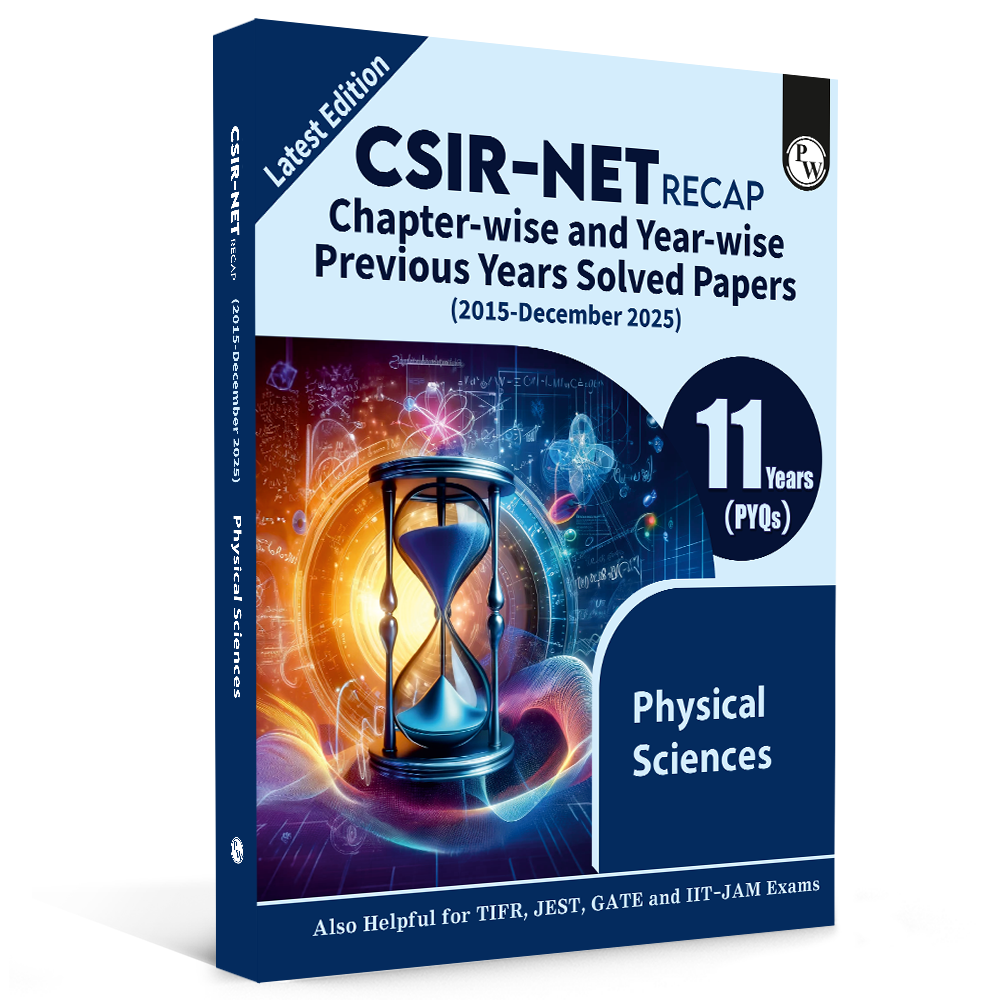
To build accuracy, you need high-quality practice resources that reflect the real difficulty and structure of the national test. With the help of common CSIR NET preparation books, you will face different types of problems long before the exam. These volumes give ample practice sets with extensive solutions that illustrate the underlying concepts, not just the final answers.
Working through carefully chosen problem banks helps your brain to identify frequent traps made by examiners. Solving timed mock tests from reliable study resources puts you under actual exam pressure. This practice trains you to know when to try a question and when to walk away. With time, you develop an intuition to navigate the CSIR NET marking scheme with 100% certainty and minimum score erosion.
How to Improve Accuracy with CSIR NET Negative Marking
A high attempt count does not always lead to a higher score when wrong answers carry a penalty. During negative marking, accuracy should therefore remain a major part of your preparation strategy. Instead of trying to solve every question, practise identifying questions that match your strongest concepts and can be answered with reasonable confidence.
Divide practice problems in three groups. problems you can solve right away, questions that take some computation or thinking and questions you are not convinced about the idea. Try the first category quickly . Come back to the second category with enough time . Carefully judge if the third category is worth attempting . This strategy cuts down on useless guesses.
You can also keep an accuracy tracker when solving mock tests. Keep track of your total attempts, right answers, wrong responses and unresolved questions. Looking at these figures after every test might help you see if your mistakes stem from weak concepts, hurried computations or superfluous tries. And, this in turn, makes your test taking decisions more careful over time and allows you to protect marks under the negative marking system.
Read More - UGC NET vs CSIR NET – Differences and Career Scope
How an Error Log Can Reduce CSIR NET Negative Marking
An error log makes wrong replies a vital part of your preparation. If you don’t score marks in a mock test or practice session, don’t just see the correct answer and move on. Write out the reason of the mistake and what may have prevented it. This is especially helpful while preparing for negative marking, as multiple silly mistakes can impact your grade even when you have great conceptual knowledge.
Create separate categories for conceptual mistakes, calculation errors, misreading questions, incorrect option selection, and guesses made without sufficient confidence. Review this log at the end of every week and identify patterns. If several mistakes come from the same chapter, return to the relevant concepts before attempting another test.
You can also revisit previously incorrect questions after a few days without looking at the solution first. Try solving them independently and compare your approach with the original mistake. This repeated review helps strengthen weak areas while making you more aware of the situations in which you tend to take unnecessary risks. Over time, your practice becomes more focused on accuracy rather than simply increasing the number of questions attempted.
Mock Test Strategy for CSIR NET Negative Marking
Mock tests are useful not only for checking preparation but also for developing better decision-making under exam conditions. To manage negative marking, use each mock test to practise when to attempt, when to postpone, and when to leave a question unanswered. Avoid treating every mock as an opportunity to maximise the number of attempts.
After completing a test, compare your attempted questions with your accuracy. Pay particular attention to questions where you changed a correct answer to an incorrect one or attempted a question despite having low confidence. These patterns can reveal habits that may lead to avoidable mark deductions.
Repeat this analysis across several mock tests rather than judging your strategy from one paper. Set an accuracy target for each practice session and gradually improve your question selection. With regular analysis, you can develop a more controlled approach to the paper and reduce the number of marks lost through avoidable mistakes.
FAQs
What is the penalty for incorrect answers under the csir net negative marking system?
The penalty varies by section and question weight, typically deducting a specific fraction of the total marks allotted to that question for every wrong response.
How does the official CSIR NET exam pattern influence scoring?
The exam is divided into sections with varying mark allocations and negative marking rules, requiring candidates to balance attempt volume with accuracy.
Can strategic practice reduce CSIR NET negative marks?
Yes, solving timed mock tests and structured practice sets helps you identify weak spots and eliminates impulsive guessing during the actual exam.
Which resources help most with understanding the CSIR NET marking scheme?
Official information bulletins combined with comprehensive study guides and chapter-wise practice books provide the clearest insight into how scores are calculated.
How to avoid negative marking in CSIR NET?
Focus on high-confidence questions during initial passes, use elimination tactics for tricky options, and leave ambiguous questions unanswered to protect your score.