Do or Die Topics for CUET Exam, Subject-wise Weightage List
It can feel like a race against time to get ready for the Common University Entrance Test (CUET). Many students have trouble figuring out which chapters are the most important to study because the syllabus is so big and covers Class 12 NCERT. The difference between a score in the 99th percentile and an average score is knowing the right topics for CUET exam. By focusing on important chapters for CUET, you can maximise your marks even if you started your preparation late. This article provides a comprehensive CUET exam important chapters list and a detailed CUET subject wise topics weightage to help you build a "Do or Die" study plan.
Check out: CUET Books
Topics for CUET Science Stream
There is a lot of competition in the Science stream. The National Testing Agency (NTA) usually follows the Class 12 NCERT curriculum quite closely for topics like Physics, Chemistry, and Biology. However, some CUET UG important chapters are far more vital than others.
Physics Important Chapters and Weightage
There are a lot of numbers in the Physics chapters, and the conceptual units like optics are also important. If you don't have much time, make sure you learn these CUET exam preparation topics first:
-
Optics: This is the most important unit, making up about 14% to 16% of the paper.
-
Electrostatics & Current Electricity: These two units together make for about 20% of the questions.
-
Magnetic Effects of Current and Magnetism: A high-yield area with about 8 to 10 questions expected.
-
Modern Physics (Atoms and Nuclei): Usually easier to score in, but requires clear conceptual understanding.
Chemistry High Weightage Chapters
Chemistry is often divided into physical, organic, and inorganic sections. The CUET subject wise topics for Chemistry show a strong preference for organic reactions and inorganic coordination.
-
Coordination Compounds: Expect 5 to 6 questions. It is a moderately difficult but essential topic.
-
Electrochemistry & Solutions: These often appear as case-study-based questions.
-
Organic Chemistry (Aldehydes, Ketones, and Carboxylic Acids): A "Do or Die" section for every aspirant.
-
p-Block, d, and f-Block Elements: Purely NCERT-based but high in weightage.
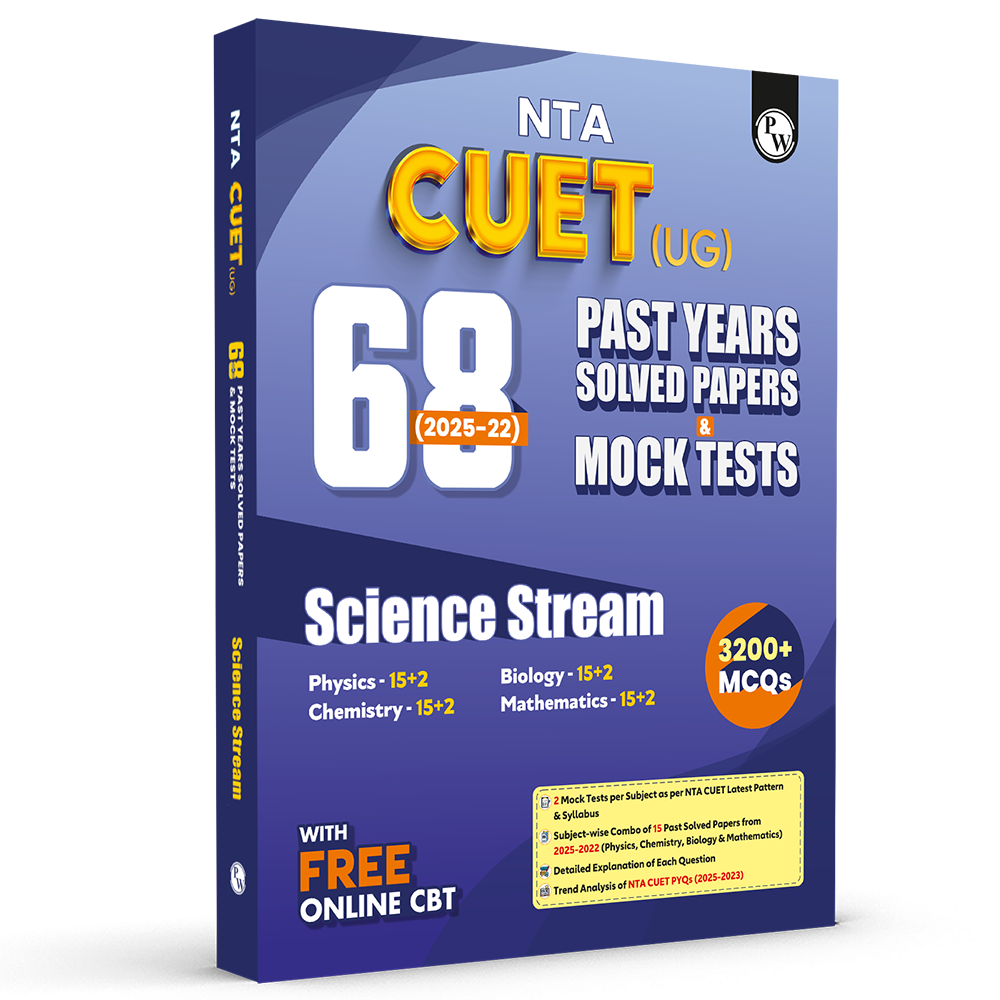
Check Out: NTA CUET (UG) Science Stream 68 Past Years Solved Papers
Topics for CUET Exam Subject Wise Weightage Table
This table breaks down the expected number of questions for major domain subjects, helping you identify important chapters for CUET.
|
Subject |
Highly Important Chapters |
Expected No. of Questions |
|
Physics |
Optics, Electrostatics, Magnetism |
22-24 |
|
Chemistry |
Coordination Compounds, Alcohols, d & f Block |
18-20 |
|
Mathematics |
Calculus (Integration/Differentiation), Matrices |
15-18 |
|
Biology |
Genetics and Evolution, Ecology, Biotechnology |
20-22 |
|
Accountancy |
Partnership Accounts, Share Capital |
15-20 |
|
Economics |
Consumer Behaviour, Macroeconomics |
12-15 |
Topics for CUET Exam Mathematics Important Chapters
For Maths, speed and accuracy are vital. There is a required part of the syllabus, and then there are core and applied parts. Focus on these CUET UG important chapters:
-
Calculus: This is the backbone of the Maths paper. Prioritise integration, differentiation, and their applications.
-
Algebra (Matrices & Determinants): These are not too hard and usually have 4 to 6 straightforward problems.
-
Probability: An important part, especially in the applied math segment.
-
Relations and Functions: This section usually has 5 to 6 questions.
Topics for CUET Exam Commerce and Humanities
If you are aiming for B.Com or B.A. courses, your CUET exam preparation topics will focus heavily on theory and application.
Commerce Stream
-
Accountancy: Reconstitution of Partnership and Accounting for Share Capital are non-negotiable. They often make up nearly 40% of the domain-specific questions.
-
Business Studies: Focus on the Principles of Management and Business Environment. Case studies are very common here.
-
Economics: Introductory Macroeconomics and the Determination of Income and Employment are vital.
Humanities Stream
-
History: Focus on "An Imperial Capital: Vijayanagara" and "The Mughal Court".
-
Political Science: "Recent Developments in Indian Politics" and "Politics of Planned Development" carry high weightage.
-
Geography: Human activities and map work are high-scoring areas.
Check Out: NTA CUET (UG) Commerce Stream 54 Past Years Solved Papers
NTA CUET (UG) Humanities Stream 58 Past Years Solved Papers
Topics for English CUET exam
The language section is often overlooked but highly scoring.
-
Reading Comprehension
-
Vocabulary (Synonyms, Antonyms)
-
Grammar (Tenses, Prepositions, Articles)
-
Sentence Correction
-
Para Jumbles
Focusing on these topics for cuet exam can significantly improve your overall score.
Topics for CUET Exam Additional Subjects
If you are appearing for specialised subjects, focus on:
-
Computer Science / Informatics Practices: Python, SQL, Data Handling
-
Psychology: Behaviour, Development, Mental Processes
-
Sociology: Social Institutions, Change & Development
-
Legal Studies: Judiciary, Rights, Constitution
-
Environmental Science: Ecosystems, Sustainability
These topics for the CUET exam are important for specific course requirements.
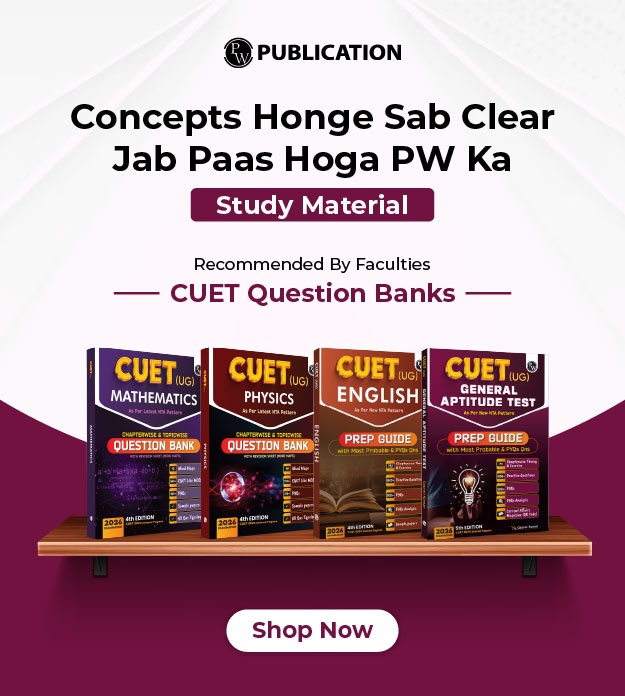
Check Out: CUET Question Bank
Topics for CUET Exam General Test
Many universities require the CUET General Test. To ace this, focus on these CUET exam important chapters list items:
-
Quantitative Reasoning: Percentage, Ratio and Proportion, Time and Work, and Basic Geometry.
-
Logical Reasoning: Number Series, Blood Relations, and Coding-Decoding.
-
Current Affairs: Focus on the last 6 months of national and international news.
-
General Knowledge: Static + Current Affairs
-
General Science: Basic Physics, Chemistry, Biology
-
Environmental Awareness
-
Data Interpretation
Subject wise Preparation Tips for CUET Exam
-
Physics: Practise numericals daily and revise formulas
-
Chemistry: Focus on NCERT reactions and concepts
-
Mathematics: Solve timed mock tests for speed
-
Biology: Use diagrams and revise NCERT lines
-
Commerce: Practice case studies and formats
-
Humanities: Focus on theory clarity and keywords
These targeted strategies help you master topics for the CUET exam efficiently.
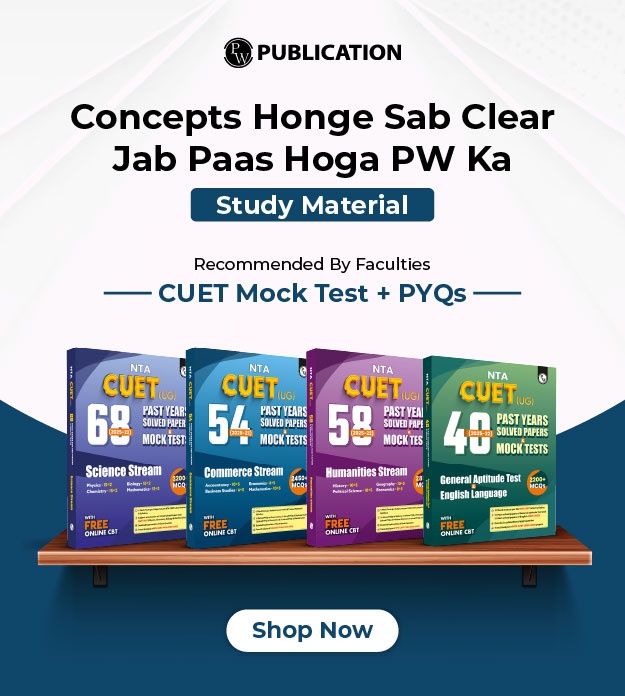
Check out - CUET Mock Test + PYQs
Tips to Cover CUET Topics
To effectively cover these topics for the CUET exam, follow a structured approach:
-
NCERT is King: More than 80% of questions are derived directly from NCERT textbooks. Follow them religiously.
-
Mock Tests: Do at least 10 to 12 of them. This helps you get faster and better at using the computer-based format.
-
Formula Sheets: Make a one-page formula sheet for each high-weightage chapter in physics and maths.
-
Time Management: Since you have limited time per question, practise solving easy questions in under 40 seconds to save time for tougher numericals.
Concentrating on the crucial chapters listed above will make your preparation go more smoothly. Instead of trying to learn everything, focus on the chapters that are most important.
Read More: CUET Previous Year Question Papers, Download PDFs
Do or Die Topics for CUET Exam FAQs
Which are the most important topics for CUET exam in Physics?
The most critical units are optics, electrostatics, and magnetic effects of current. Optics alone can account for up to 14% of the weightage.
Is NCERT enough for exam preparation topics?
Yes, NCERT is the main source. Most of the questions in the domain courses are based on the NCERT syllabus for Class 12
What is the weightage of calculus in the CUET Maths paper?
Calculus is a very important topic, and it usually makes up 15% to 20% of the problems in the Maths portion.
Are there any case-study questions in the CUET Chemistry paper?
Yes, there are typically case-study questions on subjects like electrochemistry, solutions, and coordination compounds.
How can I find the full list of important chapters for the CUET exam in my subject?
To find the chapters with the most weight, you should look at the official NTA syllabus and compare it to the subject-wise weightage tables in this guide.