CUET PG Previous Year Question Papers: How to Use PYQs Effectively
You might find yourself staring at bulky textbooks, wondering if your revision schedule aligns with actual testing standards. Many students struggle to bridge the gap between theoretical reading and practical exam application, creating unnecessary stress right when momentum matters most. Incorporating CUET PG previous year question papers directly into your daily routine resolves this challenge.
By working through authentic past materials, you transform passive learning into active problem-solving, ensuring your CUET PG preparation remains targeted, efficient, and completely aligned with modern university expectations.
Without a structured approach, thousands of hours spent reading theoretical chapters can easily go to waste during the final examination hours.
What Are CUET PG Previous Year Question Papers
Understanding the exact anatomy of a national-level entrance test requires looking closely at verified past archives. Authentic CUET PG previous year question papers serve as transparent blueprints of previous testing cycles. They capture the official distribution of domain-specific questions, general aptitude sections, and exact marking schemes without ambiguity. When you look at these documents, you stop guessing what the examining body might test and start seeing clear patterns of historical evaluation.
-
These structured paper archives preserve the exact questions asked in earlier examination windows.
-
They reveal structural shifts or consistency in how testing authorities frame difficult syllabus concepts.
-
Reliable study resources often bundle these questions into a specialized CUET PG PYQ book format alongside chapter-wise exercises.
-
Past test sets provide the exact distribution of weightage across different core subjects within your chosen postgraduate domain.
-
Reviewing these documents helps eliminate exam-day anxiety by familiarising you with the layout, font styles, and instruction patterns.
Explore CUET PG books for effective preparation with concept-based theory, previous year questions, practice sets, and detailed solutions to build concepts, improve accuracy, and strengthen exam readiness.
Why CUET PG Previous Year Question Papers Important for the Exam
Examining raw test sheets offers incredible clarity regarding what examiners value most during paper creation. Relying entirely on standard textbooks can sometimes lead students down rabbit holes of redundant information. Reviewing past tests successfully filters out the academic noise and highlights high-yield areas. When you analyze multiple years of testing data side by side, distinct operational trends emerge that completely reshape how you allocate your weekly revision hours.
-
Past papers highlight which specific syllabus chapters carry the heaviest weight in the actual exam.
-
They help you gauge whether recent difficulty trends lean toward deep conceptual analysis or rapid factual recall.
-
Certain core themes reappear across multiple consecutive years, signaling absolute must-study areas for your CUET PG preparation.
-
The proportion of numerical versus theoretical questions becomes obvious when you review successive years of past papers.
-
You learn how examiners phrase tricky statements designed to test your deep comprehension rather than rote learning.
How to Use CUET PG Previous Year Question Papers for Topic-Wise Practice
Randomly flipping through old exam sets rarely yields meaningful academic progress. Effective utilization requires a systematic, topic-by-topic breakdown that matches your ongoing syllabus progression rather than waiting until the end of your term. When you anchor your daily study sessions to past questions, every theoretical chapter immediately gains practical context.
-
Pair your current textbook chapter directly with corresponding questions found inside CUET PG previous year papers.
-
Solve targeted questions immediately after finishing a study unit to test your retention and conceptual clarity.
-
Utilize a dedicated CUET PG PYQ book that organizes questions by chapter to streamline this active practice phase.
-
Track your accuracy rate for each individual sub-topic to identify lingering knowledge gaps early in your revision cycle.
-
Revisit challenging topics whenever your practice scores drop below acceptable thresholds during chapter tests.
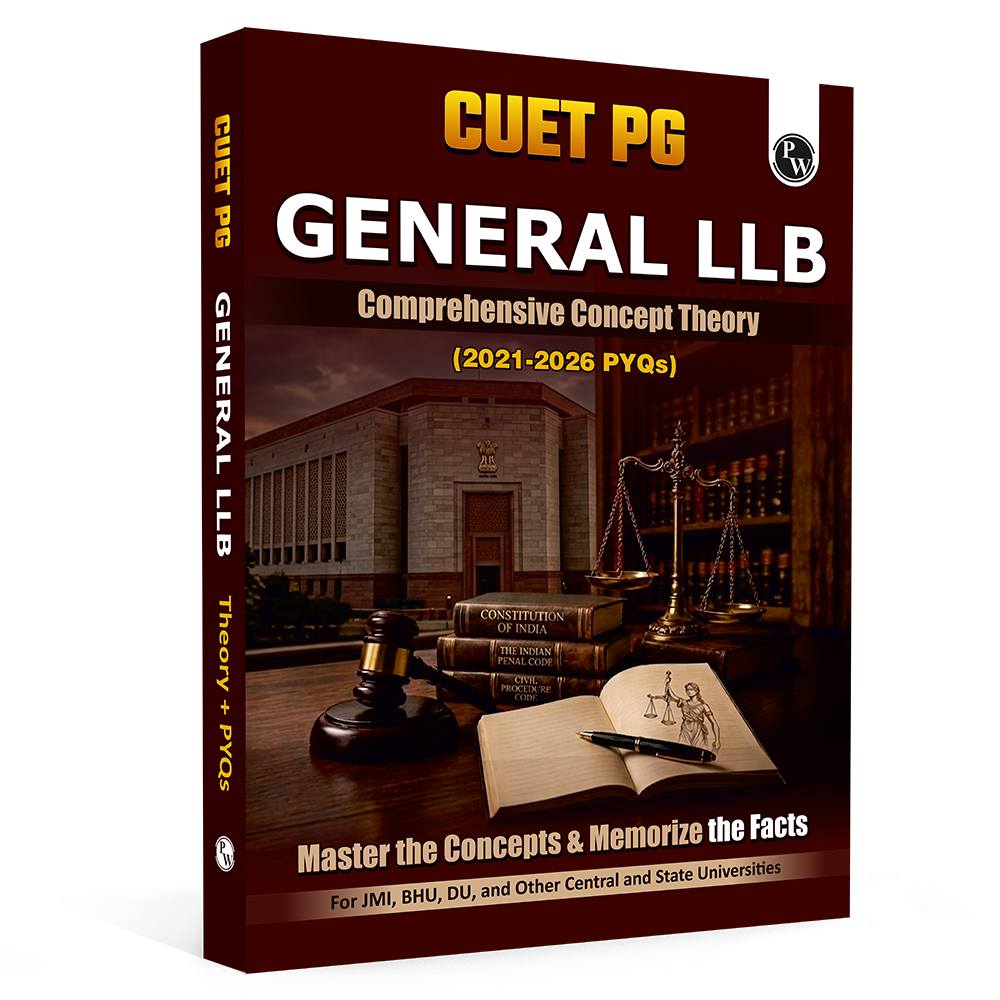
PW CUET PG General LLB Book: Get concept-based theory along with 6 years of PYQs (2026–2021), suitable for preparation for JMI, BHU, DU, and other central universities.
PW CUET PG Economics Book: Study with concept-based theory and 6 years of PYQs (2026–2021), covering key preparation needs for JMI, BHU, DU, and other central universities.
PW CUET PG Commerce Book: Prepare with concept-based theory and 6 years of PYQs (2026–2021), suitable for aspirants targeting JMI, BHU, DU, and other central universities.
PW CUET PG Computer Science Book: Build concepts and practise with 6 years of PYQs (2026–2021), designed for aspirants preparing for JMI, BHU, DU, and other central universities.
Which Questions to Mark While Solving CUET PG Previous Year Question Papers
Not every single practice question requires the exact same amount of revision attention. As you work through various CUET PG question papers, filtering your practice makes final-week reviews much more streamlined. Building a curated collection of difficult or unique problems ensures that your last-minute revision focuses purely on high-leverage learning.
-
Highlight questions where tricky phrasing or hidden conditions nearly caused a calculation mistake.
-
Mark alternative problems that unlock faster shortcut techniques or simpler logical pathways.
-
Note down questions touching upon syllabus areas that require further personal revision.
-
Categorize questions based on whether they tested fundamental definitions or complex multi-step analytical reasoning.
-
Keep a separate notebook dedicated solely to these marked questions to review during the final fortnight before your test.
Study Strategy Plan with CUET PG Previous Year Question Papers
A structured weekly routine prevents academic burnout during the intense mid-term revision phase. Incorporating past assessments into your timetable ensures balanced subject coverage across all your chosen academic domains. Without a disciplined timeline, it is easy to spend too much time on comfortable subjects while ignoring complex testing modules.
-
Build a strong conceptual foundation using standard study material before touching any past papers.
-
Introduce timed practice sessions using CUET PG PYQs once you finish half of your syllabus chapters.
-
Analyze your performance trends, fix recurring calculation errors, and revise your marked questions regularly.
-
Allocate specific weekend blocks exclusively for full-length mock examinations under strict time constraints.
-
Dedicate weekdays to resolving individual subject blocks and clearing specific conceptual doubts using your reference texts.
Read More - CUET PG Syllabus 2027: Subject-Wise Books for Preparation
Mistakes to Avoid While Solving CUET PG Previous Year Question Papers
Even dedicated students sometimes misuse these valuable resources, limiting their overall score improvements. Avoiding common procedural errors keeps your study momentum moving in the right direction. Recognizing these pitfalls early prevents bad habits from permanently damaging your exam performance.
-
Never just check the final answer key; always read the step-by-step reasoning behind correct solutions.
-
Treating past papers like casual reading material fails to build the time-management skills needed for exam day.
-
Rushing the performance analysis phase leads to repeating the exact same errors in subsequent mock tests.
-
Attempting past papers before finishing your basic syllabus concepts leads to unnecessary frustration and loss of confidence.
-
Ignoring negative marking patterns during self-evaluation gives you an unrealistic picture of your actual competitive standing.
Practice Sheet for CUET PG Previous Year Question Papers Preparation
Consistent practice requires organized tracking of your daily milestones and weak spots. Creating a personal evaluation sheet helps you monitor growth throughout the mid-term session. Structured tracking turns vague anxiety about exam performance into clear, measurable data points that you can systematically improve week after week.
-
Record the attempt date, paper year, and total score achieved for every practice session.
-
Categorize mistakes into conceptual gaps, silly calculation errors, or severe time crunches.
-
Maintain a running list of difficult questions extracted from various CUET PG previous year question papers for rapid final-month revision.
-
Note the exact time taken to complete each section to isolate bottlenecks in your pacing strategy.
-
Compare your weekly progress metrics against previous cycles to verify that your retention rates are steadily improving.
Frequently Asked Questions
What are the best books for CUET PG preparation?
The best study guides are those that cover the latest syllabus, explain concepts clearly, and include practice questions, mock tests, and CUET PG previous year question papers.
Do CUET PG books include previous year questions?
Yes, quality study guides include previous year questions with detailed solutions to help students understand the exam pattern and improve their preparation.
Can beginners prepare for CUET PG using standard books?
Yes, books designed with simple explanations, structured content, and practice exercises make preparation accessible for both beginners and repeat aspirants.
Why are CUET PG PYQs important for scoring high?
Regularly practicing past questions improves conceptual clarity, increases accuracy, and helps students solve exam-oriented problems confidently.