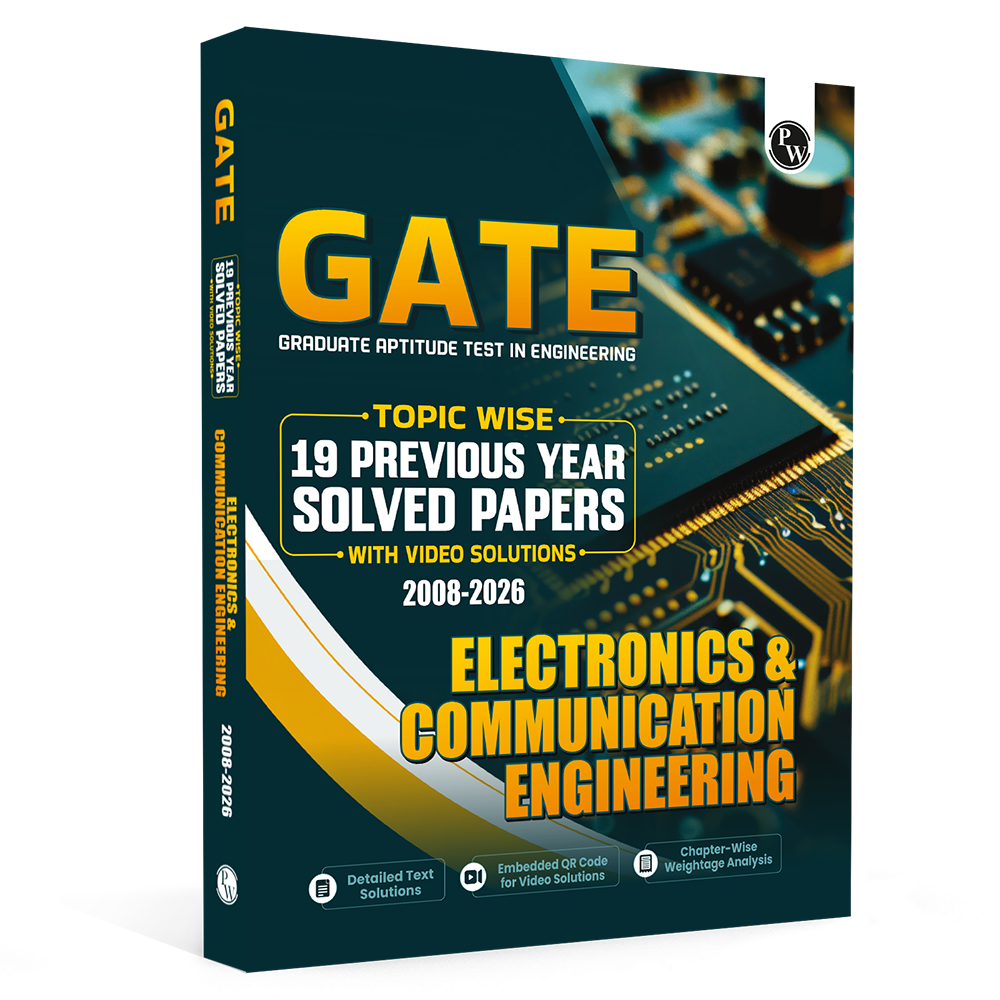
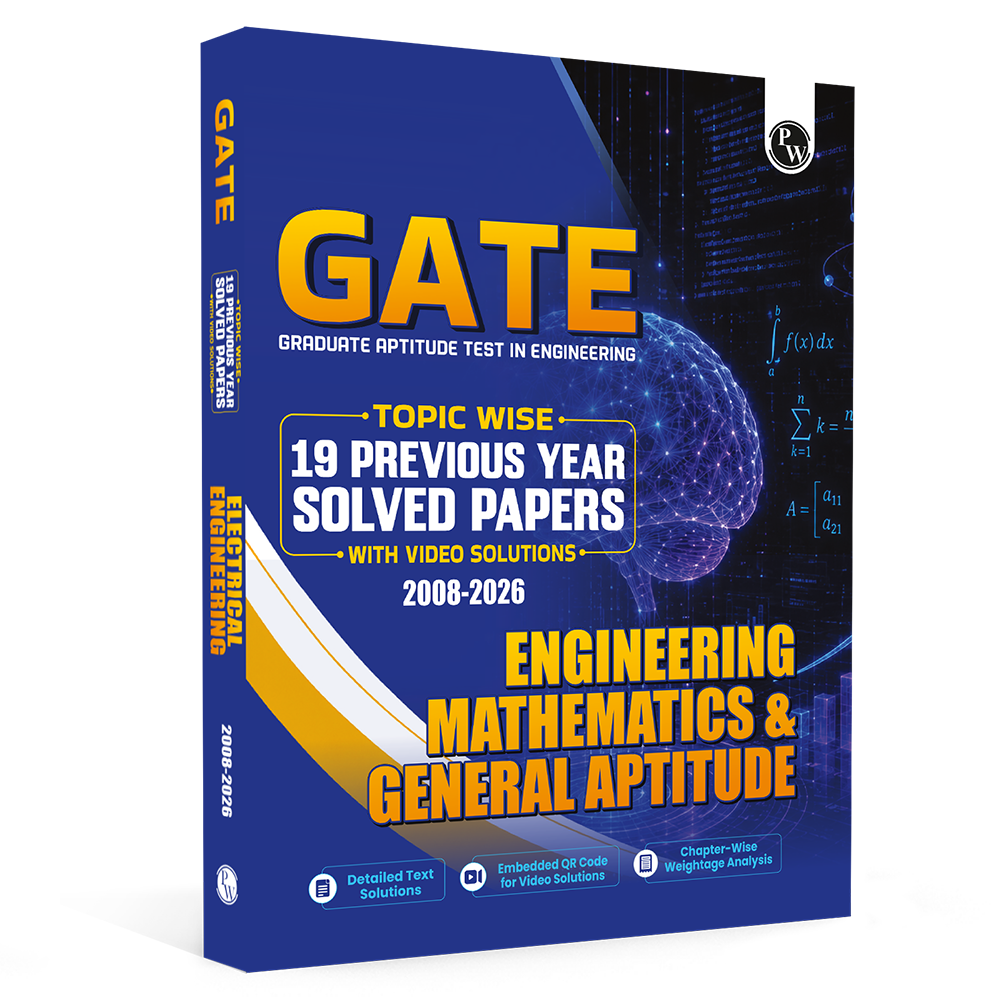
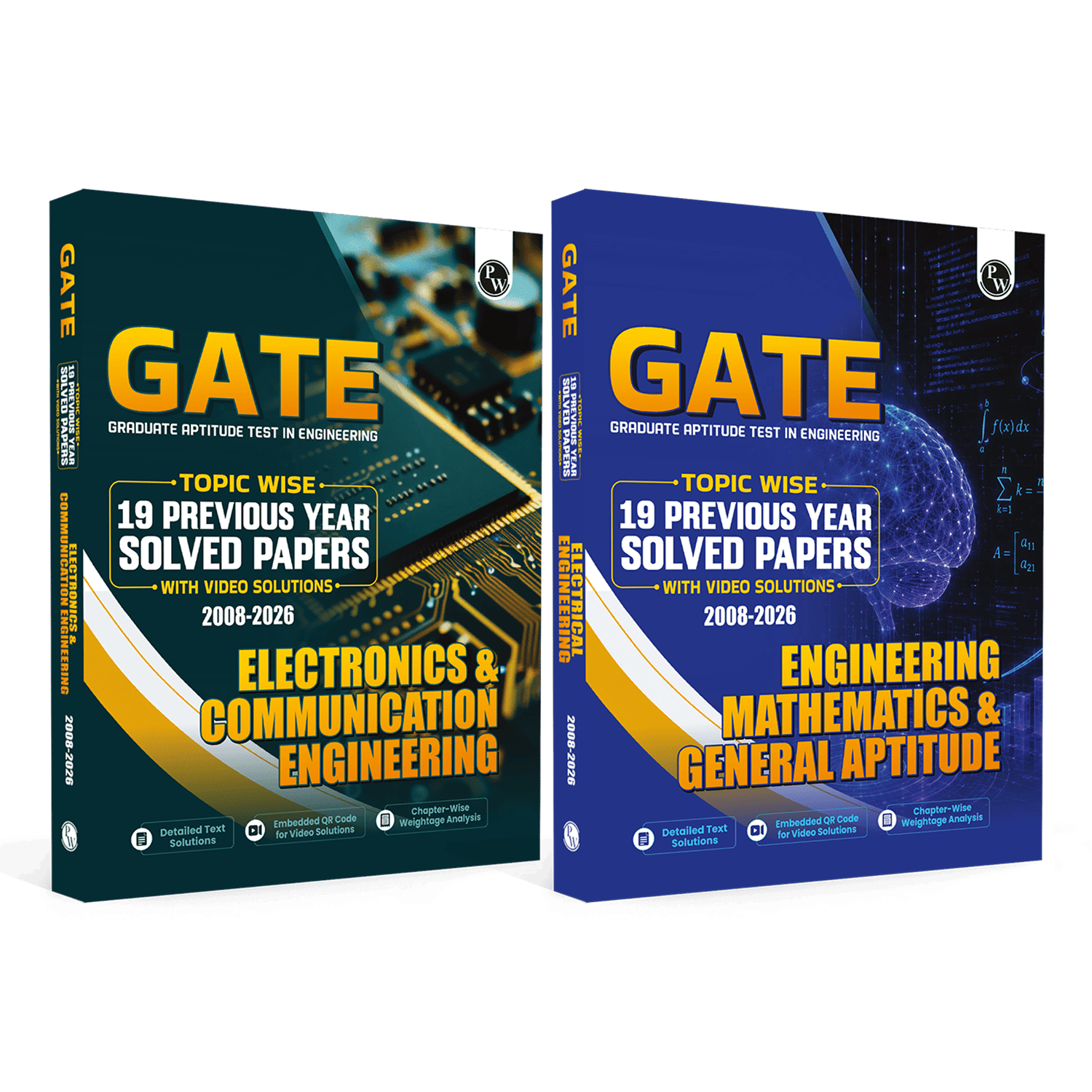
GATE ECE Syllabus 2027: Important Topics and PYQ with PW Book

Electronics and Communication Engineering covers vast theoretical domains, complex mathematical derivations, and intricate circuit designs that require clear prioritization. Facing hundreds of pages of technical material without a clear roadmap creates confusion regarding which topics yield maximum marks.
Understanding the exact boundaries of the GATE ECE syllabus eliminates guesswork and provides a clear path forward. By using GATE Books alongside historical paper trends, you can streamline your preparation, focus on high-yield sections, and build the problem-solving confidence needed to score well on exam day.
Importance of the GATE ECE Syllabus
Navigating your technical preparation without thoroughly reviewing the GATE ECE syllabus often leads to wasted effort on low-yield topics that rarely appear in the actual exam. The syllabus acts as an official framework, defining precise conceptual boundaries so you can manage your daily study timetable with complete efficiency.
-
Clear Conceptual Boundaries: Prevents aspirants from spending valuable hours on out-of-syllabus subjects or overly complex theoretical proofs.
-
Balanced Resource Allocation: Helps distribute study hours based on actual subject weightage rather than personal preference for specific modules.
-
Targeted Revision Planning: Allows easy tracking of completed topics versus pending technical areas so you never miss critical concepts.
-
Strategic Exam Readiness: Gives candidates a complete bird’s-eye view of all core domains, making it easier to structure mock tests and subject tests.
A thorough understanding of the GATE ECE subject-wise syllabus ensures your hard work translates directly into higher scores across every paper section.
Which Topics Should You Prioritise in the GATE ECE Syllabus
Certain engineering modules consistently carry higher mark allocations year after year. Prioritising these core areas early in your schedule ensures you secure foundational marks before moving on to secondary concepts.
|
Subject Name |
Key Focus Areas |
Average Weightage |
|
Engineering Mathematics |
Linear Algebra, Calculus, Differential Equations, Vector Analysis, Probability |
13 - 15 Marks |
|
General Aptitude |
Numerical Ability, Verbal Reasoning, Analytical & Spatial Reasoning |
15 Marks |
|
Networks, Signals & Systems |
Network Theorems, Transient Response, Continuous & Discrete Fourier Transforms, Z-Transform, LTI Systems |
14 - 16 Marks |
|
Electronic Devices & Analog Circuits |
Energy Bands, P-N Junction, MOSFETs, Op-Amps, Small Signal Amplifiers, Active Filters |
13 - 15 Marks |
|
Communications & Electromagnetics |
Digital Modulation (PSK, QAM), Random Processes, Maxwell Equations, Transmission Lines, Waveguides |
18 - 20 Marks |
Focusing on these GATE ECE important topics helps establish a strong numerical base early in your journey.
How to Use PYQs Along with the GATE ECE Syllabus
Studying theoretical concepts alone is never enough to secure a top rank in national-level competitive engineering exams. Working through GATE ECE PYQs alongside syllabus completion bridges the gap between theoretical knowledge and real numerical applications.
-
Trend Identification: Uncovers recurring question formats, formula variations, and problem patterns across multiple years.
-
Application Readiness: Tests whether you can accurately apply theoretical equations to multi-step numerical problems under time pressure.
-
Self-Assessment: Pinpoints specific weak areas within individual subjects early enough to make necessary study adjustments.
-
Time Management Practice: Helps build speed and numerical precision while using the virtual calculator.
Working with solved papers spanning from 2008 to 2026 offers comprehensive practice across 19 full years of examination trends.
Study Strategy Plan for GATE ECE Syllabus with a PW Book
A successful preparation model relies on structured study habits and reliable, error-free practice materials. Utilizing topic-wise and chapter-wise previous years' solved paper books simplifies daily practice and streamlines progress tracking.
-
Core Concept Study: Complete a topic thoroughly from your main lecture notes or primary textbook.
-
Topic-Wise Practice: Open your topic-wise solved paper book and solve questions tagged directly to that specific chapter.
-
Analyze Detailed Explanations: Review step-by-step written solutions for every incorrect or skipped problem to fix conceptual misunderstandings.
-
Access Video Solutions: Scan the embedded QR codes to watch expert video explanations for complex, multi-step engineering problems.
-
Review Year-Wise Weightage: Utilize year-wise weightage analyses to adjust your study plan towards high-value modules.
Following this complete GATE ECE preparation strategy keeps your daily schedule organized, prevents study burnout, and ensures steady numerical growth.
Tips to Revise Important Topics from the GATE ECE Syllabus
Consistent revision is essential to retain complex formulas, block diagrams, and mathematical shortcuts over long preparation months.
-
Maintain Formula Notebooks: Keep organized logs of essential formulas, circuit identities, and boundary conditions for quick daily review.
-
Build Error Notebooks: Note down recurring calculation mistakes, misread units, and conceptual traps encountered during practice sessions.
-
Practice Spaced Repetition: Re-visit tagged, high-difficulty questions every two weeks to keep problem-solving methods fresh in mind.
-
Take Timed Mini-Quizzes: Solve small sets of 10 to 15 questions under strict timed conditions to build speed and reduce test anxiety.
-
Use Visual Summaries: Draw quick block diagrams and flowcharts for complex topics like digital communication modulation schemes and control system state-space models.
Also Check - GATE Engineering Mathematics & General Aptitude PYQ
Mistakes to Avoid While Preparing the GATE ECE Syllabus
Avoid studying the GATE ECE syllabus without a clear plan, skipping difficult topics, or relying only on memorisation instead of understanding concepts.Practise previous-year questions, revise regularly, and take mock tests to improve accuracy, time management, and overall preparation.
-
Ignoring Mathematics and Aptitude: Neglecting these straightforward sections costs candidates up to 30 overall marks that could easily boost their rank.
-
Delaying Practice Until Syllabus Completion: Waiting to finish every single topic before opening previous years' questions leaves zero time for effective revision and mock tests.
-
Skipping Explanations for Correct Guesswork: Marking a lucky guess as correct without reading the detailed step-by-step solution masks underlying conceptual gaps.
-
Overlooking Digital Learning Tools: Failing to use available QR code video explanations means missing out on time-saving shortcuts and alternative visual methods.
-
Ignoring the Virtual Calculator: Practicing exclusively with physical scientific calculators leads to slow calculation speed and simple input errors during the official online exam.
Practice Plan for GATE ECE Syllabus and PYQs
To cover all modules systematically, structure your weekly study timetable around a balanced mix of new theoretical learning and past question practice.
-
Days 1–4: Study primary theory modules and immediately solve corresponding topic-wise questions.
-
Day 5: Work through mixed problem sets combining two or three related technical subjects to test multi-concept recall.
-
Day 6: Watch expert video solutions for all failed attempts using QR code links and update your error log.
-
Day 7: Conduct weekly formula reviews, clear pending backlogs, and re-attempt previously marked difficult questions.
Read More: Books for GATE Exam
GATE ECE Syllabus FAQs
What are the main subjects in the GATE ECE syllabus?
The core subjects include Engineering Mathematics, General Aptitude, Networks, Signals and Systems, Electronic Devices, Analog Circuits, Digital Circuits, Control Systems, Communications, and Electromagnetics.
How can I download the GATE ECE syllabus pdf for 2027?
You can download the official syllabus PDF directly from the organizing institute’s official exam portal once the notification is released.
Which GATE ECE important topics carry the maximum mark weightage?
Engineering Mathematics, General Aptitude, Communications, Electronic Devices, and Signals & Systems carry significant weightage in the exam.
How many years of GATE ECE PYQs should a candidate practice?
Practicing 19 years of topic-wise solved papers (2008 to 2026) provides ideal coverage of question patterns and exam trends.
What is the ideal GATE ECE preparation strategy for beginners?
Beginners should focus on building core theoretical concepts, solving topic-wise past questions daily, reviewing video explanations, and maintaining formula sheets.