How to Identify High-Weightage Topics Using GATE ECE PYQ Book
Preparing for the Graduate Aptitude Test in Engineering in Electronics and Communication Engineering requires a clear, strategic approach to mastering a vast syllabus. Identifying high-weightage subjects and recurring concept patterns allows aspirants to direct their efforts towards topics that yield maximum marks.
A structured GATE ECE PYQ book serves as an indispensable tool in this diagnostic process. By systematically evaluating past papers, candidates can move beyond raw guesswork and build a data-driven study strategy.
Importance of GATE ECE PYQ Book
A PYQ Book is important for understanding the exam pattern, identifying high-weightage topics, and practising questions based on real GATE papers. Solving previous year questions helps candidates recognize repeated concepts across subjects such as Network Theory, Signals and Systems, Digital Circuits, Analog Circuits, Control Systems, and Communication.
Topic-wise practice makes it easier to find weak areas and focus on important chapters. Detailed solutions help improve conceptual clarity, while year-wise weightage analysis supports better study planning. Regular practice also improves speed, accuracy, and confidence for the GATE ECE examination.
How Does the GATE ECE PYQ Book Help With Exam Analysis?
Analyzing previous years' papers is a fundamental step in structured gate ece preparation. The syllabus covers multiple core domain areas, making it difficult to allocate equal study time across every chapter. Utilizing a dedicated PYQ book provides direct visibility into how examiners frame questions, how mark distributions shift over time, and which core principles recur consistently.
Advantages of Systematic Analysis
-
Pattern Recognition: Solved papers reveal repeated conceptual frameworks across multi-year cycles.
-
Weightage Mapping: Reviewing electronics and communication pyqs highlights high-yield subjects like Communication Systems, Signals and Systems, and Analog Circuits.
-
Targeted Effort: Directing focus towards high-frequency topics minimizes wasted time on low-yield chapters.
-
Difficulty Mapping: Differentiates basic direct-formula questions from complex multi-concept numerical answer types (NATs).
Features of GATE ECE PYQ Book
Selecting an authentic revision resource ensures that your analysis reflects actual historical trends. The GATE ECE PYQ book is designed specifically to simplify trend tracking through structured indexing and detailed explanations.
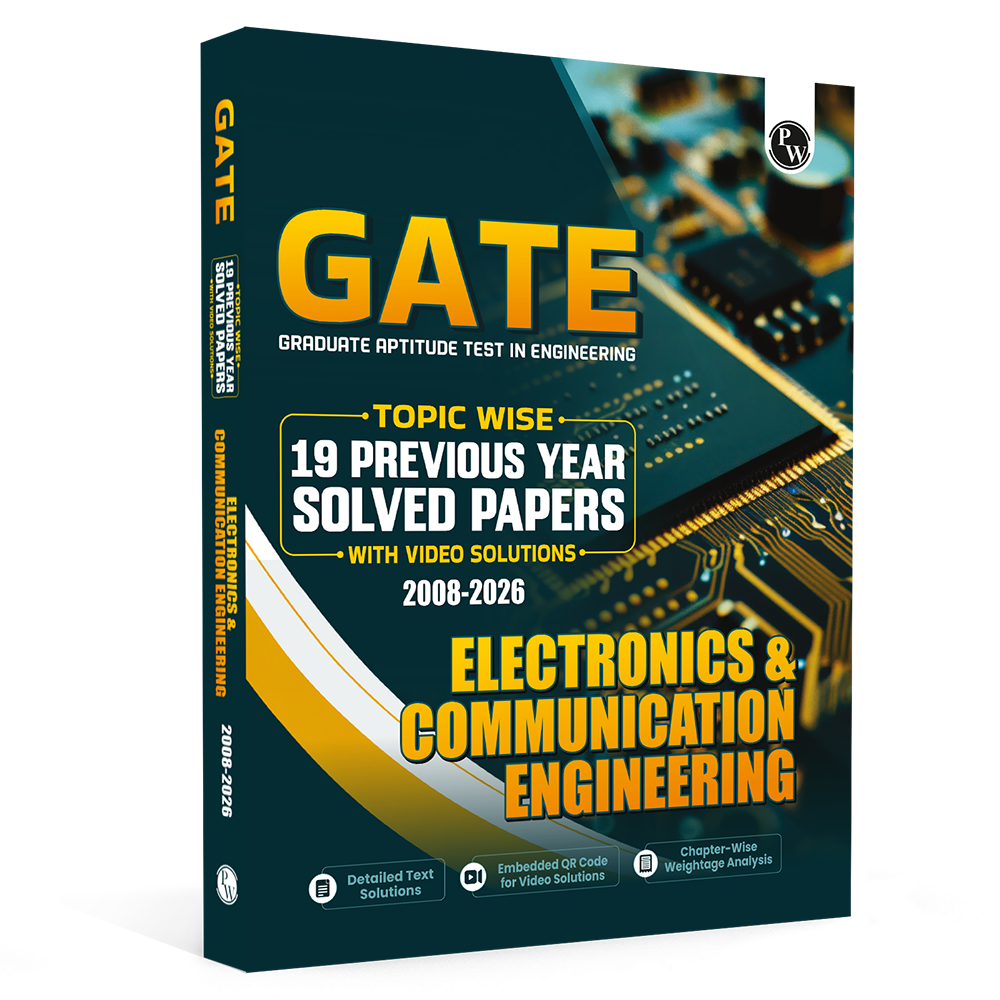
Topic-wise & Chapter-wise Previous Years’ Questions: Practice GATE Previous Year Questions in a well-organized topic-wise and chapter-wise format. This makes it easier to study each topic, practice regularly, and revise important questions.
Detailed Solutions with Step-by-Step Explanations: Get clear and detailed solutions for every question. Step-by-step explanations help you understand the concepts, learn the correct solving method, and improve your problem-solving skills.
PYQ Coverage from 2008–2026: Practice 19 years of GATE questions from 2008 to 2026. This wide range of questions helps you understand exam patterns, important topics, repeated concepts, and different question types.
QR Codes for Video Solutions: Scan the QR codes to access expert video solutions. These videos provide additional explanations and make difficult questions and concepts easier to understand.
Year-wise Weightage Analysis: Check the year-wise weightage of important topics to understand which areas are asked more often. This helps you focus your preparation on important and high-scoring topics.
Prepared by Expert Faculties & Academic Team: The book is carefully prepared by experienced faculties and an academic team. The content is checked for accuracy and designed to match GATE exam needs and preparation requirements.
Also Check - GATE Mathematics & General Aptitude Book
How to Find High-Weightage Topics in GATE ECE PYQ Book?
Extracting maximum value from a PYQ book requires a methodical approach. Merely reading through questions is insufficient; candidates must actively evaluate problem distribution patterns using the included year-wise weightage tools.
1. Leverage the Year-Wise Weightage Analysis Chart
Start by reviewing the introductory analysis tables provided at the beginning of each subject section. These charts outline exact mark allocations per topic from 2008 through 2026. Identify subjects that consistently command double-digit mark distributions year after year.
2. Track Question Frequency Across 19 Years
Count the density of questions within individual sub-topics using GATE ECE topic-wise PYQs. When a specific sub-topic contains numerous solved examples across multiple years, it signals a non-negotiable core concept that must be prioritized during revision.
3. Categorise Questions by Problem Complexity
Divide gate electronics previous year questions into three standard tiers:
-
Tier 1 (Direct Formula-Based): Solved quickly using standard mathematical relations.
-
Tier 2 (Conceptual Application): Requires multi-step derivations or core signal analyses.
-
Tier 3 (Integrated Multi-Topic): Combines concepts from multiple domains (e.g., Analog Circuits merged with Signals & Systems).
How to Prioritise Topics Using GATE ECE PYQ Book?
To convert raw PYQ data into a practical study plan, follow a structured step-by-step workflow.
Step 1: Divide Subjects into High, Medium, and Low Yield
Group your ECE syllabus subjects based on historical weightage patterns observed in the book.
-
High-Yield Subjects: Network Theory, Signals and Systems, Control Systems, Digital Circuits.
-
Medium-Yield Subjects: Analog Circuits, Communications, Electromagnetics.
-
Low-Yield or Niche Areas: Specialized sub-topics with sporadic appearance rates.
Step 2: Cross-Reference High-Frequency Topics with Syllabus Outlines
Match high-frequency PYQ topics directly against the official GATE syllabus. Ensure foundational prerequisites (such as Linear Algebra and Complex Variables) are mastered alongside core technical areas like Fourier Transforms or Semiconductor Mechanics.
Step 3: Establish Topic-Wise Practice Milestones
Set strict time blocks to work through each chapter inside your GATE books. Aim to attempt questions without referencing solutions initially, testing your recall under timed conditions.
How to Solve GATE ECE PYQ Book Questions Faster?
Working through past papers efficiently ensures long-term retention and sharpens problem-solving accuracy.
Workflow for PYQ Practice
-
Self-Attempt First: Attempt every question independently before checking explanations.
-
Review Detailed Text Explanations: Compare your step-by-step solution against the book's verified text answers to identify calculation shortcuts or conceptual gaps.
-
Scan QR Codes for Video Solutions: When encountering challenging NAT questions, scan the embedded QR codes to access expert video guidance.
-
Maintain an Error Log: Note down recurring mistakes, formula misapplications, or unit conversion errors in a dedicated notebook for quick weekly review.
Read More: GATE ECE Syllabus 2026
GATE ECE PYQ Book FAQs
How many years of past papers are included in the PW GATE ECE PYQ book?
The book covers 19 years of solved papers spanning from 2008 to 2026, structured topic-wise for systematic preparation.
Why is topic-wise arrangement better for GATE ECE preparation?
Topic-wise arrangement allows candidates to practice questions immediately after completing a chapter, making it easier to identify high-weightage topics and test concept clarity early.
Does the PYQ book include video explanations?
Yes, the book features embedded QR codes that provide instant access to step-by-step video solutions created by expert subject faculty.
How do I identify high-weightage topics using GATE ECE topic-wise PYQs?
You can identify high-weightage topics by studying the year-wise weightage analysis chart and counting question density per sub-topic across the 19 years of solved papers.
Are step-by-step solutions provided for GATE Electronics previous year questions?
Yes, all questions feature detailed text solutions with step-by-step derivations to help students understand underlying technical concepts clearly.