IPMAT Books for Quantitative Ability Preparation
Aspirants frequently find themselves completely overwhelmed by complex mathematical formulas, tight examination timelines, and the sheer volume of rigorous practice needed for competitive tests. Finding reliable academic guidance is vital when juggling regular school commitments and ambitious career goals simultaneously.
Selecting specialized IPMAT books for quantitative ability acts as a dependable anchor, turning scattered study habits into a disciplined daily routine. Quality study materials provide structured frameworks that simplify abstract mathematical concepts for every learner.
What Are IPMAT Books For Quantitative Ability
Specialized study guides focus heavily on developing fundamental mathematical reasoning rather than relying on rote learning or superficial memorization. These comprehensive texts serve as structured companions for learners tackling demanding management entrance hurdles. High-grade IPMAT quantitative ability books curate relevant problem sets that align directly with modern assessment frameworks and changing testing patterns.
-
Materials align strictly with updated testing patterns for prominent national management exams.
-
Content focuses on strengthening fundamental arithmetic, algebra, and geometry skills from absolute scratch.
-
Question sets progress smoothly from basic warm-ups to advanced analytical puzzles that test true aptitude.
-
Detailed theoretical explanations accompany every single chapter to clear conceptual blocks before practice.
Which Topics To Cover With IPMAT Books For Quantitative Ability
Comprehensive preparation requires navigating a diverse and extensive syllabus without missing vital high-weightage areas. Dedicated IPMAT QA book breaks down the vast curriculum into manageable, structured segments. Organizing study sessions around distinct mathematical branches ensures zero blind spots before exam day arrives.
-
Focus heavily on arithmetic foundations like percentages, ratios, profit and loss, time, speed, and distance.
-
Practice linear equations, quadratic equations, inequalities, and logarithmic functions thoroughly through targeted drills.
-
Review properties of triangles, circles, polygons, and three-dimensional volume calculations in geometry and mensuration.
-
Dedicate ample time to permutations, combinations, probability, and complex sequence series.
How To Choose IPMAT Books For Quantitative Ability Preparation
Selecting the correct study text dictates the overall efficiency and direction of daily practice sessions. Aspirants must evaluate options based on content clarity and question variety rather than sheer page count or flashy marketing. Utilizing top-tier IPMAT preparation books ensures access to authentic simulation levels required for top business schools.
-
Ensure the text provides detailed, step-by-step breakdowns instead of direct answers to foster true understanding.
-
Look for resources offering a large question bank to build speed, accuracy, and endurance.
-
Confirm the material mirrors current trends across management aptitude assessments to avoid outdated problem types.
How To Use IPMAT Books For Quantitative Ability Practice
Owning a comprehensive manual means little without a disciplined execution plan and active learning habits. Active engagement with text content converts theoretical knowledge into reliable scoring capabilities. Implementing structured drills using quality best books for quantitative aptitude prevents passive reading habits and boosts retention.
-
Go through chapter theories and shortcut methods thoroughly before touching any exercise questions.
-
Allocate specific minutes per question during practice routines to simulate actual test pressure effectively.
-
Maintain a separate notebook for incorrectly solved sums to review diligently during weekly revisions.
How to Understand Strong Concepts With IPMAT Books For Quantitative Ability
Relying purely on shortcut tricks fails completely when examiners modify standard question formats or introduce novel twists. True success stems from deep conceptual clarity built over months of consistent effort. Premium IPMAT study material emphasizes the underlying logic of theorems, allowing candidates to tackle unfamiliar problems easily.
-
Understand why a specific formula works before applying it blindly to complex word problems.
-
Draw accurate diagrams for geometry and word problems to decode hidden variables quickly.
-
Solve equations using alternate methods to build absolute confidence in final answers.
Study Strategy Plan With IPMAT Books For Quantitative Ability
A well-mapped timetable keeps mid-term stress at bay and prevents last-minute panic. Dividing the preparation timeline into logical phases ensures steady progress without mental burnout. Strategic usage of dedicated resources helps balance school workloads alongside entrance targets harmoniously.
-
Focus exclusively on concept clarity and foundational chapter exercises during the initial phase.
-
Integrate chapterwise previous years' questions and sectional tests during the intermediate months.
-
Attempt full-length mock tests under strict exam conditions during the final stretch before the exam.
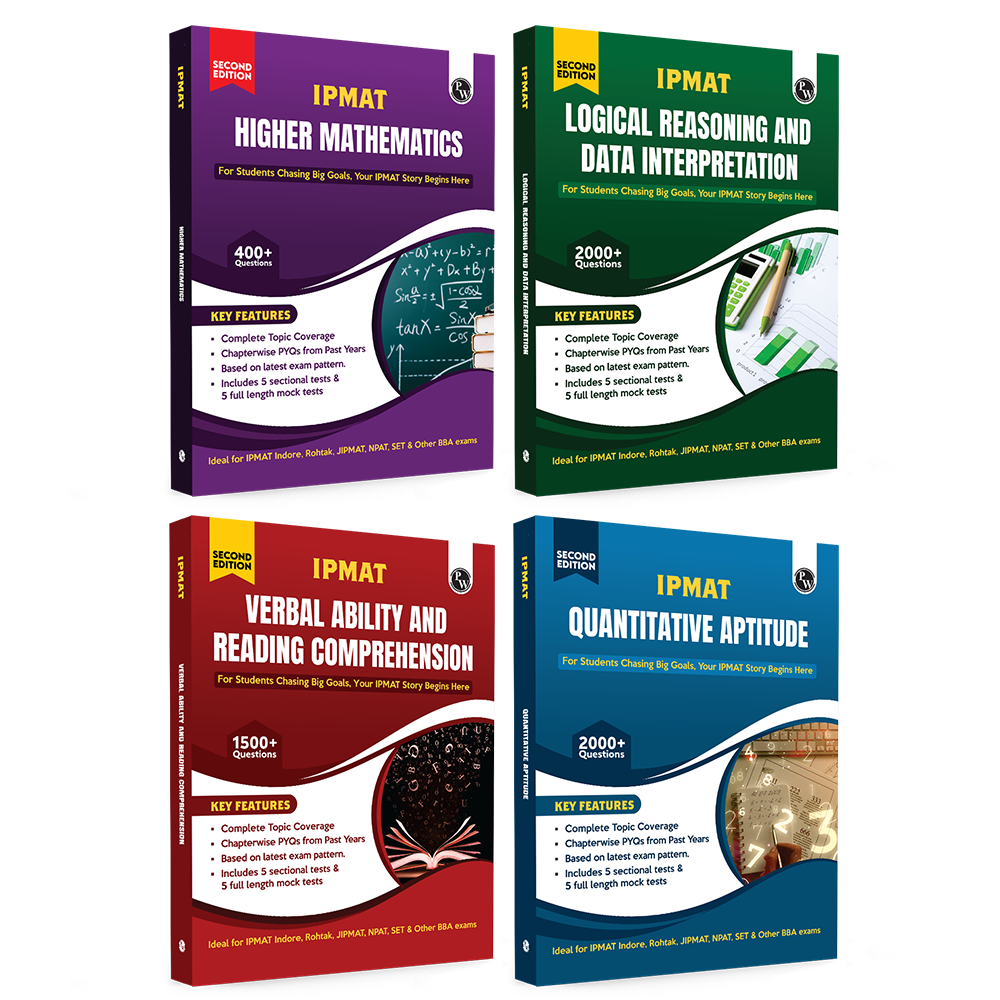
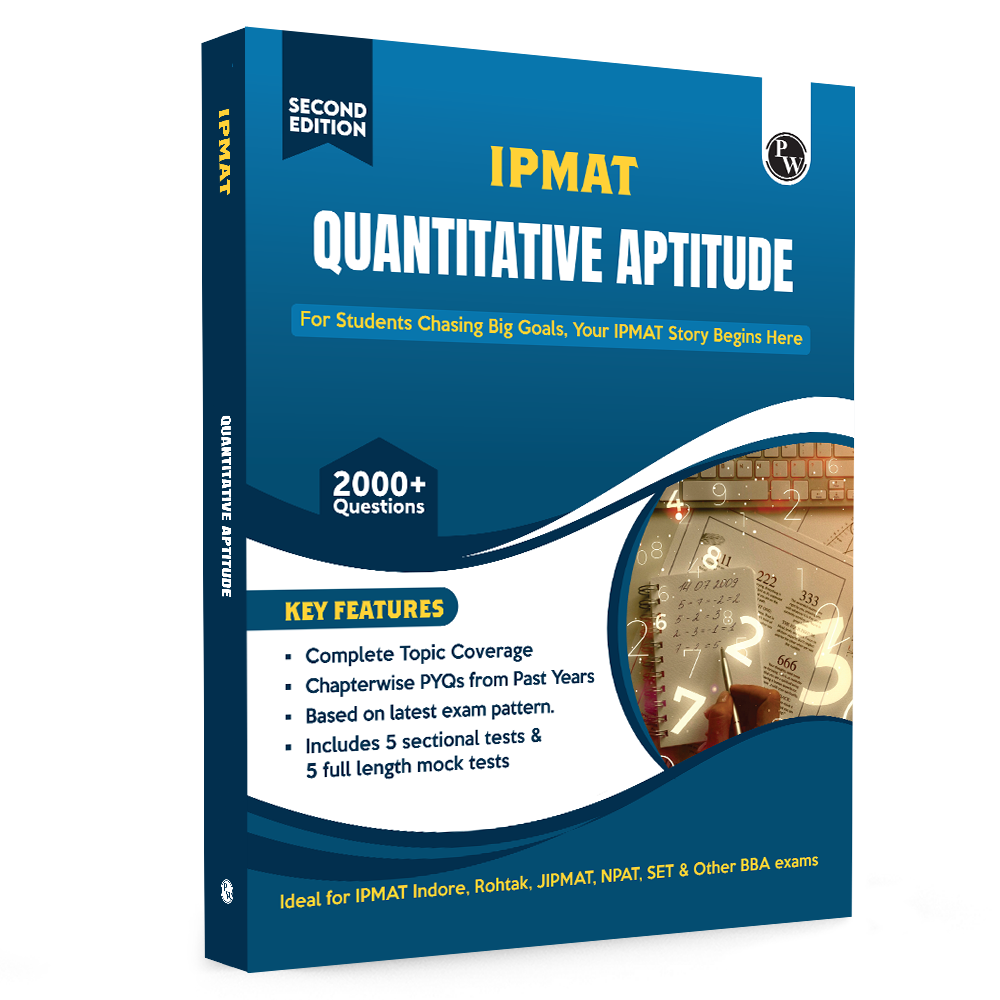
Explore IPMAT Books by PW with concept-based theory, practice questions, and previous year papers to strengthen preparation and improve performance across key IPMAT sections.
Tips To Improve Your Maths Practice With IPMAT Books For Quantitative Ability
Consistent daily habits yield exponential improvements in calculation speed and mental agility. Small adjustments to regular routines multiply overall productivity during high-intensity study blocks. Incorporating smart learning techniques transforms monotonous drill sessions into engaging academic challenges.
-
Practice tables, squares, and cubes daily to reduce dependency on rough sheets and save time.
-
Learn Vedic math techniques from text sidebars to shave precious seconds off calculation steps.
-
Revisit older chapters bi-weekly to prevent memory fading and maintain continuous revision cycles.
Mistakes To Avoid While Using IPMAT Books For Quantitative Ability
Avoiding common preparation pitfalls saves valuable time during crucial study windows. Recognizing counterproductive habits early protects mental stamina and sustained focus. Maintaining disciplined study boundaries ensures long-term productivity and prevents cognitive overload.
-
Jumping straight to high-level questions without clearing basic theorems creates structural weaknesses.
-
Skipping step-by-step explanations after solving a question correctly prevents learning faster alternative approaches.
-
Practicing manual calculations builds the intuition required for computer-based testing environments.
Read More - Complete IPMAT Booklist for IIM Indore & IIM Rohtak Preparation
Frequently Asked Questions
What features make ideal IPMAT books for quantitative ability?
Ideal books offer chapter-wise organization, extensive practice questions, detailed step-by-step solutions, and full-length mock tests matching current exam trends.
How many practice questions should IPMAT books contain?
Comprehensive guides should ideally feature thousands of questions to ensure adequate variety across easy, moderate, and difficult difficulty tiers.
Why are step-by-step solutions important in IPMAT quantitative ability books?
Detailed solutions help students understand optimal shortcuts, alternative problem-solving approaches, and the correct logical framework required for complex sums.
Can beginners rely solely on standard IPMAT study material?
Yes, structured study materials designed for management aspirants start from foundational principles and gradually elevate the difficulty level to suit beginners and advanced learners alike.
How do chapterwise mock tests in IPMAT QA books help?
Chapterwise sectional tests allow targeted learning, efficient revision, and precise tracking of progress across individual mathematical topics.
How can students balance school exams and management entrance preparation using these books?
Students can manage both commitments by scheduling dedicated micro-study blocks, focusing on foundational chapters during school breaks, and utilizing structured sectional tests for efficient weekend revision.
When should an aspirant transition from practice questions to full-length mock tests?
Aspirants should transition to full-length mock tests only after completing foundational concept clarity and finishing chapterwise practice drills across all major mathematical branches.