3 Months JEE Main 2027 Study Plan with PYQ Book
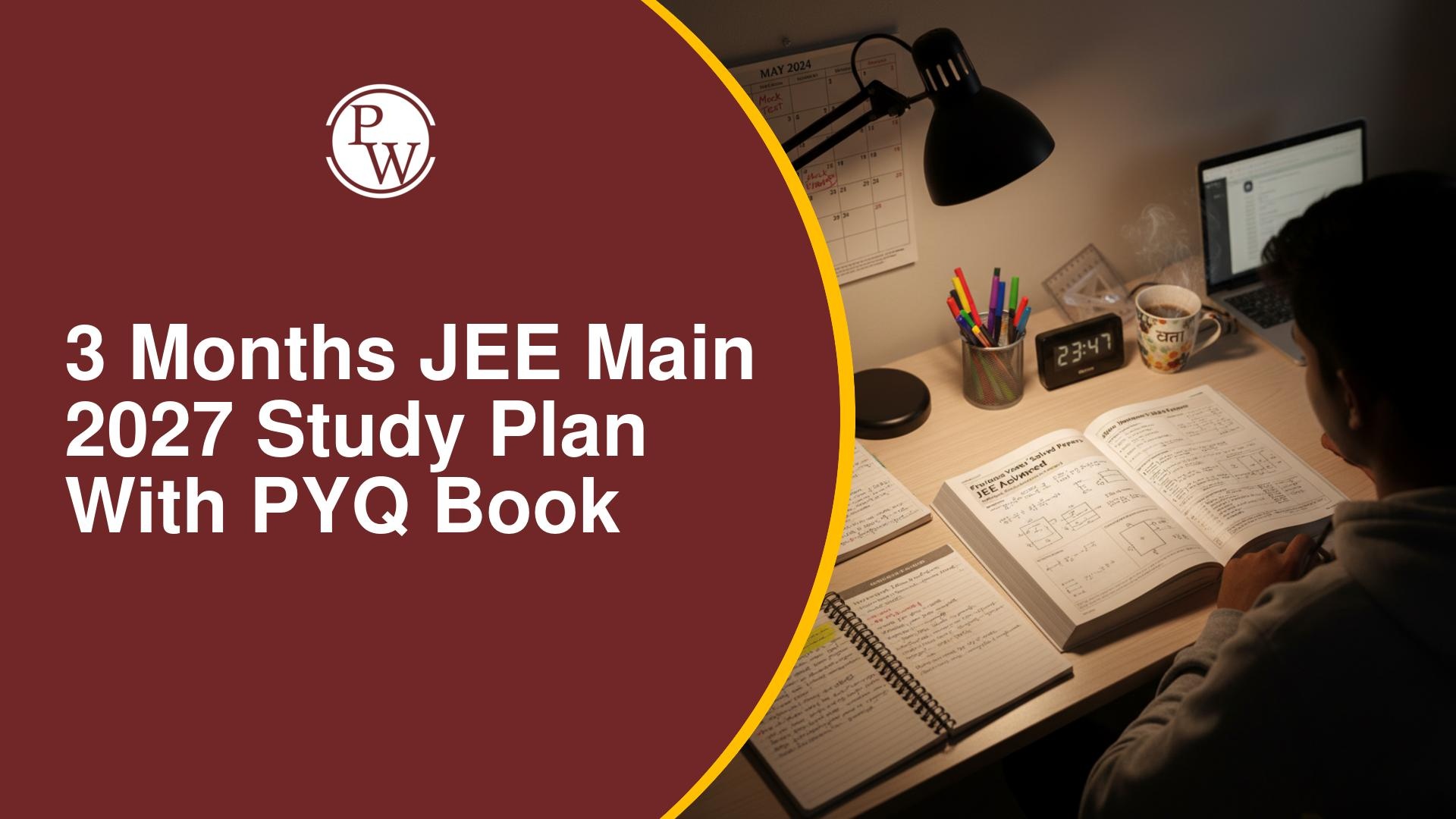
Mid-term assessments often act as a wake-up call for engineering aspirants. Standing midway through the academic session, you might feel overwhelmed by the sheer volume of chapters remaining in Physics, Chemistry, and Mathematics. Balancing school obligations with competitive exam demands leaves very little room for unstructured reading.
At this juncture, continuing to read lengthy theory textbooks without clear direction yields diminishing returns. What you need right now is a sharp pivot toward exam-oriented revision. Integrating an authentic jee main pyq book into your daily routine helps convert theoretical knowledge into concrete problem-solving ability.
By analyzing past trends, you can focus strictly on high-yield topics and gain clarity on actual test conditions.
Overview of JEE Main PYQ Book
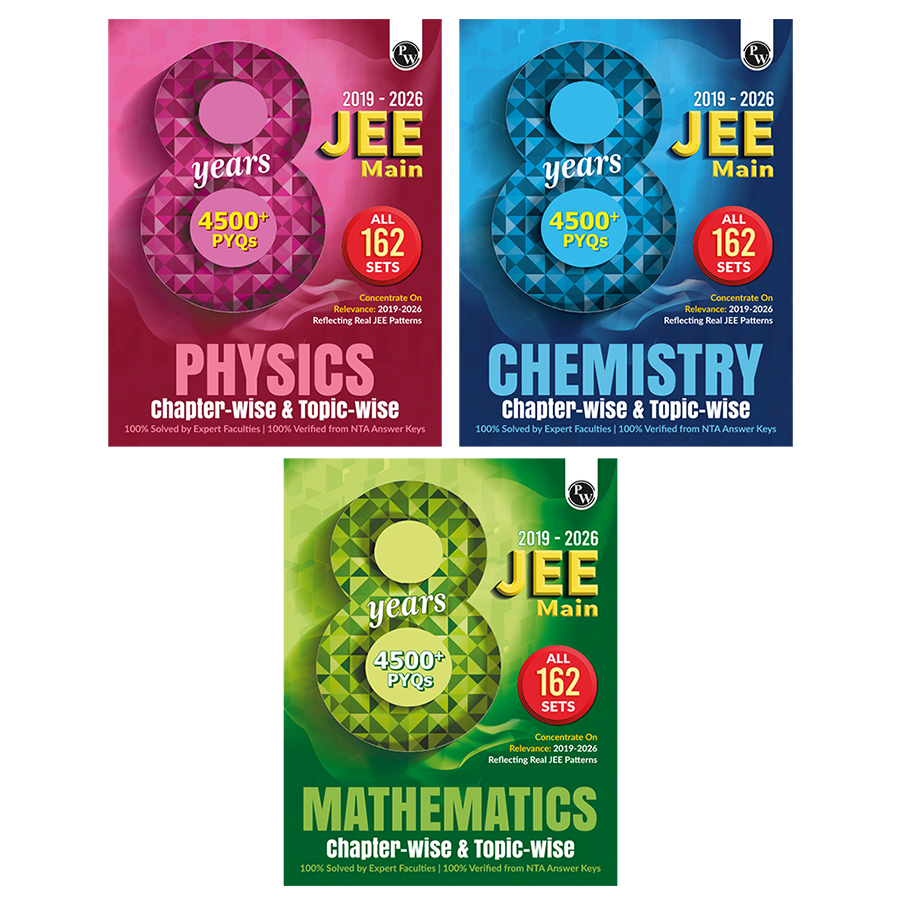
A reliable jee main pyq book set serves as a comprehensive practice system designed specifically for rigorous jee main preparation. Covering 8 years from 2019 to 2026, this three-book combo for Physics, Chemistry, and Mathematics includes all 162 shift-wise original question paper sets from Session 1 and Session 2.
Key features of this practice resource include:
-
Extensive Question Bank: Access to over 13,500 questions structured into chapter-wise and topic-wise formats.
-
Complete Question Formats: Full coverage of Multiple Choice Questions (MCQs) and Numerical Value Questions based on official answer keys.
-
Smart Weightage Insights: Detailed multi-year trend analysis to help prioritize high-yield chapters.
-
Detailed Explanations: Error-free, step-by-step solutions to strengthen conceptual understanding and correct analytical mistakes.
What Should You Cover with a JEE Main PYQ Book in 3 Months
Executing a targeted jee main 3 month preparation strategy means you cannot afford to solve every single question randomly. You must divide your attention systematically based on past question frequency and topic difficulty.
Priority Level 1: High-Weightage Core Topics
Identify chapters that consistently yield multiple questions per shift. In Physics, focus heavily on Mechanics, Modern Physics, and Electrostatics. In Chemistry, prioritize Organic Chemistry mechanisms, Coordination Compounds, and Chemical Bonding. In Mathematics, direct your effort toward Vectors, 3D Geometry, Definite Integrals, and Matrices.
Priority Level 2: Medium-Weightage Consistent Topics
Topics such as Thermodynamics, Work Energy Power, Solutions, Equilibrium, and Sequences Series appear regularly across almost every shift set. Allocate steady practice sessions to these chapters to ensure guaranteed marks.
Priority Level 3: Low-Weightage or Formula-Based Topics
Chapters that require simple formula application or quick memory retention, such as Units and Dimensions or Specific Name Reactions, should be revised using topic-wise collections to secure quick points without spending excess time.
How to Use a JEE Main PYQ Book in a 3-Month Study Plan
Using a compilation of JEE previous year papers effectively demands a systematic routine rather than sporadic practice.
-
Start with Topic-Wise Segregation: Do not jump straight into full test papers if your syllabus is partially complete. Open the chapter-wise section immediately after completing a topic in class to test your grasp.
-
Implement Timed Practice Sessions: Set a timer for 60 minutes and attempt 25 to 30 questions from a single chapter. This builds speed and simulates real exam conditions.
-
Cross-Check Solutions Thoroughly: Do not merely check whether your answer is right or wrong. Read the step-by-step solution to evaluate if there was a shorter or more efficient method to arrive at the answer.
-
Maintain an Error Logbook: Note down every formula you forgot, calculation error you made, or conceptual trick you missed during practice. Review this logbook every Sunday.
When to Solve Questions from a JEE Main PYQ Book
Timing your practice sessions determines how well you retain concepts during the mid-term revision phase.
-
Immediately After Chapter Completion: Solve 20–30 basic and intermediate level topic-wise questions to lock in fundamental principles.
-
During Weekly Revision Cycles: Dedicate specific time blocks on weekends to solve previous year paper sets under timed conditions without referring to theory notes.
-
In the Final Month Before Exams: Shift entirely from chapter-wise practice to solving complete 162 shift-wise papers as full-length mock tests to build mental stamina.
Study Strategy Plan with a JEE Main PYQ Book for JEE Main 2027
A structured timeline helps distribute 13,500+ questions logically across twelve weeks without causing burnout. Using JEE Books alongside this schedule can provide additional practice and strengthen exam preparation.
Month 1: Chapter-Wise Foundation & Core Practice
Focus on strengthening your weak areas while keeping up with ongoing mid-term class modules.
-
Allocate 3 hours daily to practice chapter-wise questions from jee main 2027 pyqs.
-
Target 40–50 questions per day across two subjects.
-
Complete all single-choice MCQs from 2022 to 2026 for high-weightage chapters.
Month 2: Mixed Topic Practice & Speed Building
Shift towards combining related chapters and tackling complex numerical value problems.
-
Practice mixed sets combining two or three chapters per subject to improve concept switching.
-
Focus specifically on Numerical Value Questions to refine calculation accuracy.
-
Analyze weightage trends from the past 8 years to ensure no recurring topic is left unpracticed.
Month 3: Full Shift Paper Simulation & Final Revision
Replicate actual test environments using original shift papers from the JEE Main & Advanced PYQ Combo 2027 for realistic exam practice.
-
Solve one complete shift paper (out of the 162 available sets) every alternate day in a strict 3-hour window.
-
Spend 2 hours analyzing errors and revisiting detailed solutions.
-
Review your personal error logbook daily alongside high-frequency formulas.
Tips to Get More from a JEE Main PYQ Book in 3 Months
To extract maximum value from your practice resource, adopt active learning techniques rather than passive reading.
-
Categorize Questions on First Attempt: Mark questions with symbols during your first pass—a star for tricky problems, a tick for easy ones, and a cross for unattempted ones. This speeds up your second revision cycle.
-
Focus on Recent Question Dynamics: Prioritize papers from 2023 to 2026, as they reflect the exact question style, difficulty variation, and numerical formats enforced currently.
-
Master Alternative Solution Methods: Compare your working out with the provided detailed solutions to discover shorter shortcuts, elimination techniques, or key conceptual simplifications.
Common Mistakes to Avoid While Using a JEE Main PYQ Book
Many students buy comprehensive question banks but fail to see score improvements due to flawed execution methods.
-
Reading Solutions Prematurely: Looking at the answer key after trying a problem for only 30 seconds prevents critical thinking skills from developing. Give every question at least 3 minutes of genuine effort.
-
Ignoring Numerical Value Questions: Practicing only MCQs leads to anxiety during the exam when numerical inputs require precise calculations without options to guide you.
-
Skipping Post-Test Analysis: Simply scoring a practice paper without reviewing why errors occurred guarantees that the same mistakes will recur in actual exam shifts.
-
Neglecting Low-Yield Chapters Entirely: Ignoring smaller chapters completely can cost you easy, straightforward marks that boost your overall percentile.
Read More; JEE Syllabus 2026 And Exam Pattern
JEE Main PYQ Book FAQs
How many years of previous questions are necessary for JEE Main?
Practicing 8 years of shift-wise papers (2019–2026) is ideal as it covers 162 distinct sets, giving you complete exposure to modern difficulty levels and question patterns.
Are past year questions sufficient to clear JEE Main?
Yes, thoroughly solving over 13,500 past questions along with detailed solution analysis builds complete conceptual clarity and problem-solving speed needed for a high score.
Should I solve past questions chapter-wise or paper-wise first?
Start with chapter-wise and topic-wise practice while completing or revising syllabus topics, then switch to full shift-wise papers in the final weeks before the exam.
How do numerical value questions differ in past papers?
Numerical value questions require exact calculations without option choices, making regular practice essential to avoid simple arithmetic or rounding errors during the test.
How can I analyze my performance using past question sets?
Review every incorrect answer, verify your approach against the step-by-step solution, and record missing formulas or analytical errors in a dedicated notebook for daily revision.