How 8 Years JEE Physics PYQ Book Strengthens Numerical Problem-Solving
You might memorise every single formula from your textbooks, yet application remains a hurdle when confronting an actual exam paper. The gap between understanding a theoretical law and solving a complex problem can feel immense.
If you struggle to convert conceptual knowledge into accurate answers, you are not alone in this journey. Integrating targeted practice with JEE Main PYQ physics questions bridges this gap by introducing you directly to real exam trends and exact difficulty metrics.
What Is JEE PYQ Physics?
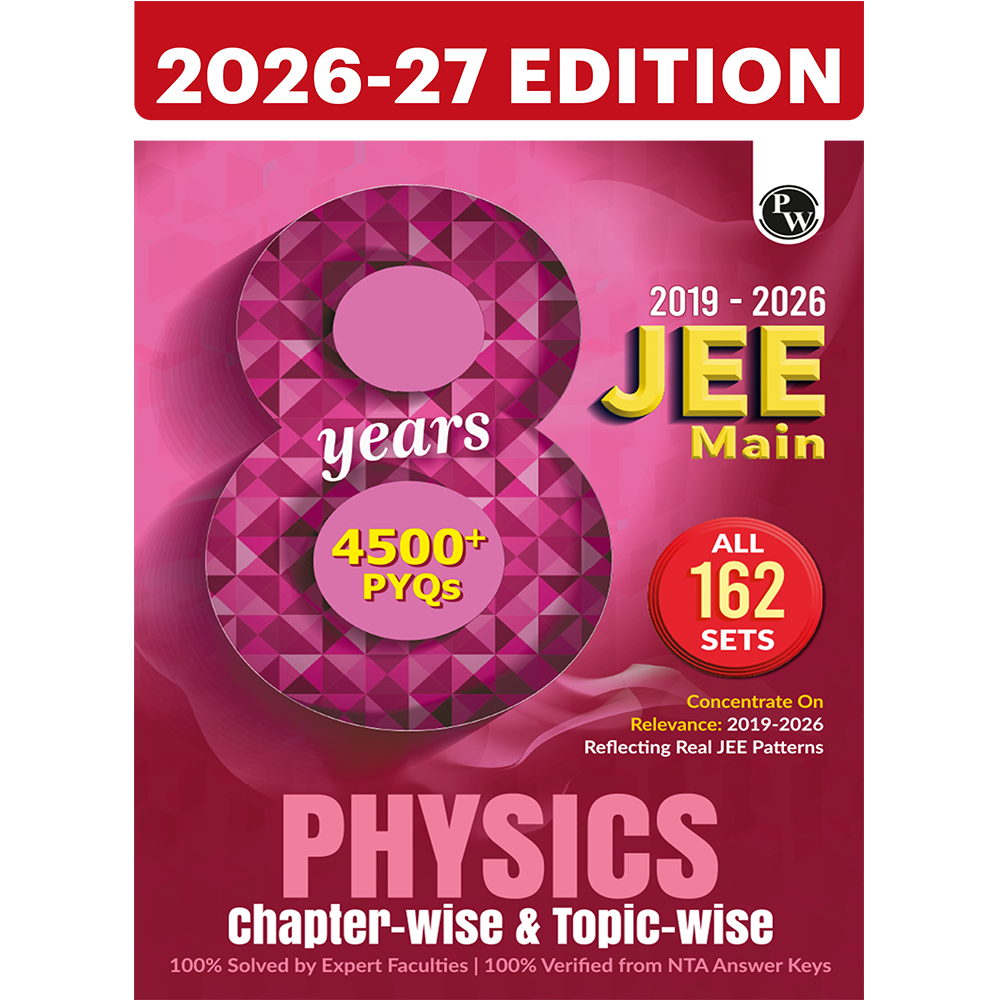
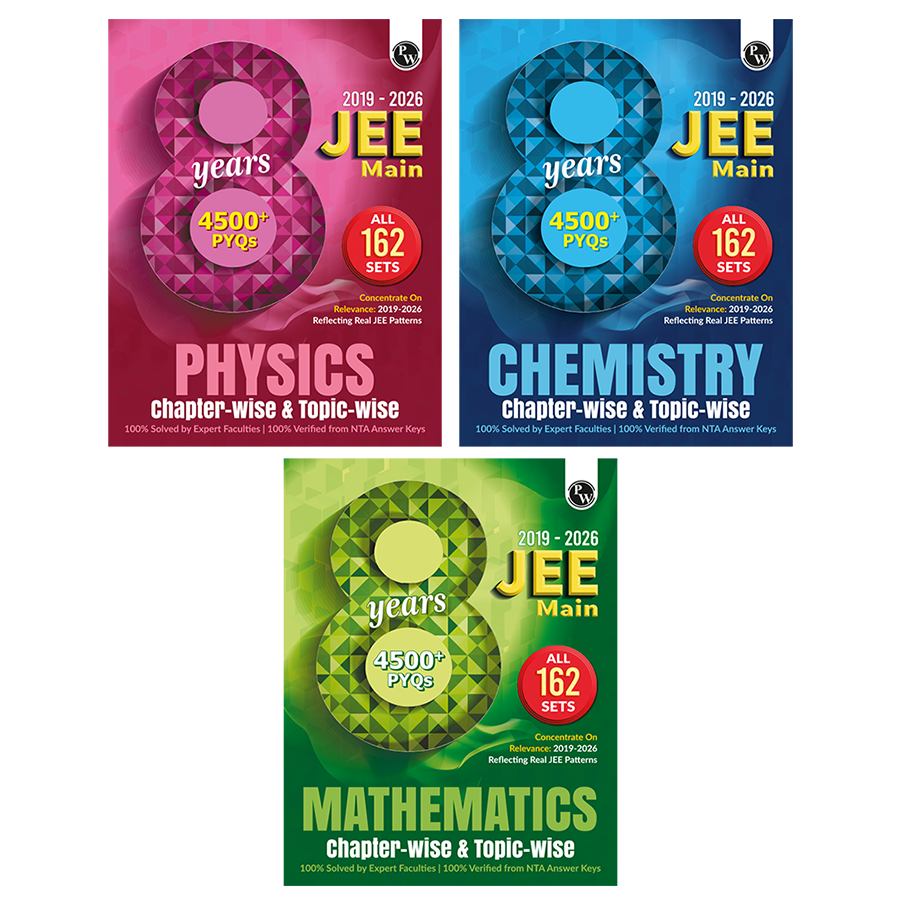
This term refers to the collection of actual questions asked in the Joint Entrance Examination over previous sessions. Specifically, using a comprehensive resource covering 2019 to 2026 provides access to 162 sets of shift-wise papers.
This compilation represents thousands of high-level problems that have screened millions of candidates.
Instead of guessing what standard of problems might turn up, working through these papers allows you to practice what actually gets asked. They encompass various formats, such as traditional Multiple Choice Questions (MCQs) and specific Numerical Value Questions.
Using a dedicated JEE physics PYQ book ensures you see these papers arranged in a structured manner rather than an unorganised mix.
Why Is JEE PYQ Physics Important for JEE Main?
Succeeding in JEE mains physics requires more than rote memorisation because the national papers evaluate analytical interpretation. Relying on outdated study patterns or random practice problems can leave you vulnerable to unexpected question formats.
Here is why solving JEE past papers is critical:
-
Alignment with Real Difficulty: You encounter the exact question standards set by examiners.
-
Elimination of Outdated Patterns: Focus remains entirely on current trends observed between 2019 and 2026.
-
Shift-Wise Exposure: Accessing complete shift papers mirrors the true layout of the online testing window.
-
Comprehensive Variety: Exposure to both objective choices and integer-type answers eliminates surprises.
How Does JEE PYQ Physics Improve Problem-Solving Skills?
Regularly working through real exam questions directly transforms how your brain processes complex technical data. When you face mixed questions from multiple chapters, your brain learns to adapt rapidly without relying on explicit chapter hints.
1. Building Concept Recognition
A well-structured resource offers chapterwise physics questions so you can target individual theoretical units. This systematic setup helps you identify which specific principle applies to a dynamic situation, such as determining if a problem requires conservation of momentum or work-energy theorems.
2. Boosting Critical Thinking
Reviewing multi-year exam patterns helps you recognize recurring structural themes across different calculation styles. Over time, you build deep spatial and mathematical intuition, allowing you to identify shortcuts or notice trap options instantly.
3. Error Minimisation Through Explanations
Using a guide containing 13500+ questions with detailed, error-free solutions provides immediate feedback. If your final calculation goes wrong, reviewing an in-depth, step-by-step resolution clarifies the exact algebraic or conceptual misstep.
Important Topics To Cover in JEE PYQ Physics
Not all chapters carry identical numerical volume or distribution weight during the exam shifts. A smart weightage analysis enables you to isolate high-priority topics and distribute your revision energy efficiently.
|
Physics Domain |
High-Priority Numerical Focus Areas |
Realized Benefit |
|
Mechanics |
Rotational dynamics, work-energy theorems, system of particles, and projectile motion. |
Builds foundational mathematical stamina for complex engineering situations. |
|
Electrodynamics |
Kirchhoff's laws, alternating current circuits, and electromagnetic induction metrics. |
Trains students to handle large Multi-Loop circuit calculations easily. |
|
Modern Physics |
Photoelectric effect equations, nuclear half-life problems, and Bohr's atomic structures. |
High-scoring zone with highly structured formula applications. |
|
Thermodynamics |
Carnot engine efficiency calculations and specific cyclic process graph translations. |
Helps link graphic visuals directly with thermodynamic algebraic proofs. |
How to Use JEE PYQ Physics?
Maximising the utility of your collection of JEE Main previous year question requires a deliberate operational methodology. Simply reading through questions and their corresponding answers like a storybook will not yield significant skill improvement.
Follow this systematic execution method:
-
Attempt Silently First: Spend at least five to seven minutes wrestling with a problem independently before looking at any external solution.
-
Analyse the Explanations: Compare your personal derivation steps with the provided error-free solutions to find more direct avenues.
-
Highlight Critical Triggers: Mark individual questions that required an unconventional conceptual connection or unique mathematical conversion.
-
Revisit Marked Steps: Return to your highlighted selections exactly one week later to ensure the methodology is fully retained.
Study Plan for Using the JEE PYQ Physics
To turn your resource into a tool for consistent improvement, you need to embed it directly into your daily preparation schedule. A disorganised approach reduces retention and leaves you scrambling right before the final test day.
Stage 1: Topic Isolation
Begin your session by working through numerical practice sets restricted to single conceptual blocks. If you just finished studying electrostatics, solve only the relevant past questions from that specific chapter to solidify your immediate learning.
Stage 2: Mixed-Chapter Mock Blocks
As you near the final phase of your schedule, move away from isolated single-topic lists. Assemble random selections of 30 past problems across multiple areas and attempt them within a strict 60-minute countdown window.
Stage 3: Trend Tracking
Review the historical questions chronologically from 2019 up to 2026. Note how specific topics evolve over time, showing you where the exam demands higher precision or deeper conceptual application.
JEE Books offer comprehensive theory, chapter-wise practice questions, concept-building exercises, and exam-oriented solutions aligned with the latest JEE syllabus. They help students strengthen fundamentals, improve problem-solving skills, and prepare effectively for both JEE Main and JEE Advanced.
Tips for Using the JEE PYQ Physics
Practising JEE PYQ Physics regularly helps you understand the exam pattern, identify frequently tested concepts, and improve problem-solving speed. Focus on analysing your mistakes after each practice session and revise the underlying concepts to strengthen your preparation.
-
Avoid Outdated Trends: Do not spend excessive time on decades-old problems that do not reflect the current format of the computer-based exam.
-
Prioritize Numerical Values: Give extra attention to non-MCQ integer questions where you do not have options to help guide your guess.
-
Track Your Common Mistakes: Keep a dedicated log of algebraic slips or misread units to review before your main test.
-
Review the Explanations: Read the comprehensive breakdowns, even for questions you got right, to discover faster alternative methods.
-
Maintain Consistency: Solve a fixed number of authentic past questions daily rather than doing massive, irregular cramming sessions.
Read More: List of Physics Formulas for JEE Exams
JEE PYQ Physics FAQs
How many years of past papers should I ideally cover for the engineering entrance exam?
Focusing deeply on the past eight years from 2019 to 2026 is highly effective. This period contains 162 shift-wise tests, giving you ample relevant practice aligned with the modern computer-based format.
Why do chapterwise physics questions help more than random sets early on?
Dividing your work by topic allows you to focus on one area at a time. This method reinforces the specific formulas and concepts you have just learned before you try mixed mock tests.
What is the best way to tackle integer-based numerical practice items?
Since integer-type questions do not offer multiple-choice options to help guide you, you need absolute mathematical accuracy. Work through detailed, error-free solutions to perfect your step-by-step calculation workflow.