How to use 8 Years JEE Physics PYQ to identify NTA's favourite Physics topics
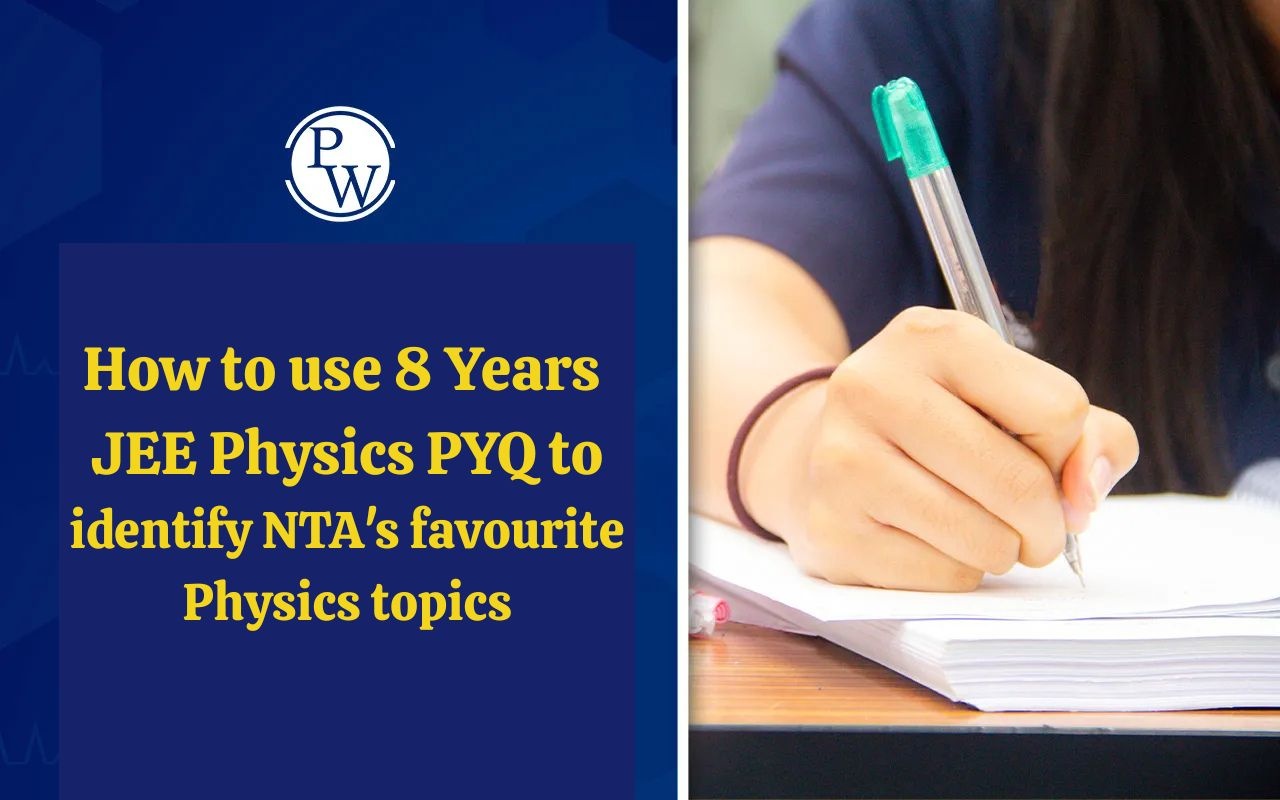
Hard work alone is not enough for JEE preparation; it needs careful revision. JEE Main Physics PYQ helps students know the important themes with high weightage, know the pattern of the recurring questions, and focus on the concepts that matter the most in the test. Aspirants can eliminate guesswork, improve their problem-solving skills, and make the most of the limited revision time before the final test by rehearsing past years’ questions.
Features of 8 Years JEE Main Physics PYQ
A high-quality physical or digital question bank spanning the last eight years (specifically from 2019 to 2026) offers unique structural attributes designed to simplify preparation:
-
Complete Multi-Shift Coverage: It contains all 162 shift papers conducted over the last eight years, presenting a total pool of more than 4500 authentic exam questions.
-
Dual Question Formats: The compilation integrates both single-choice Multiple Choice Questions (MCQs) and Numerical Value Questions to ensure complete familiarity with all test layouts.
-
Topic-Wise and Chapter-Wise Division: Instead of mixed chronological tests, the questions are segmented sequentially by structural chapters and detailed internal sub-topics.
-
Verified Analytical Solutions: Every single question comes backed by complete, error-free detailed explanations aimed at reinforcing underlying conceptual fundamentals.
-
Trend Alignment (2019–2026): By completely filtering out outdated formats from previous decades, the resource aligns precisely with modern computer-based testing parameters.
How JEE Main Physics PYQ Helps You Identify NTA Topics
The modern computer-based examination system relies on generating multiple unique test papers across consecutive testing days. To maintain uniform standards across these distinct papers, specific structural trends must be utilized during question bank compilation. Analyzing a reliable JEE main physics PYQ collection provides a window into this question generation logic.
Looking at 8 years of historical exam data, you will see some conceptual areas that are consistently occurring during distinct morning and evening sessions. For example, questions on photoelectric effect, Bohr’s atomic model and circuit analysis arise very consistently. When you spot these predictable high frequency themes, you can construct a dependable blueprint of what the forthcoming test papers are most likely to contain.
Benefits of JEE Main Physics PYQ
There are many practical benefits that come from putting in consistent effort to solving quality prior question papers that have a direct bearing on your final performance:
-
Accurate Topic-Weightage Mapping: You get to know fast, which particular themes contribute the biggest percentage of marks, so that you don’t waste days on low-yield components.
-
Better Time Allocation: Replicating actual question structures helps you naturally balance your answering speed and analytical calculation precision during timed conditions.
-
Elimination of Formula Errors: Applying abstract theoretical formulas to direct, multi-tiered structural numerical problems highlights calculation blind spots early on.
-
Deeper Conceptual Clarity: Working backwards from the provided detailed step-by-step verified solutions helps rectify incorrect logic and strengthens fundamental understanding.
When to Use JEE Main Physics PYQ?
Timing your engagement with the past paper compilation determines how effectively you retain the extracted trends:
-
During Phase-One Preparation: As soon as you complete an individual chapter from regular study modules, open the JEE main PYQ physics database immediately to check your understanding of that specific module.
-
Mid-Term Evaluation Intervals: Use the topic-wise divisions during periodic revision cycles to verify whether your problem-solving accuracy holds up over time.
-
The Final Pre-Exam Sprint: In the final months leading up to the main national test, treat these blocks as targeted practice sheets to secure quick marks from high-weightage chapters.
How to Use JEE Main Physics PYQ?
Solving questions randomly from a compilation of prior papers of 8 years does not unlock the compilation entirely.There is a sequence to it:
Step 1: Execute a Comprehensive Trend Audit
Before diving straight into solving, flip through the recent three years of papers within your question bank. Keep a separate tracking notebook to note down how many times questions from specific sub-sections appear across various testing shifts.
Step 2: Target via Chapter-Wise Focus
Avoid solving mixed, full-length papers until your individual chapter bases are completely secure. Use the JEE Mains PYQ chapterwise physics sections to solve questions directly related to a newly completed topic, ensuring you reinforce your learning seamlessly.
Step 3: Maintain an Error and Concept Journal
When you hit a dead end on a complex calculation or misapply an equation, do not just glance at the answer key. Highlight the question index and write down the exact missing step in an error log for dedicated weekend review sessions.
Study Plan with JEE Main Physics PYQ
Integrating an 8-year question book into your weekly schedule requires an organized blueprint that balances conceptual review with extensive problem-solving practice:
|
Preparation Stage |
Weekly Action Plan |
Core Focus Area |
|
Initial Chapter Completion |
Solve 30 to 40 topic-specific past questions immediately after finishing theory. |
Building initial application confidence. |
|
Mid-Term Consistency Review |
Re-attempt marked high-difficulty numerical items from the JEE PYQ physics collection. |
Strengthening conceptual memory retention. |
|
Pre-Session Performance Test |
Solve full sets from recent shifts within fixed three-hour blocks without looking at solutions. |
Enhancing real-time stamina and velocity. |
Common Mistakes While Using JEE Main Physics PYQ
Many students fail to hit their target marks because they fall into predictable traps while practicing past papers:
-
Treating Solutions as Reading Material: Glancing at step-by-step explanations without attempting the problem yourself creates a false sense of security while leaving your core analytical skills undeveloped.
-
Relying on Outdated Materials: Practicing with unorganized question sets from decades ago can lead you to study obsolete topics that are no longer part of the current online test framework.
-
Ignoring the Numeric Input Sections: Skipping integer-based questions to save time leaves you poorly prepared for the exact section where calculation accuracy matters most.
-
Using Unverified Answer Sources: Practicing with buggy, unverified JEE Mains PYQ physics PDF files found online can teach you flawed calculation methods or incorrect formulas.
-
Failing to Track Recurring Errors: Neglecting to log your mistakes means you are highly likely to repeat those exact same calculation errors on the actual test day.
FAQs
Which chapters carry the highest weightage in the modern national physics paper layout?
From the historical paper patterns we see that topics like Modern Physics, Electromagnetism, Current Electricity and Optics had a considerable weightage in several exam sessions.
How does a chapter-wise past paper breakdown save preparation time compared to mixed mock papers?
Using a JEE chapter wise PYQ approach helps you immediately identify specific conceptual gaps within an individual topic right after studying it, saving you from sorting through mixed question sets prematurely.
How should I use the detailed solutions inside past question banks effectively?
Attempt the question completely on your own at least twice. If your calculated values turn out incorrect, consult the provided solutions to pinpoint the exact step where your formula application or calculation went wrong.