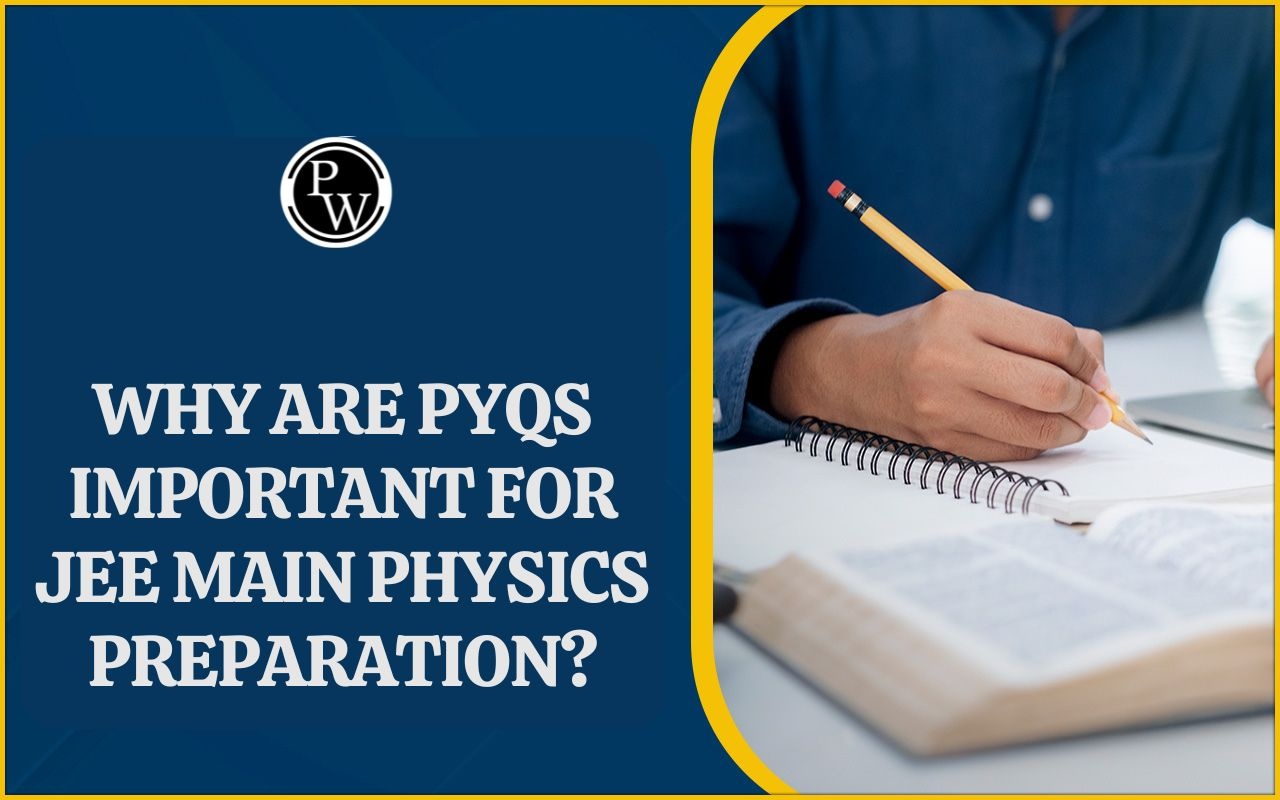
Why Are PYQs Important for JEE Main Physics Preparation?
JEE Main Physics is often considered the most challenging section due to its heavy reliance on conceptual clarity and numerical application. Preparing for this subject requires more than just reading textbooks; it demands a strategic approach to problem-solving.
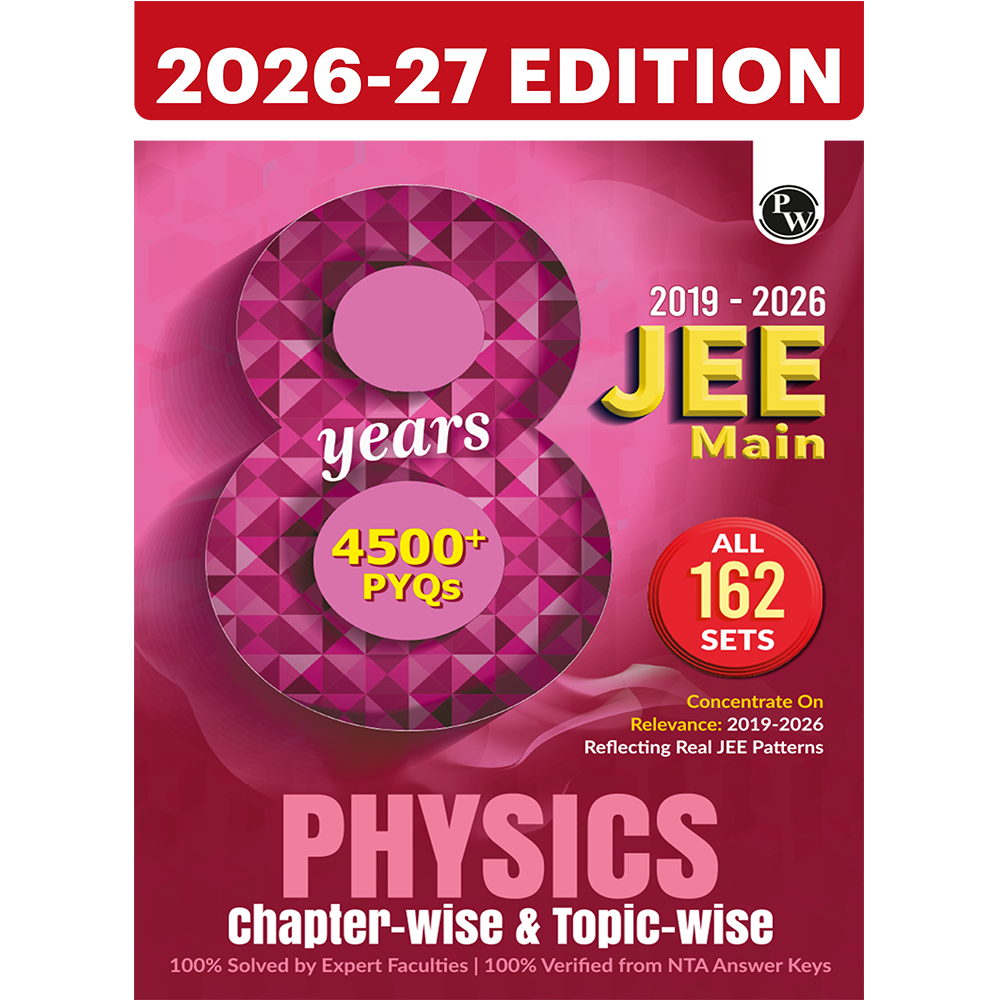
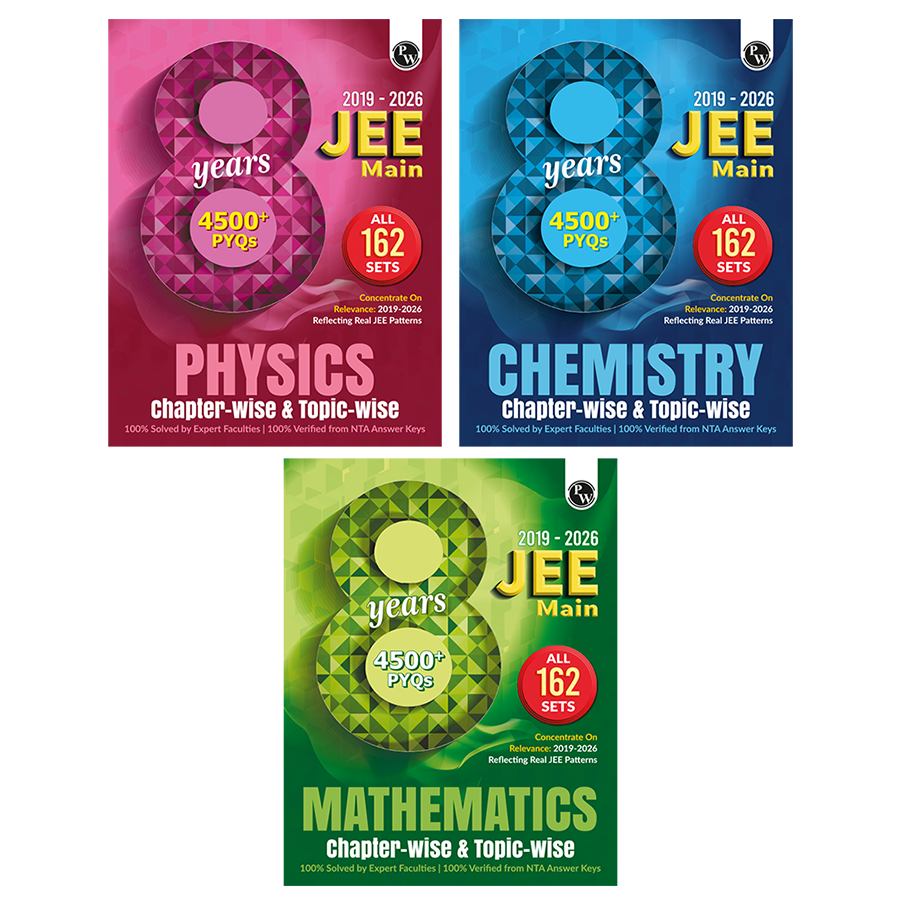
One of the most effective tools in a topper's arsenal is the JEE Main Physics PYQ (Previous Year Questions). These papers serve as a blueprint, revealing the trends and difficulty levels of the actual exam.
Check Out: JEE Books
Importance of JEE Main Physics PYQ
When you start your revision, you might feel overwhelmed by the vast syllabus. Using a JEE Main Physics PYQ helps you narrow down your focus. It is not just about solving questions; it is about understanding how the National Testing Agency (NTA) frames problems.
-
Identifying High-Weightage Chapters: Not all chapters carry the same marks. By analysing JEE Mains Physics chapter-wise, you can see which topics, like Modern Physics or Electrostatics, appear every year.
-
Familiarity with Exam Pattern: Solving these papers helps you get used to the mix of Multiple Choice Questions (MCQs) and Numerical Value Questions.
-
Improving Speed and Accuracy: Physics involves complex calculations. Regular practice with JEE Main Physics ensures you can solve problems quickly without making silly errors.
Features of JEE Main Physics PYQ
Below are the main features of the PYQ that you must know:
-
Latest PYQ Practice: Solve recent JEE Main previous year questions to stay updated with the latest exam trends, patterns, and question styles.
-
Focused Coverage (2019–2026): Carefully selected questions from recent years help ensure your preparation stays aligned with the current syllabus and exam format.
-
JEE Main Standard Questions: Practice questions that match the actual JEE Main difficulty level to improve speed, accuracy, and exam confidence.
-
Comprehensive Shift-wise Papers: Get access to a wide range of shift papers for realistic practice across different exam sessions.
-
Topic Weightage Analysis: Understand chapter-wise importance and focus your preparation on high-weightage and frequently asked topics.
-
Topic-wise Question Arrangement: Questions are systematically organized chapter by chapter, making targeted practice and revision more effective.
-
4500+ Solved Questions: Includes detailed and easy-to-understand solutions for better concept clarity and mistake analysis.
-
Improves Analytical Skills: Consistent JEE Main Physics PYQ practice helps strengthen logical thinking, problem-solving ability, and pattern recognition.
-
Covers Multiple Question Types: Includes both MCQs and numerical-based questions to prepare you for every format asked in JEE Main.
How to Use JEE Main Physics PYQ
Many students download a JEE Mains PYQ Physics PDF but never actually use it effectively. The best way to use these resources is to integrate them into your weekly schedule.
-
Weekly Mock Tests: Use a full-year JEE Main PYQ paper as a mock test every Sunday.
-
Revision Notes: While solving JEE PYQ, note down the repeated formulas or "tricks" used in the solutions. These become your last-minute revision notes.
-
Focus on Logic: Physics is about logic. If you find a shortcut in a PYQ chapterwise physics solution, try to understand the derivation behind it so you can apply it to similar new problems.
Benefits of Solving JEE Main Physics PYQ
One common mistake students make is solving random questions from various sources. A more structured approach involves focusing on the JEE Mains Physics chapter-wise. This method allows you to master one topic at a time before moving to the next.
|
Feature |
Benefits of Chapterwise Practice |
|
Concept Reinforcement |
Helps in applying a specific formula to different types of problems. |
|
Gap Analysis |
Clearly shows which specific sub-topic (e.g., Doppler Effect) needs more work. |
|
Progress Tracking |
You can measure your mastery over a chapter based on how many PYQs you solve correctly. |
By using a JEE Mains PYQ Physics PDF, students can easily carry their study material on digital devices, making it possible to revise during short breaks. This accessibility is crucial for maintaining consistency during the final months of preparation.
Study Strategy for JEE Main Physics PYQ
To get the most out of the PYQ, you should treat every practice session like a real exam. Simply looking at the solutions will not help you develop the logical thinking required for JEE.
-
Timed Practice: Set a timer for 60 minutes and try to solve 25–30 questions from a JEE Main Physics PYQ set. This builds the mental stamina needed for the three-hour exam.
-
Analyze Your Mistakes: After completing a set, go back and see why you got a question wrong. Was it a calculation error or a conceptual gap?
-
No Calculators: Since calculators are not allowed in JEE Main, perform all your calculations manually while practising Physics.
-
Repeat the Difficult Ones: If a particular question from the JEE chapter-wise PYQ was hard to solve, mark it and come back to it after a week to see if you have mastered the concept.
While there are many free resources available online, accuracy is paramount. An incorrect solution in a JEE chapter-wise PYQ book or PDF can lead to conceptual confusion.
Practising with JEE Mains PYQ Physics from a reputable source provides:
-
Detailed step-by-step solutions instead of just the final answer.
-
Alternative methods to solve the same problem faster.
-
Trend analysis that shows the "difficulty curve" over the last few years.
Check Out: JEE Previous Year Papers
Common Myths About JEE Main Physics PYQ
Many students believe that questions are "repeated" exactly as they were in previous years. While this is rarely true, the concepts and patterns are almost always repeated.
-
Myth 1: If I solve all JEE PYQ physics, I will get in the 100th percentile.
-
Reality: PYQs are for practice and strategy; you still need to understand the theory from NCERT and other standard books.
-
Myth 2: Only the last 2 years are important.
-
Reality: Looking at a broader range, like an 8-year JEE Main Physics PYQ collection, gives a better view of how topics rotate in importance.
-
Myth 3: JEE Mains PYQ chapterwise physics is only for revision.
-
Reality: It can be used alongside your first reading of a chapter to understand what parts of the theory are most relevant for the exam.
Read More: List of Physics Formulas for JEE Exams
JEE Main Physics PYQ FAQs
Which is the right way to solve JEE PYQ for Physics?
The best way is to solve them chapter-wise after finishing the theory. Once the entire syllabus is covered, switch to solving full-length year-wise papers to improve your time management skills.
Are questions repeated in JEE Main PYQ Physics?
Exact questions are rarely repeated, but the underlying concepts and the methodology to solve them remain consistent. Practising PYQs helps you quickly recognise these recurring patterns during the exam.
Where can I find a reliable JEE Mains PYQ Physics PDF?
Reliable PDFs are available online. These include verified answers and detailed explanations, which are essential for self-study and correcting your mistakes.
Is solving the JEE Mains PYQ chapterwise physics enough for a good rank?
While the chapterwise study is a critical component, you also need to take regular mock tests and have a strong grasp of NCERT concepts to achieve a top rank in JEE Main.
How many years of JEE chapter-wise PYQ should I practice?
It is highly recommended to practice at least the last 8 to 10 years of JEE chapter-wise PYQ. This range covers different shifts and various difficulty levels introduced by the NTA over the years.7