How to Improve JEE Physics Score from 100 to 130+
Many aspirants hit a frustrating plateau around the triple-digit mark, feeling that every extra hour of study brings diminishing returns. If you find yourself in this position, the problem is rarely a lack of hard work; rather, it may be a mismatch between your exam strategy, question selection, and conceptual understanding.
Breaking past this barrier requires a shift from passive reading to active practice. Using relevant JEE Study Materials alongside mock paper analysis can help you prioritise high-yield topics, identify weak areas, eliminate calculation errors, and improve your JEE Physics score
What is a JEE Physics Score
Your JEE physics score is a critical quantitative metric that reflects your command over mechanics, electromagnetism, optics, and modern physics within a high-pressure, time-bound testing environment. Achieving a competitive grade requires balancing speed with precise analytical thinking, as the national examination tests both fundamental clarity and multi-concept integration.
-
Your numerical evaluation is determined by a strict marking scheme featuring positive points for correct answers and negative marks for incorrect attempts.
-
A score of 100 typically indicates strong command over foundational chapters, while pushing past 130 requires handling advanced numericals and multi-step derivations.
-
Balancing time allocation between physics, chemistry, and mathematics directly influences your final percentile and overall engineering entrance ranking.
How to Analyse Your JEE Physics Score at 100 Marks
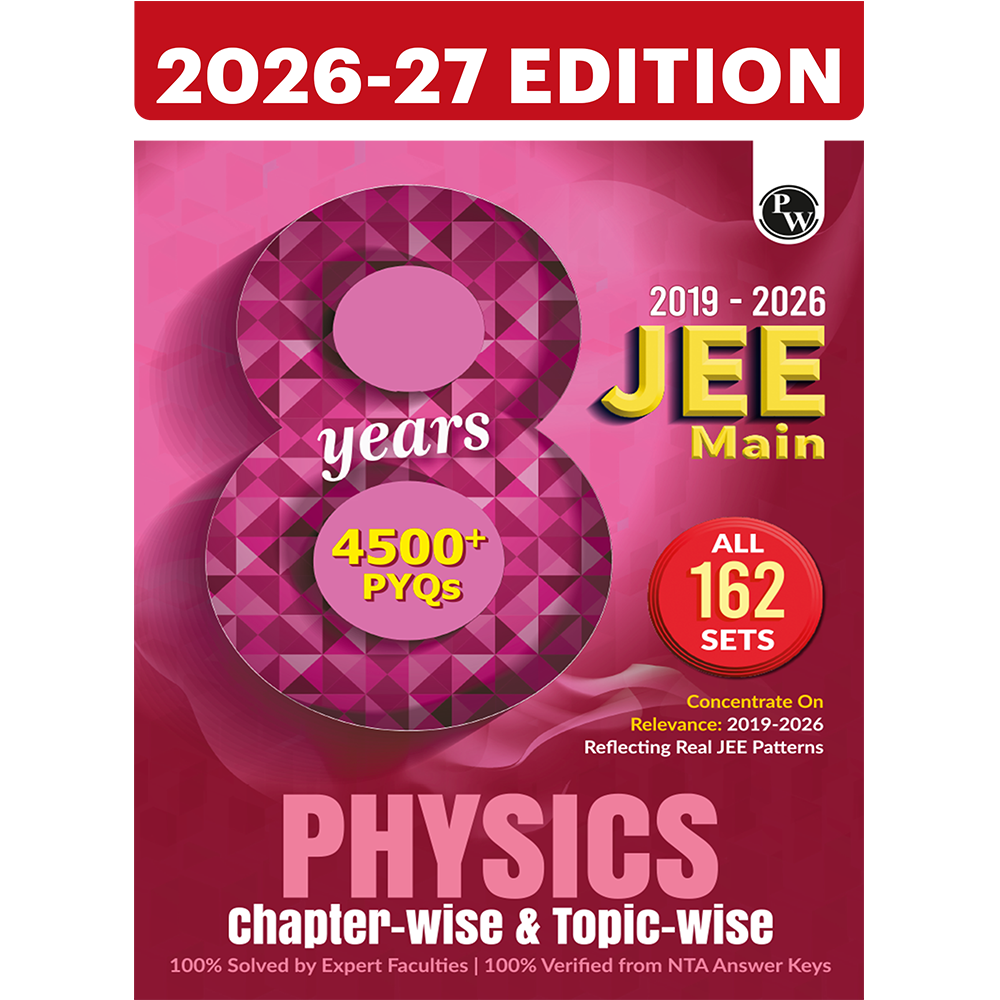
Diagnosing a 100-mark performance requires looking beyond the final tally to identify whether lost marks stem from conceptual gaps, calculation errors, or poor time management. Analysing mock tests alongside JEE Main Physics PYQ questions helps reveal recurring patterns, highlight weak areas, and guide targeted practice for better performance.
-
Categorize every lost mark into conceptual lack, silly calculation mistakes, formula confusion, or questions left unattempted due to time constraints.
-
Evaluate the time spent per question to identify if you are getting bogged down in lengthy, low-yield numericals at the expense of easier problems.
-
Compare your accuracy rate in mechanics versus modern physics to discover which modules require immediate remedial revision.
Which Physics Topics Can Help Improve Your JEE Physics Score
Targeting high-weightage topics with predictable question patterns is the fastest way to add crucial numbers to your total without spreading your energy too thin across the entire vast syllabus. Focusing heavily on scoring chapters ensures maximum return on your invested study hours.
-
Prioritize high-scoring and frequently repeated units like Modern Physics, Thermodynamics, Current Electricity, and Electrostatics which feature direct formula-based or standard conceptual patterns.
-
Strengthen your grasp on Optics and Magnetism by practicing diverse numerical variations that frequently appear in recent exam shifts.
-
Revisit Mechanics fundamentals, particularly Rotational Motion and Newton's Laws of Motion, ensuring you can handle multi-concept problems effortlessly.
The official JEE Main Physics syllabus can be used as a reference to ensure that your revision and question practice cover the required areas.
How to Use PYQs and Mock Tests to Increase Your JEE Physics Score
Leveraging past exam papers and simulated test environments bridges the gap between passive theoretical knowledge and real-time problem-solving agility under strict time limits. Consistent practice with authentic exam archives trains your brain to recognize recurring question frameworks instantly.
-
Solve chapter-wise previous year questions to understand the exact depth, trend, and difficulty level expected by testing authorities.
-
Attempt full-length mock papers under strict exam conditions to build mental stamina and optimize your subject-wise time distribution strategy.
-
Maintain a dedicated error log for every mock test, reviewing incorrect answers thoroughly to ensure the same conceptual trap is never repeated.
How to Improve Accuracy and Reduce Mistakes for a Better JEE Physics Score
Unforced errors and misread calculation steps can lower your percentile, often bringing potential high scores down to average levels. Using the PW Physics Handbook For JEE for quick formula revision, along with disciplined problem-solving habits, can help you reduce calculation mistakes, avoid negative marking, and improve your overall score.
-
Read every numerical question twice to underline given parameters, unit conversions, and specific output requirements before touching your notepad.
-
Avoid mental calculations during complex algebraic manipulations; write down every intermediate step clearly to prevent sign errors and dropped coefficients.
-
Practice leaving buffer time at the end of your study sessions specifically to re-verify critical calculations and final numerical values.
Study Strategy to Raise Your JEE Physics Score from 100 to 130 Plus
Transitioning to the 130+ bracket calls for a structured daily timetable that balances rigorous problem practice with active doubt resolution and structured revision cycles. A disciplined schedule prevents burnout while keeping your analytical reflexes sharp.
-
Dedicate specific weekly blocks to tackle advanced-level problems and multi-concept integration challenges rather than just repeating comfortable formula substitutions.
-
Use concise revision notes to review critical laws, dimensional formulas, and graph interpretations every few days to maintain long-term retention.
-
Reference trusted study resources and structured theory guides to clear ambiguous concepts without cluttering your preparation with too many conflicting publications.
Also Check - JEE Test series
Tips to Improve Your JEE Physics Score Through Regular Practice
Sustained, daily engagement with numerical problems builds the intuitive mathematical fluency needed to tackle tricky exam variations with total confidence. Building small, consistent habits compounds into massive performance gains over the preparation cycle.
-
Solve a fixed quota of mixed-concept numerical problems every single morning when your cognitive energy and focus levels are highest.
-
Create flashcards or summary sheets for tricky formulas, standard approximations, and shortcut methods to review during short breaks.
-
Prioritize physical health, balanced nutrition, and adequate nightly sleep to ensure optimal cognitive function and sustained focus during intense study hours.
Read More: List of Physics Formulas for JEE Exams
JEE Physics Score FAQs
What is a good score in JEE Physics?
A score above 60 to 70 out of 100 in physics is generally considered excellent, placing you in a very competitive percentile bracket for top engineering admissions.
How can I improve my numerical problem-solving speed?
Improve your speed by memorizing standard formula derivations, practicing mental math for common calculations, and taking timed sectional tests regularly.
Are previous year questions enough to boost my performance?
Previous year questions are vital for understanding exam trends, but you must also practice standard numerical problems and mock tests to handle unexpected question variations.
Which chapters are most important for physics preparation?
Modern Physics, Current Electricity, Electrostatics, Thermodynamics, and Magnetism consistently carry high weightage and offer great scoring potential with focused practice.
How do I stop making silly calculation mistakes in exams?
Combat silly mistakes by writing down intermediate steps clearly, avoiding rushing through easy questions, and double-checking unit conversions before marking final answers.