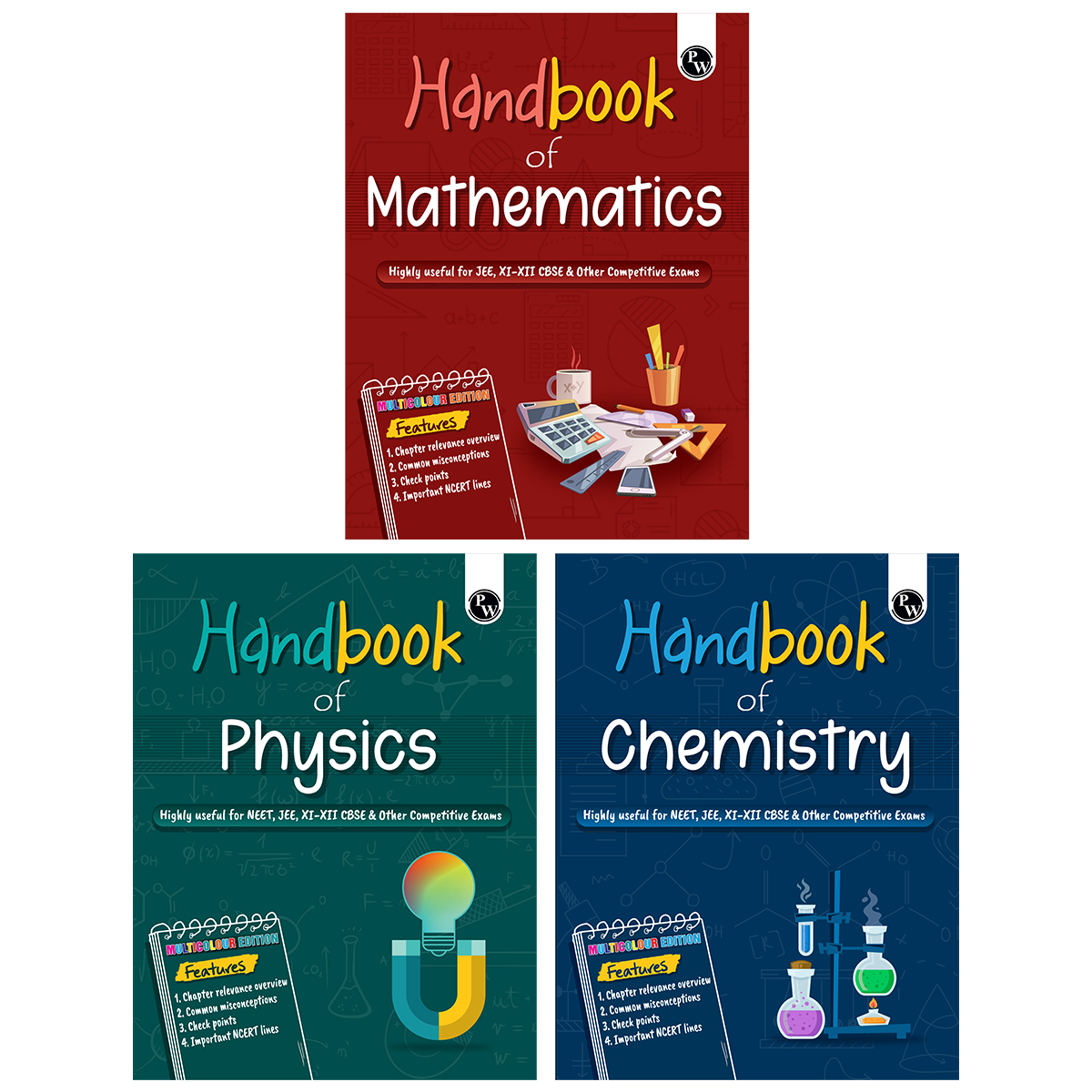
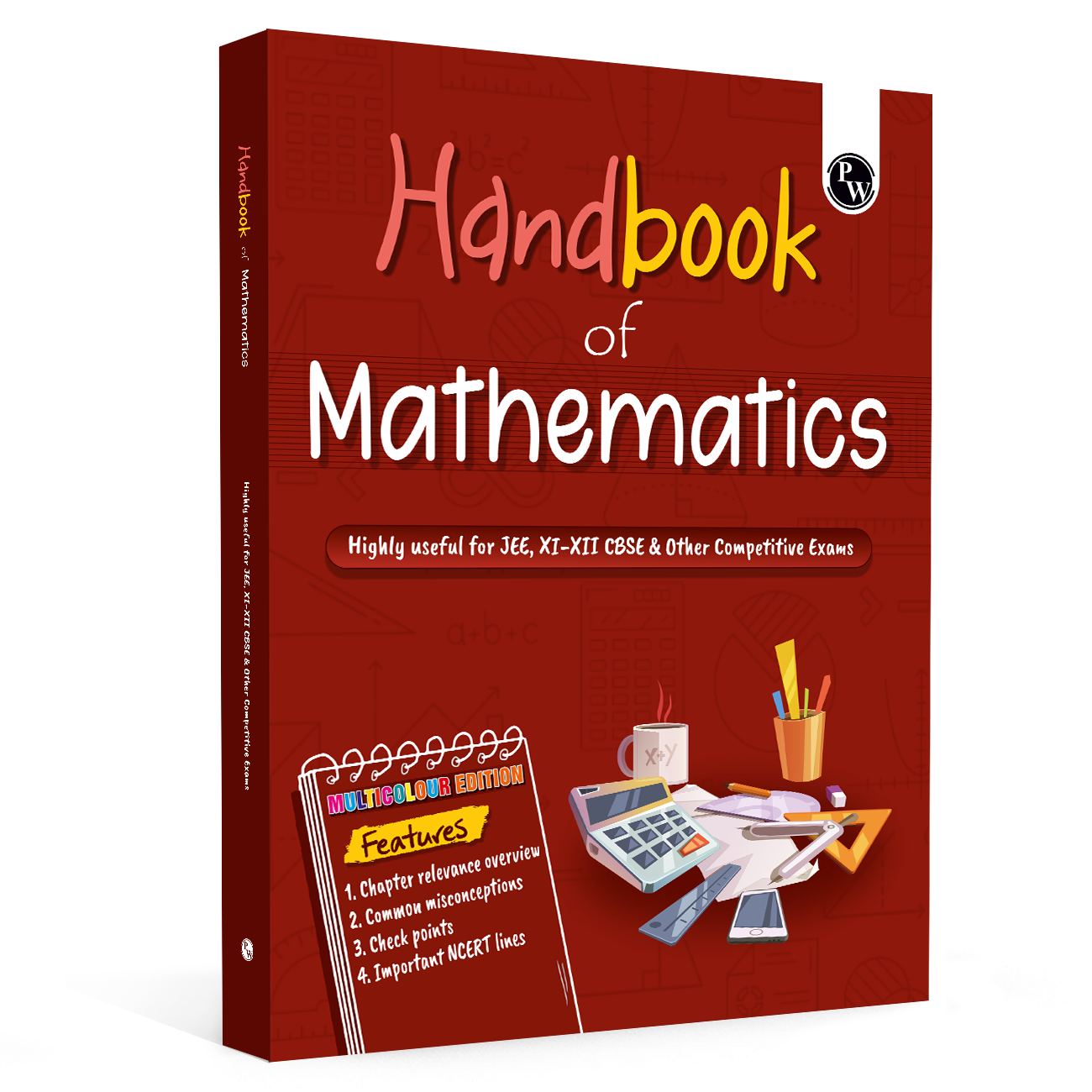
How PCM Handbook Helps JEE Aspirants with Quick Formula Revision
Managing a huge syllabus is part of preparing for competitive exams. The common problem students face is that of recalling important concepts during mock tests. A dedicated JEE handbook takes care of this by bringing together core information in a single, portable reference guide. This article describes the importance of a good formula manual to organise study schedules and improve performance.
Importane of a JEE Handbook
A structured JEE handbook acts as a constant companion during daily problem-solving sessions. Instead of flipping through multiple heavy textbooks to find a single equation, students can locate it within seconds. This immediate access maintains the momentum of study sessions and prevents unnecessary distractions.
Immediate Doubt Resolution
It is common to forget a basic condition or a constant value when practicing complex problems. A brief glance at a reliable reference puts the student back on track without losing attention.
Streamlining Daily Worksheets
A dedicated guide helps students familiarise themselves with alternative problem-solving methods by solving daily practice papers. It connects the learning of a concept with its application in various questions.
How a JEE Handbook Simplifies Physics, Chemistry, and Maths Formula Revision?
The vast syllabus of the engineering entrance exam demands regular contact with all topics. Covering physics chemistry maths formulas systematically is tough without an organised framework. A well-designed guide separates these subjects into clear, manageable segments.
|
Subject |
Core Focus Areas in the Manual |
Revision Benefit |
|
Physics |
Mechanics, Electrodynamics, Modern Physics |
Quick derivation summaries and unit checks |
|
Chemistry |
Physical constants, Organic reactions, Inorganic trends |
Rapid scanning of reaction mechanisms |
|
Mathematics |
Calculus, Coordinate Geometry, Algebra |
Instant access to properties and theorems |
Having these subjects bound together in a comprehensive JEE Revision Books ensures that students do not neglect one subject in favour of another. It provides a balanced approach to daily revisions.
How to Use the JEE Handbook Effectively?
Simply owning a formula handbook does not guarantee success. Students must integrate it strategically into their routine to get the best results.
Active Revision Sessions
Spend around fifteen minutes every morning scanning a specific chapter from the guide. This practice keeps old topics fresh in memory while regular classes focus on new chapters.
Post-Test Analysis
After completing a mock exam, identify the questions missed due to forgotten equations. Highlight those specific sections in your manual to ensure they receive extra attention during the next review cycle.
How a JEE Handbook Improves Your JEE Preparation Strategy
An effective JEE preparation strategy balances deep conceptual learning with rapid execution skills. The ability to recall equations instantly saves precious minutes during the actual exam, allowing more time for complex numerical calculations.
-
Builds Core Confidence: Knowing that all critical information is accessible in one place reduces exam anxiety significantly.
-
Improves Accuracy: Regular interaction with structured data minimises silly mistakes related to signs, constants, and units.
-
Enhances Speed: Instant recall transitions into faster problem-solving, which is vital for clearing competitive cut-offs.
Using a comprehensive compilation ensures that a student's quick revision periods are highly productive, turning weak areas into scoring opportunities before the exam day arrives.
Why a JEE Handbook Is Better Than Traditional Notes?
Many students debate whether to rely entirely on their classroom registers or switch to a structured compilation during the final months of preparation. While comprehensive notes are indispensable during the initial learning phase, they can hamper your speed when time is limited.
The following table highlights the structural differences and explains why a consolidated layout is more efficient for rapid scanning:
|
Feature |
Detailed Classroom Notes |
Smart Formula Manual |
|
Volume and Size |
Multiple heavy registers per subject |
One single, lightweight book |
|
Search Time |
High (requires turning pages of derivations) |
Extremely low (alphabetical or chapter-wise index) |
|
Clutter Factor |
Contains explanations, rough work, and examples |
Purely focuses on core principles and equations |
|
Portability |
Difficult to carry to test centres |
Easily fits into a small bag for last-minute reading |
By switching your focus to a streamlined layout during your quick revision windows, you free up cognitive space. This allows your brain to focus on the application of the data rather than sorting through pages of unnecessary explanations.
Why use JEE Handbook for Last-Minute Revision?
The final weeks before the main exam are highly stressful. Reading comprehensive notes from scratch becomes practically impossible. This is where a specialized JEE books becomes an invaluable asset for every aspirant.
-
Reduces Cognitive Load: Looking at concise summaries instead of detailed descriptions keeps the mind calm and focused.
-
Encourages Active Recall: Students can scan the topic headings and try to remember the equations before checking the manual.
-
Saves Premium Time: It eliminates the need to create personal short notes during the final days of preparation.
Common Mistakes to Avoid While Using a JEE Handbook
Even with a high-quality JEE formula book in hand, your method of review dictates your actual performance on test day. Many aspirants treat revision as a passive reading session, which often leads to poor retention.
To ensure your JEE preparation remains effective, avoid these frequent pitfalls during your study sessions:
-
Passive Skimming Without Pen and Paper: Simply staring at a page of physics chemistry maths formulas creates a false sense of familiarity. Always write down the core equations on a blank sheet from memory after looking at the manual.
-
Ignoring the Conditions and Constraints: An equation is useless if you do not know when it applies. For instance, in thermodynamics or mechanics, certain laws only hold true under constant pressure or in inertial frames. Always check the small print next to the equations.
-
Skipping Unit Conversions: Many competitive questions trick students by mixing SI units with CGS units. Use your handbook to review standard physical constants and their precise units every single week.
Avoiding these simple errors ensures that the information you absorb from your PCM handbook translates directly into higher marks during your weekly mock examinations.
JEE Handbook FAQs
How does a JEE handbook improve problem-solving speed?
A dedicated reference manual places all essential equations and properties in one organised location. This removes the need to search through massive textbooks, allowing students to memorise core concepts efficiently and apply them rapidly during timed tests.
Can a JEE handbook replace traditional textbooks entirely?
No, a reference manual is designed specifically for rapid review and final preparation. It should be used alongside standard textbooks and lecture notes, which are necessary for building initial conceptual depth and understanding core theories.
When is the best time to start using a JEE formula book?
A student should start using the compilation tool early in their preparation cycle. Integrating it into daily study routines after completing chapters ensures familiarity with the layout, making last-minute reviews highly effective.
Does the manual cover all physics, chemistry, and maths formulas needed for the exam?
Yes, a well-structured manual covers the essential equations, core theorems, and critical reactions across all three subjects. It organises information systematically to support both daily assignments and final mock test preparations.
How can I use a formula handbook for effective quick revision?
Spend approximately twenty minutes daily reviewing a few chapters from the manual. Combine this reading with active recall techniques and use the guide during post-exam analysis to revisit the specific topics that caused errors during the test.