JEE Chemical Bonding PYQ Preparation with PW Book
Mastering engineering entrance exams requires targeted practice, especially when handling foundational topics like molecular structures and bonding theories. Many aspirants struggle to bridge the gap between theoretical textbook concepts and actual exam questions. Utilizing a structured resource transforms your daily study routine by aligning your practice directly with recent testing trends.
Tackling a JEE Chemical Bonding PYQ allows you to decode recurring patterns set by testing authorities, ensuring your revision remains relevant, highly focused, and aligned with modern exam demands.
Why Is JEE Chemical Bonding PYQ Important?
Practicing a PYQ is important because it helps students understand how chemical bonding concepts are asked in the actual exam. It gives practice with topics such as hybridization, molecular shapes, bond order, dipole moment, and hydrogen bonding. Regular PYQ practice also helps improve speed, accuracy, and confidence while reducing repeated mistakes. By solving recent questions and checking detailed solutions, students can identify weak topics and improve their JEE Chemical Bonding preparation in a focused way.
Features of JEE Chemical Bonding PYQ
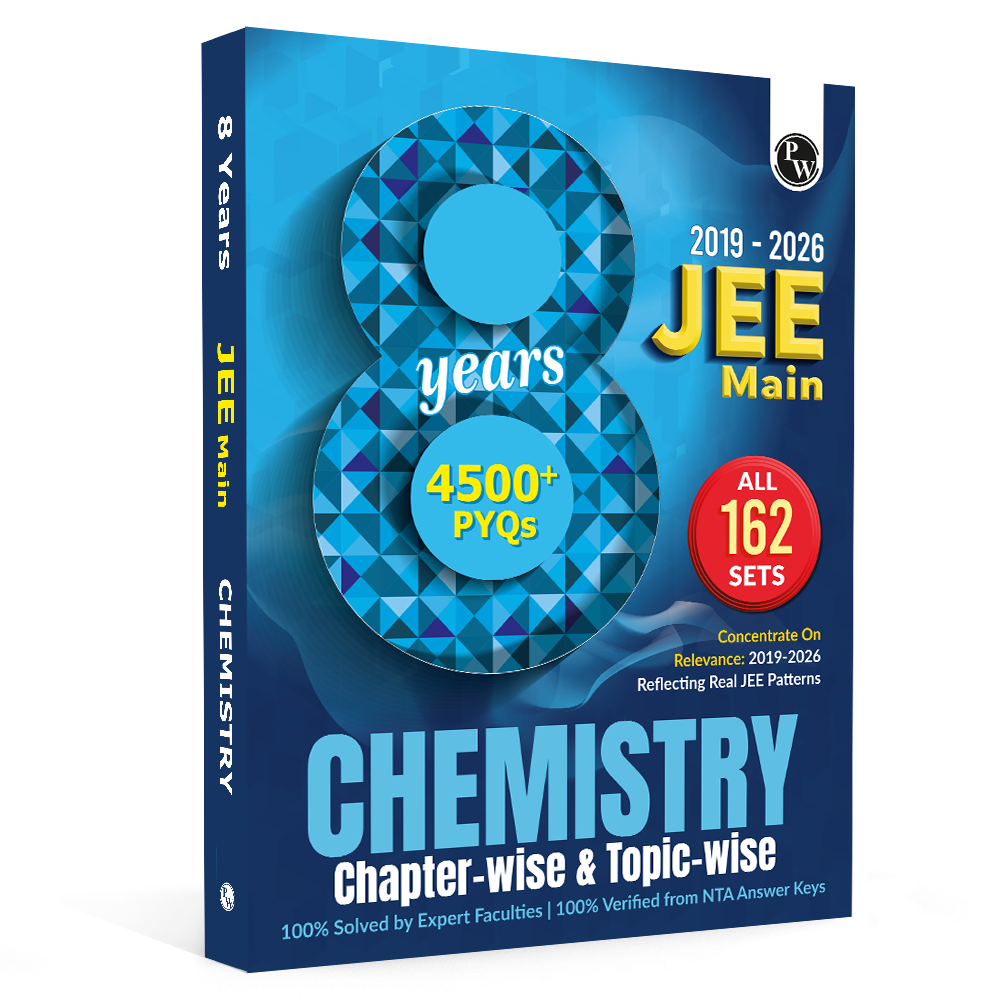
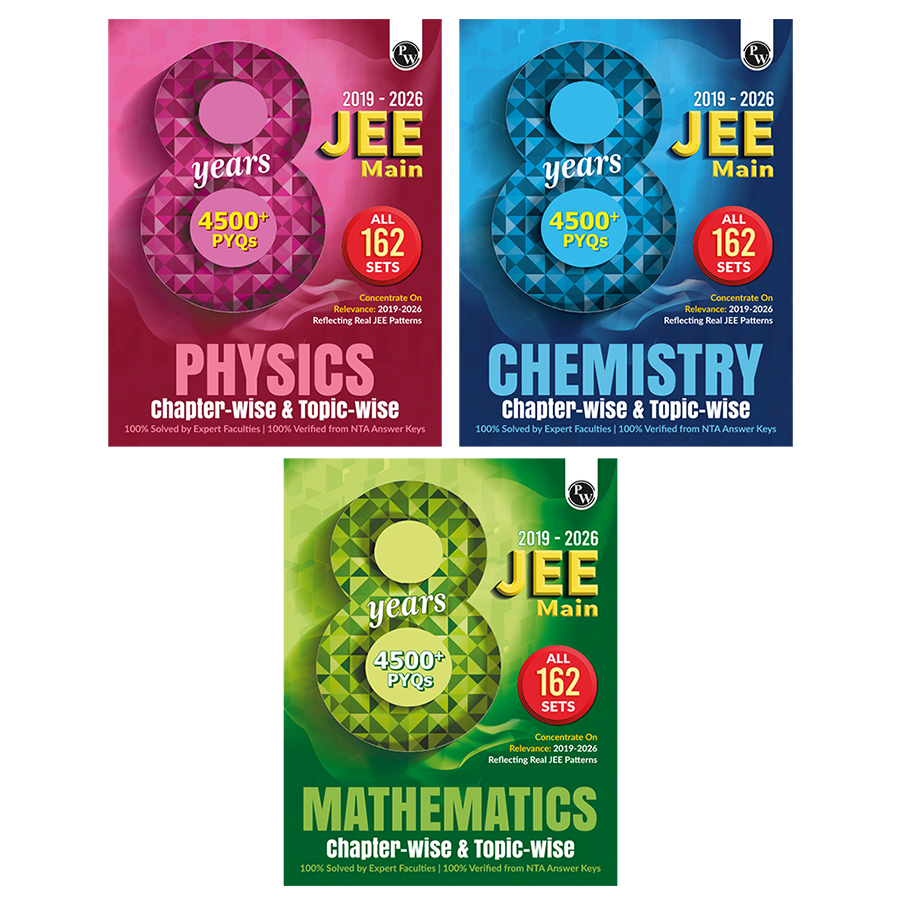
Prepare for JEE Main Chemistry with recent PYQs, complete shift-wise papers, topic-based practice, and detailed solutions. The book helps you understand exam trends, improve concepts, and practice questions based on the latest pattern.
-
Latest PYQ Practice (2019–2026): Solve recent JEE Main Chemistry PYQs (2019–2026) to understand the latest question patterns, difficulty levels, and exam trends.
-
Focus on Relevance (2019–2026): Practice questions from recent years that are useful for current preparation. This helps you avoid outdated question patterns and follow a focused JEE Main Chemistry preparation strategy.
-
JEE-Level Question Standard: Get questions designed around the actual difficulty level of the JEE Main Chemistry exam. Regular practice helps you become more comfortable with exam-level problems.
-
All 162 Sets Included: Access all 162 shift-wise papers from different sessions for complete and realistic JEE Main PYQ practice.
-
Smart Weightage Analysis: Identify important and frequently asked topics from past exam trends. Use this information to plan your preparation and work toward JEE Main Chemistry scoring improvement.
-
Topic-wise Practice Approach: Questions are arranged chapterwise and topicwise to make revision easier. This structure helps you focus on weak areas and build better concept clarity in Chemistry.
-
4500+ Questions with Detailed Error-Free Solutions: Practice more than 4500 JEE Main Chemistry questions with clear and detailed solutions. Step-by-step explanations make it easier to understand the correct approach.
-
Boost Critical Thinking: Study questions from multiple years to identify repeated concepts and changing patterns. This improves problem-solving ability and develops JEE Main Chemistry analytical skills.
-
Comprehensive Question Variety: Practice different question formats, including MCQs and Numerical Value Questions, to improve overall JEE Main exam readiness in Chemistry.
How Can JEE Chemical Bonding PYQ Improve Your Score?
Effective preparation starts with understanding how atomic interactions and molecular geometries are tested. Questions frequently focus on hybridization, molecular orbital theory, dipole moments, and hydrogen bonding. When you study a JEE PYQ, you notice specific trends in how options are framed. Test setters often create traps involving exceptions to the octet rule or formal charge calculations. Recognizing these recurring traps helps you avoid silly mistakes during the actual test.
Isolating your practice to chapter-specific modules keeps your momentum steady. Instead of solving random papers, complete your textbook reading and immediately test your knowledge using a dedicated chemical bonding PYQ book. This immediate application solidifies weak concepts. Structured question banks break down complex topics into digestible parts, letting you track your accuracy across different sub-topics.
How to Solve JEE Chemical Bonding PYQ Questions Effectively?
Analyzing historical questions reveals the exact depth required for high-scoring exams. Many students waste hours memorizing obscure theories that rarely appear. Reviewing chemical bonding JEE questions from recent years highlights the exact weightage given to VSEPR theory and valence bond theory.
-
Focus on exceptions: Pay close attention to molecules with odd electron species or expanded octets.
-
Practice bond parameters: Bond order, bond length, and bond angle comparisons frequently feature in numerical and multiple-choice sections.
-
Visualize geometries: Master 3D molecular shapes to quickly solve dipole moment direction queries.
Tracking these core areas ensures that your study hours yield maximum improvement. Consistent practice bridges the gap between passive reading and active problem-solving.
How to Use JEE Chemical Bonding PYQ for JEE Main Preparation?
The transition toward online testing formats changed how questions evaluate conceptual clarity. Multi-statement questions require absolute clarity on concepts like intermolecular forces and metallic bonding. Practicing a JEE main PYQ exposes you to statements that combine multiple principles into a single query.
Thoroughly reviewing detailed solutions is just as important as solving the questions themselves. When a solution explains the underlying logic rather than just giving the final answer, it builds your analytical framework. Error analysis notebooks help document why a specific geometry or hybridization was miscalculated, preventing repeated errors during full-length mock tests.
How to Analyze JEE Chemical Bonding PYQ Questions?
Systematic revision relies heavily on evaluating past trends. Going through chemical bonding previous year questions gives you a clear metric of your preparation level. Timed practice sessions help build the speed required to handle tricky inorganic and physical-chemical calculations smoothly.
-
Simulate exam pressure: Set a strict timer when attempting a set of past questions to improve time management.
-
Categorize mistakes: Differentiate between conceptual gaps and calculation slips in your error log.
-
Regular revision: Revisit challenging coordination or bonding questions weekly to maintain long-term retention.
Structured review habits, supported by JEE Books, can turn difficult sections into scoring opportunities, boosting overall confidence for the main exam.
How to Build a JEE Chemical Bonding PYQ Preparation Strategy?
A well-rounded study plan balances inorganic theory with physical calculations. Your JEE chemical bonding preparation should incorporate chapter-wise problem sets, concise revision notes, and regular mock evaluations. Utilizing a reliable chemical bonding PYQ book ensures you have access to verified, error-free solutions that save valuable study time.
Consistent efforts directed toward authentic exam archives eliminate guesswork. By treating each past question as a learning milestone rather than a chore, you build the technical competence needed to secure top ranks in engineering entrance tests.
Read More: Previous Year Question Papers of JEE Mains
JEE Chemical Bonding PYQ FAQs
How does solving a JEE Chemical Bonding PYQ help improve my exam score?
Solving a PYQ familiarises you with the exact exam pattern, highlights recurring conceptual traps, and sharpens your speed and accuracy for both multiple-choice and numerical sections.
Why should I choose a chapterwise chemical bonding PYQ book for my studies?
A chapterwise chemical bonding PYQ book allows you to test your understanding immediately after finishing a specific topic, making it easier to identify and fix weak areas before moving forward.
What are the most important sub-topics to focus on when practicing chemical bonding JEE questions?
Key sub-topics include molecular orbital theory configurations, hybridization states, VSEPR theory shape predictions, dipole moment comparisons, and hydrogen bonding variations.
How many years of JEE Main chemical bonding PYQs should I practice?
Practicing questions from a comprehensive 8-year window covering recent online shift papers provides the most relevant exposure to modern NTA testing trends and multi-concept formats.
How can I integrate a chemical bonding previous year questions book into my daily routine?
Dedicate specific slots after your daily study blocks to solve a small set of chemical bonding previous year questions, followed by a thorough review of the provided explanations to clear all doubts.