JEE Main Books for 2027: What Should You Study From Each Book?
Many candidates feel overwhelmed when looking at massive stacks of reference materials without knowing which parts actually yield high scores. Selecting the ideal JEE books forms the core foundation of your study routine.
Rather than collecting multiple theoretical guides for a single topic, targeting structured study materials that offer clear theory, solved examples, and exam-pattern practice questions allows you to build solid fundamentals without wasting valuable time.
What Are JEE Main Books?
JEE main books serve as structured academic resources created specifically to help students cover the full syllabus of the Joint Entrance Examination. Conducted twice annually (typically in January and April) by the National Testing Agency (NTA), the test covers Physics, Chemistry, and Mathematics. Each subject contains 25 questions, making up a 3-hour computer-based exam paper.
Standard JEE main study material focuses on bridging standard school curricula with high-level analytical requirements. These publications break down complex concepts into simple units, offer worked-out numerical examples, and provide practice sets arranged by difficulty level.
What to Study from JEE Main Books for Physics, Chemistry, and Maths
Each subject tested in the examination requires a distinct approach. Relying on a single study tactic across all three papers leads to uneven performance. Using JEE Main PYQs with a tailored approach for each subject ensures balanced preparation across the entire syllabus.
Physics
Physics tests your understanding of natural laws and your ability to translate physical situations into mathematical expressions.
-
Theoretical Models: Read core definitions, units, and physical laws to build strong conceptual clarity.
-
Step-by-Step Examples: Study solved illustrations to learn how to draw free-body diagrams, set up coordinate systems, and apply conservation laws.
-
Numerical Practice: Work through practice questions ranging from direct single-formula applications to complex multi-concept scenarios.
Chemistry
Chemistry is often the most scoring subject because it combines factual recall with logical mechanisms.
-
Organic Chemistry: Focus on reaction mechanisms, named reactions, and functional group transformations.
-
Inorganic Chemistry: Pay close attention to periodic trends, chemical bonding rules, coordination compounds, and block elements.
-
Physical Chemistry: Treat this section like Physics by mastering basic formulas, unit conversions, and numerical calculations.
Mathematics
Mathematics demands high accuracy, quick thinking, and consistent problem-solving practice.
-
Formula Application: Learn essential identities, theorems, and shortcut techniques.
-
Calculus and Algebra: Practice a wide range of problems to recognize structural patterns in algebraic expressions and integration steps.
-
Coordinate Geometry and Vectors: Train to visualize spatial relationships and master formula-based problem solving.
How to Use JEE Main Books for Concepts, Formulas, and Practice
Having access to top-tier JEE main preparation books is only half the battle; knowing how to navigate through them determines your actual score improvement.
1. Conceptual Reading
Begin every new chapter by reading the theoretical exposition carefully. Avoid skipping paragraphs to jump straight to problems. Understanding the underlying derivations, assumptions, and limitations of physical principles ensures you will not be tricked by tweaked exam questions.
2. Maintaining a Formula Workbook
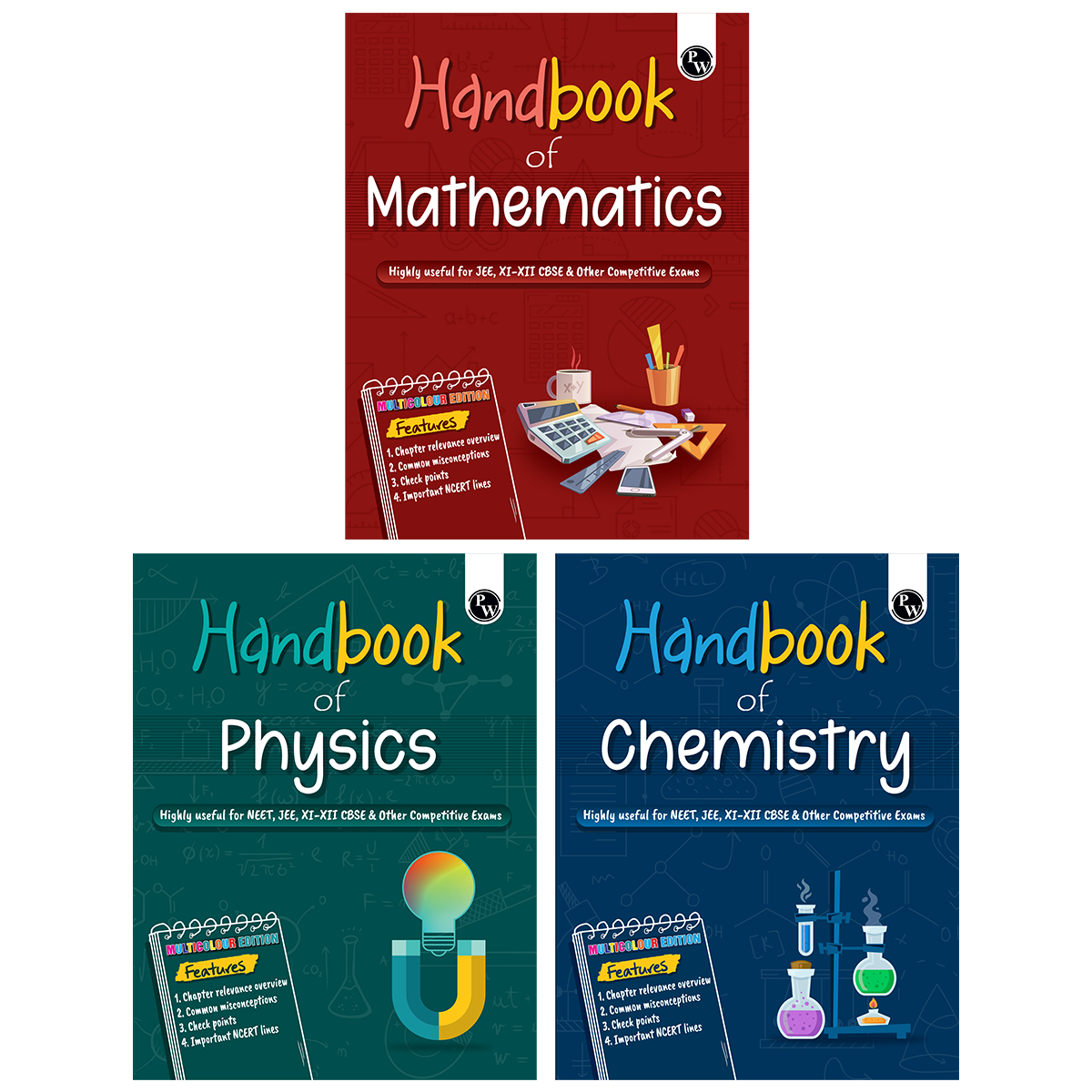
As you move through chapter theories, record every key definition, equation, and condition in a separate notebook. Summarising mathematical formulas and physical relationships in your own words builds memory retention and serves as a rapid review tool later on.
3. Analyzing Worked Examples
Before attempting unsolved exercises, read through the solved examples. Cover the solution with a piece of paper, attempt the problem independently, and then check the step-by-step working provided. This reveals gaps in your logic and teaches efficient calculation pathways.
4. Systematic Unsolved Exercise Practice
Divide unsolved chapter exercises into timed practice sessions. Begin with introductory questions to verify your basic understanding before moving on to advanced, multi-concept problems.
Which JEE Main Books Should You Use for NCERT-Based Topics
The NTA relies heavily on NCERT textbooks for framing questions, making them an essential foundation for all aspirants. However, combining basic textbooks with targeted JEE main books for preparation gives you the extra depth needed for competitive scoring.
-
Inorganic Chemistry: Read every line of the NCERT text carefully. Annotate margin notes and solve all in-text and end-of-chapter questions.
-
Organic Reactions: Use foundational texts to map out reaction pathways, and then test your understanding with comprehensive question banks.
-
Physics & Mathematics: Use NCERT to confirm syllabus limits and definitions, then immediately switch to dedicated reference books for heavy problem-solving practice.
Also Check - JEE Revision Book
How to Combine JEE Main Books with PYQs and Mock Tests
Isolating book study from actual exam patterns is a common strategy mistake. Integrating previous year question papers and timed tests into your routine ensures your learning directly improves your test performance.
-
The Role of Chapter-Wise PYQs
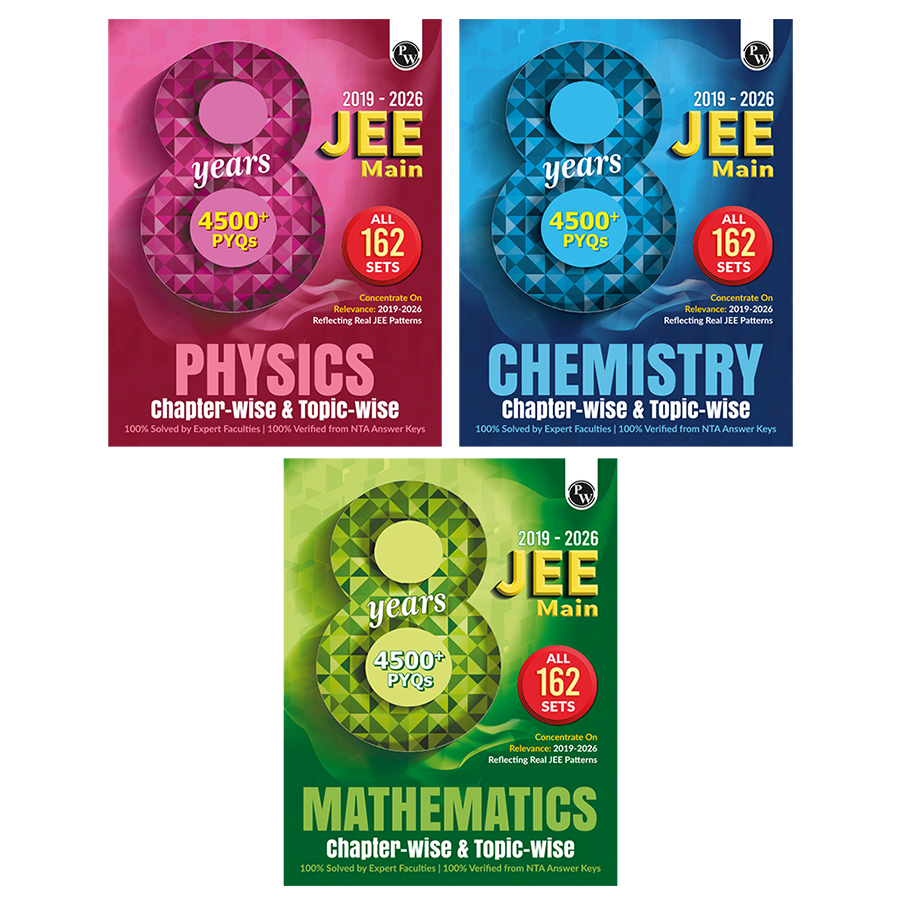
Chapter-wise collections of past exam questions allow you to verify whether your book study matches the actual difficulty of the test. After finishing a chapter, attempt at least 8 to 10 years of past papers without looking at the solutions. This builds confidence and highlights frequent testing patterns.
-
Transitioning to Timed Mock Tests
While reference guides build fundamental knowledge, full-length computer-based mock tests teach time management, question selection, and stress control. Use your book practice to address specific weak points identified during mock test analyses.
Study Strategy to Complete JEE Main Books Before the 2027 Exam
A structured long-term plan prevents last-minute cramming and ensures you cover the entire two-year JEE syllabus thoroughly.
Phase 1: Foundation Building (Months 1–12)
-
Focus on mastering Class 11 topics using foundational books for JEE main.
-
Complete all theoretical readings, worked examples, and basic level exercises for every chapter.
-
Maintain a dedicated formula notebook alongside your daily studies.
Phase 2: Advanced Application & Class 12 Syllabus (Months 13–18)
-
Cover Class 12 syllabus topics systematically while scheduling weekly reviews for Class 11 units.
-
Increase the proportion of complex, multi-concept problems in your daily practice sessions.
-
Solve 8-year chapter-wise previous year question sets upon completing each unit.
Phase 3: Full Revision and Test Series (Months 19–24)
-
Shift from reading thick textbook chapters to reviewing concise notes and formula summaries.
-
Take full-length timed mock tests twice a week to build exam stamina.
-
Re-solve incorrect questions from previous practice sessions and mock tests to eliminate recurring errors.
Tips to Make Better Use of JEE Main Books for Revision
Revising effectively involves active engagement with your study materials rather than passive re-reading.
-
Use Visual Highlighting: Use highlighters or colored pens to mark key formulas, exceptional chemical reactions, and difficult physical conditions during your first reading.
-
Tag Tricky Questions: Mark challenging problems during your daily practice with a star or bookmark. Re-visit these flagged items during revision instead of re-solving entire chapters.
-
Create Margin Summaries: Write short summaries, key steps, or shortcut formulas in the top and bottom margins of your reference book pages.
-
Leverage Chapter Summaries: Use the end-of-chapter recap pages provided in quality reference materials for rapid multi-topic reviews before major tests.
Mistakes to Avoid While Studying from JEE Main Books
Many candidates work hard but fail to achieve top scores because of poor study habits. Steering clear of these common pitfalls will keep your preparation efficient.
-
Resource Hoarding: Buying five different reference guides for a single subject leads to confusion and unfinished topics. Stick to one reliable, comprehensive resource per subject.
-
Passive Reading: Reading through solved examples without grabbing a pen and paper builds a false sense of mastery. Always write down calculations manually.
-
Ignoring NCERT: Skipping foundational textbooks, especially for Chemistry, can cost you easy marks on fact-based questions.
-
Neglecting Timed Conditions: Solving problems at a leisurely pace without tracking time can cause speed issues during the actual timed test.
JEE Main Books FAQs
How many books are required for JEE preparation?
You need at least one reliable reference book for each subject: Physics, Chemistry, and Mathematics. Additional question banks or past paper collections can be added for extra practice as needed.
Is NCERT enough for cracking JEE Main?
NCERT is essential, especially for Inorganic and Organic Chemistry. However, for Physics and Mathematics, supplementary reference materials are required to build the necessary numerical speed and advanced problem-solving skills.
When should I start solving previous year questions from my books?
You should begin solving chapter-wise previous year questions immediately after completing the theoretical study and basic practice exercises of that specific unit.
Should I study from different books for JEE Main and JEE Advanced?
Foundational concepts remain the same for both exams. However, JEE Advanced requires additional practice with complex, multi-concept problems, matrix-match questions, and multi-correct options.
How do I balance reading theory and solving questions in reference books?
A balanced rule of thumb is to dedicate roughly 30% of your study time to theoretical concepts and worked examples, leaving the remaining 70% for active problem-solving and question sets.