JEE Main Books vs PYQs: What Should You Practise First?
Choosing between foundational study materials and official exam archives dictates how well aspirants build accuracy and speed. When mid-term examinations approach, students frequently question whether finishing theory books completely is necessary before touching past archives.
This article breaks down the JEE Main Books vs PYQ right sequence to follow using structured resources and historical question banks to ensure a balanced, high-scoring revision phase without unnecessary burnout.
Overview of JEE Main Books vs PYQ
Understanding the distinct role of each study asset helps learners organise their daily timetables effectively. Standard reference texts provide clear theory, detailed explanations, and step-by-step solved examples for physics, chemistry, and mathematics. They build basic to advanced conceptual understanding from scratch.
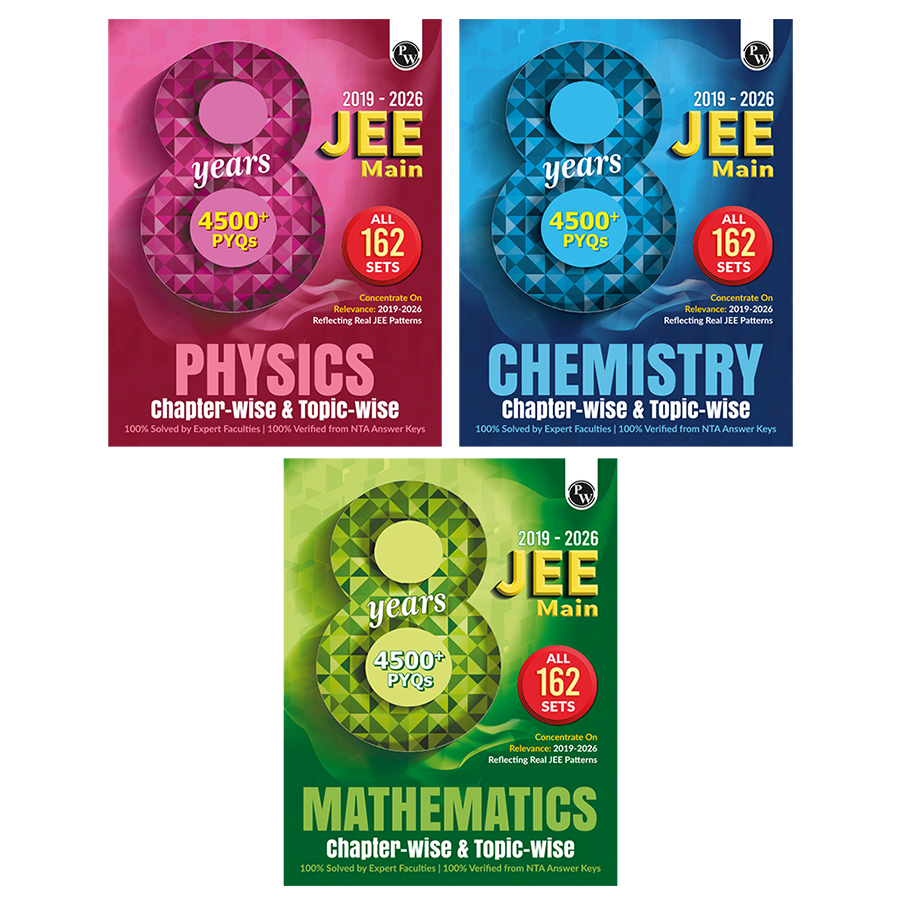
On the other hand, past archives contain historical papers featuring chapter-wise and topic-wise queries. Analysing these archives reveals testing trends, repeating concepts, and overall difficulty levels. Using JEE main books alongside archived question files forms the backbone of a solid schedule.
Selecting proper JEE main preparation books ensures comprehensive syllabus coverage without running into redundant information. While textbooks lay down the fundamental laws and theoretical derivations, historical test archives expose the actual application style required in modern examination formats. Navigating both resources correctly prevents conceptual gaps and builds robust confidence.
What JEE Main Books Are Useful for During Preparation
Textbooks act as the primary pillar for learning fundamental laws, chemical reactions, and mathematical theorems. Reliable JEE main preparation guides provide clear and simple explanations written in easy-to-understand language. They offer a large number of practice questions spanning basic to advanced levels to sharpen problem-solving skills. Structured chapter-wise and topic-wise layouts allow smooth daily revisions.
-
Concept Building: Textbooks introduce complex formulas alongside detailed derivations.
-
Solved Examples: Step-by-step illustrations demonstrate correct application methods.
-
Subject Focus: Physics requires numerical practice, chemistry relies on reaction mechanisms, and mathematics demands regular calculation drills.
-
Theory Depth: Comprehensive reading clears fundamental doubts before attempting timed problem sets.
What JEE Main PYQs Help You Understand About the Exam
Archived testing papers expose the exact mindset of the testing authority. Solving JEE main previous year questions highlights which topics carry heavy weightage across sessions. Regular JEE main PYQ practice bridges the gap between theoretical knowledge and real exam pressure.
-
Exam Trends: Archives show shifts in question phrasing and numerical difficulty over recent years.
-
Time Management: Practising timed sets helps students allocate proper minutes per section.
-
Repeating Concepts: Certain high-yield formulas reappear frequently across alternate exam shifts.
-
Question Patterns: Familiarity with recurring formats reduces anxiety on test day.
When to Use JEE Main Books vs PYQ for Each Chapter
Timing your resource switch correctly prevents premature frustration and ensures deep conceptual clarity. Textbooks should always be opened first when encountering a brand-new syllabus topic.
Reading the theory and solving introductory numericals establishes a strong base. Once chapter completion reaches seventy percent, transition directly into historical problem sets. Testing your knowledge against past papers exposes lingering weak spots that require extra revision.
Rushing into archives too early without reading fundamental textbook chapters leads to frequent calculation blocks and low scoring, whereas delaying archive practice until the very end hampers time management skills during actual tests.
How to Combine JEE Main Books vs PYQ in Your Study Routine
Integrating both assets into a unified timetable creates a balanced workflow. Dedicate morning hours to reading textbook chapters and working through illustrative examples. Reserve afternoon or evening slots for solving chapter-wise archive questions to test retention.
Maintain a dedicated error notebook to log incorrect answers found during archive practice. Reviewing these errors weekly ensures continuous score improvement. Building this consistent rhythm keeps preparation steady and structured throughout the mid-term academic calendar.
Solving JEE Previous Year Papers helps students identify important topics and frequently tested concepts.
Tips to Balance JEE Main Books vs PYQ Practice
Maintaining equilibrium between resource types requires discipline and structured time blocking. Avoid spending months reading theory without testing your problem-solving application. Limit reference material to trusted publications to avoid information overload.
-
Prioritise Weak Areas: Identify difficult topics from mock scores and revisit textbook theory.
-
Simulate Exam Conditions: Set a timer when working through historical question sets.
-
Consistent Schedule: Alternate between daily problem practice and weekly concept revision.
-
Error Analysis: Review every incorrect answer to understand underlying conceptual gaps.
Common Mistakes to Avoid When Using JEE Main Books vs PYQ
Aspirants often fall into traps that slow down their mid-term progress. Relying solely on theory books without attempting timed test papers leads to poor speed management during actual exams.
Skipping foundational textbook reading to solve tough archive questions directly causes conceptual gaps. Sticking to too many reference publications simultaneously creates confusion and wastes valuable preparation hours.
Avoiding these pitfalls keeps the study process streamlined and focused on high-yield output.
Practice Plan for JEE Main Books vs PYQ Before the Exam
A well-planned execution timeline ensures maximum syllabus coverage without burnout. Allocate the first phase of any chapter to comprehensive textbook reading and solved examples. Move into structured archive problem-solving during the second phase to track accuracy.
Conclude with full-length mock tests to polish time management and stamina. Following this systematic progression ensures balanced development across all three core subjects.
Read More - Are 5 Subjects Required for JEE Main Exam?
JEE Main Books vs PYQ FAQs
Should I complete entire textbooks before solving archives?
No, solving historical questions alongside chapter-wise completion works best to test application skills early.
How many years of historical papers should I solve?
Practising recent historical archives covering multiple testing sessions provides adequate exposure to modern exam patterns.
Can reference texts alone guarantee a high score?
Combining textbook theory with rigorous JEE main PYQ sessions is necessary for balanced preparation and speed.
How do I handle difficult questions found in past papers?
Log tough problems in a separate notebook and revisit textbook theory to strengthen those specific weak spots.
Which subject requires more archive practice?
All three subjects—physics, chemistry, and mathematics—require equal archive practice to master time allocation under pressure.