How JEE Revision Notes by faculty reduce revision time from weeks to days

Many students face the stressful challenge of flipping through thousands of textbook pages to consolidate months of learning. This traditional method often drains valuable preparation time, turning what should be a quick review into a tedious process that lasts for weeks.
Expert JEE revision notes address this problem by condensing heavy theoretical chapters into precise, actionable summaries. By providing a structured framework designed by experienced teachers, these notes compress your review cycle, helping you transition from chaotic, week-long reading sessions to swift, daily completions.
What Are JEE Revision Notes?
Expert-curated JEE revision notes are highly structured study materials designed to compress vast subject matter into a compact, accessible format. Unlike standard textbook chapters that elaborate on lengthy histories and complex background derivations, these faculty-prepared notes focus solely on essential formulas, core definitions, and step-by-step problem-solving methods.
Experienced educators build these resources to align perfectly with current examination trends, ensuring that the depth of each topic matches what the assessment actually requires.
Faculty members highlight critical linkages between different sub-topics, which helps you grasp the bigger picture without getting lost in unnecessary details. The layout is optimized for rapid visual scanning, featuring clear headings, structured tables, and highlighted equations.
By compiling these elements into a singular, structured reference, faculty notes eliminate the need to juggle multiple massive reference volumes during your study sessions.
How JEE Revision Notes Reduce Revision Time?
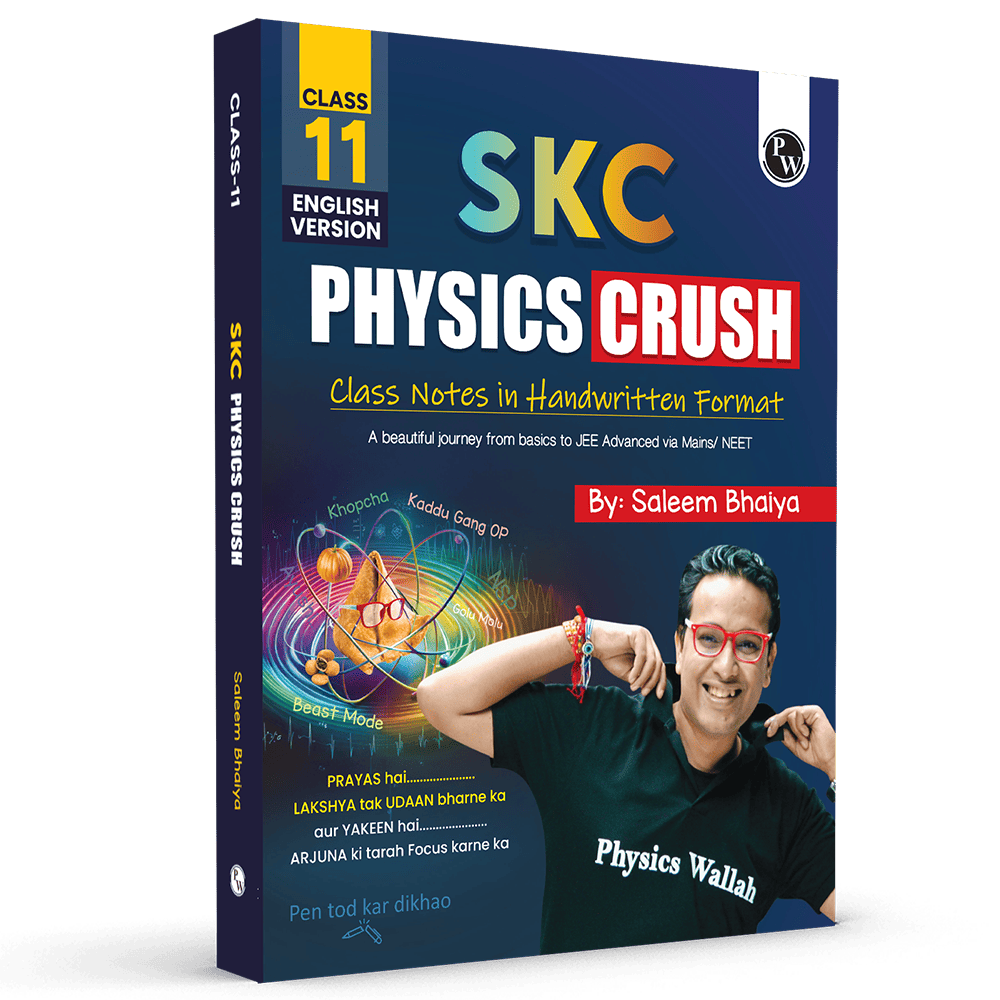
The primary reason preparation timelines stretch into weeks is the lack of content filtering. When you review from regular textbooks, your brain spends excessive energy separating crucial formulas from explanatory text. Resources such as Physics Crush for Class 11th 2026 support faster revision by presenting concepts in a focused and structured format.
-
Elimination of Fluff: These resources remove lengthy introductory paragraphs and repetitive historical contexts, leaving behind only the exact principles you need to solve complex problems.
-
Pre-compiled Interconnected Formulas: Instead of searching through multiple chapters to find related equations, you find them grouped logically, allowing for swift mental mapping.
-
Simplified Layouts: Complex chemical mechanisms and mathematical proofs are broken down into easy-to-follow, linear steps, reducing cognitive fatigue.
-
Optimized Formats: Using resources like PW handwritten notes JEE provides a familiar classroom feel, which naturally triggers memory recall faster than standard printed text.
Instead of spending hours trying to summarise a single chapter of Physics or Chemistry, you can browse a faculty-optimized summary in a fraction of the time.
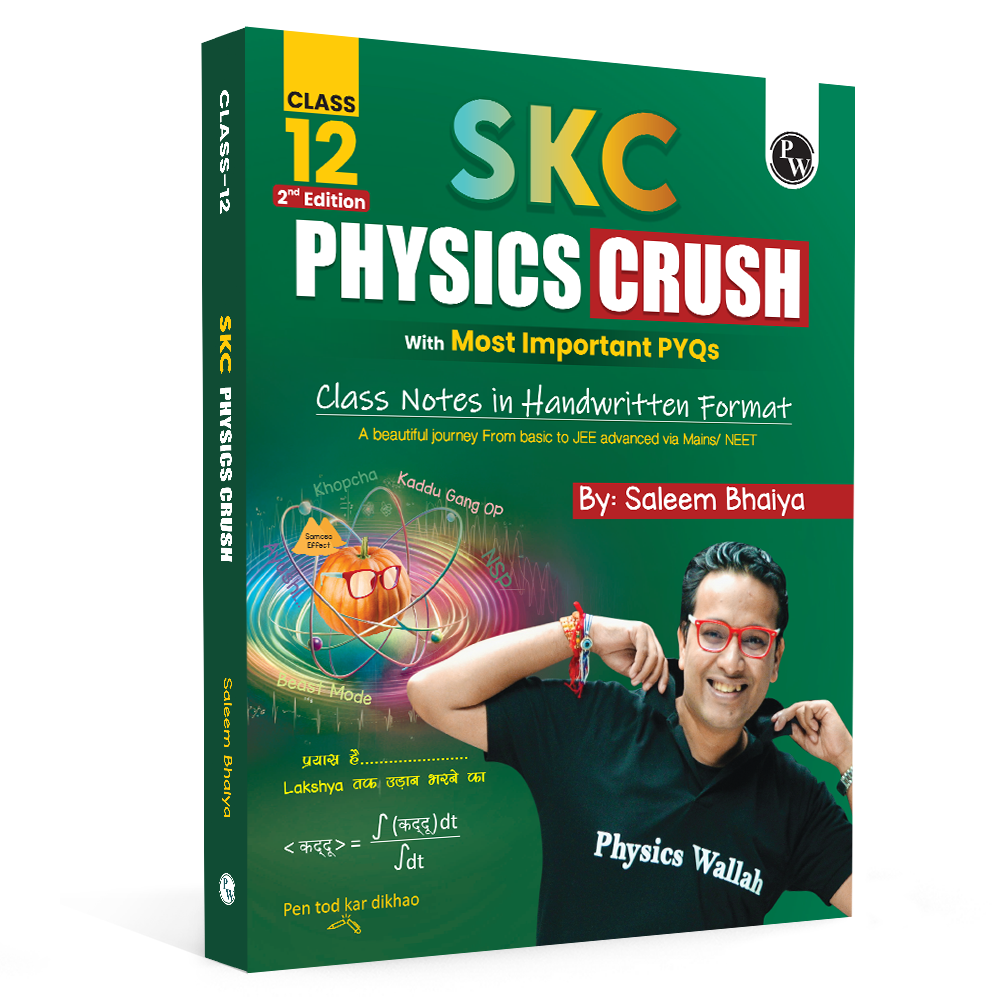
This shifts your daily routine away from passive reading and guides you directly into active practice, which is vital for clearing competitive entrance tests. Resources such as the SKC Physics Crush 12th 2026 further support this transition by helping students revise concepts efficiently and spend more time applying ideas through focused problem-solving.
How JEE Revision Notes Focus on High-Weightage Topics?
Not all chapters in the syllabus carry equal marks, and experienced faculty members understand this distribution perfectly. This ensures your mid-term preparation focuses heavily on high-yield sections rather than low-weightage modules.
|
Subject |
Typical High-Weightage Focus Areas |
How Notes Help |
|
Physics |
Mechanics, Electrodynamics, Modern Physics |
Condenses multi-step derivations into direct, final application formulas. |
|
Chemistry |
Coordination Compounds, Thermodynamics, Organic Mechanisms |
Organises name reactions and periodic trends into scannable charts. |
|
Mathematics |
Calculus, Vectors & 3D Geometry, Matrices |
Provides direct shortcut methods and standard property lists for speed. |
By using structured resources like comprehensive JEE notes, you avoid wasting hours on minor concepts. The faculty deliberately structures these summaries to guide your eyes toward critical theorems, recurring question formats, and essential edge-cases that examiners frequently exploit.
How to Use JEE Revision Notes for Faster Revision?
To gain the maximum advantage from your JEE revision notes, your study method must be active and systematic rather than passive. Simply reading through summaries like a storybook will not yield the rapid time savings you need during the mid-term crunch.
-
Align with NCERT Foundations: Always ensure your basic reading of NCERT textbooks is complete, as it establishes the fundamental definitions and language of the exam.
-
Integrate into Daily Practice: Open your JEE mains revision notes alongside your question bank. Use them as an immediate reference whenever you get stuck on a formula, rather than opening a massive reference book.
-
Incorporate Visual Mind Maps: Use products like PW short notes JEE that contain compact layout maps to quickly view how different sub-topics branch out from a main chapter.
-
Build Personal Additions: While reading the faculty notes, jot down your frequent personal mistakes or specific problem-solving blind spots directly in the margins to personalize the tool.
-
Simulate Timed Assessments: Use the summarized formulas to solve previous years’ questions within strict time limits, training your brain to retrieve stored facts instantaneously.
When Should You Start Using JEE Revision Notes?
Timing your study resources is crucial for keeping your preparation on the right track. Introducing concise JEE revision notes at the wrong stage can lead to superficial learning, whereas introducing them at the perfect time saves your mid-term schedule.
-
The Mid-Term Phase: This is the ideal window. Once you have finished the initial detailed lectures and textbook readings, swap out your heavy reference books for these notes to keep old topics fresh while managing your ongoing classes.
-
During Weekly Mock Test Preparation: Use your JEE advanced revision notes two days prior to any mock exam to rapidly run through formulas across all three subjects simultaneously.
-
The Final Months Before the Exam: As the official test date approaches, your primary textbooks should be closed completely. Your daily routine must rely entirely on short summaries and intensive question practice.
Common Mistakes to Avoid While Using JEE Revision Notes
Even quality study material can lose its effectiveness if used incorrectly. Avoid these common study errors to keep your revision cycle running at peak speed. Resources such as EAJEE Handwritten Notes Organic Chemistry and SKC Sir can support structured revision when combined with consistent practice.
-
Treating Notes as Textbook Substitutes: Faculty notes are built to summarize and accelerate, not to teach a topic completely from scratch. Always build your baseline understanding first via regular classes or textbooks.
-
Passive Reading Without Problem Solving: Reading through formulas repeatedly without solving actual questions creates a false sense of confidence. Balance every hour of reading with two hours of active question practice.
-
Hoarding Multiple Variations of Notes: Collecting too many different versions of notes from various sources causes visual confusion. Stick to one comprehensive, faculty-vetted resource and trust its path.
-
Ignoring Personal Mistakes: Failing to mark down the specific areas where you trip up means you might repeat those same errors on the final exam day.
Read More: Important IIT-JEE Chemistry Topics to Practice for Exam Success
JEE Revision Notes FAQs
What makes faculty-prepared JEE revision notes unique compared to standard textbooks?
Faculty-prepared notes prioritize concise explanations, highlight essential formulas, and include exam-style practice problems. They adapt to individual study preferences, aid comprehension through direct approaches, and compress study timelines for efficient preparation.
Can I rely entirely on comprehensive JEE notes to pass the exam?
No, these notes are designed as valuable supplements rather than absolute replacements. Regular textbooks provide the initial depth and conceptual clarity required when learning a topic for the first time, while revision books streamline information and simulate exam conditions.
When is the ideal time to incorporate JEE Mains revision notes into my routine?
The best time to incorporate them is during the mid-term phase and a few months leading up to the test. This reinforces your daily classroom learning, helps you identify weak topics quickly, and allows you to simulate realistic exam conditions without falling behind.
How do PW handwritten notes JEE help visual learners remember formulas?
These resources utilize organic classroom formatting, clear underline styles, and structured layouts that mirror real lecture boards. This format triggers immediate visual memory recall far quicker than standard, dense block text found in traditional books.
Do JEE advanced revision notes cover both foundational and complex topics?
Yes, they act as an all-in-one resource that balances both foundational concepts and advanced application topics in a single place. This integrated structure allows you to quickly brush up on basic formulas before moving directly into complex analytical problems.