Last Month Revision Tips for JEE Advanced 2026

It's not about how many questions you can answer on the JEE Advanced; it's about how well you understand the "why" behind each idea. In the last month, your strategy for JEE Advanced should change from a broad syllabus crawl to a very focused improvement of the most important areas.
JEE Main tests your speed and memory, but JEE Advanced tests your ability to use many ideas to solve a single, difficult problem. You might have trouble even if you have a strong foundation if your JEE Advanced revision plan doesn't take this change in difficulty into account.
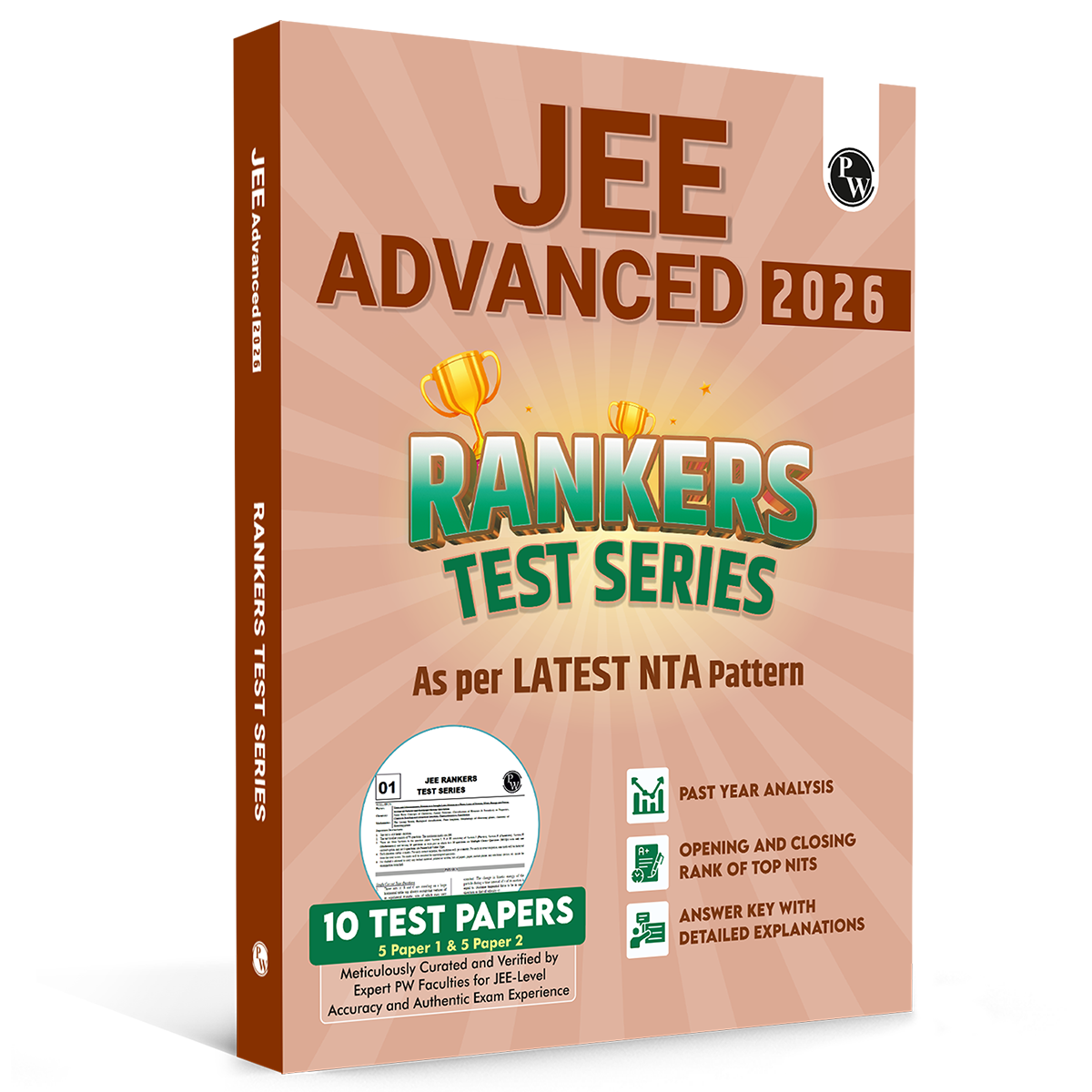
Check Out - JEE Books
The 3-Phase Revision Tips for JEE Advanced
To make the most of your final 30 days, divide your schedule into these three functional phases. This ensures you cover the entire landscape without burning out.
Phase 1: Deep Dive into "Gold" Topics (Days 1-15)
Focus on the chapters that historically carry the highest weightage. Use your revision tips for JEE Advanced to solve 20-30 high-quality, advanced-level problems per subject daily.
-
Physics: Mechanics, Electrodynamics, and Modern Physics.
-
Mathematics: Calculus (Integration & Differential Equations), Vectors, and 3D Geometry.
-
Chemistry: Organic Reaction Mechanisms, Chemical Bonding, and Coordination Compounds.
Phase 2: Mixed-Bag & Multi-Concept Practice (Days 16-25)
JEE Advanced usually covers multiple chapters in its questions. Start solving "mixed-bag" sets that combine concepts (e.g., a physics problem combining thermodynamics with mechanics). This builds the mental agility required for the elite level of JEE Advanced preparation.
Phase 3: The Final Simulation (Days 26-30)
In the last five days, stop solving new or exceptionally tough problems.
-
Review Short Notes: Go through your formula sheets and reaction roadmaps.
-
Light PYQ Scans: Quickly look at the solutions of the last 5 years of papers to keep the "IIT logic" fresh in your mind.
-
Rest: Ensure a stable 7-8 hour sleep cycle to align your biological clock with the exam timings.
Check Out: JEE Test series
Subject-Wise Revision Tips for Jee Advanced
Every subject in this exam requires a unique mental setup. Tailor your how to prepare JEE Advanced approach based on these subject-specific needs:
|
Subject |
Primary Focus Area |
Recommended Practice Strategy |
|
Physics |
Concept Over Calculation |
Draw Free Body Diagrams (FBDs) for every problem. Focus on the "why" behind formulas rather than rote memorisation. |
|
Chemistry |
The Rank Booster |
Master the stability of intermediates in organic. For inorganic chemistry, rely on NCERT and focus on understanding periodic trends rather than just memorising facts. |
|
Mathematics |
Creative Manipulation |
Practice breaking down complex problems into 4-5 manageable steps. Prioritise coordinate geometry and calculus for high scores. |
High-Weightage vs Low-Weightage Topics: JEE Advanced Revision Strategy
In the final 30 days of JEE Advanced preparation, you must be ruthless with your time. Attempting to cover everything leads to mediocrity. Instead, categorise your syllabus into "Must-Do" and "Skip" zones to ensure your revision for JEE Advanced are effective.
1. High-Weightage JEE Advanced Topics
Focus on chapters that consistently appear in the exam and allow for multi-layered questioning. These should form the core of your JEE Advanced revision plan:
-
Physics: Mechanics (Rotation & Fluids), Electrodynamics, and Optics. These are conceptually heavy but highly rewarding.
-
Mathematics: Integral Calculus, vectors, 3D Geometry, and Matrices. These topics are the bedrock of the Advanced paper.
-
Chemistry: General Organic Chemistry (GOC), Chemical Bonding, and Coordination Compounds.
2. Low-Weightage JEE Advanced Topics
If you haven't mastered these by now, it is often safer to skip them to avoid confusing your core concepts:
-
Obscure Theory: Don't waste days on deep, theoretical proofs that are rarely tested numerically.
-
Isolated Weak Links: If a specific sub-topic like "Properties of Triangles" has always been a struggle, stop trying to fix it now. Use that time to move your "average" topics to the "excellent" category.
-
New Reference Material: Never pick up a new book in the last month. Stick to your existing JEE Advanced preparation notes.
Check Out: JEE Previous Year Papers
Common Mistakes to Avoid in JEE Advanced Revision
The final weeks are high-pressure, and even small errors in your JEE Advanced last month revision can lead to significant rank drops. Avoid these common pitfalls to stay ahead:
-
Mindless Formula Cramming: You have to apply for JEE Advanced. If you only memorise formulas without knowing how they were made or what their limits are, you will make mistakes on multi-concept questions.
-
The "Resource Overload" Trap: In the last month, don't switch to new reference books or pick up study materials you don't know. Stick to your notes and the PW JEE Advanced series to keep your ideas straight.
-
Neglecting Weak Subjects: While it's tempting to focus on your strongest subject, the IITs require a minimum qualifying mark in each subject. Ensure your JEE Advanced preparation is balanced across Physics, Chemistry, and Mathematics.
-
Skipping the analysis phase: taking a mock test without analysing it is a waste of six hours. You must spend equal time reviewing your mistakes as you do taking the test.
Mock Test Revision Tips for JEE Advanced
A core part of the JEE Advanced last month revision is simulating the actual exam day. JEE Advanced is conducted in two sessions (Paper 1 and Paper 2) on the same day.
-
Simulate the Slot: Take your mock tests from 9:00 AM - 12:00 PM and 2:30 PM - 5:30 PM. This trains your brain to stay sharp during the afternoon slump.
-
The Analysis Rule: Never spend more time taking a test than you do analysing it.
-
Mistake Log: Document whether an error was "conceptual", "calculation-based", or "time-pressure".
-
Alternative Solutions: Always look for a second, faster way to solve the same problem.
-
Accuracy Over Speed: In Advanced, it is better to solve 40% of the paper with 100% accuracy than to attempt 80% with 40% accuracy.
Read More: JEE Advanced Previous Year Question Papers with Solutions
Revision Tips for JEE Advanced 2026 FAQs
1. Is one month enough for revision if my basics are clear?
Yes. A structured JEE Advanced revision plan in the last month can significantly jump your rank. Focus on refining your application skills rather than re-reading entire textbooks.
2. Should I start new topics in the last month?
Absolutely not. Starting a new, complex chapter can lead to confusion and lower your confidence. Strengthen your existing 80-90% syllabus to ensure you don't miss "easy" advanced marks.
3. How many mock tests should I take in the final month?
Aim for at least 8-10 full-length simulations (Paper 1 + Paper 2). In the final week, reduce this to 2 tests to avoid mental fatigue before the actual JEE Advanced exam.
4. How to prepare for JEE Advanced Chemistry effectively?
Chemistry is often the highest-scoring subject. For Physical Chemistry, solve 10-15 numericals daily without a calculator. For Inorganic, revise the NCERT trends and exceptions every morning.
5. What is the best way to use the PW Store resources for revision?
Utilise the PW JEE Advanced series for high-quality multi-concept problems and video solutions. These help you understand the logical steps required to dissect "unpredictable" IIT-style questions.