How to Reduce Negative Marks in JEE Advanced
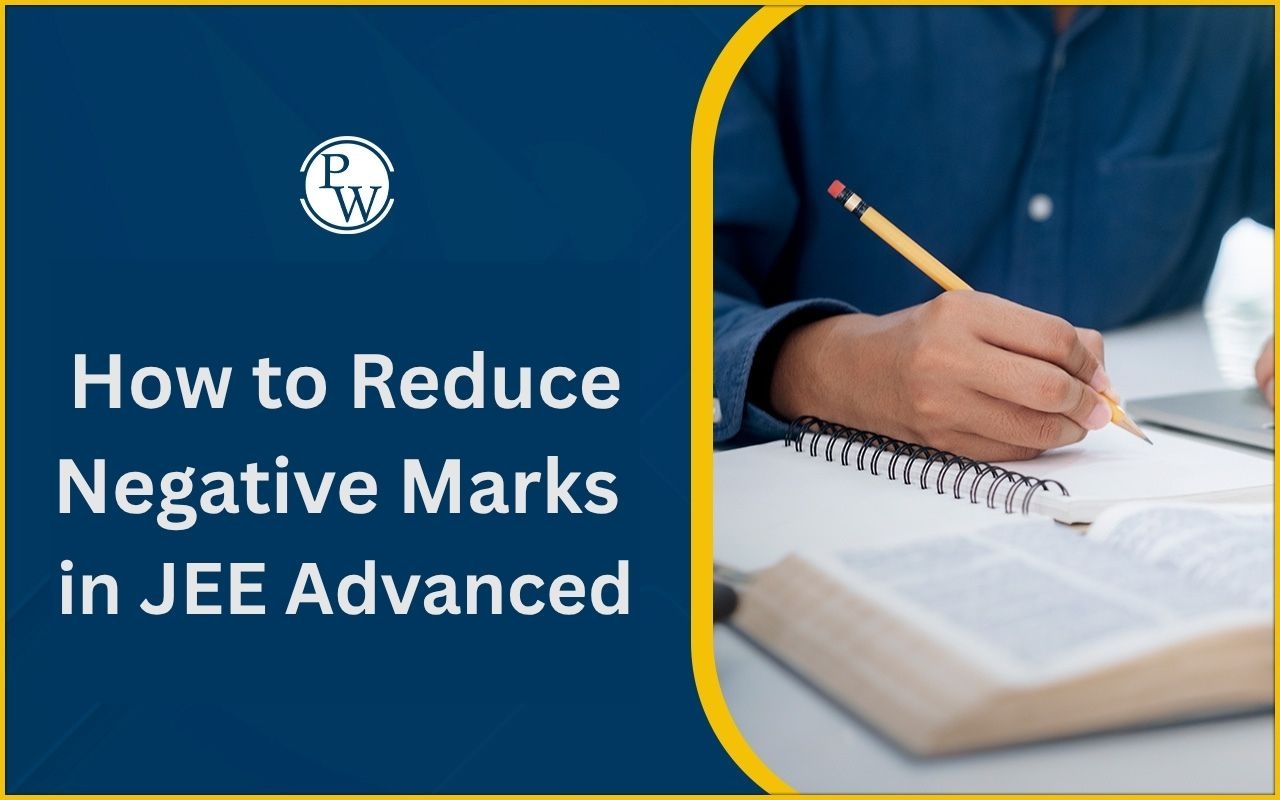
The JEE Advanced is widely considered one of the toughest entrance exams globally, not just because of the complex concepts but also due to its unpredictable marking scheme. For many students, the real hurdle isn’t a lack of knowledge; it is the accumulation of negative marks that drags their rank down. Losing points for a wrong answer can be the difference between getting into an IIT and missing out entirely. This guide provides actionable tips to reduce negative marks in the JEE so you can preserve your hard-earned score and improve your overall accuracy.
Check Out: JEE Books
Negative Marks in JEE Advanced
Before diving into strategies, you must understand the "enemy." The JEE Advanced marking scheme is fluid, often changing year to year. However, it generally consists of three types of questions: Single Correct, Multiple Correct, and Numerical Value types.
-
Single Correct Option: Usually carries +3 for a correct answer and -1 for an incorrect one.
-
Multiple Correct Options: These are high-risk, high-reward. You might get +4 for all the correct choices, but a wrong choice often leads to -2.
-
Numerical/Integer Type: These often carry zero negative marking, making them the safest territory for students.
Knowing which sections penalise you the most can help you adjust your risk appetite. To avoid negative marks in JEE Advanced, you should treat every question with a "penalty risk assessment" before putting pen to paper.
Tips to Reduce Negative Marks in JEE Advanced
Success in this exam is as much about what you don't answer as what you do. Here are practical ways to keep your score sheet clean:
1. Select Right Question
You do not need to solve 100% of the paper to get into a top IIT. The first step in JEE Advanced accuracy improvement tips is to categorise questions during your first read-through:
-
Must-Do: Concepts you are 100% confident in.
-
Review Later: You know the method, but it looks time-consuming.
-
Leave Alone: Topics that feel completely foreign.
2. Eliminating Blind Guesswork
Negative marks are almost always the result of "blind" or "gut-feeling" guesses. If you can eliminate two options out of four, the probability of being right increases, but in JEE Advanced, even a 50/50 chance is risky. Only guess if you have a logical derivation supporting your choice.
3. Read the Question Twice (Literally)
Many students lose marks because they missed a small word like "NOT," "Incorrect," or "Correct." Sometimes, the units requested in numerical questions (e.g., cm vs metres) are different from what you calculated. Double-checking the "ask" of the question is the easiest way to avoid negative marks.
Check Out: JEE Test series
JEE Advanced Accuracy Improvement Tips
Accuracy isn't just about knowing the formula; it's about the execution.
-
Avoid Mental Calculations: In a high-pressure environment, the brain is prone to simple arithmetic errors. Use your scratchpad for even basic additions.
-
The "Unit" Check: If you are unsure about a physics formula, check the units on both sides of your derived equation. If they don't match, your answer is definitely wrong, and submitting it would lead to negative marks.
-
Verify Numerical Values: Since numerical questions often have no negative marking, spend a bit more time here. However, ensure you round off to the correct decimal place as instructed in the paper.
JEE Advanced Time Management Tips
Time pressure is the primary trigger for impulsive, incorrect answers. If you feel rushed, you are more likely to make "silly mistakes".
The 3-Round Strategy
-
Round 1 (The Easy Wins): Spend the first 45 minutes of each paper solving the easiest 10-12 questions. This builds confidence and secures a "base" score without any negative marking risk.
-
Round 2 (The Calculative Zone): Spend the next hour on questions that require effort but are within your comfort zone. This is where jee advanced time management tips become crucial; if a calculation takes more than 5 minutes, move on.
-
Round 3 (The Risk Zone): Use the remaining time to tackle difficult questions or review your answers.
Stop "Over-Solving"
One common mistake is trying to solve a question that you've already spent 8 minutes on just because of "ego." If you can't reach a conclusion, leave it. A zero is infinitely better than a -2.
Check Out: JEE Previous Year Papers
Multiple Correct Choice Questions in JEE Advanced
This section is where most dreams are crushed by negative marks. Because of partial marking, you don't always have to find all the correct options.
-
Play it Safe: If you are certain that options A and B are correct, but unsure about C, it is often wiser to just mark A and B. You will get partial marks instead of risking a heavy penalty by marking an incorrect C.
-
Check Each Option Individually: Treat each option as a True/False statement. This systematic approach reduces the mental load and improves accuracy.
Mindset Tips to Avoid Negative Marking
Your mindset during the three-hour window dictates your accuracy.
-
Don't Panic at a Hard Start: If the first five questions are impossible, remember that the paper is challenging for everyone. Panicking leads to rushed answers and, inevitably, negative marks.
-
Stay Focused Until the Last Second: Many students make errors in the final 10 minutes by hurriedly marking answers they weren't sure of. Stay disciplined. If you weren't sure at the 2-hour mark, you aren't sure now.
Strategies to Avoid Negative Marking in JEE Advanced
To ensure you stay on the right track, follow this checklist during your mock tests and the final exam:
-
Prioritise Zero-Penalty Questions: Always finish numerical and integer-type questions first.
-
Use Rough Sheets Neatly: Scrambled roughwork leads to "transcription errors," where you solve correctly but tick the wrong option.
-
Watch for Traps: JEE examiners often include "distractor" options that match a common calculation error. If your answer matches an option perfectly but you did it rapidly, double-check your steps.
Read More: JEE Advanced 2026 Marks vs Rank Expected, Qualifying Marks
Reduce Negative Marks in JEE Advanced FAQs
Q1. Is there negative marking in all sections of JEE Advanced?
No, typically the Numerical Value and integer type questions do not carry negative marking. However, always read the specific instructions at the start of the exam as the pattern can change.
Q2. What are the best tips to reduce negative marks in jee for multiple-choice questions?
The best strategy is to use partial marking to your advantage. Only mark the options you are 100% sure about. Avoiding the "maybe" options helps you avoid negative marks in JEE Advanced.
Q3. How does time management affect my accuracy?
Poor jee advanced time management tips lead to rushing in the final hour. When you rush, you skip reading instructions and make arithmetic errors, which directly increases negative marks.
Q4. Can mock tests help with JEE Advanced accuracy improvement tips?
Yes, mock tests allow you to practice your "question-skipping" skills. Use mocks to identify which topics usually lead to wrong answers for you and learn to avoid them in the actual exam.
Q5. Should I leave a question if I am 70% sure of the answer?
In JEE Advanced, 70% certainty is often not enough for Single Correct or Multiple Correct types due to the heavy penalty. Unless it is a zero-negative marking question, it is safer to leave it blank to avoid negative marks.