Top 5 Repeated JEE Chemistry PYQ for 2027 Exam
Solving repeated questions is the most effective way to understand the exam pattern. Many students struggle to identify which topics carry the most weight. By focusing on JEE chemistry PYQ, you can pinpoint recurring themes and save time during revision. This guide breaks down five highly repeated question types that frequently appear in the exam, helping you streamline your preparation and boost your confidence for the upcoming sessions.
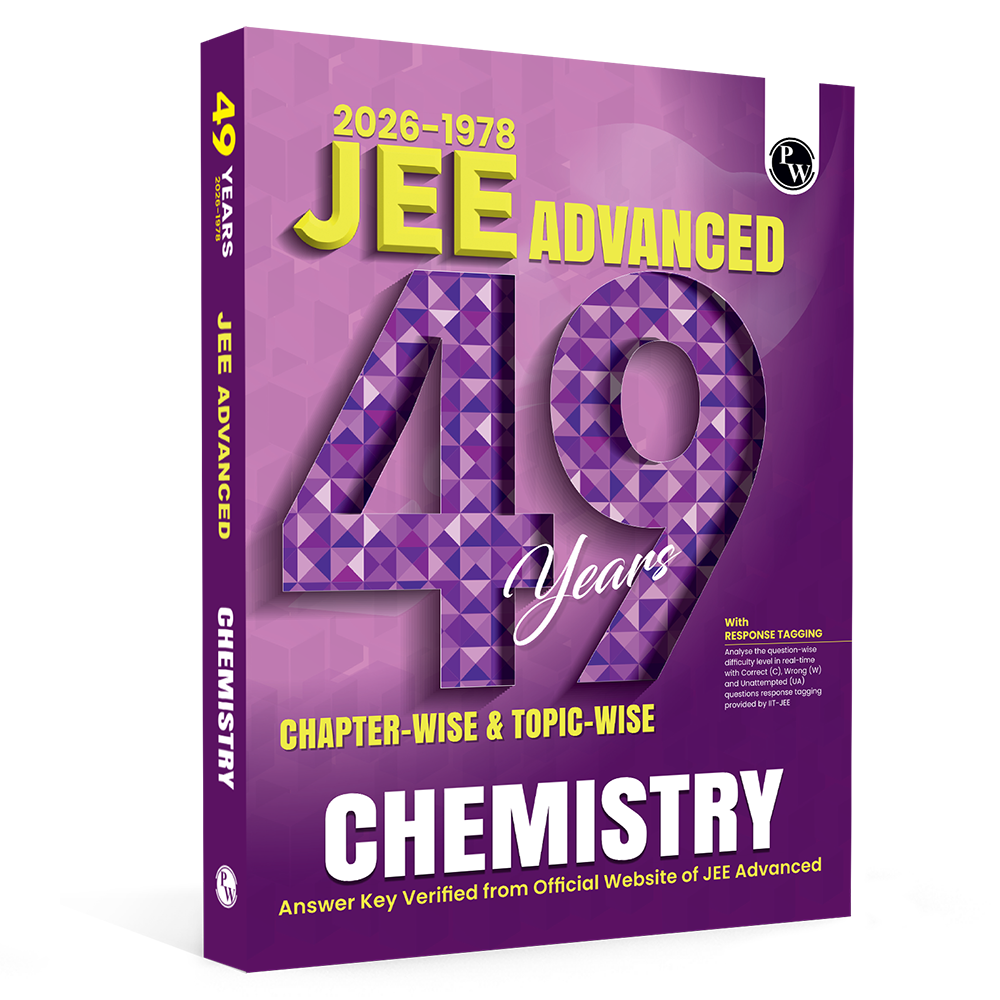
PW IIT JEE Books — designed to support complete JEE preparation with structured theory, concept-focused learning, and extensive practice. These PW IIT JEE Books books help students strengthen fundamentals, revise effectively, and improve performance for both JEE Main and JEE Advanced.
Why JEE Chemistry PYQs?
The journey to an elite engineering college often feels like navigating a maze. While textbooks provide the map, solving JEE chemistry PYQ sets provides the compass. Chemistry is often considered one of the more scoring sections by many students, acting as a "rank booster." By analyzing previous papers, you shift from passive reading to active problem-solving, which is essential for mastering the time constraints of the actual test.
Focusing on recurring questions allows you to:
-
Identify Important Topics: Not all chapters contribute equally; some carry more weight in many exams.
-
Understand Question Trends: You learn to anticipate the "tricks" used in options and question phrasing.
-
Improve Accuracy and Confidence: Practicing real exam questions reduces anxiety and improves accuracy under pressure.
Repeated JEE Main Chemistry Questions
Here are the top 5 PYQs for JEE Main Chemistry students often have to solve:
-
Coordination Compounds and Isomerism
Coordination Chemistry is a goldmine for marks in the JEE Main exam. One of the most consistent patterns observed in JEE Advanced chemistry PYQ involves structural and stereoisomerism. Questions often ask students to identify the number of geometrical or optical isomers for a given complex like [Co(en)_2Cl_2]^+.
-
Key Focus: Understand the difference between facial (fac) and meridional (mer) isomers in octahedral complexes.
-
Common Format: Identifying whether a complex is paramagnetic or diamagnetic based on Crystal Field Theory (CFT).
-
Frequency: Many exam shifts include questions related to hybridization or magnetic moment of coordination compounds.
Learning how to calculate the "spin-only" magnetic moment using the formula below is essential, as this type of calculation has appeared in multiple chemistry JEE Main PYQ sets over the years.
μ=n(n+2)\mu = \sqrt{n(n+2)}μ=n(n+2)
-
Thermodynamics and Enthalpy Calculations
Chemical Thermodynamics is often feared for its complexity, yet the exam frequently sticks to a few predictable formats. The most repeated questions revolve around the First Law of Thermodynamics and the concept of Enthalpy of Combustion or Neutralisation.
-
Relationship between \Delta H and \Delta U: The equation \Delta H = \Delta U + \Delta n_gRT is a staple in the exam.
-
Entropy Changes: Predicting the sign of \Delta S for physical and chemical processes.
-
Hess’s Law: Combining multiple thermochemical equations to find the enthalpy of a target reaction.
Analysis of JEE PYQs suggests that numerical problems involving work done in reversible isothermal expansion appear regularly in many papers. Pay close attention to the units, especially converting between Joules and calories, as this is where many students make errors.
-
Chemical Bonding and Molecular Structure
If there is one topic you cannot afford to skip, it is Chemical Bonding. The examiners have a clear preference for VSEPR theory and Molecular Orbital Theory (MOT).
-
Bond Order: Frequently, students are asked to compare the bond orders of species like O_2, O_2^+ and O_2^-.
-
Hybridisation: Determining the shape and lone pairs of molecules like XeF_4, SF_4, or ICl_2^-.
-
Dipole Moment: Comparing the polarity of molecules, often using NH_3 and NF_3 as classic examples.
Analysing chemistry PYQs JEE shows that the concept of hydrogen bonding and its effect on boiling points is another recurring theme. Mastering the MOT electronic configurations for diatomic molecules will help you solve these questions in seconds.
4. Organic Chemistry Name Reactions and Reagents
Organic Chemistry in JEE Main is less about complex synthesis and more about specific, well-known reactions. Certain reagents appear so often in chemistry previous year question JEE mains that they become predictable.
|
Reagent |
Common Reaction |
Key Product |
|
NaBH_4 |
Selective Reduction |
Reduces aldehydes/ketones but not esters |
|
O_3 / Zn-H_2O |
Ozonolysis |
Cleavage of alkenes to carbonyls |
|
Sn/HCl |
Reduction of Nitro compounds |
Formation of Aniline |
|
Alc. KOH |
Dehydrohalogenation |
Formation of Alkenes |
The Aldol Condensation and Cannizzaro reaction are the "kings" of the organic section. You will often find questions where you must identify the product formed when an aldehyde with no alpha-hydrogen reacts with a concentrated alkali.
5. P-Block Elements and Trends
The p-block section is vast, but the JEE Main exam usually focuses on the trends of groups 15 to 18. Questions from JEE mains chemistry previous year question papers highlight that the anomalous behaviour of Nitrogen and Oxygen is a favourite topic.
-
Oxoacids: Structure and basicity of oxoacids of Phosphorus and Sulphur (e.g., H_3PO_3 vs H_3PO_4).
-
Noble Gases: Structures of Xenon fluorides and oxides are commonly seen in several exam shifts.
-
Halogens: Bond dissociation enthalpy trends and the electron gain enthalpy of Chlorine vs Fluorine.
Instead of memorizing every reaction, focus on the "reasoning" based questions. For instance, why is BiH_3 the strongest reducing agent in Group 15? These conceptual trends are the backbone of the inorganic section.
Benefits of JEE Chemistry PYQ
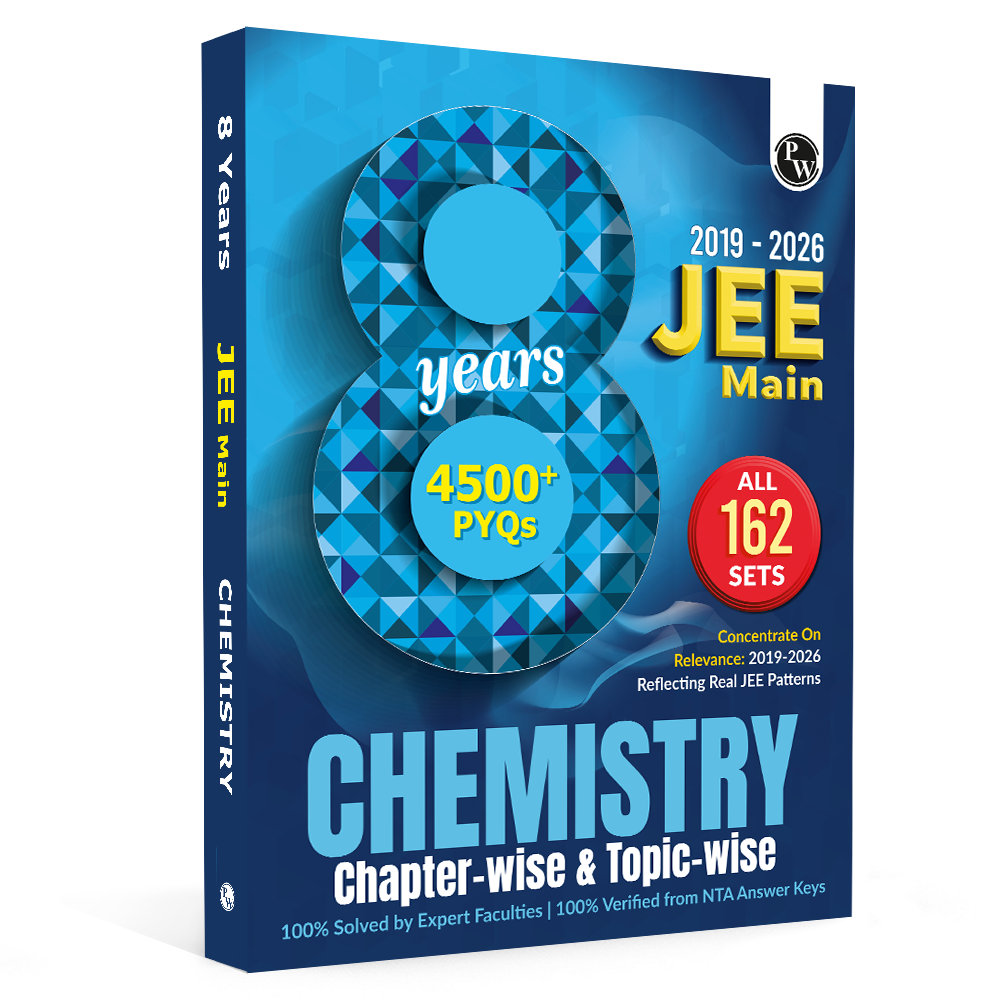
Using a dedicated resource like the 8 Years JEE Chemistry PYQ allows you to see these patterns clearly. When you solve these questions, you aren't just practicing math; you are learning the "language" of the paper setters.
-
Time Management: Repeated questions help you identify which problems can be solved in under 30 seconds.
-
Syllabus Weightage: Students often notice that some chapters contribute more questions compared to others in many papers.
-
Error Analysis: PYQs highlight common traps, such as "except" or "incorrect statement" phrased in the question.
Periodic Table and Atomic Properties
Atomic structure and periodic properties form the foundation of the entire subject. In many JEE chemistry PYQ instances, the focus is on Ionisation Enthalpy and Atomic Radii.
-
Screening Effect: How the poor shielding of d and f electrons affects the size of atoms (Lanthanoid Contraction).
-
Quantum Numbers: Identifying the correct set of four quantum numbers for the last electron of an element.
-
Electronic Configuration: Exceptions like Chromium and Copper are frequently tested to check if students understand half-filled and fully filled stability.
Chemical Kinetics and Rate Laws
In Physical Chemistry, Chemical Kinetics provides straightforward numericals. Most questions are centered around first-order reactions.
-
Half-life (t_{1/2}): Calculations involving the time taken for a certain percentage of completion in a first-order reaction.
-
Arrhenius Equation: The effect of temperature on the rate constant and the calculation of activation energy.
-
Rate Law Expression: Determining the order of a reaction from a given table of initial rates and concentrations.
Biomolecules and Polymers
While often ignored, these "memory-based" chapters are high-yielding. The JEE chemistry PYQ trends show that questions here are direct and take very little time to solve.
-
Carbohydrates: Reducing vs non-reducing sugars and the linkage in Maltose, Lactose, and Sucrose.
-
Proteins: Denaturation and the difference between fibrous and globular proteins.
-
Polymers: Identifying monomers for Nylon-6,6, Buna-S, and Terylene.
Solutions and Colligative Properties
This chapter is almost entirely formula-driven. You should focus on Van't Hoff factor (i) calculations, as they are integrated into almost every colligative property question in chemistry JEE Main PYQ.
-
Raoult's Law: Ideal and non-ideal solutions, including positive and negative deviations.
-
Boiling Point Elevation: Calculating the molality or molar mass of a solute using $\Delta T_b$.
-
Osmotic Pressure: Often used in questions related to isotonic solutions.
General Organic Chemistry (GOC)
GOC is the heart of Organic Chemistry. Without mastering stability orders, solving any chemistry JEE PYQ becomes difficult.
-
Inductive and Resonance Effects: Comparing the acidity of substituted phenols or benzoic acids.
-
Hyperconjugation: Stability of carbocations and alkenes.
-
Aromaticity: Identifying aromatic, anti-aromatic, and non-aromatic compounds using Huckel's Rule.
Environmental Chemistry
Though small, this chapter consistently provides one question. Focus on:
-
Atmospheric Pollution: The causes of the Greenhouse effect and Acid rain.
-
BOD (Biochemical Oxygen Demand): Understanding what a high or low BOD value signifies for water quality.
-
Smog: Differences between Classical and Photochemical smog.
Hydrocarbons
Focus on the reactions of Alkanes, Alkenes, and Alkynes.
-
Electrophilic Addition: Markovnikov and Anti-Markovnikov rules.
-
Ozonolysis: As mentioned earlier, this is a top-tier repeated concept.
-
Acidic Nature of Alkynes: Reactions with Sodamide or Ammoniacal Silver Nitrate.
d and f Block Elements
The focus here is primarily on Potassium Dichromate (K_2Cr_2O_7) and Potassium Permanganate (KMnO_4).
-
Oxidising Properties: How these reagents behave in acidic, basic, and neutral media.
-
Magnetic Properties: Calculating unpaired electrons for transition metal ions.
Read More: JEE Mains Chemistry PYQ PDF with Solutions
JEE Chemistry PYQ FAQs
How many years of chemistry PYQ JEE Mains should I solve?
It is generally recommended to solve at least the last 8 to 10 years of questions. However, focusing on the papers from 2019 onwards is crucial as the exam pattern shifted significantly when the conducting agency changed.
Are questions exactly repeated in JEE main PYQ?
While exact word-for-word repetitions are rare, the concepts, formulas, and types of questions are repeated very frequently. For example, the method to calculate bond order or the stability of carbocations remains the same every year.
Which is the most important chapter for chemistry JEE PYQ?
Coordination Compounds, Chemical Bonding, and Thermodynamics are among the highest-weightage chapters. In Organic Chemistry, General Organic Chemistry (GOC) and Carbonyl Compounds are the most frequent questions.
How can I use chemistry PYQs JEE to improve my score?
Use them as a diagnostic tool. After finishing a chapter, solve its specific PYQs to see if you can apply the concepts. If you struggle, revisit that specific sub-topic rather than re-reading the whole chapter.
Is solving chemistry previous year question JEE mains enough to pass?
Solving them is essential for understanding the level of the exam, but you also need a strong conceptual foundation from textbooks. PYQs help you refine your strategy and improve your speed and accuracy.