Using 8 Years JEE Physics PYQ Book for Focused Chapter Revision
Staring at a massive pile of formulas just weeks before the exam creates intense pressure. You know the theoretical concepts, yet applying them to complex numerical problems feels completely overwhelming.
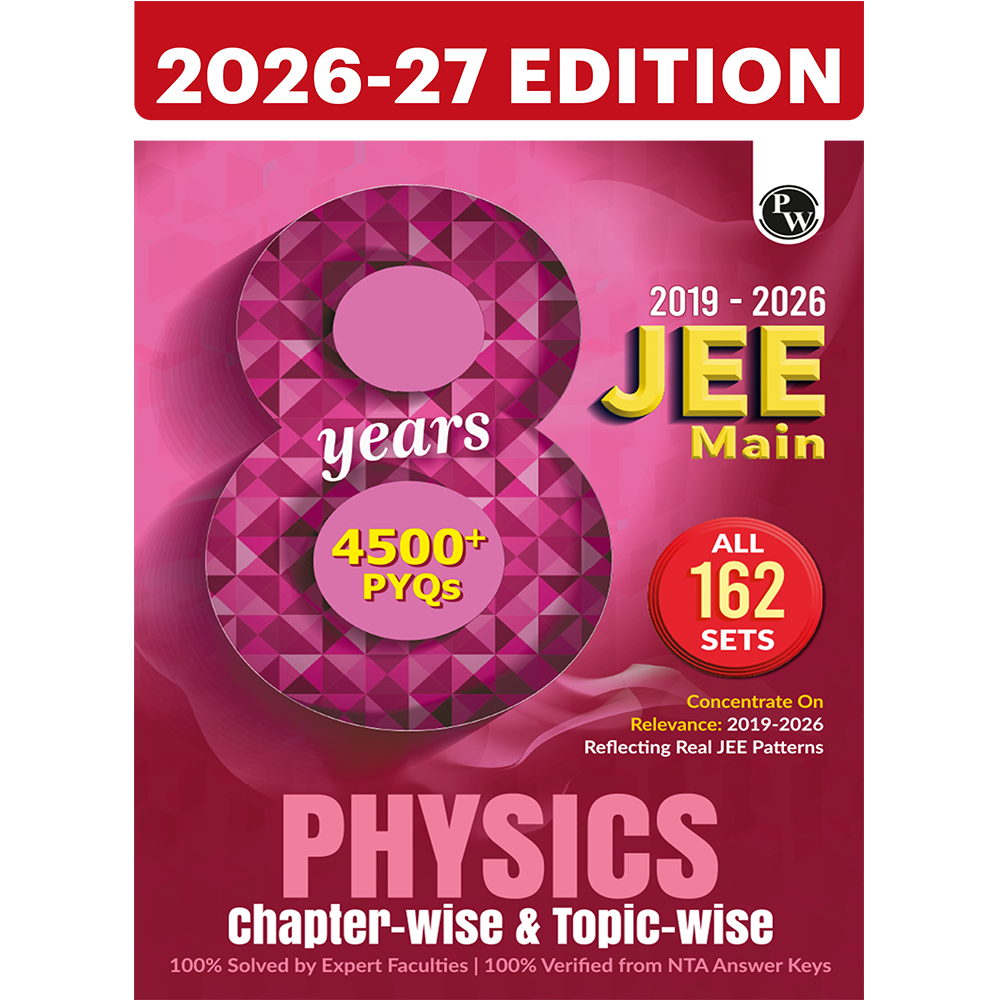
This specific struggle separates average performers from top scorers. To bridge this gap, you must change how you study. Using JEE Main PYQ physics, an 8-year compiled resource containing past papers from 2019 to 2026, allows you to match the actual difficulty level of the test.
What Is JEE PYQ Physics?
The term JEE PYQ physics refers to a structured collection of actual past exam questions asked in the Joint Entrance Examination over a defined multi-year period. Rather than mixed test papers, this compilation organizes authentic questions into single chapters and specific topics.
It acts as a direct mirror to the current engineering entrance test, showing you exactly how concepts transform into complex problems.
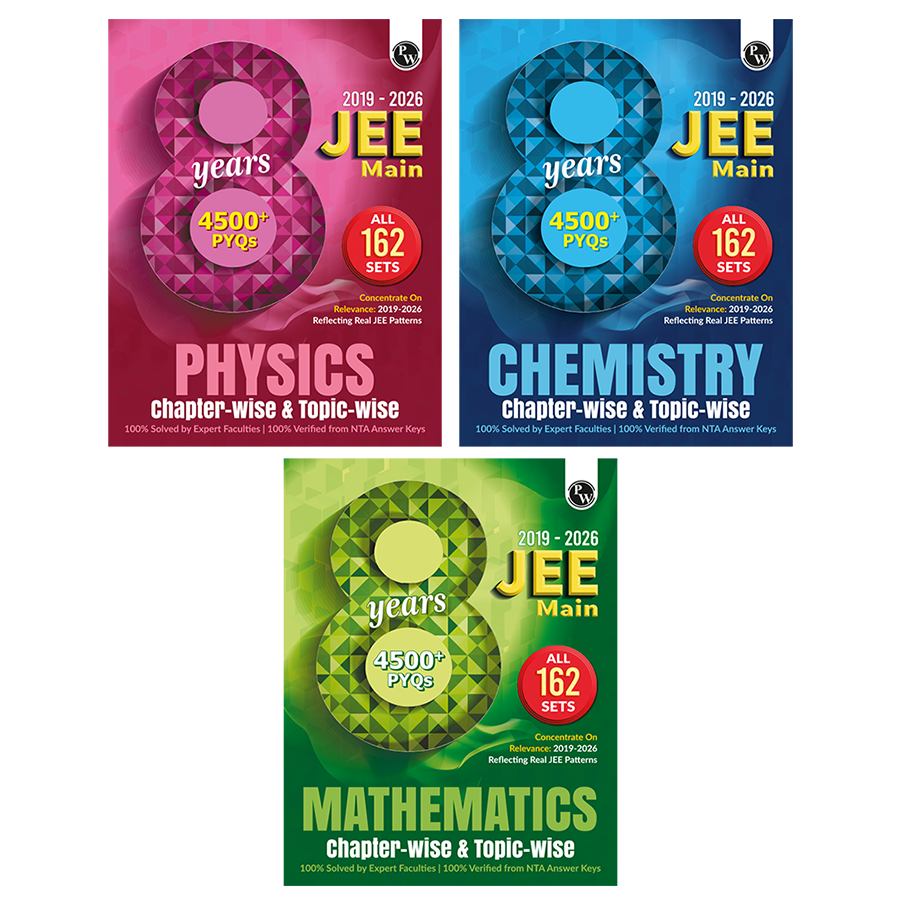
This resource specifically aggregates all 162 sets of shift-wise papers administered between 2019 and 2026. Instead of generic exercises, it provides genuine questions that match the latest testing parameters. It includes various testing formats such as Multiple Choice Questions (MCQs) and Numerical Value Questions to ensure your practice covers every required style.
Why Is JEE PYQ Physics Useful for Chapter Revision?
Standard question banks often contain outdated formats or unrealistic difficulty levels that do not match the modern test. Using authentic JEE Main PYQ resources ensures your daily practice remains perfectly aligned with what examiners actually want.
It stops you from wasting time on irrelevant, overly complex theories that never appear in the exam.
A structured multi-year compilation provides several distinct advantages for your final preparations:
-
Focus on Relevance (2019–2026): It filters out old, obsolete question styles, allowing you to focus entirely on the contemporary trends established over the last eight years.
-
True Difficulty Standards: You solve actual questions that test your real-time application skills, avoiding both overly simplified exercises and unhelpfully complex problems.
-
Boost Critical Thinking: Working through multi-year variations of the same underlying principle helps you recognize subtle question triggers and improves your overall problem-solving speed.
-
Error-Free Learning: Accessing deep, accurate solutions for over 4500+ individual questions per subject ensures you clarify your doubts instantly without picking up bad habits.
Important Chapters Covered in JEE PYQ Physics
A robust JEE PYQ physics book covers the entire senior secondary curriculum, dividing the syllabus into high-yield segments. This comprehensive distribution allows you to analyze weightage and apply a targeted, focused revision strategy across both Class 11 and Class 12 topics.
The table below outlines the essential syllabus divisions covered in the 8-year compilation:
|
Syllabus Level |
Core Physics Segments Covered |
Target Assessment Focus |
|
Class 11 Syllabus |
Mechanics, Thermal Physics, Waves, and Kinetic Theory |
Foundational application and mechanical principles |
|
Class 12 Syllabus |
Electrodynamics, Optics, Modern Physics, and Electronics |
Advanced conceptual links and formula derivation |
How to Use JEE PYQ Physics?
Simply reading through past solutions like a storybook will not improve your performance. To get the most out of your JEE PYQ physics papers, you must interact with the text actively. The best approach requires breaking down your study sessions into clear, measurable steps.
Follow this systematic sequence to structure your daily work:
-
Review Core Formulas: Spend fifteen minutes reading your short summary notes for a specific chapter before opening the past papers.
-
Attempt Questions Independently: Try to solve each past question without looking at the explanations first. Give yourself two minutes per objective question.
-
Cross-Check Explanations: Compare your answer with the provided error-free solutions to review your methods, even if your final answer was correct.
-
Mark Tricky Questions: Highlight complex problems that took you longer than three minutes so you can return to them during later study sessions.
To make your preparation more effective, complement your PYQ practice with JEE Books, which provide comprehensive theory, chapter-wise concept explanations, worked examples, and exam-oriented practice questions. Combining strong conceptual learning with previous year question practice helps improve accuracy, strengthen fundamentals, and maximise your performance in both JEE Main and JEE Advanced.
Study Plan for Using the JEE PYQ Physics
Balancing multiple subjects requires a highly structured, organized approach. Integrating chapterwise JEE Physics PYQs into your weekly schedule ensures you cover the entire syllabus evenly without leaving gaps. This structural workflow helps you transition smoothly from learning theoretical concepts to practicing high-speed calculations.
Phase 1: Topic Isolation (Days 1 to 3)
Select two specific subtopics each day. Avoid jumping across random chapters. Complete the basic exercises first, then immediately solve the corresponding JEE past papers from the last eight years to lock in the logic.
Phase 2: Mixed Shift Evaluation (Days 4 to 5)
Move away from isolated topics and open complete, shift-wise papers. Sit in a quiet room and solve twenty-five random problems from a single historic afternoon shift. This develops your mental agility and trains you to switch between different concepts quickly.
Phase 3: Weakness Rectification (Days 6 to 7)
Go back through your highlighted questions and wrong answers. Resolve every mistake you made during the week. Use this time to refine your math skills and make sure you understand the core physics principles thoroughly.
Tips To Follow for Using the JEE PYQ Physics
To maximize your JEE physics practice, you need to treat your study sessions like the actual exam. Small adjustments in how you practice can significantly improve your speed and accuracy on test day.
-
Work Under a Timer: Always use a stopwatch when practicing to simulate real test pressure and track your average speed per problem.
-
Write Out Your Steps: Avoid doing complex math in your head. Write down your intermediate steps clearly to prevent silly calculation mistakes.
-
Analyze Smart Weightage: Look closely at multi-year paper trends to identify high-yield chapters, and prioritize those during your limited study hours.
-
Avoid Early Peeking: Keep the answer keys covered until you have made a genuine, full attempt at a solution.
Common Mistakes to Avoid While Using the JEE PYQ Physics
Many students fail to reach their target scores because they use their resources incorrectly. Recognizing these common traps early will save you time and keep your physics preparation on track.
-
Memorizing the Answers: Rote learning solutions are useless. The actual numbers will change on exam day, so you must focus on understanding the underlying physics principles instead.
-
Skipping Numerical Questions: Many students only practice multiple-choice questions and ignore integer-type entries. This hurts their performance, as numerical value questions require precise, error-free calculations.
-
Ignoring Shift Variations: Practicing only morning papers gives an incomplete view of the test. You need to work through all 162 shift-wise sets to truly understand the full range of difficulty levels.
-
Neglecting the Error Log: Failing to record your mistakes means you will likely repeat the exact same errors during the actual exam.
Read More: Features of PW JEE Main PYQ Book
JEE PYQ Physics FAQs
How do modern shift-wise compilations improve overall exam readiness?
Using shift-wise collections exposes you to a wide variety of question formats and difficulty levels across all 162 historic sets. This comprehensive practice ensures you are prepared for unexpected changes in the exam layout.
Why should I focus on past papers from 2019 to 2026 instead of older volumes?
Focusing on these recent years keeps your practice aligned with current testing standards. It helps you avoid obsolete question styles while focusing your energy on contemporary trends.
What is the best way to handle difficult numerical value questions?
Break the problem down step by step, write out your unit conversions clearly, and avoid rounding off your numbers too early. Comparing your work with detailed, error-free solutions will help you find and fix any systematic math errors.