Why 8 Years JEE PYQ Is Ideal for Mains Revision
You might have finished your regular syllabus, yet a persistent doubt remains about whether you can solve actual exam questions under real test conditions. This common challenge leaves many engineering aspirants feeling stuck between raw theoretical knowledge and quick execution.
To bridge this critical gap, regular practice with authentic JEE Main PYQ sets becomes absolutely essential. Relying on recent past papers allows you to target your weak spots and build the exact problem-solving pace needed on the final day.
Let’s explore how a focused approach to these questions transforms your final preparation phase.
What Is JEE PYQ and Why Should You Solve It?
A JEE PYQ refers to an official previous-year question from the Joint Entrance Examination. These official questions serve as the definitive benchmark for your preparation because they are designed by the exam-conducting body to evaluate conceptual depth.
-
Authentic Evaluation: They show you exactly where you stand against the true standard of the examination.
-
Targeted Practice: Rather than guessing what might be asked, you practice with real variables, constraints, and formats.
-
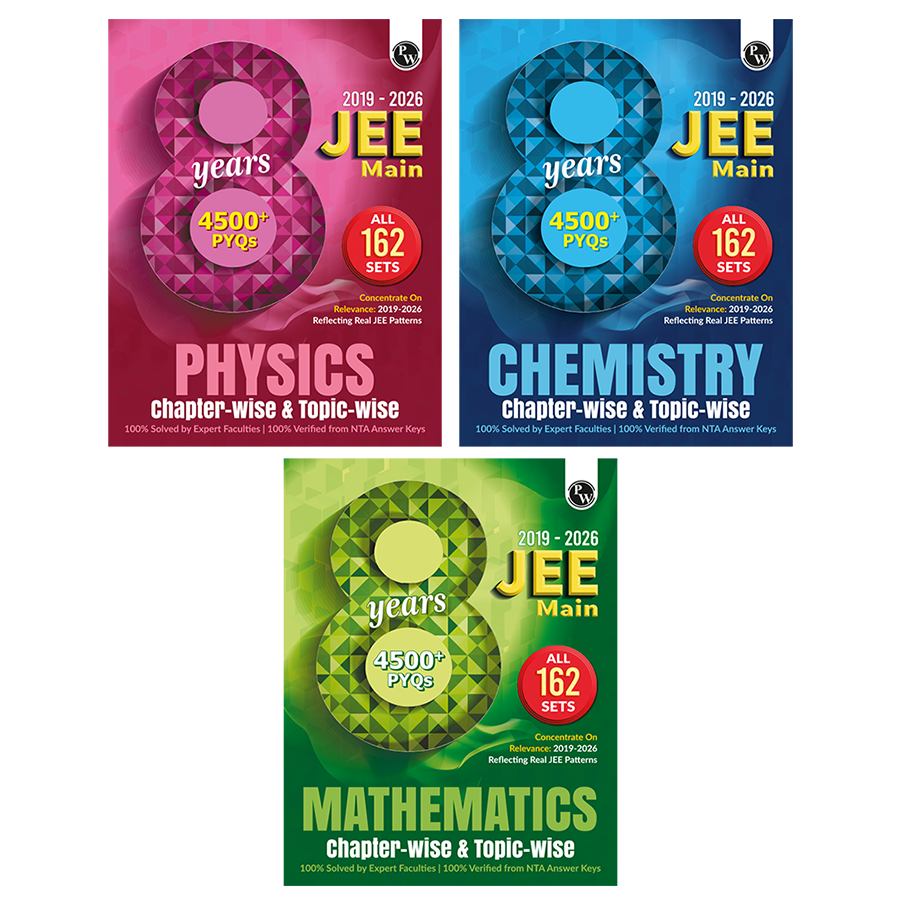
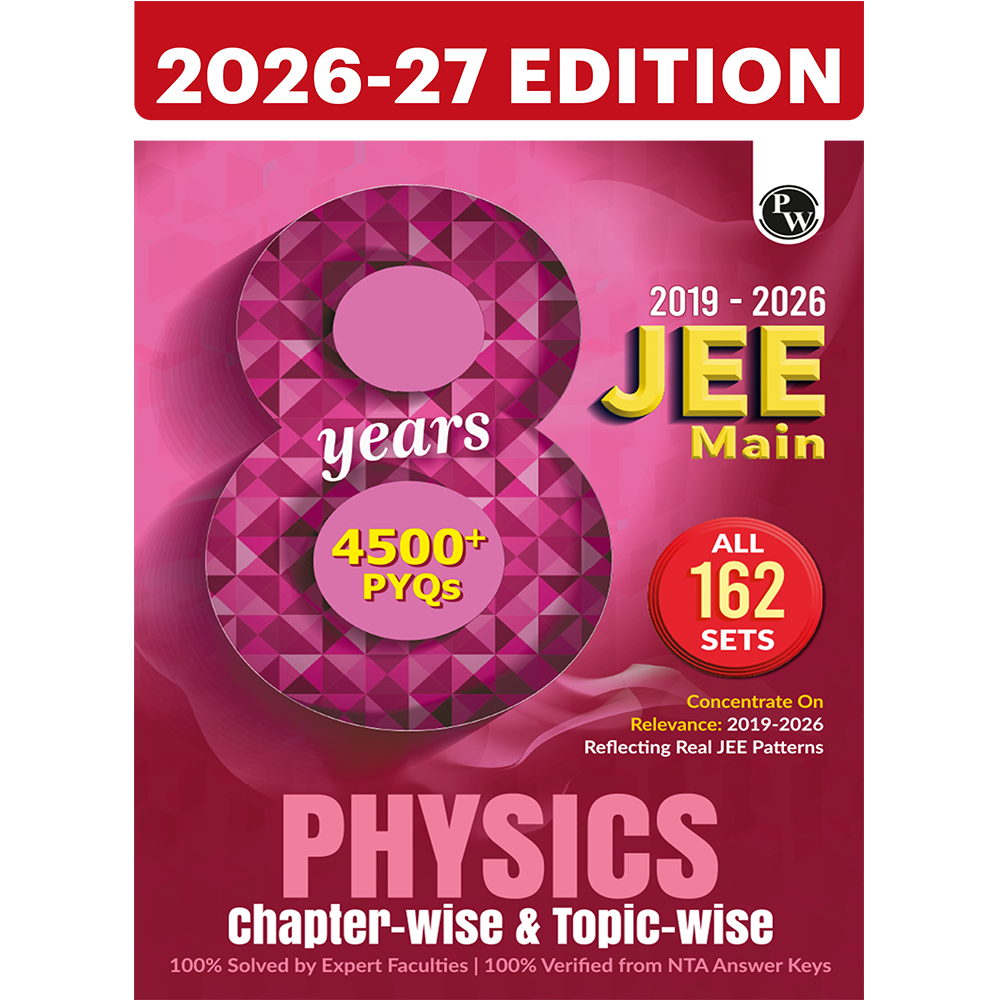
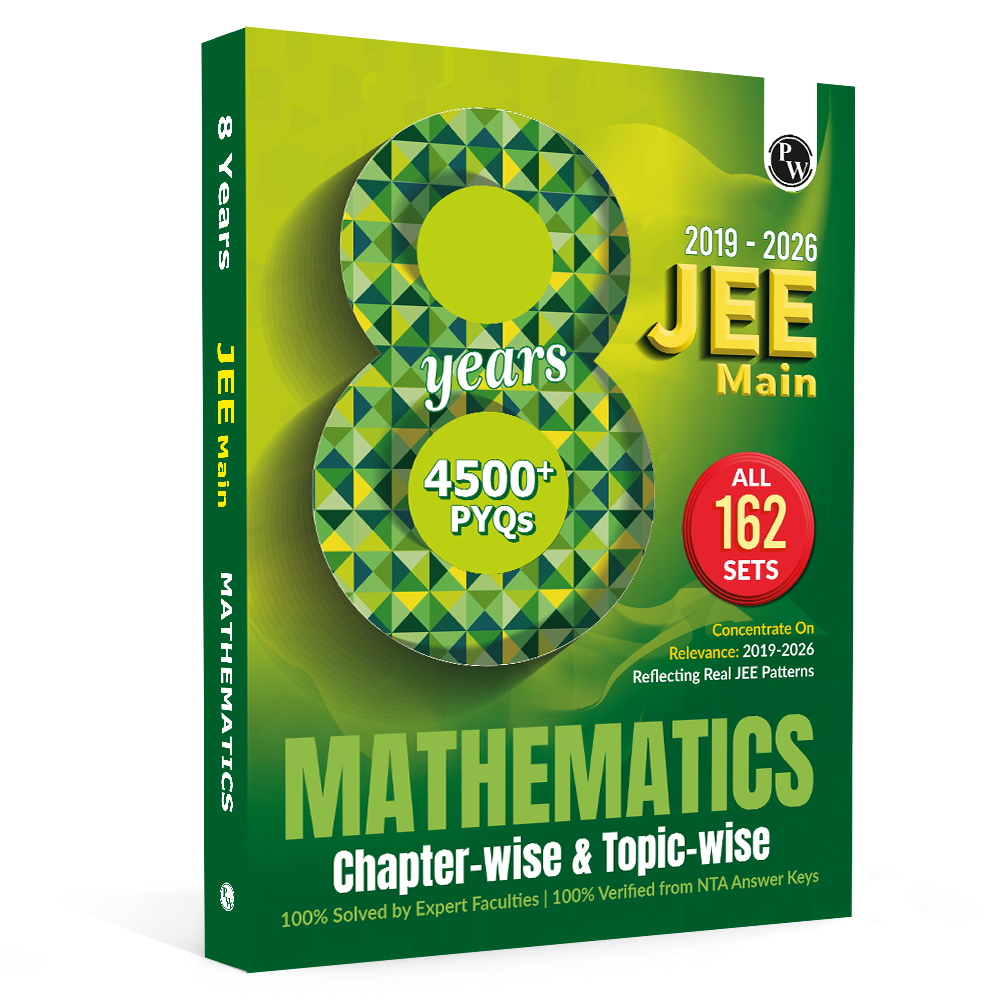
Comprehensive Resource: Using a dedicated JEE PYQ book helps compile thousands of real questions across Physics, Chemistry, and Mathematics into one organized space.
Why Is JEE PYQ Necessary for JEE Main Revision?
When the final months arrive, standard revision methods often fall short. Incorporating 8 years previous year questions into your daily schedule provides a structured framework that standard textbook reading simply cannot match.
1. Access to the Most Relevant Question Pool
The landscape of the exam shifted significantly between 2019 and 2026. Practising this specific timeline ensures you are tuning your brain to the exact modern trends.
-
Massive Volume: You get access to all 162 sets from both Session 1 and Session 2 across these years.
-
Thousands of Prompts: This timeframe yields over 13,500 questions with detailed error-free solutions, giving you ample variety.
-
Modern Alignment: The questions match the exact difficulty level you will face, keeping your expectations highly realistic.
2. Smart Weightage Analysis
Going through multi-year trends allows you to perform a reliable weightage analysis. You can easily spot which sub-topics consistently yield high-value marks and which ones require basic formulas. This insights-driven approach ensures you allocate your remaining study hours where they will yield the best results.
How JEE PYQ Helps You Understand the Exam Pattern?
Familiarity breeds confidence, and confidence is vital during competitive exams. Regular interaction with the actual past papers takes the surprise element out of the exam hall.
-
Question Type Variety: You get comfortable with all formats, including standard Multiple Choice Questions (MCQs) and Numerical Value Questions.
-
Official Marking System: By practising with papers based on official keys, you understand how marks are distributed and where negative marking usually hits students.
-
Time Management: Simulating these papers teaches you how much time to spend on tricky numerical sections versus quick conceptual chemistry prompts.
Important Topics To Cover with JEE PYQ
Not all chapters carry the same weight in competitive exams. A structured JEE mains revision plan using past papers allows you to systematically break down each subject by priority.
|
Subject |
Focus Areas via Past Papers |
Practice Strategy |
|
Mechanics, Electrodynamics, Modern Physics |
Focus on formula application and graphical interpretations. |
|
|
Organic mechanisms, Coordination compounds, Physical equilibria |
Use quick conceptual checks and step-by-step numerical tracking. |
|
|
Calculus, Coordinate Geometry, Matrices, Vectors |
Dedicate longer blocks to step-by-step calculation practice. |
How to Use JEE PYQ?
To get the absolute most out of your papers, you must treat them as diagnostic tools rather than just another simple question bank.
-
Step 1: Solve Without Assistance: Attempt a set completely on your own before looking at any hint or key.
-
Step 2: Check Against Official Keys: Verify your answers using reliable solutions to ensure absolute accuracy.
-
Step 3: Analyze the Errors: Do not just look at the correct answer; understand the exact step where your logic or calculation diverged.
-
Step 4: Rework the Concept: If you miss a question due to a conceptual gap, return to your notes immediately before moving to the next paper.
When to Use JEE PYQ?
Timing your practice correctly is just as important as the practice itself. Introducing these papers at the right moments ensures peak performance during your actual exam preparation cycle.
-
During Phase-Wise Preparation: Use them as a chapterwise practice tool right after completing a unit to solidify the foundations.
-
During Final Revision Months: Shift to full, mixed-subject papers to build stamina for sitting a complete three-hour test.
-
In the Final Weeks: Solve recent shift papers from the 2025 and 2026 sessions under strict exam timings to sync your biological clock with the actual exam slots.
Check Out: JEE Books
Study Plan for Using the JEE PYQ
A structured JEE strategy balances daily conceptual maintenance with intensive question drills.
From Monday to Wednesday, execute targeted practice on weak areas identified in previous tests. Focus heavily on chapters that show up most frequently in recent analysis.
On Thursday and Friday, solve one full-length shift paper from the 2019-2026 pool under timed conditions. Sit in a quiet room without interruptions to mimic the real exam environment.
Spend Saturday and Sunday conducting an in-depth review of error logs and revising formulas for the upcoming week. This regular routine prevents burnout while ensuring your work remains entirely practical and result-oriented.
Common Mistakes to Avoid While Solving JEE PYQ
Many candidates possess excellent resources but fail to get results because of faulty practice habits. Avoid these common pitfalls to stay ahead:
-
Memorising Solutions: Never simply read through the answers. If you do not write out the steps yourself, you will struggle to replicate them in the exam hall.
-
Ignoring Numerical Questions: Numerical value options require precise calculation without options to guide you. Skipping them during practice leaves you vulnerable.
-
Using Outdated Questions: Spending weeks on questions from the early 2000s can throw off your sense of modern trends and difficulty levels. Stick closely to the recent eight-year window.
-
Neglecting the Clock: Solving questions lazily throughout the day will not help you handle the frantic pace of the real three-hour exam. Always track your speed.
Read More: Is It Difficult to Score 150 in JEE Mains?
JEE PYQ FAQs
How many years of past papers are sufficient for current exam preparation?
Focusing on the last 8 years of papers from 2019 to 2026 is ideal because it covers the modern multi-shift computer-based test format across 162 total papers. This provides the most accurate foundation for your final exam preparation.
Should I practice these papers chapter by chapter or as full tests?
You should begin with a structured chapterwise practice layout during your initial syllabus completion. After that, transition to full-length mixed papers during your final months of JEE mains revision.
Where can I find reliable, error-free solutions for the recent papers?
A dedicated modern JEE PYQ book provides comprehensive, step-by-step solutions verified against official answer keys to help you learn the exact right methods for all 4500+ unique questions.
Will solving these papers help me clear the numerical value questions?
Yes, practising recent papers provides direct exposure to official numerical question formats. This builds the calculation precision and critical thinking required to score well in those specific sections.
Can I rely entirely on a past paper's JEE strategy for my complete revision phase?
A past papers JEE strategy forms the backbone of a solid revision plan, but it should be combined with regular formula review and notes updates to ensure no minor concept is left behind.