KCET Chapter Wise Weightage 2026 Exam
To do well on the Karnataka CET, students should study high-yield subjects like calculus, organic chemistry, and mechanics. This guide shows you the KCET chapter wise weightage for 2026. It will help you prioritise the Class 11 and 12 syllabus so you can get a top rank in engineering and pharmacy.
It can feel like trying to solve a huge puzzle without knowing what it looks like when you take a competitive exam. Many Class 12 students struggle to balance their board exams while simultaneously covering the massive KCET 2026 exam syllabus.
The main hurdle is not knowing where to start. If you know the KCET chapter wise weightage 2026, you can stop guessing and start studying the topics that come up most often on the test. By using this strategy, you can spend more time on chapters that will help you get a higher score and less time on chapters that won't.
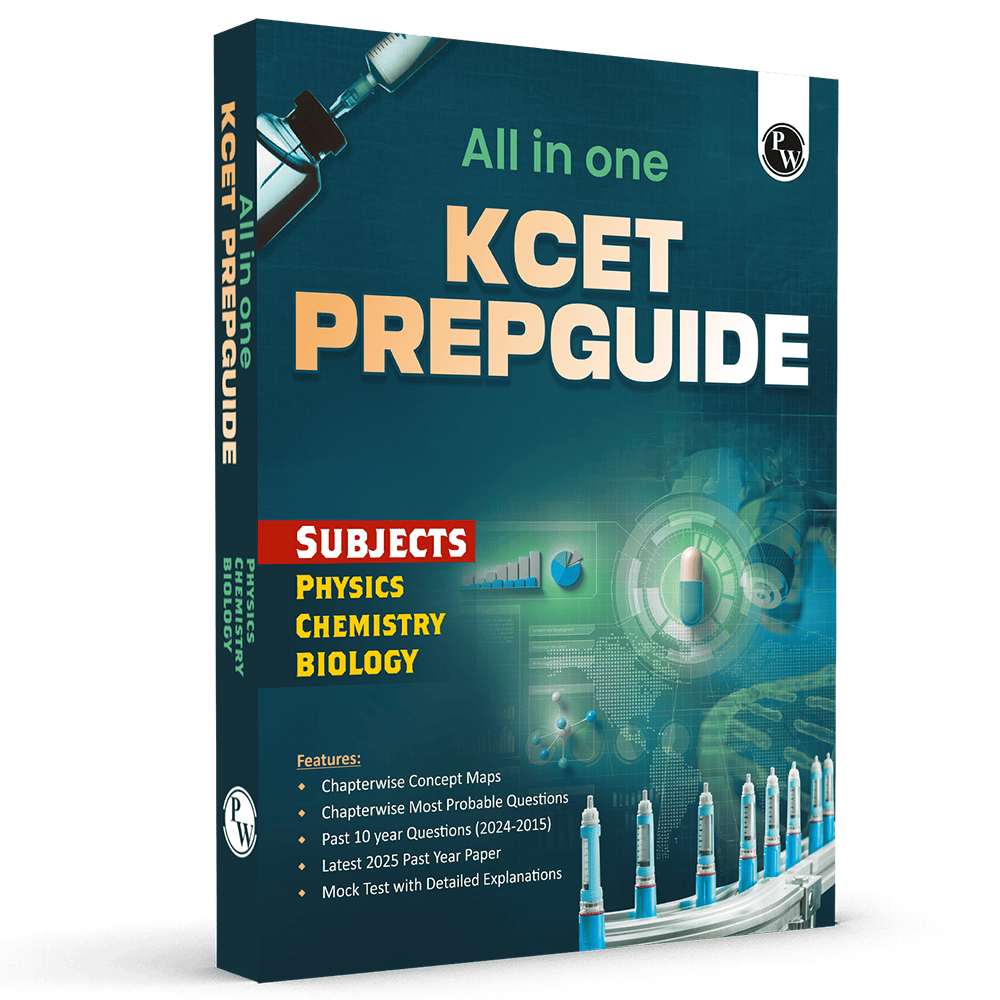
Check Out: KCET Books
KCET Chapter Wise Weightage for Physics
People usually think that physics is the hardest subject because it has a lot of maths problems and concepts that need to be applied. About half to two-thirds of the physics test is made up of questions that need you to do maths. You need to know the KCET physics important chapters from the PUC II syllabus very well in order to do well on the KCET, since they are often worth a little more.
-
Mechanics: This is the most important part of physics, making up around 32% of all the questions.
-
Electricity & Magnetism: A massive chunk of the paper (around 28%) comes from here, with Current Electricity being a top priority.
-
Optics: Expect around 10% of questions from Ray and Wave Optics combined.
-
Modern Physics: Chapters like Atoms and Nuclei are scoring because they are more formula-based.
|
Chapter Name |
Expected Number of Questions |
Weightage Percentage |
|
Current Electricity |
5–6 |
8% - 10% |
|
Electrostatics |
4–5 |
7% - 8% |
|
Moving Charges and Magnetism |
4–5 |
7% - 8% |
|
Ray Optics |
3–4 |
6% - 7% |
|
Waves & Oscillations |
3–4 |
5% - 6% |
|
Thermodynamics |
2–3 |
5% |
KCET Chapter Wise Weightage for Chemistry
The chemistry section is usually the most scoring part of the KCET paper. Unlike physics, it requires less time for calculations, allowing you to save minutes for the mathematics section. The KCET chemistry weightage is fairly balanced between physical, organic, and inorganic branches, but organic chemistry often takes the lead with 30-35% of the total marks.
-
Organic Chemistry: Focus heavily on named reactions and mechanisms in chapters like Aldehydes, Ketones, and Carboxylic Acids.
-
Physical Chemistry: This area is dominated by numericals from Solutions, Electrochemistry, and Chemical Kinetics.
-
Inorganic Chemistry: This is mostly memory-based. Focus on the p-block and d-block elements, as they are KCET high-weightage chapters.
|
Chapter Name |
Expected Questions |
Category |
|
Solutions |
4–5 |
Physical |
|
Chemical Kinetics |
4–5 |
Physical |
|
p-Block Elements |
4–5 |
Inorganic |
|
Alcohols, Phenols & Ethers |
4–5 |
Organic |
|
Coordination Compounds |
3–4 |
Inorganic |
|
Equilibrium |
2–3 |
Physical |
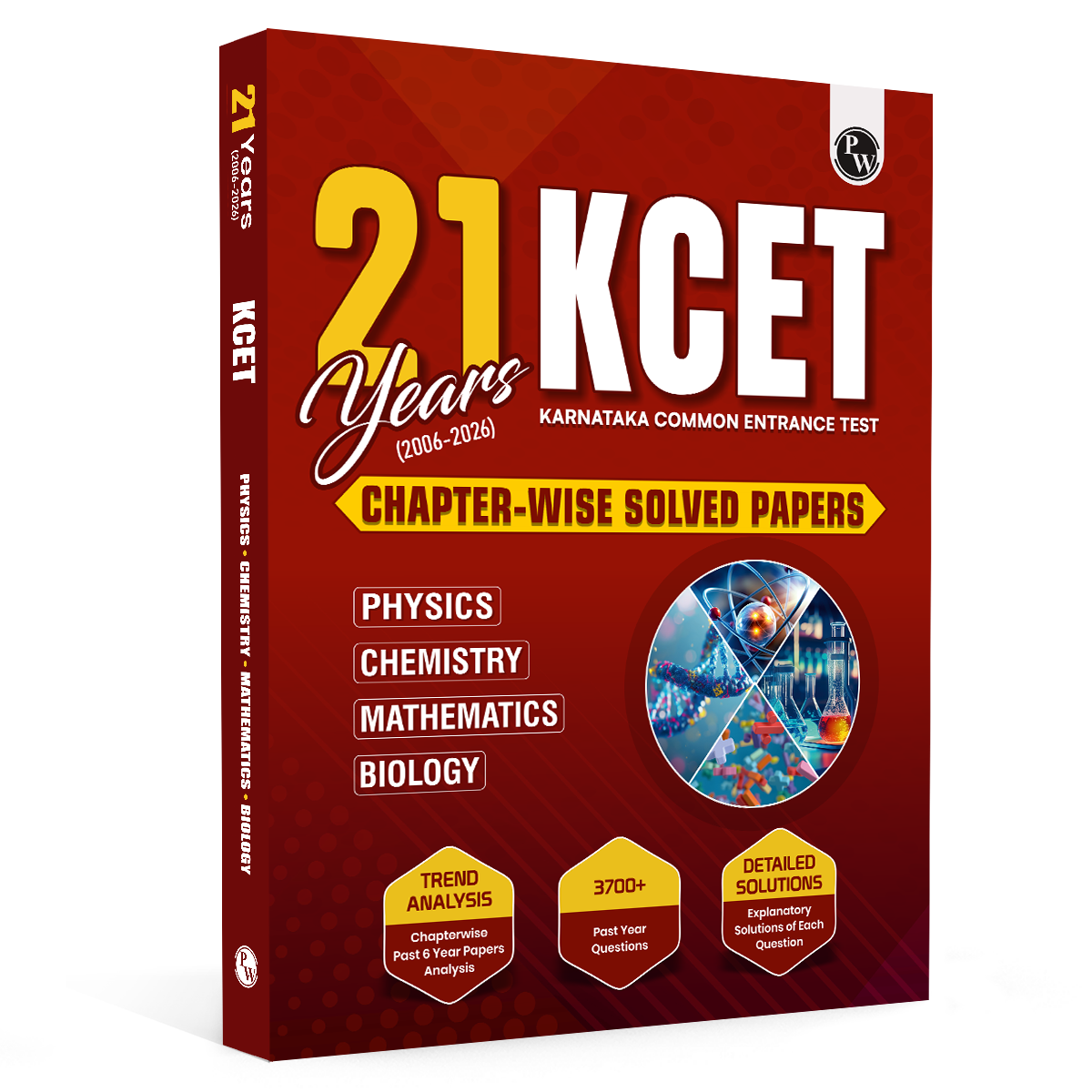
PW 21 Years KCET PYQ Book is a complete chapterwise solved paper collection from 2006 to 2026, covering Physics, Chemistry, Mathematics, and Biology with detailed solutions for KCET Engineering 2027 exam preparation.
KCET Chapter Wise Weightage for Mathematics
Mathematics is often the "rank decider" in KCET. The paper is known for being lengthy and time-consuming. According to recent trends, KCET maths important topics like calculus and algebra form more than half of the paper. Because there is no negative marking, knowing these high-weightage areas well lets you answer more questions with confidence.
-
Calculus: This is the most important unit because it covers Continuity, Differentiability, and Integration. It makes up about 25–30% of the points.
-
Algebra: It's not too hard to learn about things like matrices, determinants, and vectors, and they are quite important.
-
Trigonometry: It only counts for 10% of the grade directly, but it is the basis for practically every other chapter in the syllabus.
|
Unit |
Important Chapters |
Expected Questions |
|
Calculus |
Integration, Derivatives, Differential Equations |
15–18 |
|
Algebra |
Matrices, Determinants, Complex Numbers |
12–14 |
|
Vectors & 3D |
Vector Algebra, 3D Geometry |
8–10 |
|
Coordinate Geometry |
Straight Lines, Conic Sections |
6–8 |
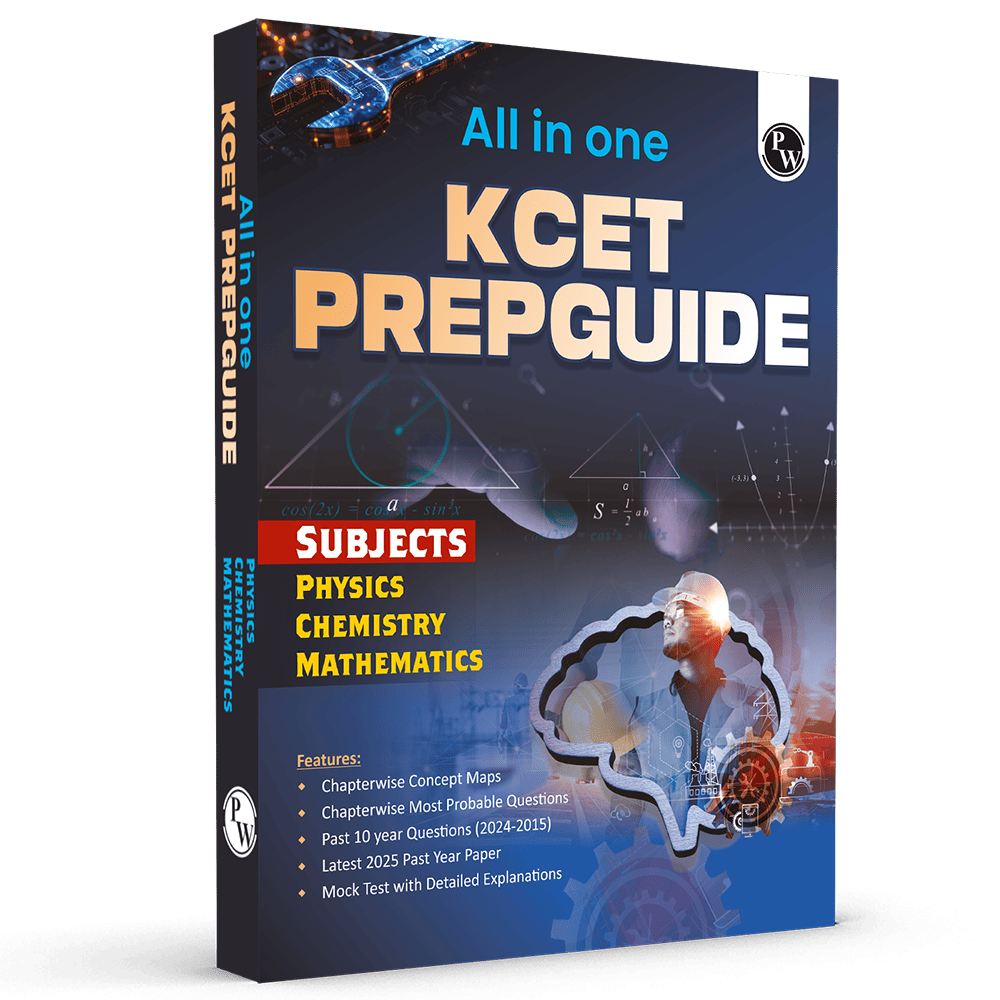
Check Out: All in One KCET Prepguide For Engineering Exam 2026
KCET PCM Preparation Strategy
To turn this weightage data into a high score, you need a solid KCET PCM preparation strategy. Simply knowing the important chapters isn't enough; you must practise them in an exam-like environment.
-
NCERT First: The KEA only uses the PUC 1 and PUC 2 books. Make sure that you can easily find every example and activity in NCERT.
-
Formula Bank: Make a "Formula Sheet" for maths and physics. When you have all your identities in one location, revision goes ten times faster.
-
Timed Practice: Since you get only 80 minutes for 60 questions, speed is vital. Do last year's papers to get better at doing maths quickly.
-
Mock Tests: To increase your stamina, take at least one full-length mock test per week for the last two months.
-
Focus on PUC 2: While both years are important, roughly 50-60% of the questions often lean toward the second-year syllabus.
Read More: KCET Previous Year Question Papers with Solutions PDF
KCET Chapter Wise Weightage FAQs
Which are the most important chapters in KCET Physics?
The important chapters include Current Electricity, Electrostatics, and Mechanics. These units usually contribute to nearly 60% of the total marks in the physics section.
Is the Class 11 syllabus important for KCET 2026?
Yes, the KCET 2026 exam syllabus includes both Class 11 (PUC 1) and Class 12 (PUC 2). Generally, the weightage is split roughly 40:60 or 50:50 between the two years.
Which subject is usually the easiest in KCET?
Most students find the KCET chemistry weightage topics to be the easiest to score in, as many questions are direct and formula-based compared to the lengthy calculations in maths. If students focus on KCET high weightage chapter, especially in physical and organic chemistry, they can significantly improve their overall KCET score with relatively less time investment.
How many questions are asked in the KCET exam?
The exam consists of 180 questions in total—60 each for physics, chemistry, and mathematics. There is no negative marking for incorrect answers.
How can I improve my speed for KCET Mathematics?
To master KCET maths, focus on learning shortcuts for integration and matrices. Practising with a timer is the best way to improve your speed for the final exam.