How to Use PW KCET Punch Chemistry for Exam Preparation
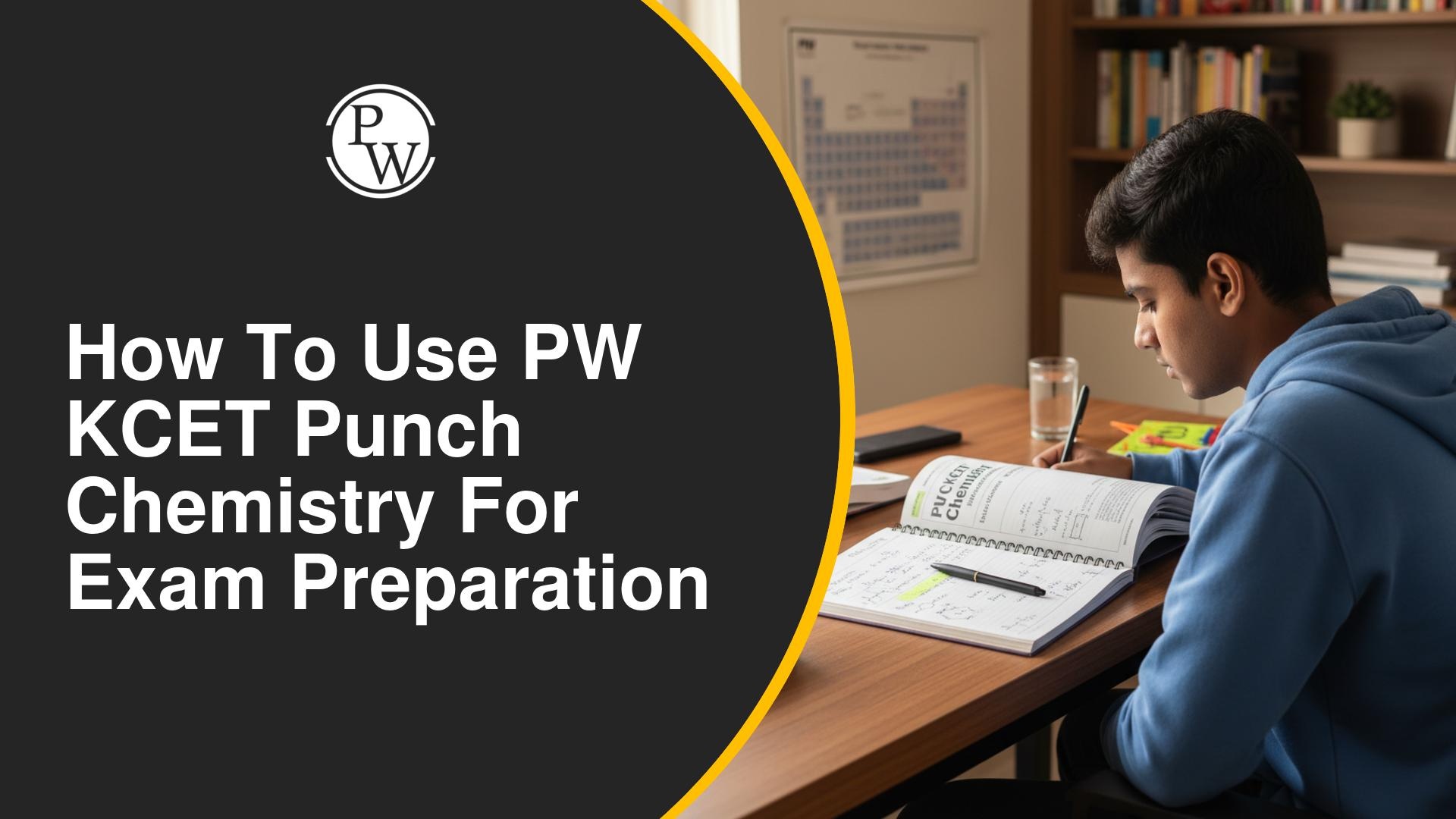
Balancing high school board exams with competitive entrance tests often leaves candidates feeling overwhelmed by endless theoretical concepts and numerical problems. Chemistry, in particular, requires a clear grasp of foundational reactions, physical formulas, and inorganic trends.
When study time feels limited, having a structured, single-volume reference removes unnecessary stress and keeps your daily study routine organised. Strategic practice with a reliable KCET punch chemistry book helps transform complex topics into manageable daily targets, allowing you to prepare with confidence.
This comprehensive article breaks down how to make the best use of this study tool to boost your final examination score.
What Is KCET Punch Chemistry Book?
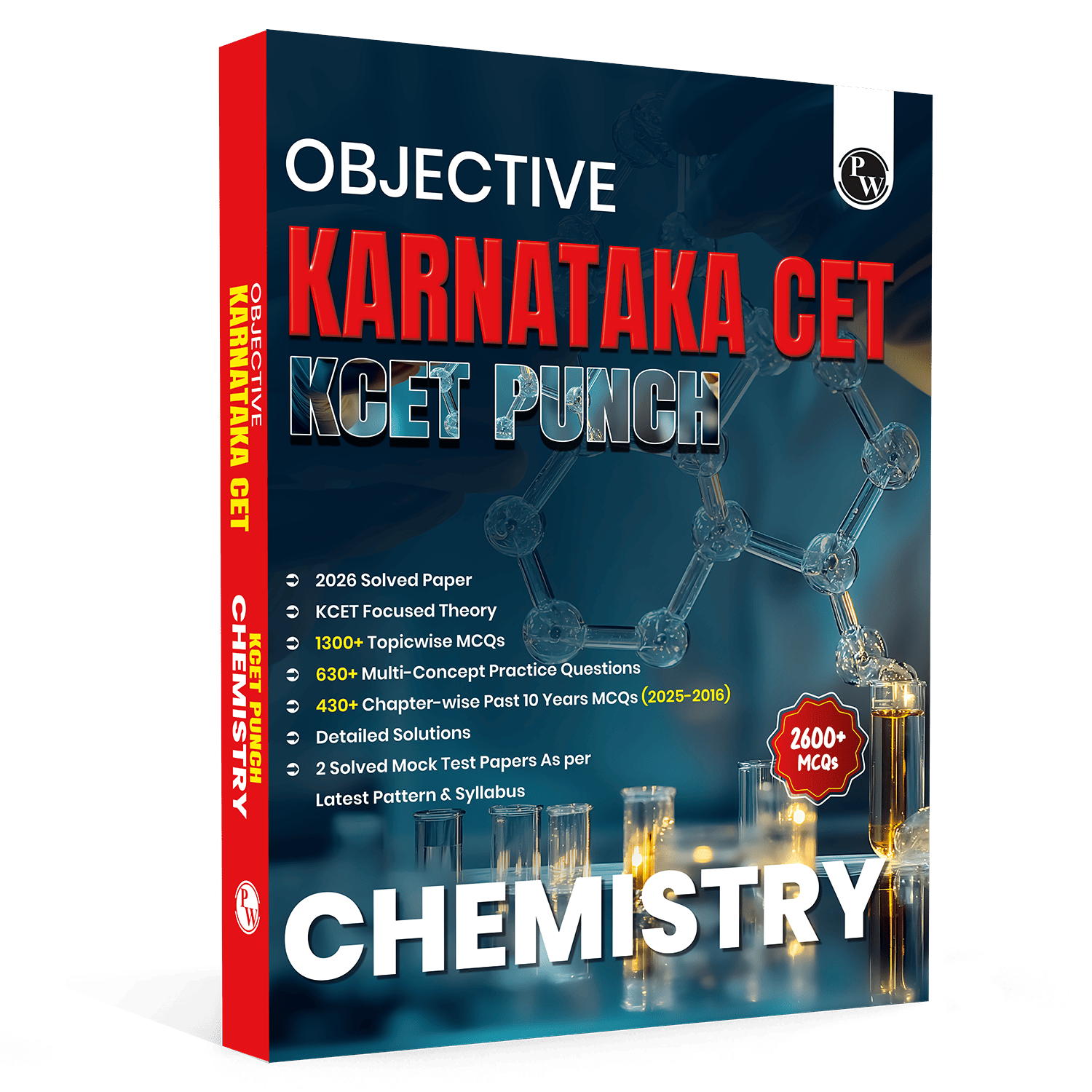
The KCET Punch Chemistry book is a complete, exam-focused preparation resource built strictly around the latest Karnataka CET pattern and NCERT syllabus. Designed to bridge the gap between classroom theory and competitive entrance requirements, this single volume provides a streamlined approach to scoring well in Chemistry.
-
KCET-Based Theory & Short Notes: Concise theoretical summaries designed for quick conceptual understanding before attempting problems.
-
1300+ KCET-Based Topic-wise MCQs: Comprehensive topic-level KCET chemistry MCQs that ensure thorough practice across all syllabus sections.
-
630+ Multi-Concept Practice Questions: Advanced questions that combine multiple concepts to test analytical skills and deeper problem-solving abilities.
-
420+ Chapterwise KCET Past 10 Years MCQs (2015–2024): KCET Previous year questions organized by topic to familiarize candidates with historical question trends.
-
2350+ Total MCQs with Detailed Solutions: Step-by-step explanations for every question to ensure self-evaluation and error correction.
-
Chapterwise Weightage Analysis: Strategic insight into high-yield topics to help prioritize study schedules effectively.
-
2 Solved Mock Test Papers: Full-length test papers tailored as per the latest pattern and syllabus to simulate actual test conditions.
Chapters to Focus on in KCET Punch Chemistry Book
A successful entrance strategy relies on identifying high-yield sections early in your study schedule. Utilizing the included chapter-wise weightage analysis within the KCET Punch Chemistry Book allows you to spend time where marks are most accessible. A standard KCET chemistry book usually covers physical, organic, and inorganic branches, but prioritization is key.
|
Chemistry Branch |
Focus Areas & Topic Types |
Recommended Practice Approach |
|
Physical Chemistry |
Chemical Kinetics, Electrochemistry, Solutions, Thermodynamics |
Practise numerical problem solving and formula applications daily. |
|
Organic Chemistry |
Hydrocarbons, Haloalkanes, Aldehydes, Ketones, Coordination Compounds |
Focus on reaction mechanisms, named reactions, and structural properties. |
|
Inorganic Chemistry |
p-Block Elements, d & f-Block Elements, Chemical Bonding |
Concentrate on periodic trends, anomalous behaviours, and direct factual lines. |
How Does the KCET Punch Chemistry Book Help with Quick Revision?
Revision during the final preparation phase must be direct and focused. Scrolling through voluminous reference materials right before an exam leads to mental fatigue and poor retention. The KCET Punch Chemistry Book simplifies revision by consolidating short notes, objective practice, PYQs, and mock papers into one unified format.
-
Concise Short Notes: Key definitions, functional group reactions, and important equations are summarized for rapid review.
-
Segmented Question Sets: Practice is divided into topicwise sets, allowing candidates to target specific weaknesses instantly.
-
Integrated Previous Year Questions: Access to authentic past 10 years questions ensures that review sessions align directly with real exam trends.
-
Detailed Step-by-Step Solutions: Detailed solutions eliminate doubts immediately without searching external references.
How to Use KCET Punch Chemistry Book
To get the best outcome from your PW KCET Punch Book, you need a systematic study workflow rather than passive reading. Passive reading creates a false sense of familiarity, whereas active problem-solving builds true speed and accuracy.
-
Review Theoretical Summaries First: Begin each study session by reading through the brief notes provided at the start of every chapter to refresh core concepts.
-
Solve Topicwise MCQs: Complete basic practice questions to confirm that you understand single-concept applications clearly.
-
Attempt Multi-Concept Questions: Test your ability to link different concepts together, which is essential for higher difficulty level questions.
-
Evaluate Errors Using Detailed Solutions: Review every incorrect answer immediately to understand where reasoning or calculation went wrong.
Study Strategy Plan Using KCET Punch Chemistry Book
Structuring your preparation around an organized weekly timetable prevents last-minute cramming. A balanced study routine allocates specific days to theory, practice, and full-length assessment using your PW KCET Punch Chemistry module.
-
Days 1–2: Fundamental Concepts and Basic Practice
-
Read short theory notes for assigned chapters in Physical or Organic Chemistry.
-
Solve 30 to 40 topic-wise practice questions to test basic recall and application.
-
Days 3–4: Advanced Problem Solving
-
Attempt multi-concept practice problems to strengthen analytical thinking.
-
Cross-check concepts against NCERT Chemistry for KCET alignment to confirm fundamental facts.
-
Day 5: Past Year Questions Practice
-
Solve chapter-wise previous year questions from 2015 to 2024 under timed conditions.
-
Mark recurring question patterns and record persistent calculation errors.
-
Day 6: Mock Assessment
-
Attempt one full-length solved paper provided in the KCET Punch Chemistry book.
-
Track time spent per question, accuracy rate, and total score achieved.
-
Day 7: Error Correction and Review
-
Thoroughly re-solve all incorrect questions using the provided detailed solutions.
-
Update a personal mistake log to ensure you do not repeat the same errors on test day.
Consistent execution of this schedule builds steady momentum, transforming difficult topics into strengths well before the final entrance exam arrives.
Tips for Using KCET Punch Chemistry Book
Effective revision relies on regular self-testing and targeted error reduction rather than simply re-reading chapters multiple times. Using structural revision tactics optimizes your retention rate significantly.
-
Maintain an Error Journal: Record every formula, reaction exception, or numerical misstep encountered during practice sets, and review it weekly.
-
Enforce Strict Timers During Practice: Allocate approximately one minute per objective question to mirror real examination pressure.
-
Prioritise Multi-Concept Exercises: Spend adequate time on multi-concept questions, as these test deeper analytical capabilities.
-
Utilise Full Mock Papers: Complete both full-length solved papers near exam dates to build physical endurance and refine time allocation.
-
Verify Solutions Line-by-Line: Avoid skipping detailed explanations even for lucky guesses; verify that your underlying logic was accurate.
Applying these revision methods systematically ensures that you enter the examination hall with optimal speed, sharp accuracy, and clear confidence.
Common Mistakes to Avoid While Using KCET Punch Chemistry Book
Even high-performing candidates lose valuable marks due to inefficient study habits or misusing their KCET study materials. Steering clear of these frequent mistakes optimizes your study time and maximizes your overall output.
-
Skipping Detailed Solutions: Relying solely on final answer keys without reading full explanations prevents deep conceptual clarity.
-
Ignoring Chapter Weightage Analysis: Spending equal time on every chapter regardless of historical importance leads to inefficient time management.
-
Practising Without Time Limits: Solving questions without monitoring your speed gives a false sense of preparation that falls apart under real exam pressure.
-
Neglecting Past Year Questions: Skipping historical paper sets reduces your familiarity with authentic question styles used over the past decade.
-
Leaving Mock Papers Unattempted: Saving mock test papers until the final day limits your opportunity to adapt your test-taking strategy.
Avoiding these strategic missteps keeps your preparation on track, ensuring every study hour translates directly into score improvements on test day.
Read More: KCET Previous Year Question Papers with Solutions PDF
KCET Punch Chemistry Book FAQs
Is the KCET Punch Chemistry book aligned with the latest syllabus?
Yes, the book is designed strictly according to the latest Karnataka CET examination pattern and NCERT syllabus guidelines.
How many practice questions are included in this KCET chemistry book?
The book contains over 2350 total MCQs, including 1300+ topic-wise questions, 630+ multi-concept questions, and 420+ past 10-year entrance questions.
Are full-length practice tests provided in the KCET chemistry question bank?
Yes, it includes 2 full-length solved mock test papers formatted as per the latest pattern to evaluate overall exam readiness.
Does the PW KCET punch chemistry guide include detailed solutions?
Every objective question, previous year problem, and mock test item comes accompanied by step-by-step detailed solutions for easy self-evaluation.
How do chapter-wise KCET chemistry questions help in daily revision?
Practising chapter-wise KCET chemistry questions isolates specific concept gaps, letting you fix weak areas without having to re-read entire textbook chapters.