Boost Your Child’s English Skills with 555 Fun Learning Activities
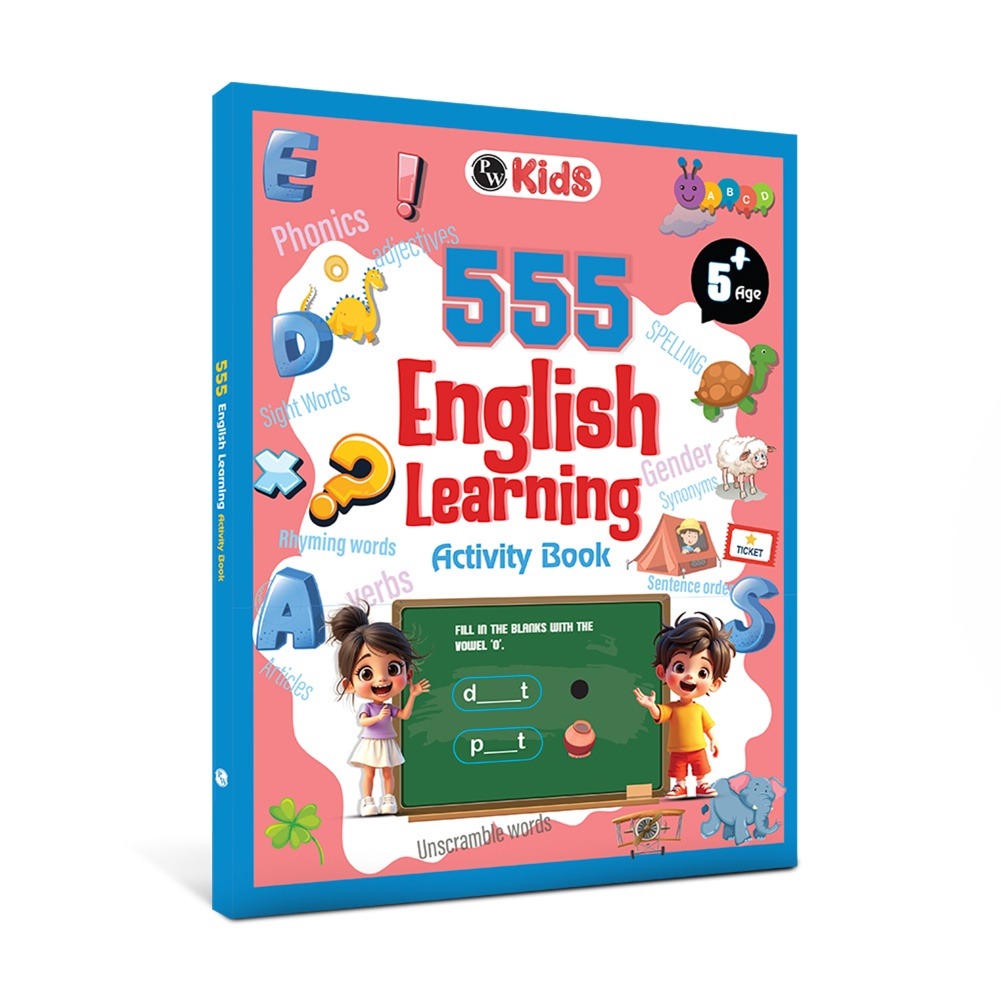
Most parents know that children are quickly bored with the usual repetitive language exercises. A dynamic approach that keeps children fully engaged is needed to build a solid foundation in grammar, vocabulary and writing. The answer is utilising targeted resources such as the 555 fun learning activities workbook, which turns daily practice into an exciting adventure.
In this article, we’ll discuss how structured, interactive exercises can significantly enhance your child’s language skills while minimising their screen time.
Check Out: PW Kids' Books
Importance of Interactive English Learning Activities for Children
Young minds learn language best through active experience, not passive reading. Traditional worksheets are often a chore that bores and frustrates students. Integrate structured English-learning activities for kids, focusing on treating learning as playtime. This will help in long-term retention.
Creative exercises stimulate different parts of the brain, which makes children understand complicated language patterns much easier. If children get involved in their lessons, they really come to love reading and writing.
Here is how interactive learning changes the educational experience:
-
It changes abstract grammar rules into concrete, visual tasks.
-
It reduces the anxiety often associated with formal tests and quizzes.
-
It builds confidence by offering immediate, satisfying problem-solving moments.
-
It encourages independent study habits from an early age.
Learning Milestones in the 555 Fun Learning Activities Workbook
To get the best results from a kids' English practice workbook, parents need to understand how the exercises match a child's developmental stages. The English 555 fun learning activities workbook divides its content into progressive tiers, allowing children to build core competencies without experiencing academic frustration.
This structured breakdown ensures that English skill development for kids happens naturally and at an appropriate pace.
Milestone 1: Phonics and Letter Recognition
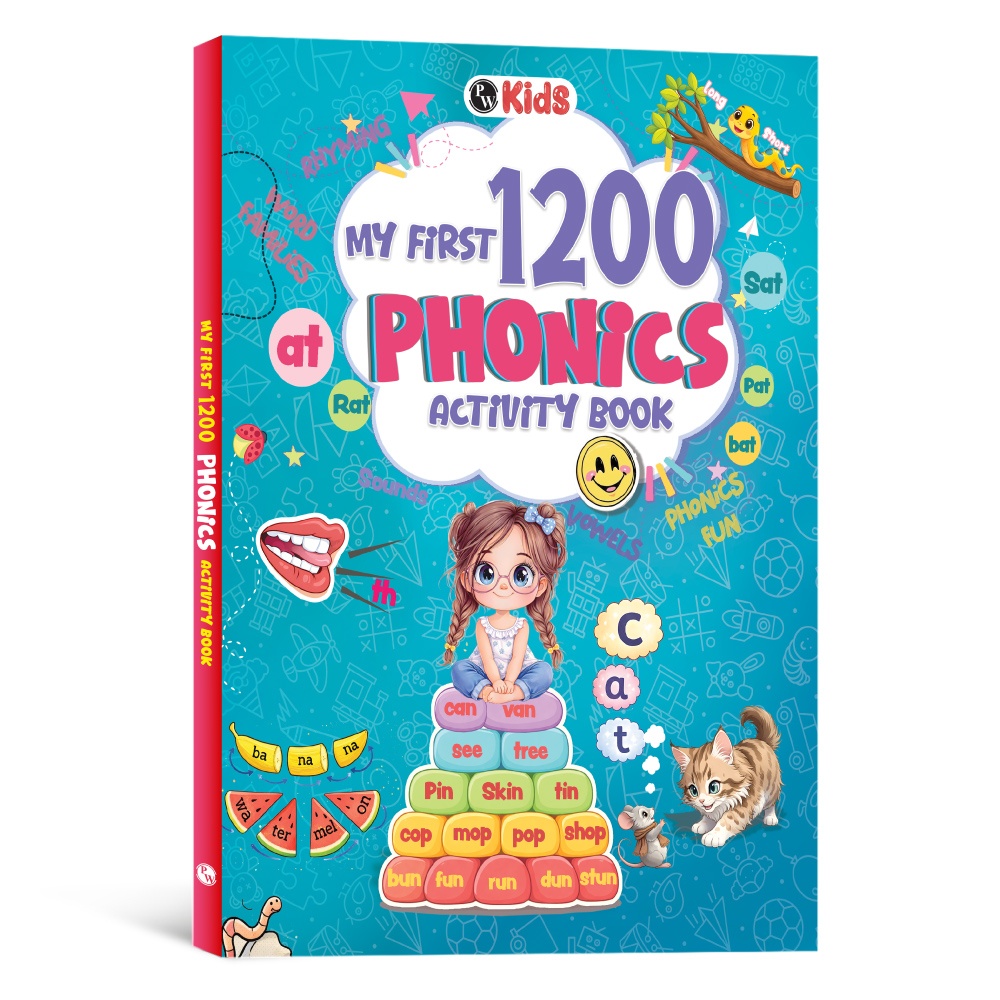
The earliest sections of the workbook focus on the fundamental building blocks of reading and writing. Children interact with vibrant visual puzzles that link sounds to specific letters.
-
Core Focus: Consonant-vowel-consonant (CVC) words, rhyming patterns, and alphabet tracking.
-
Activity Types: Letter-tracing mazes, initial-sound coloring pages, and hidden letter searches.
-
Estimated Daily Time: Around ten to fifteen minutes per session.
Milestone 2: Contextual Word Building
Once letter sounds are mastered, the book transitions to vocabulary-building activities for kids that introduce simple nouns, verbs, and adjectives. This stage moves away from memorisation, encouraging children to understand how words change meaning based on their context.
-
Core Focus: Synonyms, antonyms, compound words, and action verbs.
-
Activity Types: Word-matching trees, pictorial crosswords, and fill-in-the-blank riddles.
Milestone 3: Early Sentence Structure and Mechanics
The final tier shifts towards basic grammar and punctuation. Children learn to assemble words into meaningful phrases, mastering capital letters, full stops, and basic tense shifts through interactive layouts.
|
Milestone Level |
Targeted English Skill |
Expected Learning Outcome |
|
Level 1: Beginner |
Phonemic Awareness |
Improved spelling and pronunciation boundaries |
|
Level 2: Intermediate |
Lexical Expansion |
Broader use of descriptive vocabulary in speech |
|
Level 3: Advanced |
Syntactic Structure |
Accurate sentence construction and basic editing |
Benefits of Using 555 Fun Learning Activities
A structured kids English practice workbook acts as a guided roadmap for language development. Instead of random exercises, a well-planned book introduces concepts in a progressive sequence, ensuring your child never feels overwhelmed.
Structured Skill Progression
A good workbook starts with the basics and then goes into the advanced things. Children, for example, learn simple word associations before they attempt to form complete sentences. This gradual build-up ensures that gaps in the foundation are closed at the beginning.
Balanced Daily Practice
Language acquisition requires consistency above all else. With a dedicated workbook it’s easy to set up a manageable daily routine, which takes only about fifteen to twenty minutes of focused attention a day.
|
Area of Development |
Focus of Activity |
Long-Term Benefit |
|
Vocabulary |
Word association, puzzles |
Confident communication |
|
Grammar |
Sentence sorting, editing |
Clear, accurate writing |
|
Comprehension |
Short stories, sequencing |
Better reading retention |
Check Out: Kids Writing & Pattern Books
What are Vocabulary Building Activities for Kids
Expanding a child's vocabulary requires more than just memorising long lists of definitions. Effective vocabulary-building activities for kids focus on contextual learning, helping children understand how words function inside everyday sentences.
Puzzles, crosswords, and matching games encourage children to think critically about word meanings. This interactive approach helps transfer new words from short-term memory into daily speech and writing.
Try these simple techniques alongside your daily workbook routines:
-
Word Association Games: Ask your child to name three words connected to a specific theme, like the ocean or a kitchen.
-
Context Clue Challenges: Read a short sentence aloud and ask your child to guess the meaning of an unfamiliar word based on the surrounding text.
-
Picture Matching: Connect a new descriptive word to a vivid illustration to reinforce its visual meaning.
Check Out: Kids Activity Books
What are the Fun English Activities That Keep Children Engaged
Sustaining a child's focus over several weeks can be challenging without plenty of variety. Using diverse, fun English activities for children keeps the material fresh and exciting, preventing learning fatigue.
By mixing different formats like mazes, tracing, and spot-the-difference games, children stay curious about what is on the next page. This variety ensures that both visual and logical learners find exercises that match their personal learning styles.
Creative Writing Prompts
Simple prompts encourage children to use their imagination. Asking a child to finish a short story or describe a strange animal helps them practice sentence structure without worrying about rigid rules.
Decoding and Word Searches
Hidden word puzzles help children recognise spelling patterns. Finding words horizontally or vertically trains the eyes to spot letter combinations, directly improving reading speed.
How English Worksheets Help Children Learn Better
Using high-quality English worksheets for children provides a clear, physical way to track academic progress over time. Turning physical pages gives children a real sense of accomplishment that digital screens simply cannot replicate.
Paper-based tasks also support essential physical development, helping children refine their pen control and handwriting.
Also Check, Kids Reading Books
Tips for Supporting English Skill Development at Home
Long-term English skill development for kids relies heavily on keeping a steady, pressure-free routine. The goal is to build a reliable habit where practice feels rewarding rather than punitive.
Here are a few practical strategies to get the most out of your educational materials:
-
Set a Fixed Time: Practice at the same time every day, such as right after school or just before dinner, to build a steady routine.
-
Keep Sessions Short: Limit work to approximately twenty minutes to maintain high levels of focus and enthusiasm.
-
Celebrate the Effort: Focus on the child's persistence through a difficult puzzle rather than just celebrating perfect scores.
-
Encourage Loud Reading: Ask your child to read instructions and answers aloud to practice pronunciation and speaking confidence.
Read More: List of 40+ Shape Names for Kids
English learning activities for kids FAQs
What age group is suited for the 555 Fun Learning Activities Workbook?
This workbook is generally designed for young learners in primary school, typically between the ages of five and eight. The exercises focus on fundamental grammar, vocabulary, and reading comprehension skills.
How do English learning activities for kids reduce screen time?
By providing highly interactive, colorful, and physically engaging puzzles on paper, these activities capture a child's attention. This keeps them entertained and learning without needing a smartphone or tablet.
Can fun English activities for children really improve school grades?
Yes, consistent practice with these activities reinforces the core language concepts taught in classrooms. Regular engagement helps improve reading speeds, spelling accuracy, and written expression.
How often should my child use the kids' English practice workbook?
For the best results, it is recommended to use the workbook for about 15 to 20 minutes daily. Short, consistent sessions are much more effective for young learners than long, irregular study blocks.
Do these English worksheets for children require constant parental supervision?
The instructions are written simply so that children can quickly understand the tasks. While initial guidance is helpful, the clear layouts are designed to encourage independent study over time.