Why Nursery Kids Learn Faster with Activity-Based Worksheets
Nursery Worksheets for Kids turn abstract ideas into real experiences. Traditional rote learning can leave young children bored and uninterested. With these worksheets, parents and teachers can use play, drawing, and problem-solving to introduce new concepts.
This approach helps children connect what they see with what they understand, making learning easier and more fun.
Check Out: PW Kids' Books!
Importance of Nursery Worksheets for Kids
Young children have an amazing ability to learn quickly, often called the absorbent mind. At this age, they learn right through their senses and by doing things with their hands. When kids use nursery worksheets, they are not just looking at pictures—they are also practising their fine motor skills and thinking skills at the same time.
This hands-on approach works better than just listening. When children use a crayon to trace a line or circle an object, their brains make stronger connections. Being physically involved helps them remember what they learn and move through lessons faster than with only spoken instructions.
Features of Nursery Worksheets for Kids
Not all educational materials are created equal. To be truly effective, preschool activity worksheets must be visually appealing and developmentally appropriate. If a task is too hard, the child gets frustrated; if it is too easy, they lose interest. The good materials find a balance that keeps the child in a state of "flow."
|
Feature |
Importance for Learning |
|
Vibrant Illustrations |
Captures attention and aids in visual memory. |
|
Clear Instructions |
Allows for independent work, boosting self-reliance. |
|
Variety of Tasks |
Prevents boredom by switching between drawing, counting, and matching. |
|
Progressive Difficulty |
Gradually introduces harder concepts to build skill. |
Why are Nursery Worksheets for Kids Fun Learning?
Learning should never be a chore for a three-year-old. Incorporating fun learning activities for nursery children into their daily routine ensures that they develop a positive relationship with education. Worksheets serve as a perfect anchor for these activities. For example, after completing a worksheet about farm animals, a child might be encouraged to mimic the sounds of the animals they just coloured.
This connection between the paper and the real world is vital. It turns a static lesson into a dynamic experience. When children enjoy what they are doing, their brains release dopamine, a chemical that is closely linked to memory and motivation. This is precisely why activity-based methods lead to such rapid progress compared to traditional desks-and-blackboards teaching.
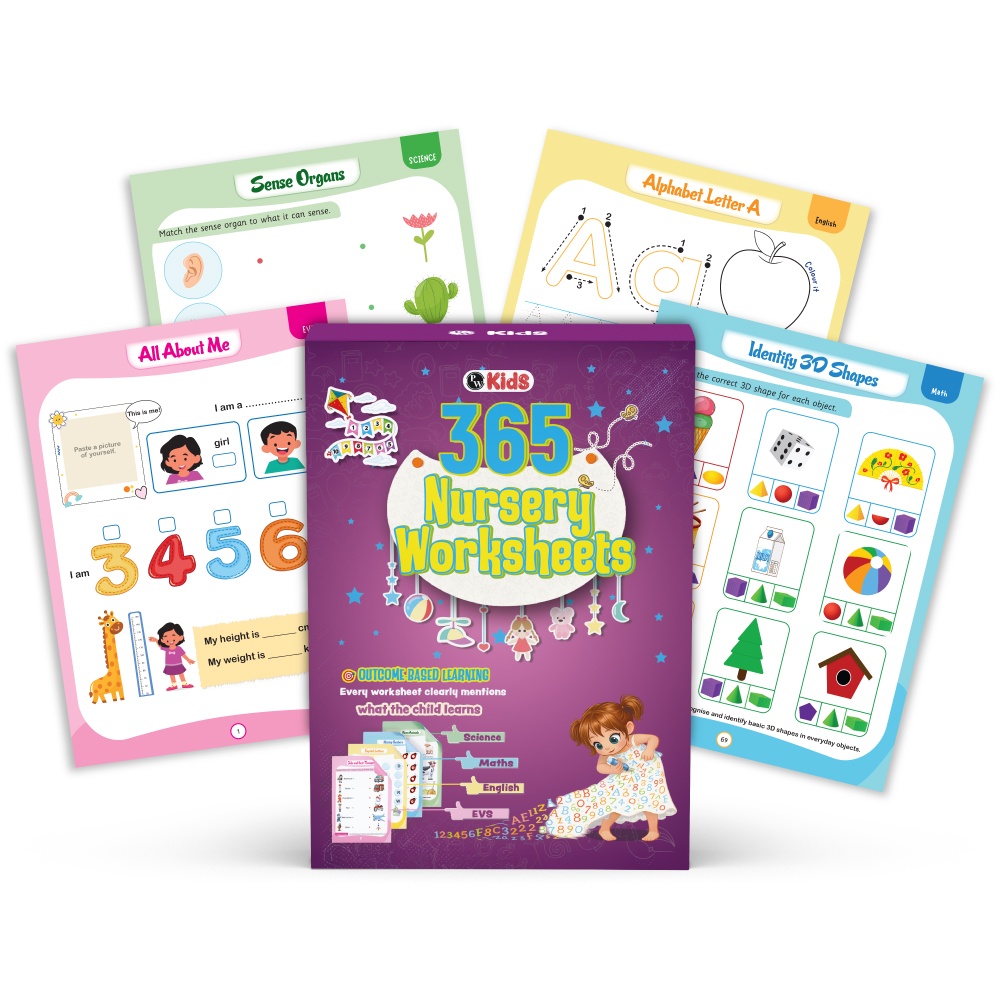
Check Out: 365 Nursery Worksheets for Kids
Benefits of Nursery Worksheets for Kids
Moving from home to a classroom can feel overwhelming for young children. Activity-based worksheets make this change easier by turning learning into a game. These worksheets give kids a way to explore new ideas in a structured but relaxed way, so they do not feel stressed.
-
Hand-Eye Coordination: Activities like dot-to-dot or simple mazes require kids to focus their vision and hand movements in sync.
-
Logical Reasoning: Sorting and matching exercises teach kids how to categorise objects based on size, colour, or shape.
-
Attention Span: Completing a single page gives a child a sense of achievement, gradually building their ability to focus on a task for longer periods.
-
Confidence Building: Simple, achievable tasks on a worksheet provide immediate positive reinforcement, encouraging the child to try more difficult challenges.
While worksheets are often seen as an individual activity, they can also be highly social. Interactive worksheets for preschoolers can be used in group settings to encourage cooperation and sharing. Teachers might ask children to compare their coloured drawings or work together to find hidden objects in a large illustration.
This social interaction adds another layer to the learning process. Children learn to follow verbal cues from an adult while looking at a physical prompt. They also learn to observe how their peers approach the same problem, which fosters empathy and collective problem-solving. This holistic development is why the activity-based model is so highly regarded in modern early-year frameworks.
Check out: Kids' Reading Books
How Nursery Worksheets for Kids Can Improve Language?
Language is one of the most complex skills a human ever learns, and the nursery years are the prime time for this development. Educational worksheets for kids facilitate this by introducing phonics, letter recognition, and basic vocabulary in a non-intimidating format.
-
Letter Tracing: Helps children recognise the unique curves and lines of each alphabet.
-
Picture-Word Association: Connecting an image of an apple to the word "Apple" builds early reading skills.
-
Vocabulary Expansion: Introducing new objects through themed worksheets broadens the child's descriptive powers.
By the time these children enter primary school, those who have used structured worksheets often have a significant head start in literacy. They are already familiar with the mechanics of writing and the concept that symbols carry meaning.
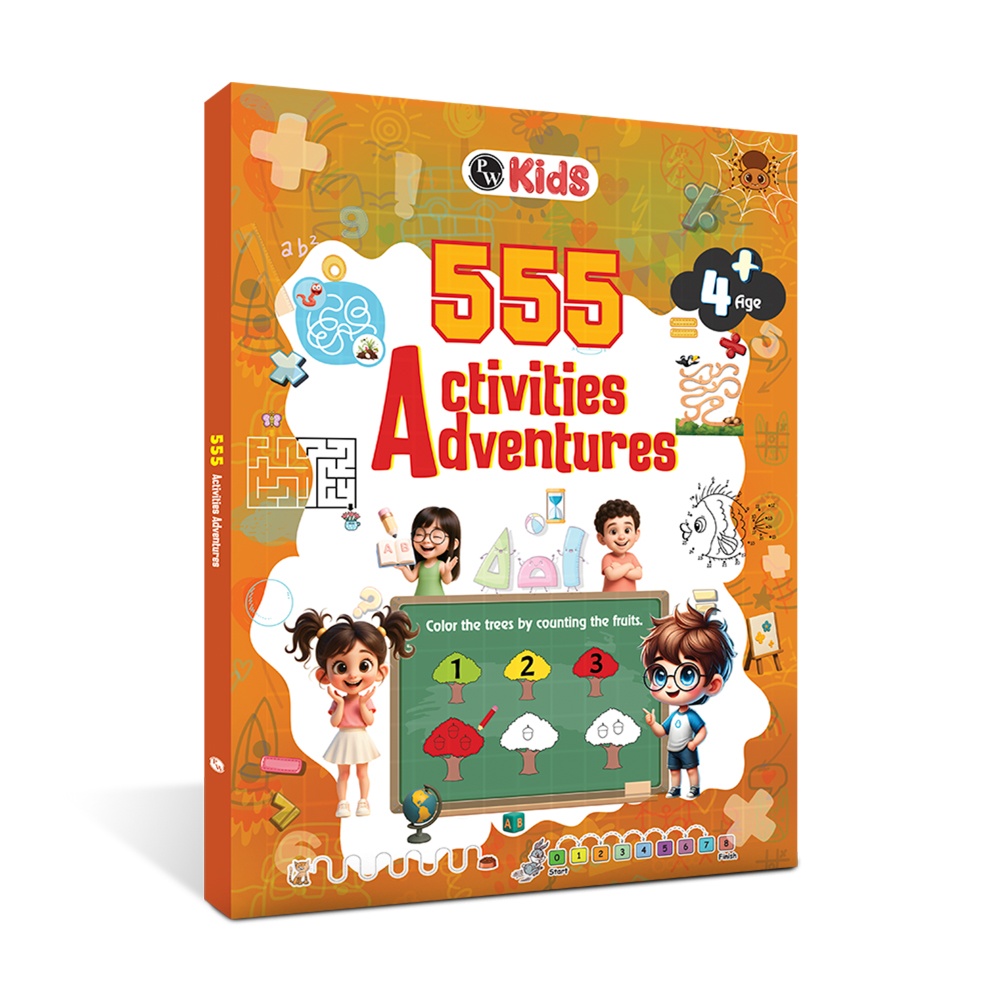
Check out: Kids Activity Books
How Nursery Worksheets for Kids Develop Motor Skills
Fine motor skills involve the coordination of small muscles in the hands and fingers. These skills are essential for everything from buttoning a shirt to writing with a pen. Nursery kids' skill-development worksheets are specifically crafted to hone these skills through various tactile tasks.
Activities such as "colouring within the lines" are not just about art; they are about control and precision. As a child learns to navigate the boundaries of a drawing, they are training their hand to move with intent. This physical mastery is a prerequisite for handwriting. Children who spend time with these worksheets often find the transition to writing sentences much easier because their hands are already "trained."
Read More: Why Reading Books is So Important for Kids?
Nursery Worksheets for Kids FAQ’s
Are nursery worksheets for kids suitable for three-year-olds?
Yes, most worksheets for the nursery level are made for children around 3-4 years old. They use large fonts, simple shapes, and minimal text to ensure the tasks are doable for toddlers developing their basic motor skills.
How many worksheets should a nursery child do per day?
Usually, 1-2 pages a day is sufficient. The emphasis should be on consistency and engagement, not the amount of work. Short daily sessions are much better for retention than long infrequent ones.
Are these worksheets good for speech and language?
Many worksheets assist toddlers in naming items, describing colours, and following verbal instructions. This helps to increase their vocabulary and improve their capacity to express their views clearly.
Are activity-based worksheets better than toys?
These should be supplemented with physical play. Worksheets are wonderful for cognitive and fine motor development, but children still require vigorous play, such as running and building with blocks, for a well-rounded upbringing.
How Can I right Use These Worksheets at Home?
The right solution is to create a joyful, stress-free environment. Give a good supply of vivid crayons and sit down with your youngster to help lead them. The photos on the site can be used to initiate conversations and turn the worksheet into an interactive storytelling session.