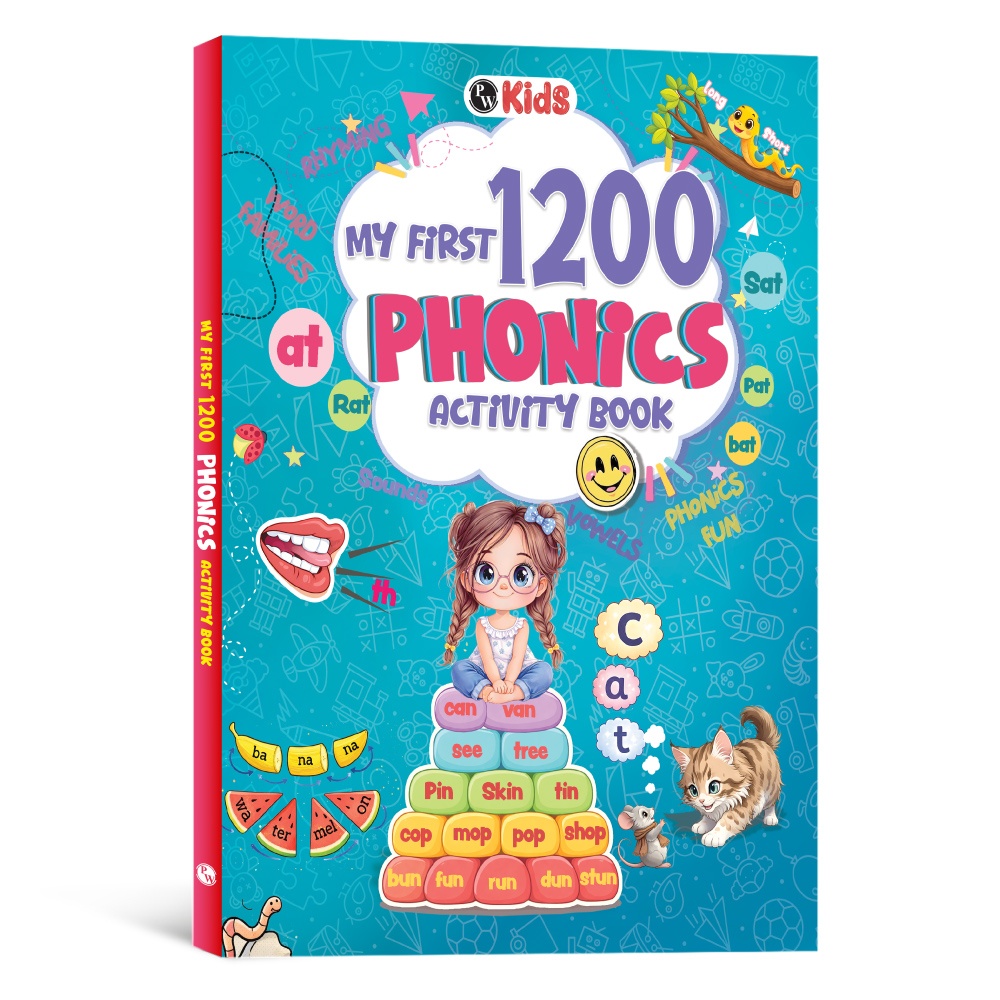
Build Strong Reading Skills with Phonics Activity Book for Kids
Early reading learning can be difficult for young learners. A structured phonics activity book helps make this easier, transforming abstract letter sounds into fun, hands-on lessons that boost confidence, improve pronunciation, and lay the groundwork for independent reading success with daily, playful practice.
Check Out: PW Kids' Books
Importance of Early Reading Skills for Kids
Developing robust early reading skills sets the foundation for all future academic and personal success. When children become fluent readers in their formative years, they absorb information more rapidly, articulate themselves more clearly and develop a larger vocabulary. This forms the basis of the structure for teaching these important literacy skills.
Children will often guess words based on picture clues if they do not have a good understanding of how letters make different sounds. As the school textbooks get more advanced and lose the illustrative context, this practice creates significant learning barriers. Structured reading habits help develop authentic decoding skills early on in young minds, making them independent readers who really love books.
What is a Phonics Activity Book?
This book is a particular teaching aid to help young learners understand the relationship between written letters and spoken sounds. These workbooks teach children how to blend individual letter sounds together to read whole words effortlessly, instead of passive memorisation or rote learning, using interactive tasks.
This activity book is about systematic learning, turning complex linguistic rules into practice puzzles, matching games and tracing exercises. This hands-on approach keeps young minds focused and reinforces school lessons in a relaxed, stress-free home setting.
Why Kids Need a Phonics Activity Book?
One of the most important milestones in a child’s early education is learning to read. But many parents and teachers observe that children often have trouble linking the written letters to their spoken sounds, causing anxiety and frustration when it comes to reading.
When young learners see a page of text, the symbols can be intimidating if they don’t have a good decoding system. This is a common hurdle that can slow a child’s academic progress and reduce confidence.
This activity book presents a proven, structured solution to this challenge. Phonics Activity Book help children naturally build the bridge between spoken words and written text by turning abstract language concepts into fun, hands-on activities..
Benefits of Using a Phonics Activity Book for Kids
There are a number of practical benefits for early childhood development when investing in a quality kids phonics learning book. Activity books are great for the kids to learn in a hands-on way.
-
Improves Pronunciation: Kids learn precise mouth movements for different English sounds, decreasing speech clarity issues.
-
Boosts Spelling Accuracy: Understanding sound segments, or phonemes, helps children spell challenging words correctly by decomposing words logically.
-
Enhances Vocabulary: Children are constantly exposed to new word families, which helps their vocabulary grow rapidly.
-
Encourages Independent Learning: With clear visual instructions, kids are able to complete tasks with little adult supervision, enhancing their independence.
How a Phonics Activity Book Improves Reading Fluency?
Regular phonics reading practice for children bridges the gap between recognising individual alphabets and reading full sentences fluidly. Fluency is achieved when a child no longer pauses to decode every single letter but reads whole words smoothly and expressively.
|
Phase of Practice |
Learning Focus |
Expected Outcome |
|
Phase 1 |
Single letter sounds |
Accurate identification of alphabet sounds |
|
Phase 2 |
Blending short vowel words |
Reading simple words like 'cat', 'pin', or 'sit' |
|
Phase 3 |
Consonant digraphs |
Mastering complex blended sounds like 'ch' and 'sh' |
|
Phase 4 |
Full sentence reading |
Smooth, expressive, and independent reading habits |
Daily practice of around fifteen to twenty minutes prevents learning loss. Consistency helps children build a strong mental library of sounds, allowing them to transition smoothly from simple picture books to early chapter books.
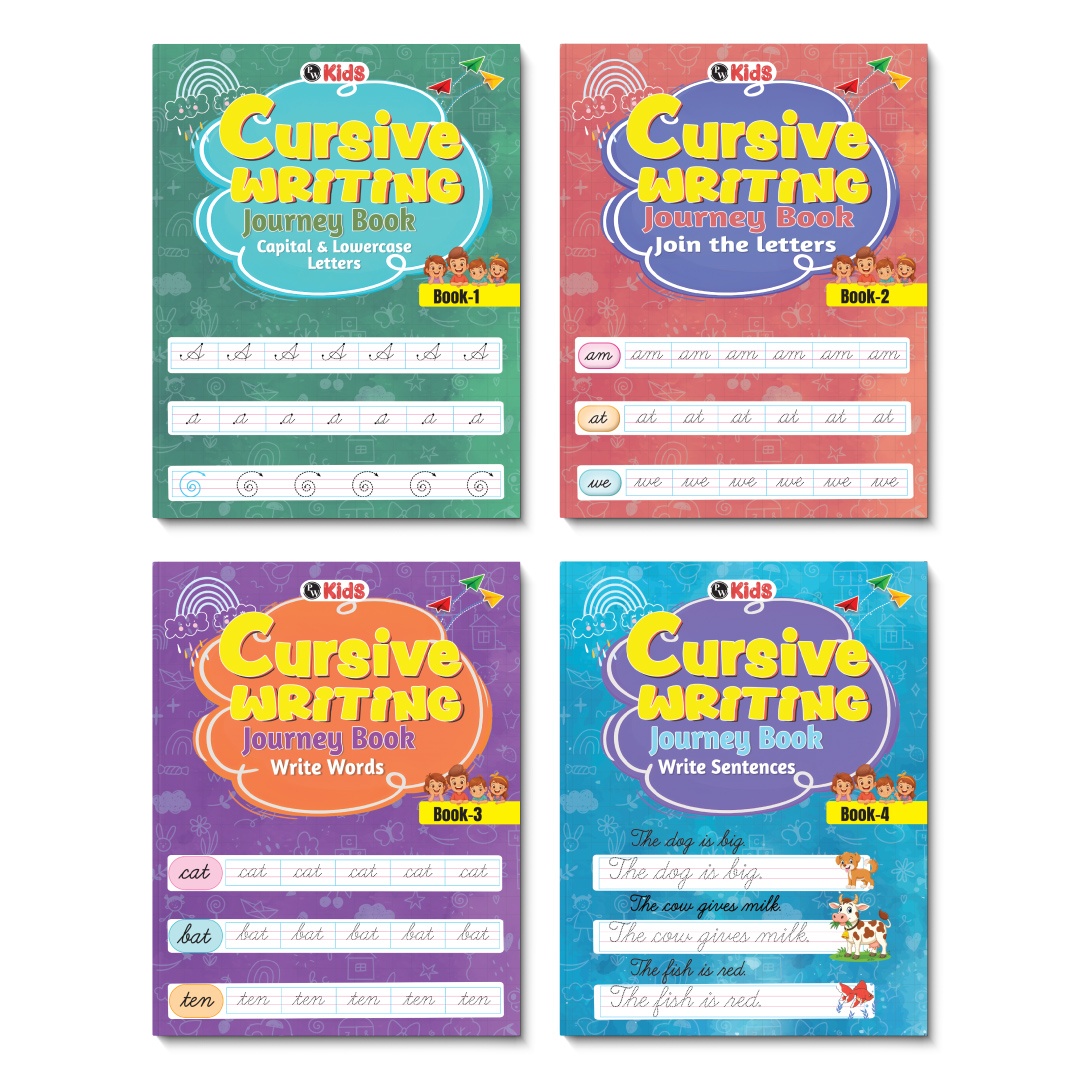
Check Out: Writing & Pattern Books
Fun Activities Inside a Phonics Activity Book
Preschoolers require short, vibrant tasks to maintain their focus. Effective phonics activities for preschoolers focus heavily on sensory learning and repetitive play to ensure that foundational concepts remain memorable without causing cognitive fatigue.
Letter-Sound Matching Games
These activities ask children to draw lines connecting a specific letter to an object that begins with that sound. For instance, connecting the letter "B" to an illustration of a ball helps cement the phonics connection instantly.
Short Vowel Word Tracing
Tracing simple three-letter words allows children to practice their fine motor skills while saying the sounds aloud. This combines muscle memory with auditory learning to double sound retention.
Colouring by Sound Codes
Children colour specific sections of a drawing based on the sound group a word belongs to. This keeps the learning process playful, creative, and highly engaging for energetic young minds.
How to Choose the Right Phonics Activity Book for Children
Selecting the right English phonics book for children depends largely on the child's current age and reading level. A book that is too difficult will discourage them, while one that is too easy will cause boredom.
Look for workbooks that feature high-quality illustrations, thick paper that handles colouring markers, and a logical progression from simple sounds to complex blends. The structure should guide the child step-by-step, ensuring they master one sound group before moving to the next.
Check Out: Kids Reading Books
Tips for Using a Phonics Activity Book
To get the good results from an educational workbook, the environment and presentation matter as much as the content itself. Parents can apply simple strategies to make the learning sessions highly effective.
-
Set a Daily Routine: Practice at approximately the same time each day to build a positive, predictable study habit.
-
Read Aloud Together: Encourage your child to pronounce the sounds loudly and clearly while working through the pages.
-
Celebrate Small Progress: Praise the effort put into blending a difficult word rather than just focusing on perfect answers.
-
Keep Sessions Short: Limit book time to around fifteen minutes for younger kids to ensure it remains an enjoyable activity.
Read More: List of A to Z Words for Kids
Phonics Activity Book FAQs
At what age is it right to start using a phonics book?
Children can generally start using this activity book around the age of three to four years, as they begin to recognize alphabet shapes and show curiosity about spoken sounds.
How often should my child engage in phonics reading practice for children?
Short daily sessions of around ten to twenty minutes are much more effective for young children than long hours of study once a week.
What makes an effective kids' phonics learning book?
An effective phonics learning book for kids should have a clear, step-by-step progression, vibrant illustrations, and interactive puzzles rather than repetitive reading lines.
Are there specific phonics activities for preschoolers that help with writing?
Yes, word tracing and sound-matching games included in an English phonics book for children help develop fine motor skills alongside sound recognition.
Can building early reading skills for kids help with spelling difficulties?
Absolutely, because phonics teaches children to break words down into individual audio components, which directly improves spelling accuracy and word recognition.