MHT CET Question Bank: How to Practise After Completing the Syllabus

Reading through theory notes and attending lectures keeps you busy for months, but the actual challenge begins right now. How do you transition from passive textbook reading to active problem-solving without feeling overwhelmed?
Many students find themselves staring at a pile of reference materials during this mid-term session, unsure of how to structure their daily hours effectively. Harnessing a dedicated MHT CET question bank changes everything by turning raw textbook concepts into active, application-driven skills.
What Is an MHT CET Question Bank?
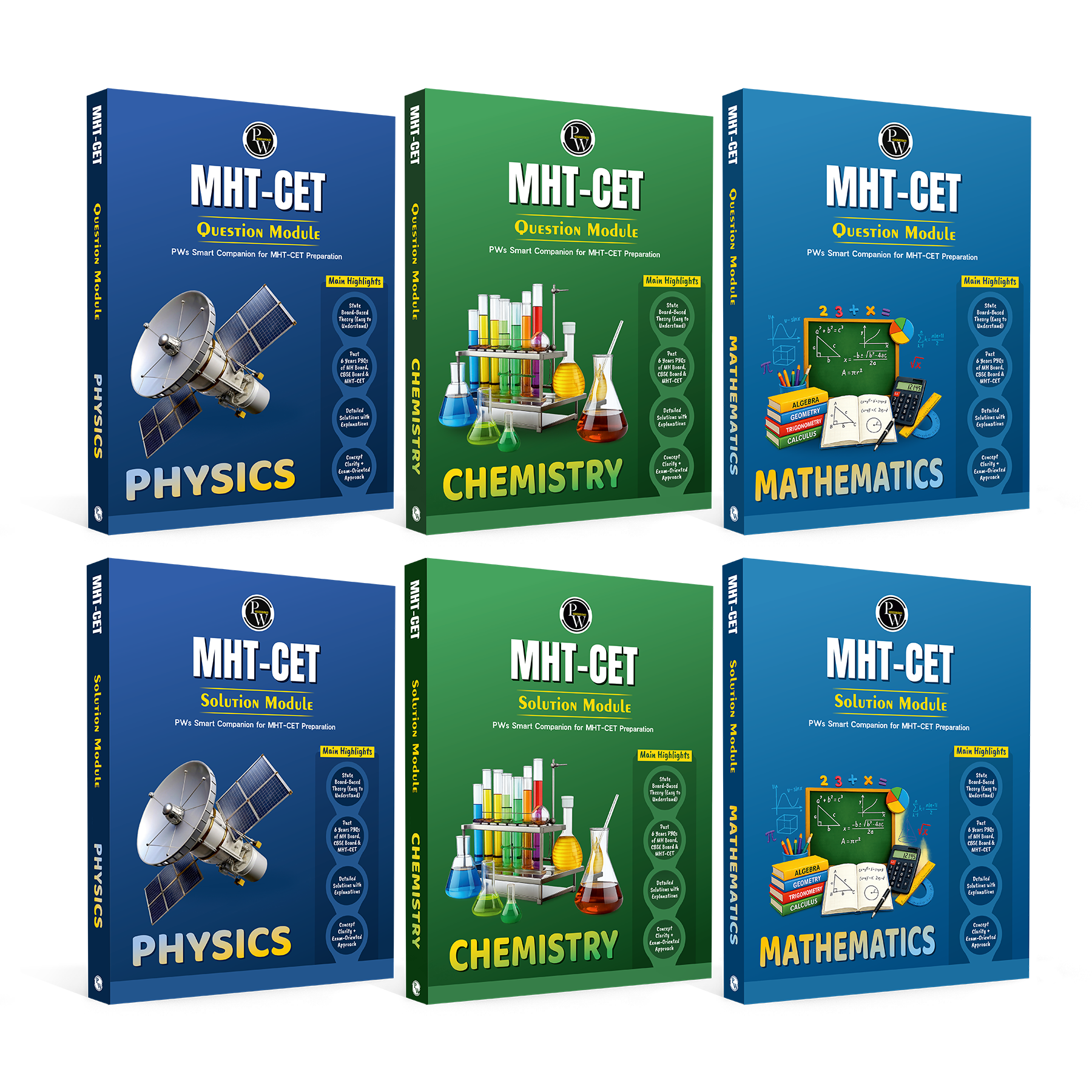
An MHT CET question bank acts as a structured repository of subject-wise problems, covering theory notes, previous year questions, and detailed solutions. It bridges the gap between board-level learning and competitive testing by offering graded difficulty levels.
-
Subject-Wise Organisation: Resources are categorised neatly into Physics, Chemistry, Mathematics, Botany, and Zoology to simplify planning.
-
Theory Integration: Quality resources offer brief chapter recaps before diving into questions, keeping fundamentals sharp and accessible.
-
Detailed Explanations: Step-by-step breakdowns teach you the correct approach rather than just supplying final numbers or answers.
-
Exam-Oriented Practice: Questions are tailored to match the exact patterns and difficulty curves observed in recent years.
Understanding the internal anatomy of an MHT CET question bank helps you deploy it effectively during intense study hours. Instead of wandering aimlessly through random chapters, you gain access to a curated collection of problems that target specific learning outcomes. This structured layout ensures that your revision remains focused, goal-oriented, and entirely free from unnecessary confusion.
Which Questions Should You Practise from an MHT CET Question Bank?
Sorting through thousands of problems can drain your energy if you lack a filtering strategy. During the mid-term phase, categorise your practice workflow to match actual examination trends. Start by addressing foundational chapter-end problems to test your immediate grasp of formulas and core definitions.
Move forward to multi-concept problems that test your ability to link different chapters together into a cohesive problem-solving framework. Finally, integrate board-level questions from CBSE and Maharashtra Board archives to ensure absolute clarity across varying difficulty gradients. Mixing these tiers prevents unexpected surprises on exam day and keeps your analytical confidence high.
When you encounter tricky problems, take time to dissect why the question was framed that way. Recognising recurring problem patterns allows you to solve similar items in a fraction of the time during the actual exam. Balance your daily session by picking questions from diverse difficulty tiers rather than sticking only to the easiest ones.
How Can You Use an MHT CET Question Bank After Completing Each Subject?
Finishing a subject syllabus requires a systematic shift toward active testing. Pick up your MHT CET practice questions immediately after closing a chapter to verify whether you can apply formulas correctly under standard conditions.
-
Immediate Post-Chapter Testing: Solve twenty to thirty topic-specific problems right after finishing your lecture notes and revision summaries.
-
Streamlined PCM and PCB Sets: Utilise comprehensive sets like an MHT CET question bank book to rotate between science disciplines without losing momentum.
-
Progressive Difficulty Scaling: Move steadily from single-formula application drills to complex analytical scenarios that demand deeper critical thinking.
-
Regular Self-Audits: Track your score percentages for each chapter to identify which topics need immediate remedial attention.
Transitioning from syllabus completion to active testing is often the hardest hurdle for aspirants. By integrating your practice sessions immediately after finishing a topic, you anchor the newly learned concepts deeply into your memory.
This prevents the common fading effect where students forget foundational formulas just weeks after finishing a chapter.
How Does an MHT CET Question Bank Fit Into Your Revision Routine?
Mid-term revision requires discipline and a structured layout to prevent burnout. Relying solely on re-reading theory notes creates a false sense of security. Instead, use your MHT CET preparation tools to anchor your revision blocks.
Allocate specific days of the week to test previously completed chapters. This spaced repetition technique ensures that concepts studied months ago remain fresh in your memory. Pair these problem-solving blocks with formula revision charts to keep your retention rates sharp and reliable.
Spacing out your revision sessions helps you retain complex chemical reactions and physics derivations without experiencing mental exhaustion. Consistency matters far more than marathon study sessions that leave you too tired to review your mistakes.
Tips to Practise Better with an MHT CET Question Bank
Maximising the output of your daily study hours depends heavily on your execution habits. Small adjustments in your study environment can yield massive performance gains over a few weeks.
-
Simulate Exam Environments: Keep distractions away and turn off your phone notifications while attempting timed problem sets.
-
Track Time Per Item: Ensure you do not spend excessive minutes on a single tricky calculation during practice runs.
-
Alternate Disciplines: Switch between numerical subjects like Mathematics and memory-heavy segments like Biology to keep your focus active.
-
Prioritize Quality Over Quantity: Solving fifty problems with complete understanding beats rushing blindly through two hundred items.
Refining your daily study habits builds the mental stamina required for long testing hours. When you practice under simulated conditions, your brain adapts to the time pressure naturally, reducing anxiety when the actual exam date approaches.
What Can You Learn from Mistakes in an MHT CET Question Bank?
Making errors during practice sessions is not a setback; it serves as a valuable diagnostic tool. Blindly solving hundreds of problems without reviewing incorrect answers leaves your weak spots unaddressed and prone to repetition.
-
Identify Conceptual Gaps: Pinpoint whether an error stems from a silly calculation blunder or a fundamentally misunderstood law of physics.
-
Maintain an Error Log: Note down tricky formulas, conceptual traps, and failed problem statements to review them weekly.
-
Refine Application Logic: Read the provided explanatory text to understand alternative pathways for solving tough items efficiently.
-
Build Resilience: Treat every incorrect answer as an opportunity to strengthen your conceptual foundation before test day arrives.
Analysing your mistakes requires complete honesty and patience. When you skip error analysis, you repeat the same calculation traps and misinterpretations during main examinations.
Cultivating the habit of maintaining a dedicated error notebook transforms your recurring weak points into absolute strengths over time.
How Can You Create a Practice Sheet from an MHT CET Question Bank
Customising your own problem sets helps target stubborn weak spots that standard chapter tests might miss. Collect bookmarked items from your MHT CET study material that caused trouble during your initial revision sweeps.
Compile these tricky problems into a separate notebook or digital list. Attempt this custom compilation every fortnight to measure your growth. This targeted approach ensures your limited mid-term study hours focus entirely on high-yield improvements.
Building custom sheets also gives you a quick-reference compilation of high-difficulty problems to review during the final week before your entrance examination.
Frequently Asked Questions
What is the ideal way to start an MHT CET question bank after finishing the syllabus?
Begin by solving foundational topic-wise exercises immediately after a chapter ends, ensuring your basic formula application is strong before attempting timed full-length tests.
How many MHT CET practice questions should I solve daily?
Aim for a balanced count of fifty to seventy problems daily across your chosen stream, ensuring you leave adequate time for detailed error analysis.
Are board-level questions necessary when using an MHT CET question bank?
Yes, solving Maharashtra Board and CBSE questions builds a rock-solid conceptual baseline required for handling application-based entrance problems smoothly.
How do I handle difficult items in an MHT CET preparation resource?
Avoid guessing blindly; spend time reviewing the step-by-step explanatory text to understand the core logic before re-attempting similar items independently.
Can a structured MHT CET question bank book replace standard textbooks?
Textbooks are essential for initial theory introduction, while question banks provide the necessary problem practice and exam-oriented exposure required for high scores.