AFCAT Selection Process 2026: Check Detailed Exam Procedure here
The Indian Air Force (IAF) runs the AFCAT Selection Process 2026, which is a tough four-step process. The first step is an online written test, and the second step is a five-day interview with the Air Force Selection Board (AFSB). After being "recommended," candidates have to go through a medical exam. The last phase is the Merit List, which shows whether you will be commissioned into the Flying or Ground Duty branches based on your marks on the written test and the interview.
Many people want to join the Indian Air Force as a Group 'A' Gazetted Officer. You need to be very careful when going through the afcat selection process to make this desire come true. Each step is meant to test your mental toughness, physical fitness, and ability to do the job, whether you choose to work in the Flying Branch or on the ground (technical or non-technical).
Check Out: AFCAT Books
Stage 1: AFCAT Written Examination
The first hurdle is the online written test. This is a common screening exam for all branches.
AFCAT Written Test Pattern
The afcat written test pattern consists of 100 objective-type questions. You are given 2 hours to complete the paper, which is conducted exclusively in English.
|
Section |
Subject |
No. of Questions |
Marks |
|
I |
General Awareness |
25 |
75 |
|
II |
Verbal Ability in English |
25 |
75 |
|
III |
Numerical Ability (Maths) |
20 |
60 |
|
IV |
Reasoning & Military Aptitude |
30 |
90 |
|
Total |
100 |
300 |
-
Marking Scheme: $+3$ for every correct answer; $-1$ for every wrong answer.
-
AFCAT Qualifying Criteria: To move on to the next round, candidates must score higher than the "Cut-off" marks, which have usually been between 140 and 160.
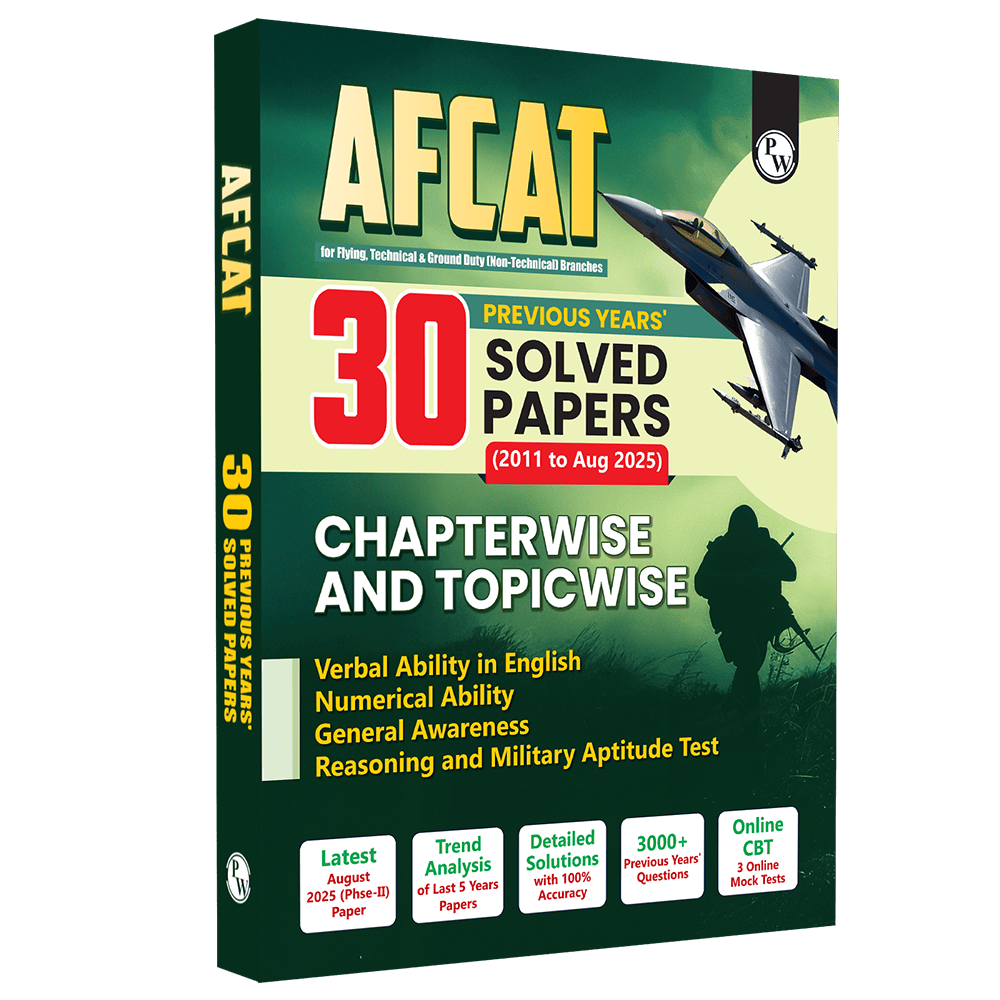
Check Out: 30 AFCAT Chapterwise & Topicwise Previous Years Solved Papers
Stage 2: Air Force Selection Board (AFSB) Interview
If you pass the written test, you will be invited to one of the AFSB locations in Dehradun, Varanasi, Gandhinagar, Mysuru, or Guwahati.
Phase 1: Screening Test (Day 1)
This is an elimination round. It includes:
-
OIR (Officer Intelligence Rating) Test: Verbal and non-verbal reasoning.
-
PPDT (Picture Perception and Discussion Test): Candidates view a hazy picture, write a story, and discuss it in a group.
-
Note: Those who fail Phase 1 are sent back on the same day.
Phase 2: Psychological & Group Testing (Day 2 to 5)
Remaining candidates stay for the full evaluation:
-
Psychological Tests: TAT (Thematic Apperception), WAT (Word Association), SRT (Situation Reaction), and SDT (Self Description).
-
Group Tasks (GTO): Includes Group Discussions, Planning Exercises, and Progressive Group Tasks.
-
Personal Interview: A one-on-one interaction with the Interviewing Officer.
-
CPSS (Computerized Pilot Selection System): Mandatory only for Flying Branch aspirants. This is a once-in-a-lifetime test.
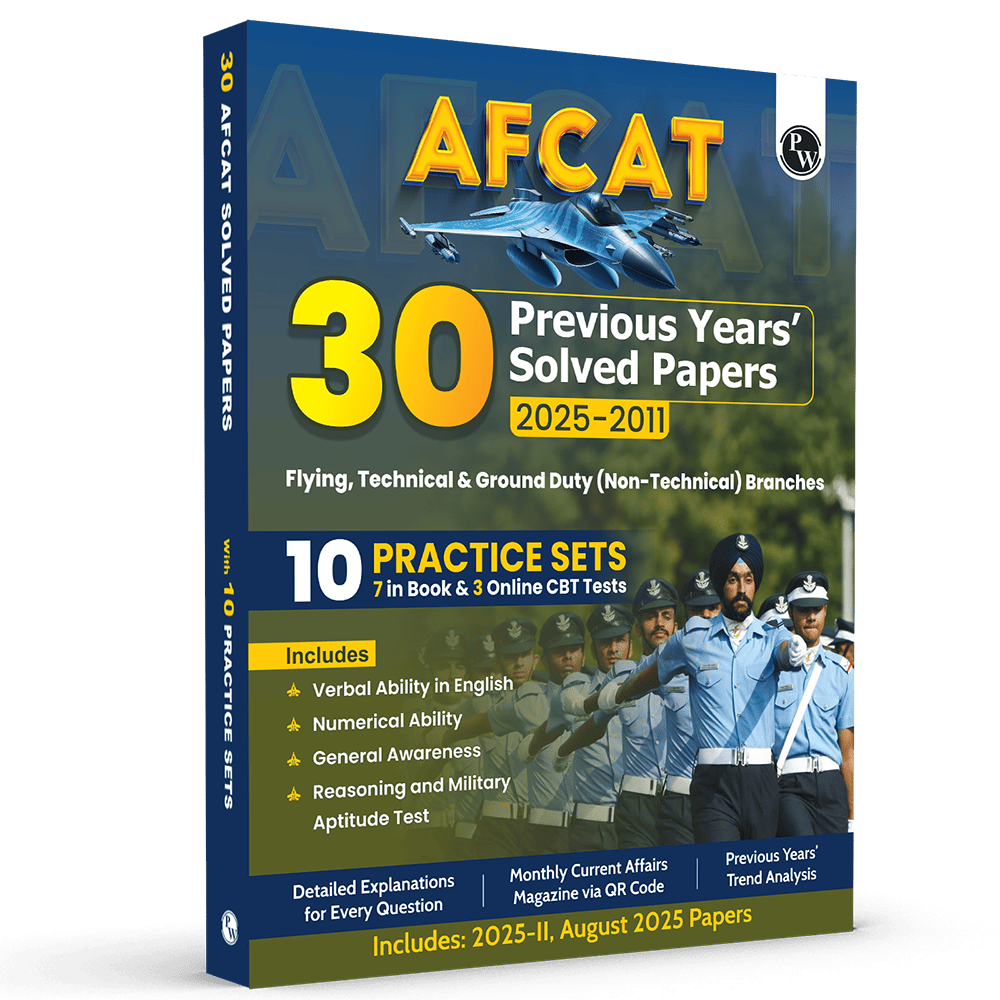
Check Out: 30 AFCAT Previous Years' Solved Papers (2025 - 2011)
Stage 3: Medical Examination
If you are recommended by the board at the end of the 5th day, you move to the medical stage. The afcat medical test requirements are strictly enforced by the IAF.
-
Centers: Air Force Central Medical Establishment (AFCME), New Delhi, or Institute of Aviation Medicine (IAM), Bengaluru.
-
Key Checks: Vision standards (especially strict for Flying Branch), height-to-weight ratio, spinal health, and overall organ function.
-
Flying Branch Height: Minimum 162.5 cm.
-
Ground Duty Height: Minimum 157.5 cm (Male) and 152 cm (Female).
Stage 4: Final Merit List
Getting through the medicals isn't the only thing that matters in the ultimate decision. The IAF makes a "Order of Merit" based on the following:
-
Written Exam Score (300 Marks)
-
AFSB Interview Score (300 Marks)
How to get selected in AFCAT: You need a high total score to fit into the few open positions, even if you pass all the tests. A score of 165 or above on the written test and a great performance in the interview (150 or higher) usually guarantees a spot on the merit list.
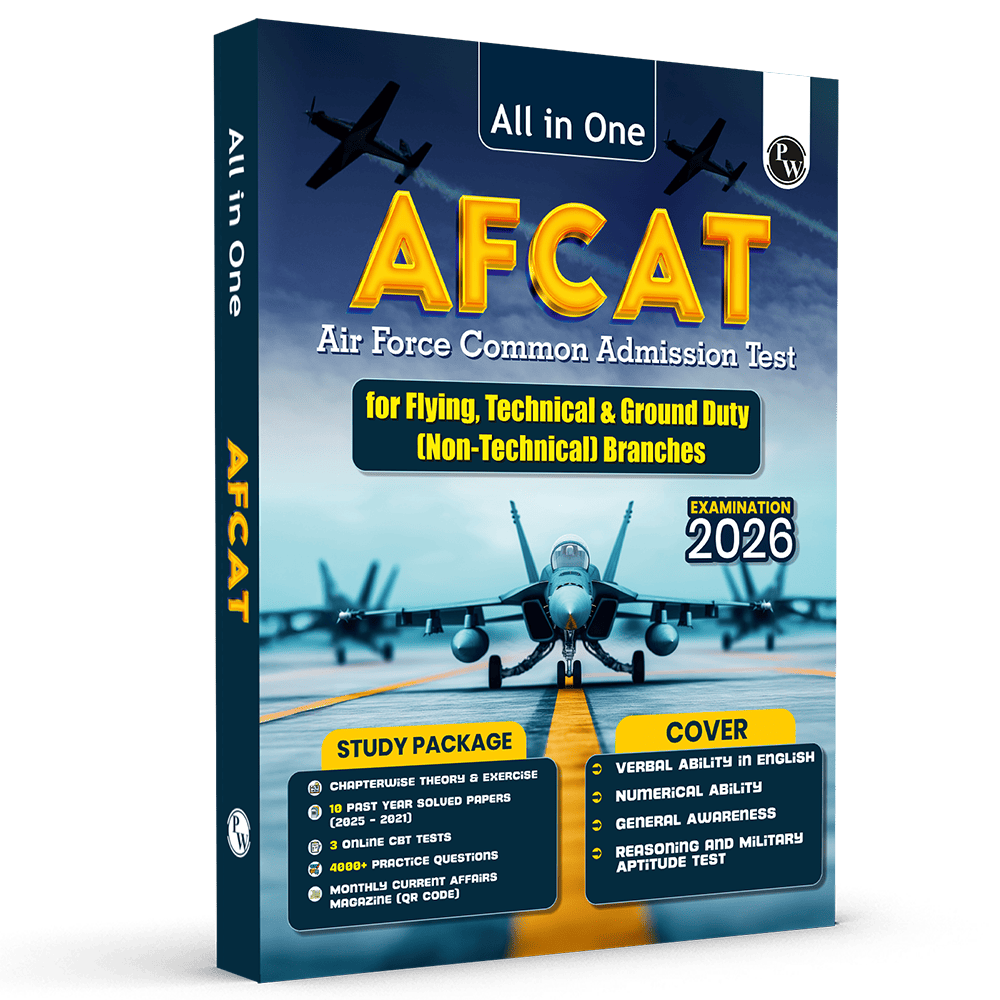
Check Out: All in One AFCAT (For Flying, Technical & Ground Duty Branches) Chapterwise Study Notes & Exercise
AFCAT 2026 Eligibility: Age, Education, and Branch-Wise Criteria
Before starting the AFCATselection process 2026, you must ensure you meet the strict eligibility standards set by the Indian Air Force. Eligibility varies significantly based on the branch you choose; Flying, Technical, or Non-Technical.
1. Nationality and Marital Status
-
Nationality: Candidates must be citizens of India.
-
Marital Status: Candidates below 25 years of age must be unmarried at the time of the course's commencement. Marriage is not permitted during the training period.
2. Age Limit (as of January 1, 2027)
Your eligibility depends on your date of birth as recorded in your Matriculation/10th certificate.
|
Branch |
Age Range |
Date of Birth Range (Inclusive) |
|
Flying Branch |
20 to 24 Years |
Jan 02, 2003, to Jan 01, 2007 |
|
Ground Duty (Tech/Non-Tech) |
20 to 26 Years |
Jan 02, 2001, to Jan 01, 2007 |
-
Commercial Pilot License (CPL) Holders: Candidates with a valid DGCA-issued CPL get an upper age relaxation up to 26 years for the Flying Branch.
3. Branch-Wise Educational Qualifications
All candidates must have scored a minimum of 60% marks in their degree examinations.
-
Flying Branch: * Mandatory 50% marks each in Physics and Mathematics at the 10+2 level.
-
A 3-year Graduation degree in any discipline OR a 4-year BE/B.Tech degree.
-
Ground Duty (Technical):
-
Aeronautical Engineer (Electronics/Mechanical): Minimum 50% marks each in Physics and Mathematics at the 10+2 level.
-
A 4-year degree in Engineering/Technology in relevant disciplines (like Mechanical, Industrial, Electronics, etc.).
-
Ground Duty (Non-Technical):
-
Administration & Logistics: Graduate degree in any discipline (minimum 3 years).
-
Accounts: B.Com degree (minimum 3 years) OR BBA/BMS/BBS with specialization in Finance.
-
Education: Post-graduation with 50% marks in any discipline + 60% marks in graduation OR 4-year integrated graduation with 60% marks.
-
Weapon Systems (WS): Mandatory 50% marks each in Physics and Mathematics at the 10+2 level + 60% in graduation.
Read More: AFCAT Preparation Tips 2026 - How to Score 200+ Marks
AFCAT Selection Process 2026 FAQs
1. Is there any negative marking in AFCAT 2026?
Yes, there is a penalty for wrong answers. For every incorrect response, 1 mark is deducted. No marks are deducted for unattempted questions.
2. Can I choose my own AFSB interview date and center?
Yes. Once the written results are released, qualifying applicants must check in to the official website and choose their chosen AFSB date and location on a first-come, first-served basis.
3. What happens if I fail the CPSS test?
You can never apply for the Flying Branch of the Indian Air Force again if you fail the CPSS (or the previous PABT). If you match their requirements, you can still be considered for Ground Duty branches.
4. Can women join all branches through AFCAT?
Yes, women can apply to be Short Service Commission (SSC) officers in the Flying, Technical, and Non-Technical (Administration, Accounts, Logistics, etc.) branches.
5. What are the AFCAT qualifying criteria for the final merit?
You need to pass the written test cut-off, get "Recommended" by the AFSB, and be deemed "Medical Fit." Your rank on the combined merit list compared to the number of open positions will determine the ultimate choice.