Biotechnology PYQs for NEET Preparation with PW Book

Many candidates learn molecular steps thoroughly, yet struggle to solve application-based problems under real examination pressure. Bridging this gap requires systematic practice using authentic biotechnology NEET PYQ sets.
Solving real NEET previous year paper items allows candidates to understand how exam setters transform theoretical pathways into competitive test questions. By analyzing past trends, evaluating incorrect options, and building problem-solving speed, students can transform challenging genetic concepts into reliable scoring opportunities on exam day.
Overview of Biotechnology NEET PYQ
Biotechnology forms a vital component of the entrance examination, testing candidates on molecular tools, genetic manipulation techniques, and practical applications in agriculture and healthcare. Solving biotechnology NEET PYQ provides immediate clarity on question structures, topic weightage, and difficulty levels established by test-conducting authorities.
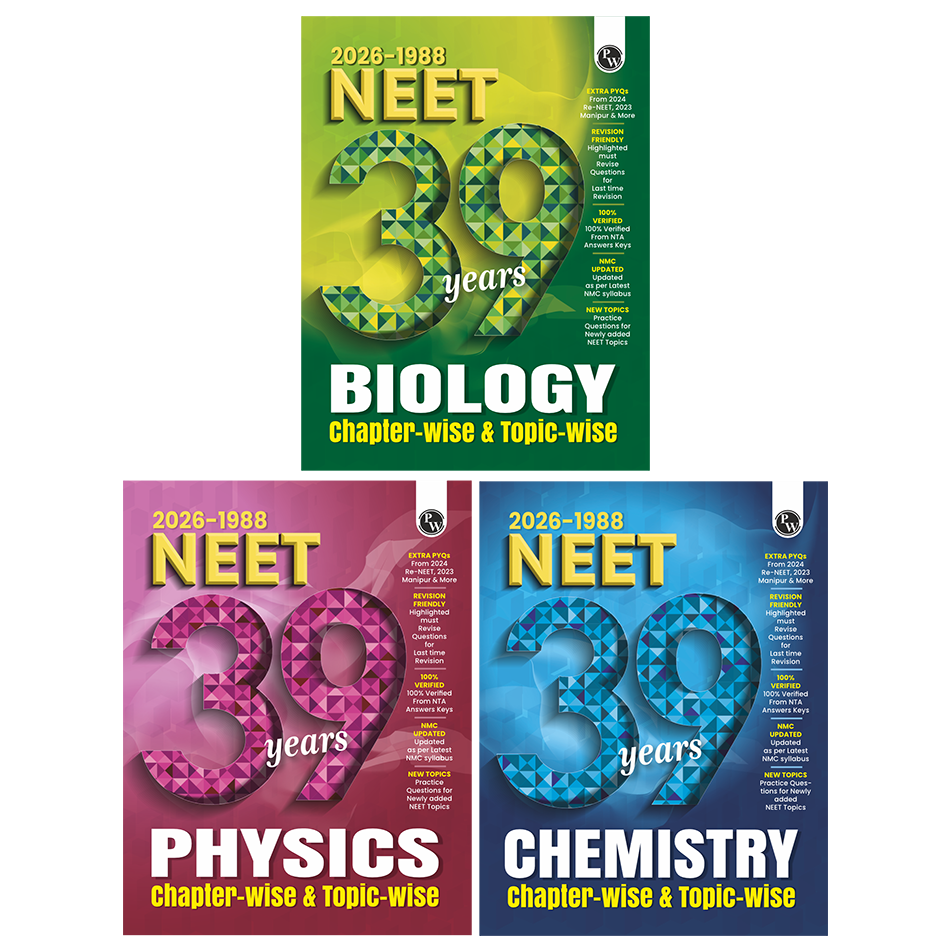
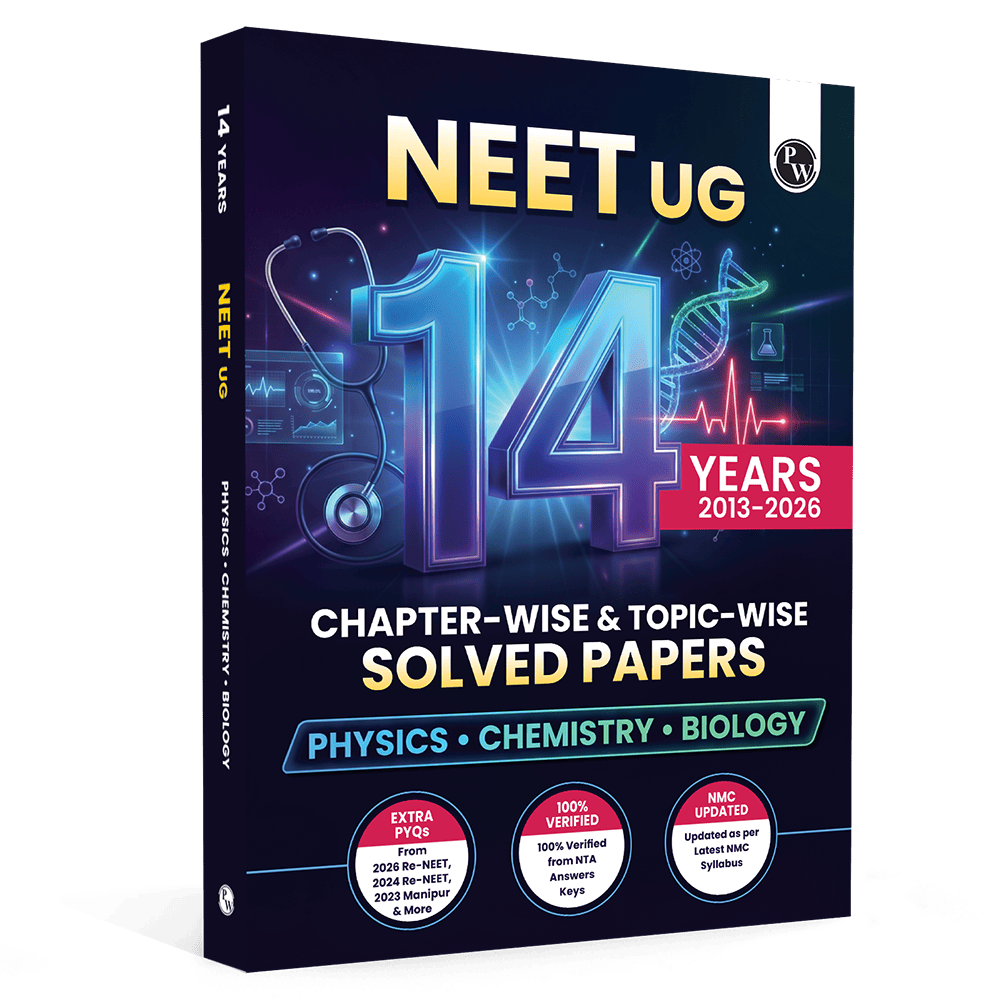
A comprehensive 39 Years Physics, Chemistry, and Biology compilation offers a robust practice base built on 38 years of historical test items. This collection strictly follows the latest NTA syllabus guidelines and incorporates questions from recent test cycles, including 2024 Re-NEET and 2023 Manipur papers.
|
Key Feature |
Specific Description |
Direct Student Benefit |
|
Chapterwise & Topicwise Sorting |
Questions organized by individual topics |
Enables targeted practice right after finishing a textbook section. |
|
PYQs Deja Vu |
Flags recurring question patterns |
Helps students spot repeating concepts across past papers. |
|
100% Verified Solutions |
Fully solved answers matched with NTA keys |
Ensures high accuracy and removes confusion. |
|
Must Revise Questions |
Pre-highlighted high-priority items |
Streamlines final revision sessions before the exam. |
|
Newly Added Syllabus Items |
Practice questions for updated topics |
Keeps preparation aligned with current exam requirements. |
Why Is Biotechnology NEET PYQ Important for the Exam?
Integrating biotechnology NEET PYQ books practice into daily study routines transforms theoretical knowledge into active exam skills. Reading textbook chapters provides foundational facts, but attempting past paper items trains the mind to process complex information rapidly.
-
Pattern Recognition: Analyzing past tests reveals standard question formats, including matching columns, assertion-reason items, and sequence identification.
-
Accuracy Improvement: Working with verified solutions helps correct common conceptual misunderstandings and reduces negative marking.
-
Time Management: Practising actual exam questions under timed conditions builds speed and confidence for test day.
-
Targeted Revision: Highlighting difficult items using structured resources like the PW NEET PYQ book collection saves valuable hours during final preparation.
Important Topics Covered in Biotechnology NEET PYQ
To achieve optimal results during NEET biology preparation, candidates should focus on high-yielding sub-topics that regularly appear in entrance papers. Reviewing biology previous year questions highlights key operational principles across two main chapters.
Principles and Processes of Biotechnology
-
Restriction Enzymes: Distinction between exonucleases and endonucleases, specific recognition sequences, palindromic sites, and production of sticky or blunt ends.
-
Cloning Vectors: Key features of plasmid pBR322, origin of replication (ori), selectable markers (ampicillin and tetracycline resistance genes), and insertional inactivation mechanisms.
-
Competent Hosts: Methods for introducing foreign DNA, including divalent cation (calcium ion) treatment, heat shock, microinjection, and biolistics (gene gun).
-
Process Steps: DNA isolation, agarose gel electrophoresis, gel elution, Polymerase Chain Reaction (PCR) steps (denaturation, annealing, extension), and bioreactor design (stirred-tank and sparged).
Applications of Biotechnology
-
Agricultural Applications: Bacillus thuringiensis (Bt) toxin mechanism, cry gene specificity (cryIAc, cryIIAb, cryIAb), and RNA interference (RNAi) in pest prevention.
-
Medical Applications: Genetically engineered human insulin synthesis, gene therapy for Adenosine Deaminase (ADA) deficiency, and early diagnostic tools like ELISA and PCR.
-
Transgenic Animals and Ethics: Models for human disease studies, production of biological products (such as alpha-1-antitrypsin and Rosie's milk), biopiracy, and regulatory roles of the GEAC.
How to use Biotechnology NEET PYQ?
Using biotechnology NEET PYQ sets effectively requires a systematic method rather than random problem solving.
-
Review Theory First: Thoroughly read NCERT textbook chapters to understand fundamental terms before opening question banks.
-
Solve Topicwise: Work through questions organized by individual topics immediately after completing a study session.
-
Analyze Every Solution: Check explanations for incorrect answers to identify why specific options fail, ensuring complete conceptual clarity.
-
Tag Difficult Questions: Mark challenging items using "Must Revise Questions" flags so you can revisit them in final revision weeks.
-
Simulate Timed Practice: Set a clock to solve 45 questions within 40 minutes to build real test endurance.
Practice Sheet with Biotechnology NEET PYQ
Evaluating sample conceptual problems from biotechnology PYQs helps gauge your understanding of key mechanisms. Alongside PYQ practice, NEET Books can help strengthen core concepts, revise important topics, and provide additional practice to improve accuracy and confidence in the Biology section.
-
Sample 1: Which sequence correctly describes the three consecutive steps of Polymerase Chain Reaction (PCR)?
-
Answer: Denaturation at high temperature, Annealing of primers, and Extension using Taq DNA polymerase.
-
Sample 2: What is the primary function of selectable markers in cloning vectors like pBR322?
-
Answer: They help select transformants while eliminating non-transformant host cells.
-
Sample 3: How does the protoxin of Bacillus thuringiensis convert into an active toxin inside target insects?
-
Answer: The inactive protoxin dissolves and becomes active due to the alkaline pH in the insect's midgut.
-
Sample 4: Which technique uses complementary double-stranded RNA to block mRNA translation?
-
Answer: RNA interference (RNAi).
-
Sample 5: Which early diagnostic technique relies on antigen-antibody binding principles?
-
Answer: Enzyme-Linked Immunosorbent Assay (ELISA).
Working through various biology PYQs NEET practice sets ensures complete familiarity with these recurring exam themes.
Study Strategy Plan for Biotechnology NEET PYQ
A structured study plan breaks preparation into manageable phases, ensuring complete coverage without last-minute stress.
-
Phase 1 (Days 1–3): Focus on Principles and Tools. Read textbook sections on restriction enzymes, vectors, and host transformation. Solve corresponding topicwise questions and review detailed solutions.
-
Phase 2 (Days 4–6): Cover Recombinant DNA Processes. Study gel electrophoresis, PCR cycles, and bioreactors. Attempt chapterwise practice sets and tag difficult questions.
-
Phase 3 (Days 7–9): Master Applications in Agriculture and Medicine. Read about Bt crops, RNAi, recombinant insulin, and gene therapy. Solve application-focused questions.
-
Phase 4 (Days 10–12): Perform Mixed Revisions. Re-solve tagged revision items, review error logs, and attempt timed mock papers to test speed and accuracy.
Tips for Using Biotechnology NEET PYQ
Implementing smart study strategies improves performance and maximizes retention during test preparation.
-
Focus on NCERT Alignment: Most examination items connect directly to textbook lines and diagrams. Ensure solutions explicitly link back to standard text references.
-
Maintain an Error Log: Record recurring mistakes, forgotten enzyme names, or misread question stems in a dedicated notebook for quick weekly reviews.
-
Pay Attention to Diagrams: Study vector structures like pBR322, bioreactor components, and electrophoresis gel results carefully.
-
Prioritize High-Yield Topics: Utilize features like "PYQs Deja Vu" to identify concepts that appear frequently across successive examination cycles.
-
Cross-Check Official Answer Keys: Always verify answers against NTA-aligned answer keys to avoid practicing incorrect information.
Also Check - PW NEET Objective NCERT Punch Books
Common Mistakes to Avoid While Solving Biotechnology NEET PYQ
Recognizing frequent student errors helps prevent costly mark deductions during competitive exams.
-
Confusing Specific Terminology: Mixing up restriction endonucleases with exonucleases or confusing gene names (such as cryIAc) with target pests.
-
Overlooking Multistep Sequences: Skipping exact process orders in techniques like downstream processing or PCR thermal cycling.
-
Misreading Negative Question Stems: Failing to notice terms like "NOT", "INCORRECT", or "EXCEPT" in complex statements.
-
Ignoring Updated Syllabus Guidelines: Practising out-of-date question sets that miss recent NTA updates or newly added curriculum topics.
Read More: NEET Toughest Chapters in Physics, Biology and Chemistry
NEET PYQ FAQs
How many questions appear from biotechnology in NEET?
Biotechnology typically accounts for 4 to 6 questions in the exam, making it a high-weightage unit relative to its concise syllabus length.
Are previous year questions enough for biotechnology preparation?
Solving past questions alongside thorough NCERT textbook reading provides an effective preparation base for achieving top marks.
Do questions repeat in biotechnology entrance exams?
While exact wording rarely repeats, core concepts and question types recur frequently under recognized examination trends.
How do verified solutions help in self-evaluation?
Fully solved answers aligned with official NTA answer keys eliminate confusion and help candidates correct conceptual errors accurately.
Which topics carry the highest weightage in biotechnology?
Restriction enzymes, plasmid pBR322 vector features, PCR steps, Bt cotton mechanisms, and recombinant insulin production carry consistently high weightage.