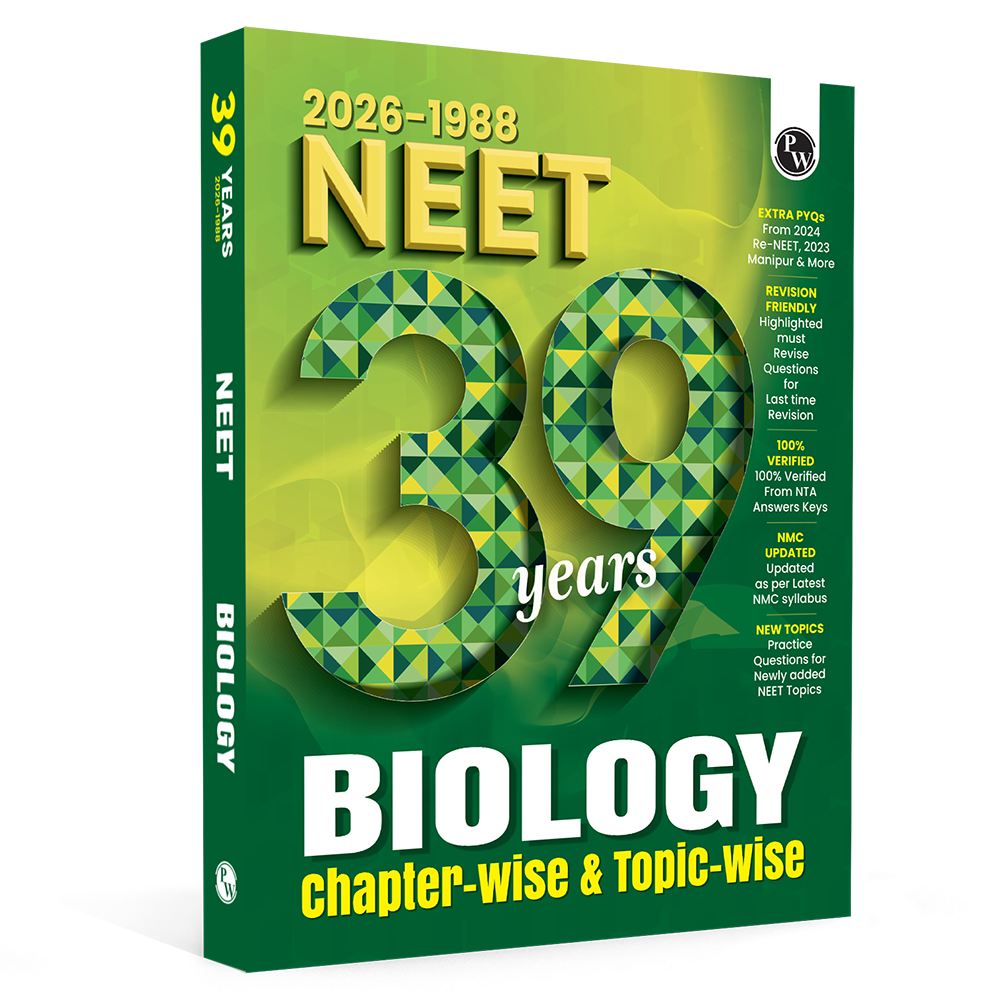
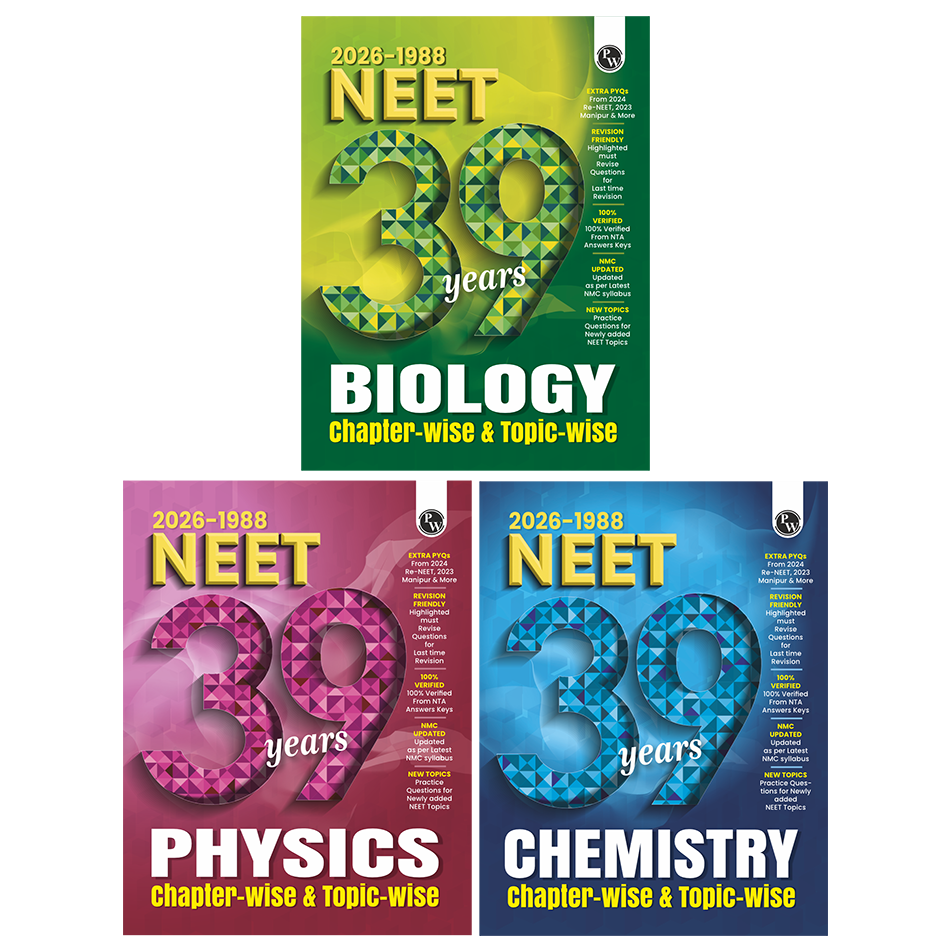
How the 39 Years NEET PYQ Biology Organises Re-NEET and State-Level Papers

Aspiring medical students often find it difficult to manage multiple question sources during their medical entrance preparation.
Using a structured resource like the NEET PYQ Biology compilation solves this problem by bringing separate papers together into one organized guide. This structured approach helps students track changing exam patterns, practice frequently repeated topics, and align their preparation with actual NEET requirements. Along with PYQ practice, using NEET Books further strengthens conceptual understanding, supports systematic revision, and provides targeted preparation across Physics, Chemistry, and Biology for better exam performance.
Importance of NEET PYQ Biology
Predicting the exact distribution of questions becomes simpler when all historical papers are grouped in a single place. The medical entrance landscape often undergoes unexpected changes, leading to re-examinations in specific regions or across the country. Practising from isolated question sheets makes it hard to notice how these separate papers share the same structural core.
A comprehensive NEET biology PYQ book solves this fragmentation by placing every variation side by side. This lets you analyze questions from standard sessions alongside replacement papers, ensuring that unexpected changes in difficulty or phrasing do not surprise you on test day.
-
Pattern Recognition: It helps you spot how an alternate test paper frames a core concept compared to the mainstream national paper.
-
Syllabus Coverage: It ensures that newly modified or subdivided topics are fully covered through genuine, tested variations.
-
Time Management: It allows you to practice under exact testing conditions using diverse paper structures from different test sessions.
Why do Re-NEET and State Papers Matter in NEET PYQ Biology?
Many students assume that unexpected alternate tests or unique state-level medical entrance question sets follow entirely different guidelines. However, an analysis of historical papers shows that these variations still rely on the foundational core text. When a test is re-conducted, the sub-topic focus often shifts slightly to maintain a high level of competition.
Using a dedicated biology NEET PYQ book helps you see exactly how these shifts happen across chapters. For instance, if a main exam focuses on a simple direct mechanism, the alternate paper might use a matching list or an assertion-reason format for the exact same biological process.
|
Exam Type |
Structural Focus |
Primary Benefit for Aspirants |
|
Main National Session |
Standard distribution across all chapters |
Establishes the baseline weightage for every unit. |
|
Regional / Re-NEET Papers |
Higher density of multi-statement questions |
Tests deeper concept application under pressure. |
|
Historical State-Level Papers |
Fact-heavy questions and unique definitions |
Explores diverse corners of the prescribed syllabus. |
Benefits of Solving NEET PYQ Biology
Sorting multiple papers chronologically can make your revision messy, as you have to flip back and forth between different years to find questions from the same chapter. Organizing these papers by chapter and sub-topic is a much more effective way to study. It collects questions from past regular tests, special state tests, and re-examinations, and places them under their specific chapter headers.
This uniform structure is the core feature of the PW Biology PYQ book. When you finish studying a specific topic, such as genetics or plant physiology, you can immediately solve every single question asked on that topic over the NEET 39 previous years papers.
-
Botany Division: It places complex cycle questions from alternate sessions directly into chapters like Plant Growth and Photosynthesis.
-
Zoology Integration: It ensures that tricky structural diagrams from different state papers are sorted logically under Human Physiology units.
-
High-Weightage Focus: It highlights units like Genetics and Molecular Basis of Inheritance, so you can see how different test panels have framed questions over decades.
-
Overlapping Concepts: It groups identical questions together to show you which definitions are repeated most often.
-
Syllabus Alignment: It filters out questions that do not match the current medical entrance framework, keeping your practice relevant.
-
Trend Identification: It highlights the transition from simple memory-based questions in older papers to analytical questions in recent tests.
How NEET PYQ Biology Helps with Tough Topics?
One of the biggest advantages of studying historical papers is recognizing the hidden repetition in question patterns. Even when the wording changes, the core scientific concept remains the same. Identifying these recurring patterns is essential for building real exam confidence.
A well-structured NEET PYQ book on biology highlights these repeated questions using smart trend indicators. This framework alerts you when a concept from a re-examination or an old state test reappears in a modern national paper.
-
Concept Variation: It demonstrates how a single process can be asked as a diagram, a true-or-false statement, or a direct definition.
-
Distractor Identification: It teaches you to spot tricky wrong options that test panels frequently use to confuse students.
-
Priority Marking: It helps you easily identify a pool of essential questions that you must revise during the final weeks before the test.
How to Improve Your Speed and Accuracy with NEET PYQ Biology?
Succeeding in medical entrance exams requires a balance of speed and precision. Since you have around one minute per question, practicing with mixed test papers teaches you to read, analyze, and mark your answers quickly without making careless mistakes.
Integrating varied papers into your routine using a verified bio NEET PYQ resource ensures that your preparation stays highly accurate. Working with verified solutions helps you understand the exact logic used by official evaluation panels.
Read More: Why Choose PW NEET Rankers Test Series
NEET PYQ Biology FAQs
How do Re-NEET questions help me prepare for the main exam?
Re-NEET questions are highly valuable because they are created by the same official testing panel. They show you alternative ways to test the same syllabus, often using unique statement combinations or matching lists that help deepen your conceptual understanding.
Are older state-level papers still relevant for current preparation?
Yes, older state-level papers are helpful because they cover a wide variety of factual questions. When sorted by chapter to fit the current syllabus, they provide excellent practice for memory-based topics and minor terms that might otherwise be overlooked.
Why is a sub-topic classification better than a yearly paper layout?
A sub-topic classification groups all related questions together, allowing you to practice them immediately after reading a specific part of a chapter. This helps you master one concept at a time, whereas a yearly layout forces you to jump between unrelated topics constantly.
How should I use the verified solutions during my revision?
You should use verified solutions not just to check the correct option, but to understand the underlying explanation. This helps you correct your conceptual mistakes and teaches you how to eliminate incorrect options systematically in future tests.
How many times should I practice the primary question pool before the exam?
It is ideal to go through the complete question pool at least twice. During your first pass, focus on understanding the concepts and pattern styles, and use your second pass to build speed and review the specific questions you found difficult.