How the 80-20 Rule Works in NEET Crash Course Preparation

Cracking the National Eligibility cum Entrance Test (NEET) is a massive challenge for medical aspirants due to the vast syllabus across Physics, Chemistry, and Biology. This is where a strategic NEET crash course approach saves your preparation. By understanding how the 80-20 rule works in competitive exams, you can shift your focus from studying everything to studying the right things.
Check Out: NEET Books
What is the 80-20 Rule in a NEET Preparation
The 80-20 rule, also known as the Pareto Principle, states that 80% of outcomes come from 20% of causes. When applied to your medical entrance preparation, it means that approximately 80% of the exam questions are derived from a vital 20% of the total syllabus.
Instead of treating every page of your textbook with equal importance, a smart student uses a crash course to pinpoint these high-weightage chapters. This method does not mean you skip the rest of the syllabus completely, but it ensures that your core energy is spent on areas that guarantee the highest returns in marks.
Importance of 80-20 Rule in a NEET Crash Course
Attempting to read all chapters with the same depth during the final months creates confusion and panic. Focusing on high-yield sections keeps your revision structured and realistic.
-
Saves Critical Time: You do not waste weeks on low-weightage chapters that yield only one question.
-
Reduces Cognitive Fatigue: Mastering fewer topics completely is better than having a superficial understanding of everything.
-
Improves Accuracy: Dedicating more hours to core chapters like Genetics, Mechanics, or Organic Chemistry enhances your problem-solving speed.
-
Boosts Confidence: Knowing you have learnt the areas where the bulk of the questions come from lowers exam anxiety.
Important Topics to Focus on in a NEET Crash Course
To apply the principle effectively, you must categorise the syllabus based on historical question trends. A premium crash course for NEET 2026 structure is built around these high-return units.
Biology
Biology forms 50% of the total marks in the exam, making it the most critical subject for securing a top rank.
-
Human and Plant Physiology: These units form the foundation of medical science and carry a heavy weightage every year.
-
Genetics and Evolution: Highly analytical chapters where questions require clear conceptual clarity.
-
Ecology and Environment: Straightforward, memory-based questions that can be solved quickly to save time.
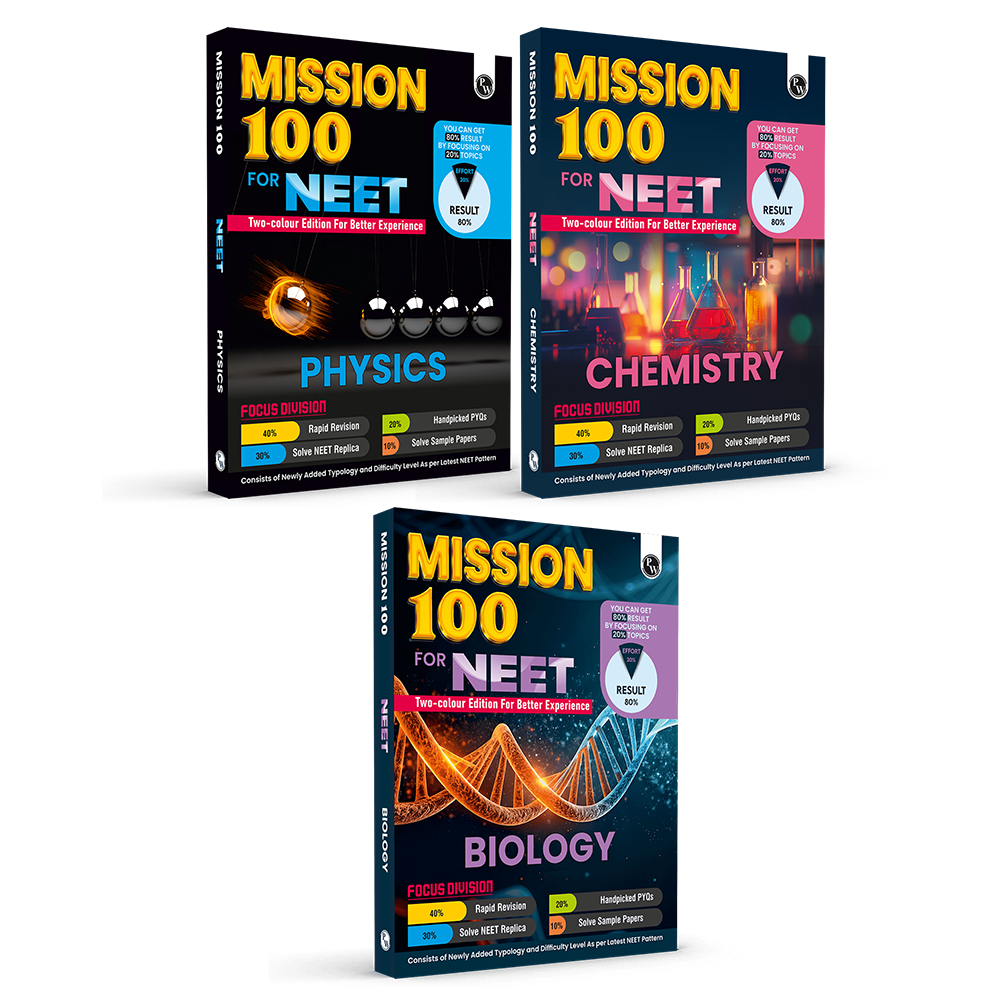
To strengthen Biology preparation further, students can also refer to the Mission 100 Biology For NEET UG 2026, which supports focused revision, important topic coverage, and exam-oriented practice.
Chemistry
Chemistry requires a balanced mix of structural understanding, numerical practice, and memory.
-
Organic Chemistry: Name reactions, mechanisms, and identification tests form a major chunk of the paper.
-
Coordination Compounds and Chemical Bonding: Fixed conceptual questions that appear consistently every year.
-
Equilibrium and Electrochemistry: High-yield physical chemistry chapters that require rigorous formula application.
To strengthen Chemistry preparation and focus on important exam-oriented topics, students can also use Mission 100 Chemistry For NEET UG 2026 for targeted revision and structured practice.
Physics
Physics is often the deciding factor for a merit seat, and focusing on high-return topics reduces the fear of numerical problems.
-
Modern Physics: Highly scoring chapters with direct formula-based application questions.
-
Mechanics: The foundation of physics; though vast, specific sub-topics like Kinematics and Laws of Motion are vital.
-
Current Electricity and Magnetism: These chapters frequently contribute questions in previous NEET papers.
To strengthen preparation and focus on important NEET-oriented topics, students can also use Mission 100 Physics For NEET UG 2026 for targeted revision, concept reinforcement, and effective practice.
NEET Crash Course Books to Use
A standard textbook contains extensive background data that you do not need during a rapid review phase. Relying on a specialized crash course book ensures that the content is already filtered using the 80-20 rule.
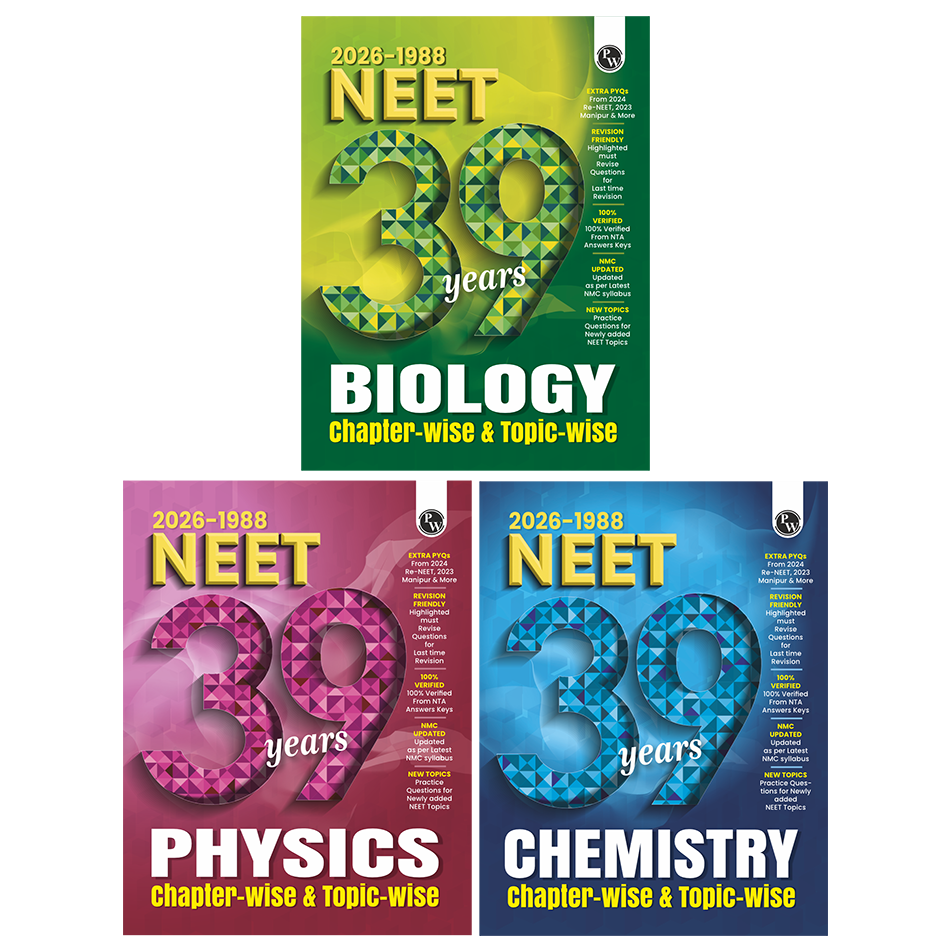
Using a dedicated PW crash course NEET provides chapter-wise revision notes that align directly with this rule. These books combine brief summaries with handpicked NEET Previous Year Questions (PYQs), so you spend your hours reading what actually matters.
60 Day NEET Study Plan
To turn the 80-20 theory into actual marks, you need a disciplined, daily plan that prioritises high-yield topics over a two-month period.
First 30 Days Focus on Core Concepts
Spend the first month focusing entirely on the 20% high-weightage chapters across all three subjects. Ensure your concepts are clear and you can solve basic application problems without assistance.
Next 15 Days Focus on Practice
Shift your strategy toward intensive problem-solving. Work through matching-type questions, statement-based problems, and assertion-reason formats from your revision materials.
Last 15 Days Focus on Mock Tests
Take full-length mock tests to build your exam endurance. Use the last fortnight to analyse your errors and revise formulas rather than picking up entirely new chapters.
Right Revision Techniques for a NEET Crash Course
Passive reading is the enemy of rapid preparation. When time is limited, your study methods must force your brain to recall information actively.
-
Active Recall: Close your book after reading a section and list the main formulas or pathways on a blank sheet of paper from memory.
-
Flashcards for Mnemonics: Create quick cards for complex biological classifications, chemical structures, and physical constants.
-
The Feynman Technique: Explain a difficult concept like Optical Isomerism or Semiconductor logic to an imaginary student in simple terms to find your own knowledge gaps.
-
Timed Sectional Tests: Set a timer for 45 minutes when solving a 50-question block to simulate real exam pressure.
How to Choose the Right NEET Crash Course Study Material
The market is filled with dense reference material, which makes picking an optimized resource essential. High-quality materials offer tailored features for quick study.
-
Two-Level Practice Questions: Questions are split into foundational and advanced levels, including matching and True/False options to match current exam patterns.
-
Last 5 Years PYQs: Access to recent past papers with detailed step-by-step explanations helps you see the 80-20 rule in action.
-
3000 Plus Questions Per Subject: A massive question bank ensures you get enough practice without needing to buy multiple extra books.
-
Visual Mind Maps: Short diagrams and structural flowcharts help you remember connections between topics right before entering the exam hall.
Common Mistakes to Avoid During a NEET Crash Course
Time management is unforgiving during a compressed study timeline, meaning small errors can derail your entire plan.
-
Ignoring NCERT Foundations: Even inside a crash course, your primary reference must remain the core NCERT concepts.
-
Collecting Too Many Books: Owning five different revision guides leads to analysis paralysis. Stick to one trusted source.
-
Skipping Mock Test Analysis: Spending three hours taking a test without spending an hour analyzing your mistakes renders the exercise pointless.
-
Neglecting Physics Numericals: Skipping Physics entirely because it takes time will hurt your overall score. Focus on the high-yield, formula-based chapters instead.
To support focused revision and strengthen NCERT-based preparation, students can also use the NEET NCERT Objective Punch Combo 2027 for structured practice and better concept reinforcement.
How to Stay Consistent During a NEET Crash Course
A compressed schedule can cause mental fatigue if you do not manage your routine properly. Staying consistent is just as important as choosing the right topics.
-
Take Scheduled Breaks: Use a method like the Pomodoro technique (50 minutes of study followed by a 10-minute break) to maintain sharp focus.
-
Track Your Progress Daily: Maintain a visible checklist of high-yield chapters so you can see your daily achievements.
-
Prioritise Quality Sleep: Your brain processes and stores what you learned during deep sleep; cutting your rest to less than 6 hours hurts long-term memory retention.
Read More: How to Master Mechanics with the PW Physics Module
NEET Crash Course FAQs
Can I clear the exam by only using a crash course?
Yes, you can score well if you already have basic conceptual familiarity and use the course to streamline your revision around high-yield topics, past papers, and structured mock exams.
How does the 80-20 rule apply to a crash course for NEET?
It works by filtering out low-yield descriptive text and directing your active study time toward the 20% of core topics that historically make up 80% of the marks on the test paper.
Should I buy a specific crash course book for my revision?
Yes, using a targeted book helps because it provides condensed theory, formula lists, and selected practice questions, saving you the time of filtering standard, heavy textbooks.
What makes the PW crash course NEET books effective for the 2026 exam?
The books are updated to match the latest syllabus patterns and contain structured levels of questions alongside historical question breakdowns.
Is 60 days enough time to prepare with these materials?
Sixty days is highly efficient if you study for 8 to 10 hours daily, focus on high-weightage sections, solve regular practice papers, and avoid learning completely new complex topics from scratch.