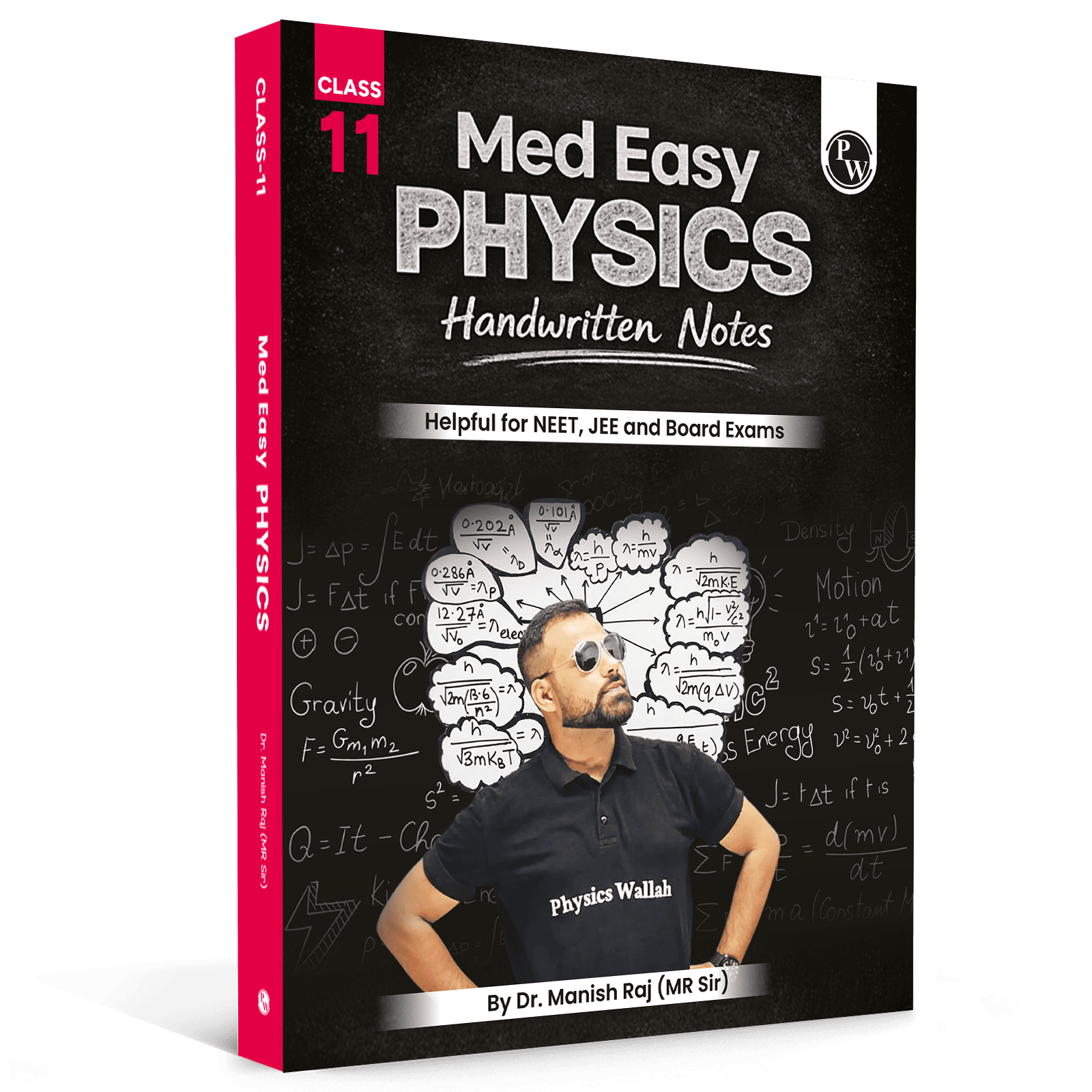
NEET Notes: How to Make Physics Notes for Formula Revision?
Conquering NEET requires not only a strong foundation but also effective revision strategies. While practice problems and mock tests play a vital role, revision books can be your secret weapon for solidifying your understanding and boosting your confidence.
Out of the 200 total questions, half are derived from NCERT, emphasising the need for effective NEET Revision Books for the 2026 Exam to assist candidates in the remaining 50%.
Juggling extensive textbooks while racing against the clock leaves countless medical aspirants overwhelmed by complex numerical problems. Constructing dedicated NEET physics notes transforms chaotic study sessions into structured learning.
Importance of NEET Physics Notes
Physics requires balancing conceptual clarity with high calculation speed under strict time limits. Crafting customized summaries ensures you never waste time hunting for standard derivations during mock test reviews. Organizing equations systematically helps your brain build strong memory pathways for difficult numerical problems.
This material serves as your primary survival guide during the final months leading to the entrance exam. Filtering complex derivations into direct statements keeps your focus locked on scoring trends. Regular interaction with self-made notes reinforces your confidence for upcoming tests.
Why Make NEET Physics Notes?
Reviewing structured materials is essential for medical aspirants looking to consolidate vast amounts of technical information quickly. Below are key reasons why keeping organized study aids changes your preparation:
-
Revision books condense vast amounts of information into structured formats for fast review.
-
Mind maps help candidates solve multiple-choice questions while shaping an effective study strategy.
-
Supplementary materials offer fresh perspectives that clarify complex topics differently than standard textbooks.
-
Flowcharts visually represent complex relationships between concepts to facilitate efficient memorization.
Explore PW NEET Books for effective preparation with NCERT-based content, PYQs, question banks, practice questions, and detailed solutions for focused NEET revision.
What to Include in NEET Physics Notes for Formula Revision?
Building an effective formula ledger requires careful selection of content. The following elements must find a place in your notebook:
-
Write primary equations clearly at the top of your page for instant recall during test simulations.
-
Define symbols like acceleration, mass, or Planck constant explicitly to prevent calculation errors.
-
Include dimensional equations for fundamental and derived quantities to solve matching questions quickly.
-
Document specific boundary conditions or symmetry rules where physical laws apply or simplify.
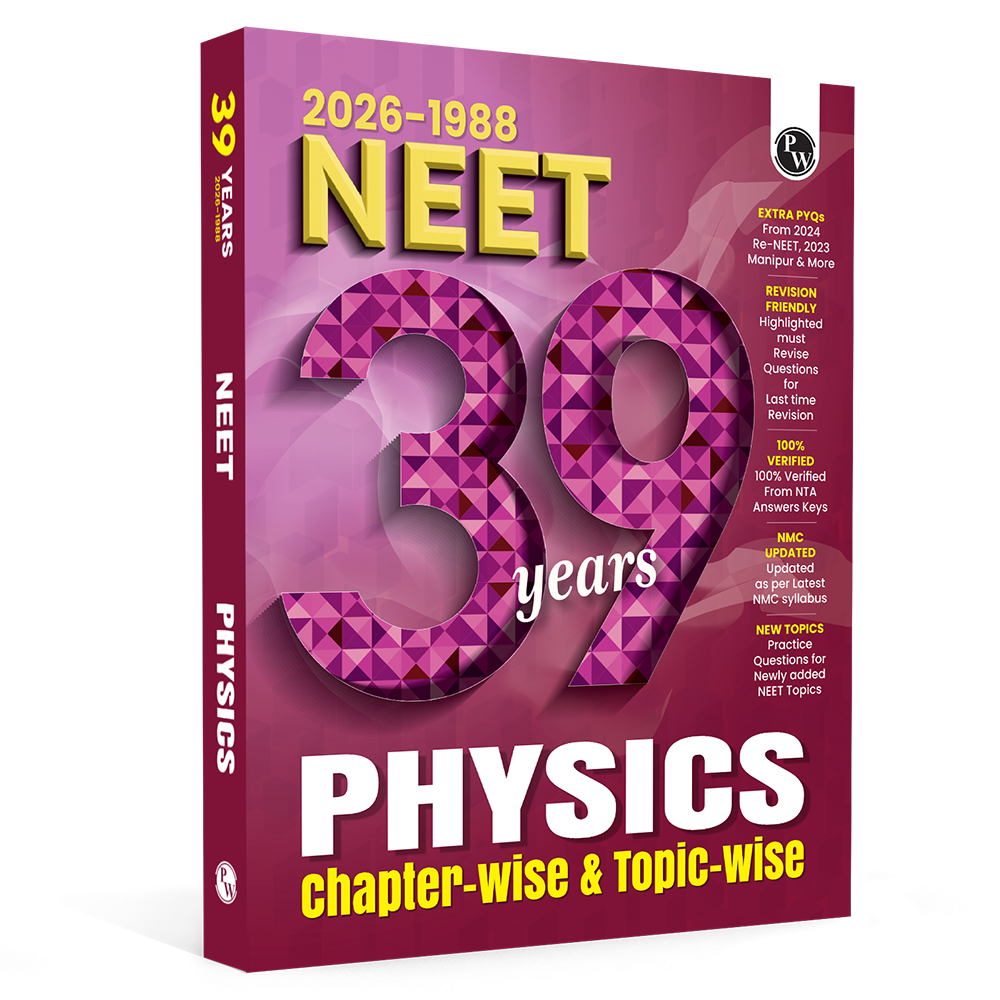
PW NEET Physics PYQ book for NEET 2027 covers 39 years of chapterwise and topicwise PYQs (1988–2026), including Re-NEET and state questions, detailed solutions, and must-revise questions.
How to Make NEET Physics Notes Chapter by Chapter?
Transforming an entire chapter into compact revision sheets requires a systematic, step-by-step approach. Implement these methods to process chapters efficiently:
-
Read standard textbooks thoroughly first, underlining key derivations before writing anything down.
-
Convert lengthy paragraph explanations into short conceptual statements or structured mind maps.
-
Use colour coding or flow charts to map relationships between interconnected topics like electric fields.
-
Leave blank margins on every page to add new shortcuts discovered during mock test analyses.
Which Formulas Should You Add to NEET Physics Notes?
Selecting the right mathematical expressions ensures your revision ledger covers all high-yield exam areas. Focus on these major physics domains:
-
Include equations covering kinematics, rotational dynamics, gravitation, and fluid mechanics.
-
List expressions for Coulomb law, magnetic force, electromagnetic induction, and alternating currents.
-
Document standard lens maker formulas, photoelectric effect relations, and radioactive decay laws.
-
Capture heat transfer equations, laws of thermodynamics, and kinetic theory constants.
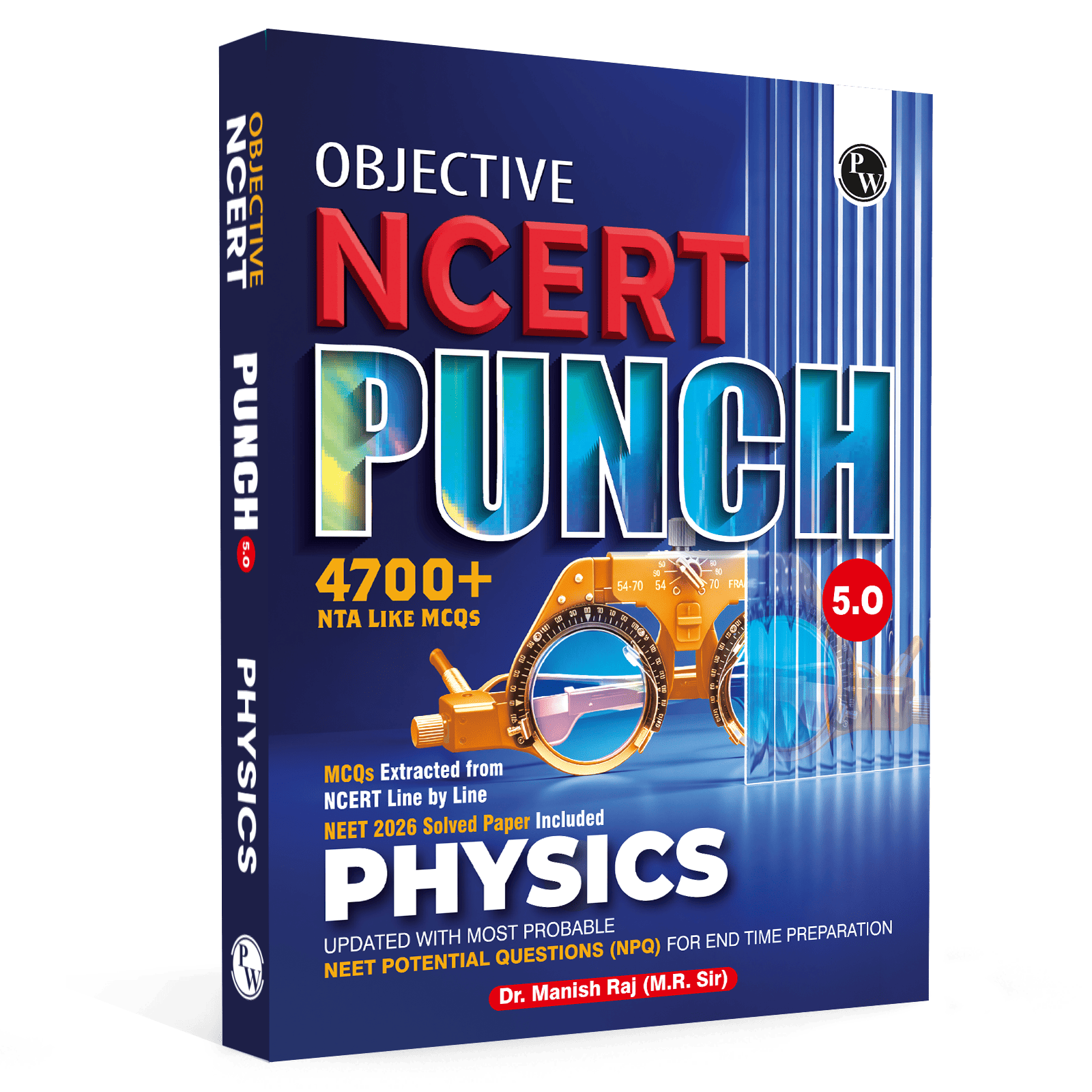
PW Objective NCERT Punch 5.0 Physics for NEET 2027 by MR Sir includes NCERT-based questions and most probable NEET Potential Questions (NPQs), designed for focused practice, revision, and end-time preparation.
How to Use NEET Physics Notes with PYQs and Practice Questions?
Your summary sheets must interact dynamically with past papers and test practice. Follow these guidelines to integrate your notes with problem-solving:
-
Cross-reference your notes with past papers to spot frequently tested concepts and question styles.
-
Log correct approaches directly into your NEET formula revision ledger whenever you miss a practice problem.
-
Test your ability to apply recorded shortcuts under strict time constraints to build exam temperament.
-
Use mock test feedback to locate weak zones, then revisit specific sections in your notes.
Tips to Keep NEET Physics Notes Short and Easy to Revise
Keeping your revision materials concise prevents cognitive overload during the final preparation phase. Apply these formatting techniques:
-
Write keywords, short phrases, and numerical shortcuts instead of full sentences.
-
Keep your layout compact so you can carry your compilation anywhere for quick daily reviews.
-
Use bold markers or underlines exclusively for critical shortcuts and exception cases.
-
Categorize concepts systematically so related ideas sit next to each other for fast browsing.
Common Mistakes to Avoid While Making NEET Physics Notes
Avoiding procedural errors during documentation ensures your study aids remain functional and reliable. Watch out for these pitfalls:
-
Avoid transcribing full chapters word-for-word, which defeats the purpose of making concise summaries.
-
Skipping crucial graphical representations makes it harder to understand wave or motion questions.
-
Do not wait until the final month to compile your revision material; build it progressively.
-
Ensure your written points align strictly with standard syllabus guidelines and exam patterns.
Read More - NEET Physics Formulas With Explanation
Practice Plan to Revise Formulas Using NEET Physics Notes
A structured schedule guarantees that your formula compilation gets regular attention. Execute this routine to solidify memory retention:
-
Dedicate the first fifteen minutes of your daily study schedule to going through yesterday's formulas.
-
Spend Sunday afternoons attempting numerical problems using only your NEET short notes.
-
Cover the right side of your page and try writing equations from memory to test retention.
-
Flip through your compiled sheets an hour before taking any full-length mock exam.
NEET Physics Notes FAQs
What are the best ways to structure NEET physics notes?
Structure your pages with main headings at the top, followed by boxed equations, short bullet points for conditions, and blank margins for later additions.
How often should I open my NEET physics formulas notebook?
Review your compiled equations daily for fifteen minutes and conduct a broader weekly sweep to maintain high retention levels.
Can short summaries replace standard textbooks during NEET preparation?
No, summaries complement standard textbooks by condensing information, but initial conceptual clarity must come from foundational reading.
When should I start compiling my NEET physics revision material?
Begin creating your summary pages right after finishing your initial reading of any given chapter to capture insights immediately.
How do NEET preparation reference materials help with problem-solving?
They provide structured overviews, shortcuts, and analytical frameworks that speed up calculation times during high-pressure exams.