How to Revise Entire NEET Physics Syllabus Using Handbook
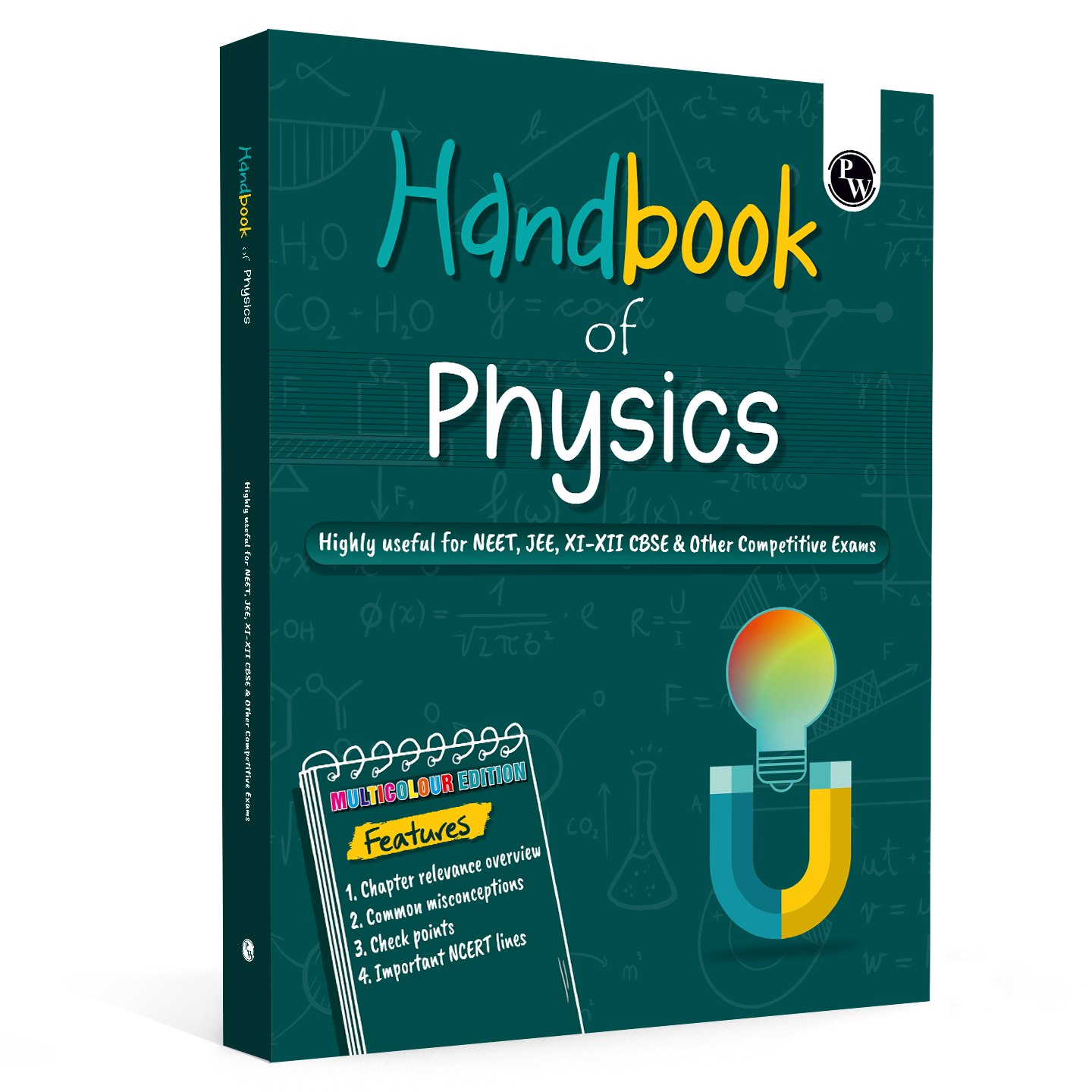
Cracking the medical entrance exam requires mastering a massive amount of information under intense time pressure. Many students struggle to retain extensive theoretical notes as the exam date approaches. Learning how to efficiently utilise a NEET physics handbook can transform your study routine and compress months of extensive material into highly manageable daily study sessions.
Importance of a NEET Physics Handbook
Medical aspirants tend to waste too many hours reading heavy textbooks rather than concentrating on core application principles. A well-structured NEET physics handbook removes the unnecessary clutter and lays down the core concepts in a digestible manner. It bridges the gap between the detailed textbooks and the rapid-fire memory recall needed in real test conditions.
A handbook can be of great help to you in simplifying your final NEET physics preparation strategy. If you are a few weeks away from the examination, reading detailed explanations becomes very counterproductive. Instead, a short book allows you to concentrate on high-yield sections, core diagrams, and recurring mathematical relationships that have the highest mark weightage.
A good NEET physics book is one that gives theoretical summaries as well as clear structural maps. It allows you to quickly find definitions without disrupting your practice problem-solving session. This rapid check and confirm cycle builds great confidence and keeps the mind agile during periods of intense revision.
How Does a NEET Physics Handbook Simplify Revising Physics Formulas?
Formulae form the backbone of the physical science paper in medical entrance tests. Dedicating specific slots to physics formula revision ensures that you do not blank out during numerical execution. A PW Handbook handbook consolidates these expressions so you don't have to search through thousands of notebook pages.
|
Chapter Category |
Primary Focus Areas |
Revision Frequency |
|
Mechanics |
Kinematics equations, work-energy theorem, rotational inertia expressions |
Every three days |
|
Electrodynamics |
Coulomb's law, Gauss theorem, circuit rules, alternating current parameters |
Every four days |
|
Optics |
Lens maker formula, mirror equations, wave interference conditions |
Weekly basis |
|
Modern Physics |
Photoelectric work function, radioactive decay laws, Bohr atomic radii |
Every two days |
Incorporate a NEET physics book into your mock test preparation to improve retention of concepts. If you make a mistake on a practice test then open up your handbook to find the relevant equation. Use a coloured marker to highlight the formula to indicate it needs more attention in future study cycles.
How to Use the NEET Physics Handbook?
A compact formula book works best when treated as an interactive tool rather than a passive reading asset. Annotate the margins with your own brief shorthand reminders or specific units that frequently confuse you during practice tests.
Make sure you pay close attention to the dimensional constants and limiting conditions given with each equation. For example, knowing an expression is only valid for small angles or smooth surfaces will help you to avoid basic conceptual errors in mock exams.
Many Neet Revision Books use highly visual block diagrams to explain derivation conclusions. Instead of memorising lengthy multi-step derivations, focus entirely on the final expression and the proportional relationships between the variables involved.
Understanding whether a variable is directly proportional or inversely proportional to another helps you eliminate incorrect options instantly during multiple-choice questions. This analytical approach reduces the necessity for exhaustive calculations on rough paper.
How Does a NEET Physics Handbook Help Revise Important Chapters Faster?
Achieving a high score relies heavily on execution speed during the test session. Incorporating structured material into your quick revision physics schedule allows you to scan through entire units within a single morning.
Focus heavily on high-yield chapters like Modern Physics and Semiconductor devices first. These chapters contain fewer mathematical complexities but offer direct, high-scoring questions that require accurate memory recall of fundamental facts.
Managing Mechanics and Kinematics
Mechanics requires a solid grasp of vector directions and signs. Use your handbook to review standard free-body diagrams and the corresponding equilibrium equations for inclined planes or pulley systems.
-
Vector Rules: Check dot product and cross product conditions for work and torque calculations.
-
Conservation Laws: Review the exact requirements for conserving linear and angular momentum.
-
Gravitation Analogy: Relate gravitational field equations directly to electrostatic field expressions for faster learning.
Mastering Electrodynamics and Magnetic Effects
Electrodynamics carries substantial weightage and demands absolute clarity on field directions. Handbooks simplify this by providing side-by-side comparisons of electric and magnetic phenomena.
Review the right-hand thumb rule configurations and loop rules systematically. Ensure you can distinguish between the peak value, root-mean-square value, and average value of alternating currents using the quick reference sheets.
How to Revise Daily with a NEET Physics Handbook?
Maximising the utility of a physics handbook for NEET involves a systematic approach rather than random page-flipping. Students should coordinate their handbook reading sessions with active problem-solving exercises to build strong memory pathways.
-
Identify Weightage: Prioritise chapters that carry the maximum number of questions historically.
-
Active Recall: Cover the explanation section and try to write down the core rules from memory.
-
Check Visual Layouts: Study the simplified flowcharts to understand relationships between different physical quantities.
-
Time-Bound Blocks: Dedicate approximately thirty to forty minutes per major chapter to keep the momentum high.
If you are using a NEET physics handbook, never ignore appendices and summary tables. These sections often contain important conversion factors, physical constants, and Greek symbols that are often used in numerical problems. Remembering these values can save valuable seconds in the actual examination paper.
Tips for Using a NEET Physics Handbook
Retaining abstract physics concepts requires converting textual descriptions into clear visual representations. NEET books often present complex theories via simplified tables and comparative lists that highlight critical differences between similar phenomena.
-
Compare Phenomena: Look at the direct contrasts between interference and diffraction patterns.
-
Analyse Graphs: Pay close attention to how potential energy varies with distance in different physical systems.
-
Track Dependencies: Note how changing one variable alters the overall output of a system.
-
Verify Units: Always cross-check SI units to avoid basic conversion errors during numerical steps.
Spend time reviewing the thermodynamic cycles and heat engine efficiency parameters. Handbooks present these cycles as clear pressure-volume indicator diagrams, making it exceptionally easy to calculate the total work done during various stages.
A common mistake is reading the handbook as if it were a storybook. Always keep a notebook handy to sketch quick diagrams or scribble down supporting equations while tracking through the pages.
Limit your reading sessions to short intervals followed by twenty to thirty targeted practice questions. This balanced methodology confirms whether you have successfully converted the Handbook data into applicable problem-solving skills.
Read More: NEET Toughest Chapters in Physics, Biology and Chemistry
NEET Physics Handbook FAQs
How can a NEET physics handbook help in improving numerical solving speed?
A specialized manual organizes all essential equations, physical constants, and proportionality rules in one place. This structured arrangement eliminates search time, allowing you to quickly memorize formulas and apply them rapidly during timed practice tests.
Can I rely entirely on a physics handbook for NEET to clear the exam?
A reference booklet is designed primarily for rapid review, consolidating formulas and active memory recall. It should be used alongside regular question banks and mock tests to build a comprehensive preparation framework.
What is the most efficient way to conduct physics formula revision?
The most effective method is to pair your reference book with blank active-recall sheets. Read a specific unit summary, close the booklet, and try to write down all the core expressions from memory before checking your accuracy.
Why is a dedicated formula book useful during the final month of preparation?
During the final weeks, reading expansive textbooks is highly inefficient. A compact tool helps filter out non-essential text, allowing you to focus entirely on high-yield equations, graphs, and core definitions that carry maximum weightage.
How do handbooks simplify abstract physics concepts for students?
They translate long textual descriptions into scannable elements like comparative tables, labeled diagrams, and flowcharts. This visual structure highlights key differences between overlapping ideas, making retention significantly easier.