How to Use NEET Previous Year Papers to Predict NTA's Next Paper

Predict NTA next exam trends by decoding NEET previous year papers to track recurring high-weightage topics, question difficulty shifts, and structural patterns. Isolating repeated concepts across subjects lets you accurately anticipate likely question profiles for your upcoming test. NEET books help strengthen this preparation by providing structured theory, practice sets, and concept clarity alongside PYQs, making trend analysis more effective.
Importance of NEET Previous Year Papers
Looking at past exams is not just about testing your current knowledge. It is a powerful way to understand how the NTA designs the actual test. When you thoroughly study past trends, you begin to see that the exam is highly structured and follows clear, predictable patterns every year.
-
Identifying High-Weightage Chapters: The exam patterns show that certain chapters always carry more marks than others. For example, topics like Rotational Motion in Physics, Coordination Compounds in Chemistry, and Genetics in Biology consistently see a high number of questions.
-
Understanding Question Mechanics: You learn how simple textbook statements are turned into tricky multiple-choice options.
-
Tracking Changes over Time: Past data reveals how the paper design shifts, such as the sudden increase in Statement-based and Assertion-Reason questions in recent sessions.
By spending your energy on these recurring themes, you can study much more efficiently. Instead of guessing what might appear on the test, you can focus on core areas that have a proven history of showing up year after year.
How to Analyze NEET Previous Year Papers?
Predicting the next NTA paper requires a structured method. You cannot simply read through NEET Previous Year Papers and hope to spot a pattern. You need to collect, sort, and look closely at the data from previous sessions to find the trends that matter.
1. Categorise Questions by Conceptual Origins
Go through the last ten years of past papers and mark where every single question comes from. Note down the specific chapter, the sub-topic, and the exact textbook paragraph it targets. This helps you separate one-time unusual questions from the core topics that the NTA tests every year.
2. Monitor Evolution of Difficulty Levels
Track how the complexity of questions within the same topic has changed over time. A concept that was tested with a direct formula five years ago might now be tested through a complex, multi-step calculation or a graph-based problem. Identifying this progression helps you prepare for the next level of difficulty.
3. Identify High-Yield Trap Zones
Pay close attention to options that look correct but are designed to mislead you. Exam setters frequently use common calculation errors, inverted units, or subtle vocabulary changes to create wrong choices. Finding these traps in past papers helps you avoid making the same mistakes during the real test.
4. Group Repeating Concepts Together
You will notice that while the exact values and phrasing change, the underlying concepts remain the same. Group these repeating ideas into a master checklist. If a specific mechanism in organic chemistry has appeared in four out of the last five years, it has an incredibly high chance of appearing again.
How to Know Subject-Wise Trends Using NEET Previous Year Papers
Each subject in the medical entrance test follows its own logic and pattern. To make accurate predictions, you must analyse Physics, Chemistry, and Biology as separate areas, looking for the specific ways the NTA alters their difficulty levels and focus points.
Physics Weightage Analysis
Physics is usually considered the most challenging section because it requires strong application skills. However, a close look at past exams reveals a highly predictable distribution of questions across major topics:
|
Physics Unit |
Average Number of Questions |
Focus Area Trend |
|
Mechanics |
11–13 Questions |
Shifts from basic kinematics to variable force and energy conservation principles. |
|
Electrodynamics |
10–12 Questions |
High focus on circuit analysis, Gauss’s Law applications, and magnetic field variations. |
|
Modern Physics |
7–9 Questions |
Highly scoring area; questions remain direct and strictly based on standard formulas. |
|
Optics |
4–5 Questions |
Alternates between wave interference phenomena and lens combination problems. |
|
Heat and Thermodynamics |
3–4 Questions |
Focuses heavily on cyclic processes, efficiency calculations, and graph conversions. |
NEET Physics PYQ helps students understand important formulas, recurring concepts, and exam-level numerical patterns asked in previous NEET exams.
Chemistry Pattern Changes
The chemistry paper is carefully divided into Physical, Organic, and Inorganic sections. The NTA tends to keep a stable balance between these three areas, but the way they present the questions changes:
-
Physical Chemistry: This section is becoming more numerical. The exam focuses on multi-step calculations in Chemical Kinetics, Thermodynamics, and Electrochemistry.
-
Organic Chemistry: Direct named reactions are rarely asked now. Instead, the paper features multi-step reaction chains, mechanism pathways, and tests used to distinguish different functional groups.
-
Inorganic Chemistry: This area remains closely tied to textbook facts. However, the questions now focus on trends, exceptions in properties, structures of chemical compounds, and coordination principles.
Regular practice with NEET Chemistry PYQ allows students to track commonly asked concepts and strengthen problem-solving accuracy.
Biology Pattern Changes
Biology holds half the total marks in the exam, making it the most critical subject for achieving a top rank. The structure of this section has changed significantly over the last few years. Direct, single-line memory questions are being replaced by items that test your deeper understanding:
-
Human and Plant Physiology: Questions focus heavily on process flowcharts, regulatory mechanisms, and real-world deficiency symptoms.
-
Genetics and Biotechnology: This has become a high-weightage zone. Questions test your analytical skills using experimental setups, code sequences, and application processes.
-
Ecology and Diversity: These areas rely on clear memorisation, focusing on specific data points, years, scientist names, and environmental case studies mentioned in your main material.
Studying NEET Biology PYQ helps students identify pattern-based questions and frequently repeated biological concepts.
How to Find Hidden Patterns in NEET Previous Year Papers?
The NTA has introduced several clear changes in how it designs exams over the last three to four years. Identifying these modern patterns is crucial because they reflect the current style of paper setting, which is quite different from papers from a decade ago.
The most visible trend is the massive increase in Statement-1 and Statement-2 format items, alongside traditional Assertion-Reason problems. These questions are deliberately designed to slow you down. They require you to evaluate the absolute truth of two separate statements and understand the exact cause-and-effect relationship between them. To predict these questions, look for textbook paragraphs that contain words like because, therefore, however, or provided that.
Another major trend is the use of comprehensive match-the-following matrices and diagram-based questions. Instead of testing one fact at a time, a single matching question can test your knowledge of four different topics simultaneously. By looking at a modern NEET PYQ, you can see that the examiners prefer combinations where one option requires you to identify an exception to a rule.
Finally, the NTA has tightened its alignment with core educational guidelines. Out-of-syllabus questions have dropped to almost zero. The difficulty now comes from deep, analytical interpretations of standard lines rather than external information. When you use a previous year question paper from recent years, focus on reading between the lines of your primary textbooks to spot where these deeper questions are created.
Which Chapters in NEET Previous Year Papers Have High Weightage?
Based on a detailed look at previous exam sessions, certain core chapters consistently provide a large portion of the total marks. You should give these areas top priority during your revision cycles.
-
In the physical sciences, the focus is heavily on Modern Physics, Current Electricity, and Semiconductor Devices. These chapters provide a high number of straightforward, formula-based questions every year.
-
In chemistry, give maximum attention to Chemical Bonding, Coordination Compounds, and Hydrocarbons, as these form the absolute foundation for many other application questions.
-
For life sciences, Principles of Inheritance and Variation, Molecular Basis of Inheritance, and Human Reproduction are massive areas that you cannot afford to skip.
Past trends indicate that the NTA regularly places its most analytical and multi-layered biology questions in these specific chapters. Mastering these high-yield topics ensures you secure a strong baseline score before picking up marks from smaller, less predictable chapters.
Also Check, NEET Revision Book
Why NEET Previous Year Papers Are Important for Question Prediction?
You cannot perform a high-level trend analysis using poorly organised papers that contain printing errors or incorrect answer keys. If your reference material contains mistakes, your data analysis will be wrong, leading you to predict the wrong trends.
Using a quality NEET PYQ book ensures that you are working with completely accurate data. Authentic books provide fully verified keys that match official sources, along with detailed explanations for every single question. This background information explains why a particular option is correct and why the other options were chosen as distractors, giving you a clear view of the paper setter's mindset.
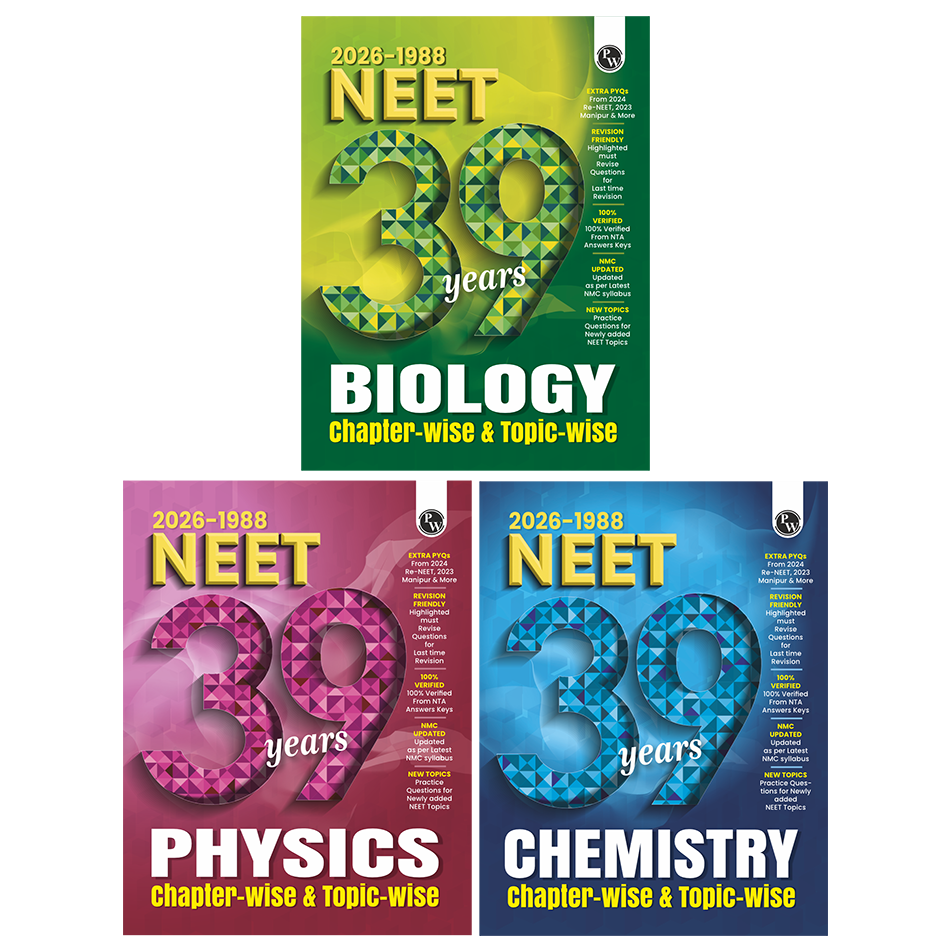
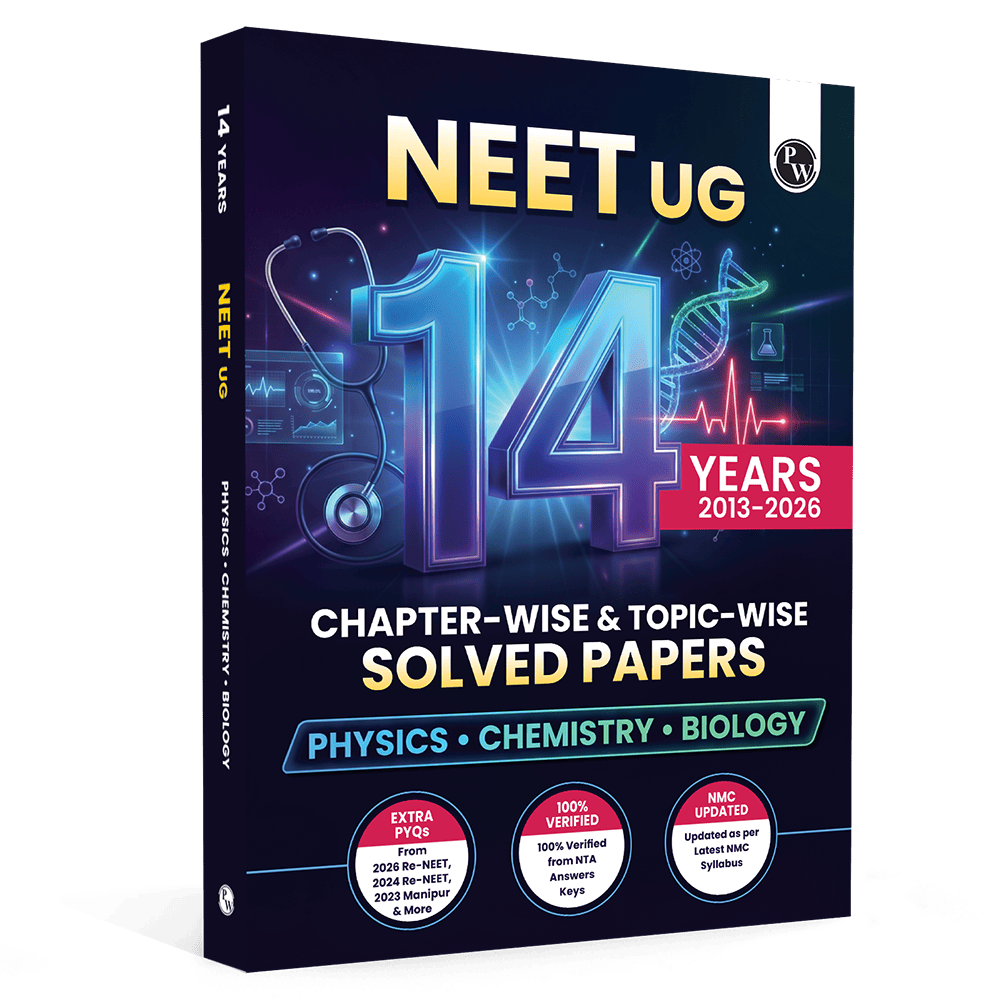
For a highly reliable resource, the PW NEET previous year question paper collections provide perfectly categorised, error-free question banks. These books break down old papers by chapter and topic, making it easy to see exactly how often a concept appears over time.
Using the NEET PYQ allows you to view the exact trends of the exam without getting distracted by poorly formatted materials. This structured layout helps you quickly see which sub-topics are growing in popularity and which ones are being dropped by the NTA.
How to Practice NEET Previous Year Papers Like the Real Exam?
Once you have analyzed the trends and identified the likely concepts, you must test your predictions under real exam conditions. This final step turns your theoretical data analysis into practical test-taking speed and accuracy.
-
Maintain Strict Time Boundaries: Always solve your past papers within a fixed three-hour and twenty-minute window. Do not take breaks, check your phone, or look at references while solving the paper.
-
Replicate the Actual Environment: Sit at a quiet desk, use a black or blue ballpoint pen, and fill out a physical OMR sheet. Managing your time while bubbling the OMR sheet is a vital skill that prevents mistakes under pressure.
-
Analyse Your Mistakes Rigorously: After completing a paper, spend at least two hours checking your work. Categorise every mistake as a calculation error, a conceptual misunderstanding, or a misread question.
-
Review OMR Filling Patterns: Look for any patterns in your bubbling mistakes, such as accidentally shifting your answers by one row, and fix these habits early.
This regular simulation builds your exam stamina and removes the anxiety of facing an unfamiliar paper layout on the actual test day.
Read More: How To Start NEET Preparation From Zero Level?
NEET PYQs FAQs
How many past years of NEET previous year papers should I analyze to accurately predict NTA trends?
You should focus heavily on the last ten years of exams. This period gives you a clear look at the modern exam format while showing you exactly how the NTA has shifted its question styles in recent sessions.
Can solving a previous year question paper help me manage my time better on the exam day?
Yes. Solving these papers under strict exam conditions teaches you how to allocate your time effectively across sections, helping you spend less time on easier questions and save valuable minutes for complex problems.
Why is using a dedicated NEET PYQ book better than downloading random online PDFs?
A dedicated book provides completely verified answer keys, detailed step-by-step solutions, and organized chapter-wise layouts. This prevents you from learning incorrect information from unverified online answer sheets.
What makes the PW NEET previous year question paper book different from other question banks?
The previous year question paper book categorises questions by topic and difficulty level. It also provides clear explanations that highlight common student mistakes, helping you understand the exact logic behind every solution.
How often should I practice with NEET PYQs to keep my preparation on track?
You should ideally solve and analyze at least one full past paper every week during your main preparation phase. As the exam date gets closer, you can increase this to two or three papers per week to maximize your speed.